Attractions and Places To See around Arraiolos - Top 19
Best attractions and places to see around Arraiolos include a variety of historical landmarks, cultural sites, and natural features. This charming town in Portugal's Alentejo region is particularly known for its unique circular castle and traditional hand-embroidered carpets. Visitors can explore its rich history, cultural heritage, and the serene beauty of the surrounding countryside. The area offers diverse points of interest for those seeking to discover the region.
Best attractions and places to see around Arraiolos
- The most popular attractions…
Last updated: August 26, 2026
Ecopista of the Ramal de Mora: Évora – Arraiolos
Highlight (Segment) • Cycleway
Tip by

Arraiolos Rug Interpretive Center
Highlight • Historical Site
The Arraiolos rug technique is a form of cross-stitch that completely covers the linen foundation.
Tip by

Sign up now to discover places like this
Get recommendations on the best single tracks, peaks, & plenty of other exciting outdoor places.
Sign up for free
Arraiolos Castle
Highlight (Segment) • Castle
Translated by Google •
Tip by
Arraiolos Town Square
Highlight • Settlement
Tip by
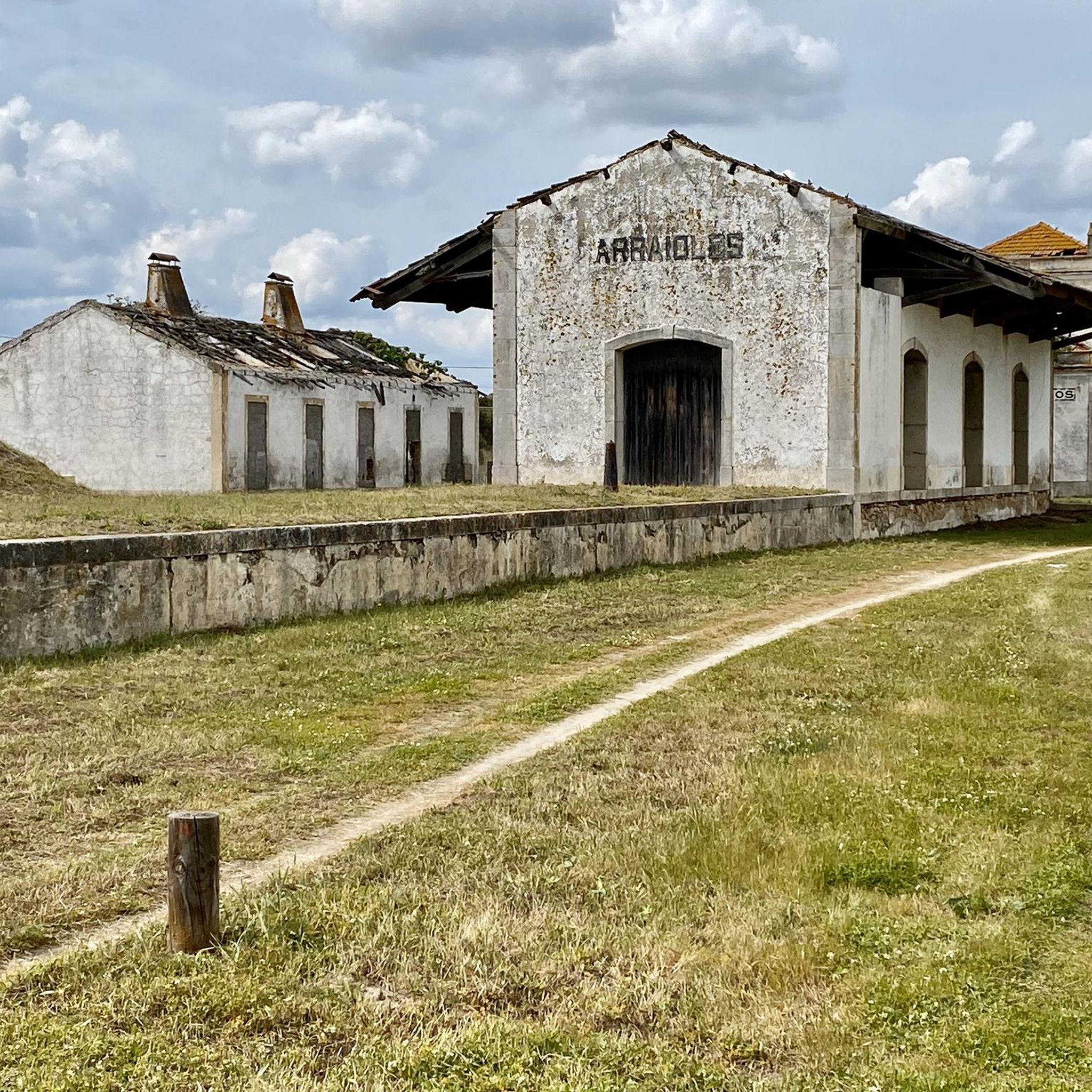
Vale de Paio Station – End of Ecopista Ramal de Mora
Highlight • Cycleway
Its called Ecopista Ramal de Mora and I can't recommend it enough. …
Tip by

Sign up for free to discover even more attractions around Arraiolos.
Sign up for free
Already have an account?
Start today with a free account
Your next adventure awaits.
Login or Signup
Popular around Arraiolos

Tips from the Community

Arraiolos rugs (tapetes de Arraiolos) are embroidered Portuguese needlework rugs traditionally crafted by hand in the town of Arraiolos, north of Évora, in Portugal. The Arraiolos rug technique is a form of cross-stitch that completely covers the linen foundation. Early Arraiolos rugs utilized designs derived from the Persians by way of the Moors, from whom the Portuguese learned the craft. By 1410, there were about 100 carpet workshops in Lisbon, but by 1551 persecution of the Moors had reduced the number to 6. Convent workshops continued to produce rugs replacing the early Persian designs with Portuguese folk-art patterns in more limited colors. By latter part of the 19th century, the making of Arraiolos rugs practically did not exist, being reduced to embroiderers that made rugs to order or for their own household. A workshop founded in 1916 in Évora helped revive the faltering industry; it is now regulated by a professional organization.
9
0
Arraiolos, the Alentejo village which needs no introduction, located in the heart of the region. The quality of the motifs and unique stitches of Arraiolos carpets as well as the peculiar circular castle put the village on the tourist map. But there are many distinctive factors able to attract you to this place only around 12.4 mi / 20 km from Evora, where the urban houses dot the slope sighting a charming rural municipality.
6
0
The Arraiolos Castle, or Paço dos Alcaides, is a 14th century castle located in Central Alentejo. Although it is not the largest castle in the region, it has a curious and almost unique peculiarity in the world, which makes it stand out in an area of the country with so many buildings of this type: its layout is circular architecture. For those who arrive in the town of Arraiolos (or pass through the surrounding region) it is impossible not to see the Arraiolos Castle, which stands proudly in the landscape, at the top of Monte de São Pedro. Historically, the Arraiolos Castle has had several roles. It was built in 1306 by D. Dinis, housing the population within its walls. Later it was the county seat of D. Nuno Álvares Pereira, 2nd Count of Arraiolos, who lived here for many years. Due to the cold and wind resulting from its location, it ended up losing many of its inhabitants. In an attempt to keep some of the population inside the walls, they began to be closed every night after the bell rang, which continued for several decades. However, the population eventually spread out along the surrounding slopes and three centuries after it was built, the Castle began to be looted for materials, eventually falling into ruins. It was during the reign of King John IV that it underwent major renovation work, but it eventually fell into ruins again, worsened by the earthquake of 1755. Between 1959 and 1963, it was partially restored by the State, achieving the appearance it still has today.
7
1
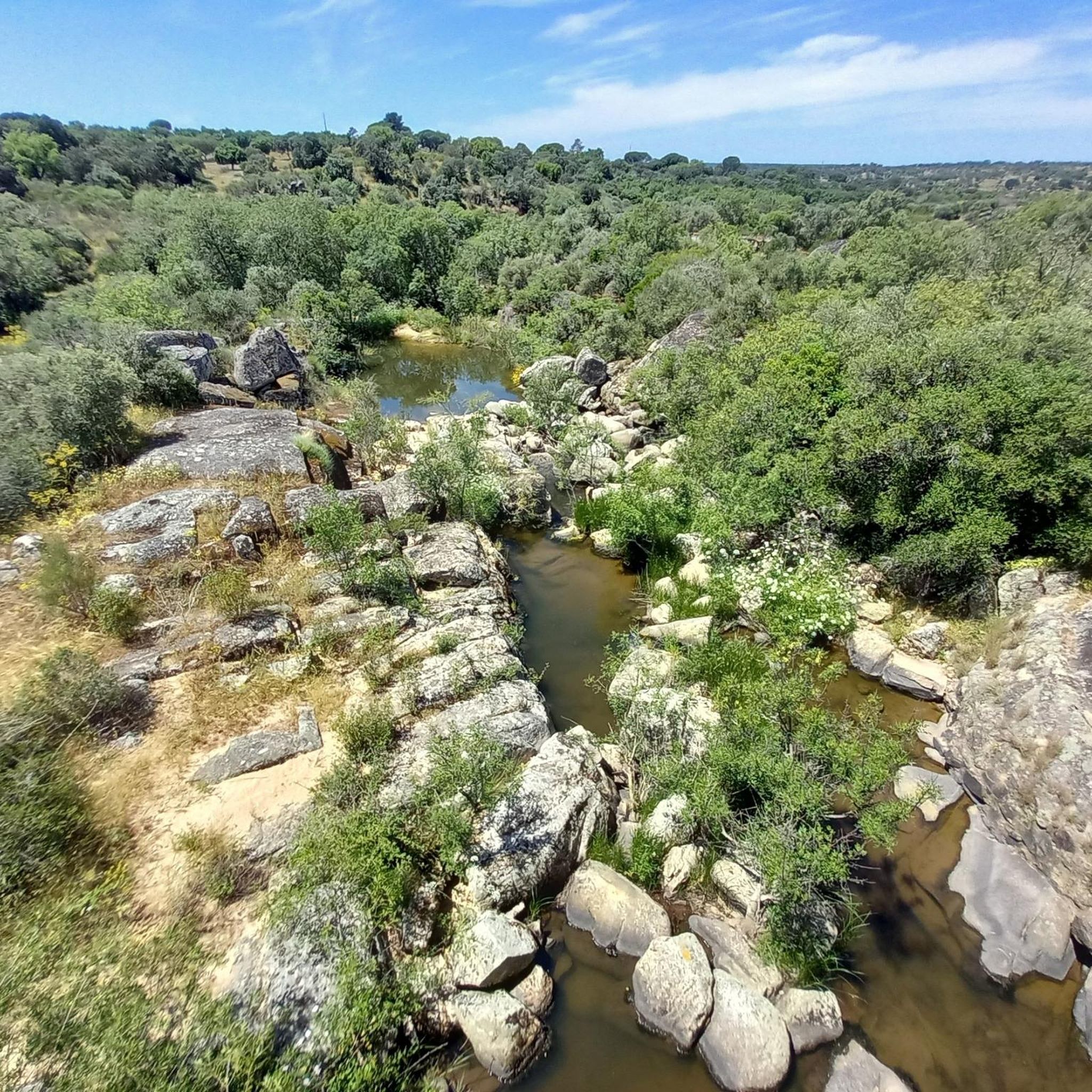
This route, along the deactivated Ramal de Mora, not only allows you to visit cultural points of interest in the city of Évora, whose historic centre was declared a UNESCO World Heritage Site, but also allows you to enjoy the magnificent landscape of the typical Alentejo plain, predominantly made up of montado and olive groves, on a route that is almost always in a rural environment, providing direct contact with nature. A short detour and a visit to Arraiolos, a town famous for its hand-made carpets, is essential, as is a stop in the village of Graça do Divor, where it is worth visiting the old houses. This Eco-track is part of the Great Montado Route, under the responsibility of CIMAC – Intermunicipal Community of Central Alentejo, which will allow the inclusion of almost 184.805 km of deactivated railway lines (Reguengos Branch, Vila Viçosa Branch, Montemor Branch, Mora Branch and Évora Line) in the Great Montado Route, in a process that includes 9 of the 14 municipalities of Central Alentejo (Arraiolos, Borba, Estremoz, Évora, Montemor-o-Novo, Mora, Redondo, Reguengos de Monsaraz and Vila Viçosa).
6
2

End of the eco-path starting in Evora.
2
0

Very nice complex with a view of the surroundings.
3
1

In June 2024, parts of it were quite overgrown and the information boards all weathered and unreadable. Pity that there seems to be no maintenance. Because it is still a great way to get into the countryside from Evora.
4
0
Carpet exhibition and historical information about life and country.
5
1
Frequently Asked Questions
What historical landmarks can I explore in Arraiolos?
Arraiolos is rich in history. You can visit the unique circular Arraiolos Castle, a 14th-century fortress offering impressive views. The 16th-century Arraiolos Pillory in the main square and the Roman Temple of Santana do Campo, built on an ancient Roman site, are also notable. Don't miss the Historic Town Center with its traditional whitewashed houses.
Where can I learn about Arraiolos' famous carpets?
To understand the town's most famous handicraft, visit the Arraiolos Rug Interpretive Center. Housed in a beautifully restored old hospital, it displays historical and contemporary Arraiolos rugs and explains the intricate, labor-intensive process of hand embroidery. You can also find artisan shops selling these rugs in the historic town center.
Are there any unique architectural sites in Arraiolos?
Yes, Arraiolos is home to the 14th-century Arraiolos Castle, which is unique for its circular, or oval, architectural feature—a rare sight in the Alentejo region. Another architectural gem is the Pousada do Convento de Arraiolos, a 16th-century convent beautifully restored into a luxury hotel, blending Gothic and Manueline styles.
What outdoor activities are available in the Arraiolos region?
The Arraiolos region offers various outdoor activities. You can enjoy cycling on the Ecopista of the Ramal de Mora: Évora – Arraiolos, a greenway along an old railway line. For walking, the Passadiço de Arraiolos is a newly constructed wooden walkway with panoramic views. The surrounding countryside, with its cork oak forests, also provides opportunities for hiking, such as the 'Between the Bridges and Hills of Arraiolos' trail. For more routes, check out the Running Trails around Arraiolos or Cycling around Arraiolos guides.
Are there family-friendly attractions or activities in Arraiolos?
Families can enjoy the Ecopista of the Ramal de Mora: Évora – Arraiolos, which is suitable for cycling and walking with children due to its flat terrain. The Arraiolos Public Garden offers a pleasant spot for a stroll. The Divor Dam and Oleirita Dam reservoirs are also great for picnics and peaceful walks in nature. The Passadiço de Arraiolos wooden walkway is also accessible and family-friendly.
What is the best time of year to visit Arraiolos for outdoor activities?
The spring (March to May) and autumn (September to November) months are generally considered the best for outdoor activities in Arraiolos. During these seasons, the weather is mild and pleasant, ideal for hiking, cycling, and exploring the countryside without the intense heat of summer.
Can I find easy walking or cycling paths in Arraiolos?
Yes, the Ecopista of the Ramal de Mora: Évora – Arraiolos is an excellent option for easy cycling and walking, as it follows an old railway line with minimal elevation changes. The Passadiço de Arraiolos is also a newly built wooden walkway designed for accessible walks and cycling, offering scenic views.
Are there any ancient megalithic sites near Arraiolos?
Yes, a short drive from Arraiolos, you can visit the Anta de São Dinis de Pavia (Pavia Dolmen), a megalithic structure dating back to the fourth or third millennium BC. Additionally, the Almendres Megalithic Settlement, one of Europe's largest groupings of megalithic structures, is approximately 30 minutes away and offers a fascinating glimpse into ancient history.
Where can I experience local culture beyond the main attractions?
Beyond the main attractions, you can immerse yourself in local culture by wandering through Arraiolos' winding streets in the Historic Town Center, where you'll find traditional whitewashed houses and artisan shops. The Alentejo region is also known for its wine culture, with several local wineries near Arraiolos offering tours and tastings. Don't forget to try local culinary delights like the savory empada de Arraiolos and various conventual sweets.
What natural areas are good for a relaxing visit?
For a relaxing visit, the Divor Dam and Oleirita Dam and their reservoirs provide picturesque spots for picnics, bird watching, and peaceful walks. The Arraiolos Public Garden is also a pleasant green space within the town. The vast cork oak forests and endless plains surrounding Arraiolos offer serene natural beauty for quiet contemplation.
Are there options for longer cycling tours around Arraiolos?
Yes, for longer cycling tours, the region offers various routes. The Road Cycling Routes around Arraiolos guide provides options like the Giraldo Square – Évora Public Library loop, which is over 56 km. The Cycling around Arraiolos guide also lists routes, including a challenging 62 km loop from Arraiolos Railway Station to Arraiolos Castle.
What makes Arraiolos Castle unique?
The Arraiolos Castle stands out due to its distinctive circular, or oval, architectural layout, which is a rare design for castles in the Alentejo region. Built in the 14th century, it offers commanding views from atop Monte de São Pedro and houses the 16th-century Church of Salvador within its walls.
Are there any religious sites of interest in Arraiolos?
Arraiolos features several significant religious sites. Inside the castle walls, you'll find the ancient Church of Nossa Senhora do Castelo (or Church of the Savior). The Misericórdia Church of Arraiolos, despite its simple exterior, boasts a beautiful interior with a golden altar and 18th-century tiles. The Mother Church of Nossa Senhora dos Mártires and the Chapel of the Steps of Christ are also notable.
Is Arraiolos accessible for visitors with mobility considerations?
Some attractions in Arraiolos are designed with accessibility in mind. The Arraiolos Rug Interpretive Center and the Arraiolos Town Square are noted as wheelchair accessible. The newly constructed Passadiço de Arraiolos wooden walkway also provides accessible paths for walking and cycling, offering panoramic views of the region.
What do visitors enjoy most about Arraiolos?
Visitors frequently praise Arraiolos for its unique circular castle, the rich history and artistry displayed at the Arraiolos Rug Interpretive Center, and the serene beauty of the surrounding Alentejo countryside. The Ecopista of the Ramal de Mora is also a popular highlight for those looking to experience nature. The town's charming atmosphere, with its whitewashed houses and slower pace of life, provides a relaxing experience.
Most popular routes around Arraiolos

Get inspired with the komoot mobile app


Explore more
Still not found the Highlight you’re looking for? See guides of the top attractions in other regions:
