The best road cycling routes around Évora Monte (Santa Maria)
4.1
(7)
159
riders
17
rides
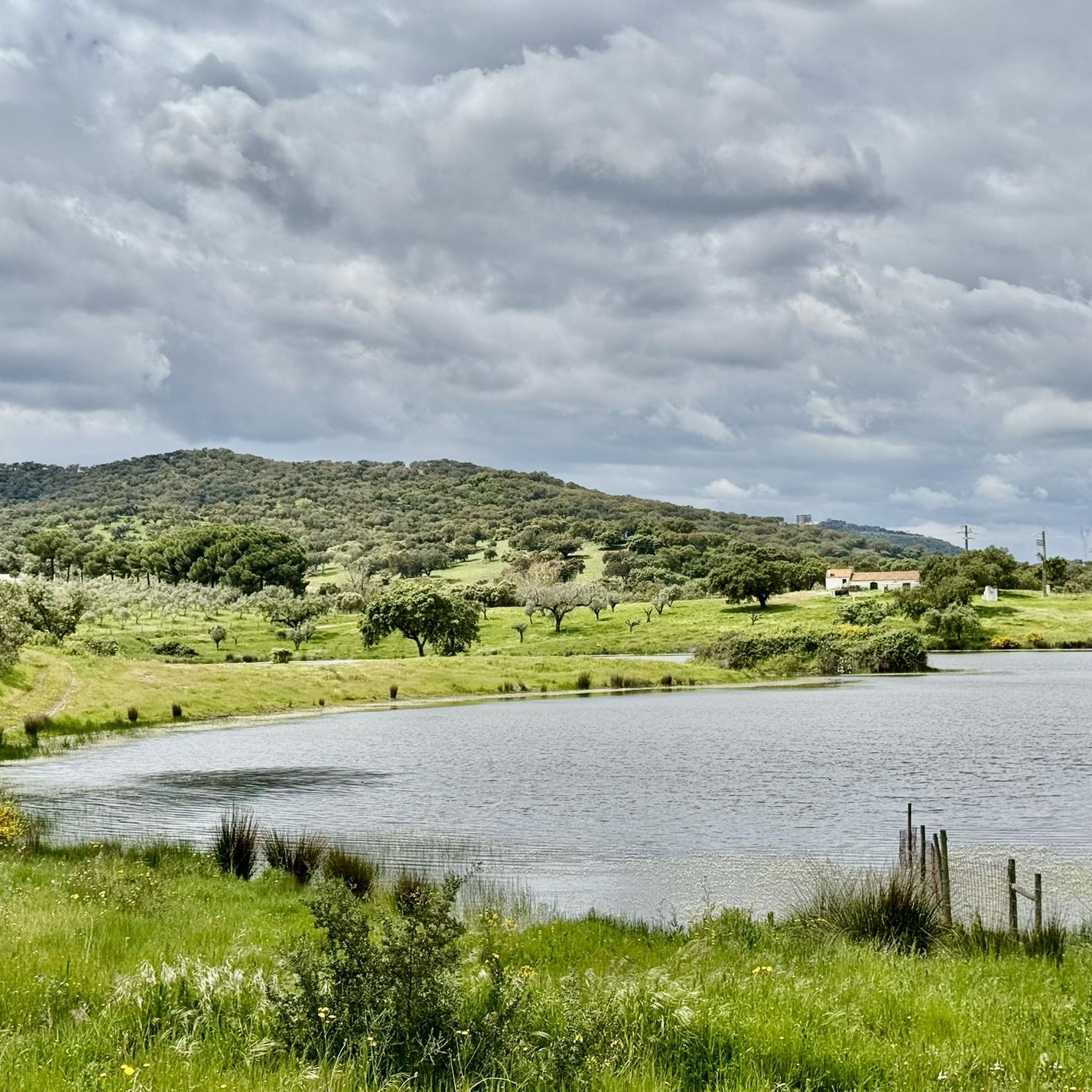
Road cycling routes around Évora Monte (Santa Maria) traverse the rolling landscapes of Portugal's Alentejo region. The area is characterized by extensive cork forests and varied terrain, offering a blend of gentle stretches and more significant climbs. Évora Monte itself is perched atop a hill, providing expansive views of the surrounding countryside. The region's roads are generally well-paved, making them suitable for road cyclists seeking both historical exploration and natural beauty.
Best road cycling routes around Évora Monte (Santa Maria)
…Last updated: July 11, 2026
24
riders
69.8km
03:17
870m
870m
Moderate road ride. Good fitness required. Mostly well-paved surfaces and easy to ride.
4.8
(4)
14
riders
35.3km
01:30
220m
220m
Easy road ride. Great for any fitness level. Mostly well-paved surfaces and easy to ride.

Sign up for free
4.5
(2)
9
riders
39.8km
01:51
350m
350m
Moderate road ride. Good fitness required. Mostly well-paved surfaces and easy to ride.
3.0
(1)
5
riders
43.9km
01:54
400m
400m
Moderate road ride. Good fitness required. Mostly well-paved surfaces and easy to ride.
8
riders
60.5km
02:39
480m
480m
Moderate road ride. Good fitness required. Mostly well-paved surfaces and easy to ride.
Get access to more routes and recommendations from other explorers.
Sign up for free
Already have an account?
Our route recommendations are based on thousands of hikes, rides, and runs completed by other people on komoot.
Start today with a free account
Your next adventure awaits.
Login or Signup


Tips from the Community

Aldeia da Serra is a characteristic and picturesque village of white houses located on the slopes of Serra d'Ossa, in the Alentejo region, Portugal. It is surrounded by greenery and is renowned for its tranquility and unspoiled nature.
0
0

Vimieiro was a municipal seat between 1257 and 1855. Two charters are known, the first granted by D. Francisco Bruno Neves, Bishop of Évora, in 1257, and the second by D. Manuel I, King of Portugal, in 1512. In 1801, it consisted of the parishes of the town and Santa Justa. It then had 1,819 inhabitants and an area of 266 km². In 1849, it consisted only of the parish of the town. It was suppressed by the administrative reform of 1855, consequently losing its status as a town, a fact that the coat of arms with a mural crown of four visible towers still marks today.
2
0

The Museu de Arte Sacra in Vila Viçosa, Portugal, is known for its extensive collection of religious art and artifacts. Housed in a historic building, the museum displays a variety of sacred objects, including paintings, sculptures, and liturgical items that reflect the region's rich religious heritage.
3
0
One of the arts that you shouldn't miss when visiting Estremoz is the Production of Clay Figures from Estremoz, which has been part of the National Inventory of Intangible Cultural Heritage since 2014 and has been a UNESCO Intangible Cultural Heritage of Humanity since 07-12-2017. This city is also home to the Cavalry Regiment No. 3, which, with its soldiers, has brought a lot of activity to a small city in the Alentejo countryside over the years.
1
0

Castelo de Redondo is a medieval fortress built in the 13th century by order of King D. Dinis. The castle played a crucial defensive role in the region. Although today, the only things that remain are the perimeter walls, with an irregular perimeter and several quadrangular towers, and part of the old Torre de Menagem (Keep).
0
0

Starting point for the Serra d'Ossa Walkways. There is a restaurant in this village, where you can sample good regional dishes.
2
0

The town of Vimieiro, as a “land of music and musicians”, intends to promote a project of national scope, with the creation of a museum space on philharmonic music with a musical training component that allows the preservation of knowledge and traditions in this area and, simultaneously, the holding of “artistic residencies”, as well as the construction of an auditorium where the arts of music and speech can take place, valuing music teaching, the holding of workshops and other activities that the final plan should include. (Source: www.tribunaalentejo.pt )
14
0
Estremoz is a Portuguese city located in the district of Évora, in Alto Alentejo, known as the "marble capital" of Portugal. It is divided into two parts: a medieval upper town, enclosed by walls, with old white houses and an imposing castle (the Castle of Queen Santa Isabel, which houses a Pousada), and a lower town with eighteenth-century fortifications. Estremoz is famous for its white marble quarries, which have made Portugal a major world exporter, and for its traditional terracotta crafts, especially the "puppets" (Bonecos de Estremoz), a UNESCO Intangible Heritage. The city hosts a lively weekly farmers' market.
0
0
Frequently Asked Questions
How many road cycling routes are available around Évora Monte (Santa Maria)?
There are 16 road cycling routes available around Évora Monte (Santa Maria). These routes offer a variety of experiences, with 3 classified as easy and 13 as moderate, ensuring options for different fitness levels.
What kind of terrain can I expect on road cycling routes in Évora Monte (Santa Maria)?
The region around Évora Monte (Santa Maria) is characterized by rolling landscapes and extensive cork forests. While the Alentejo is known for its gentler cycling, routes can include significant climbs, especially around areas like the Serra d'Ossa. The roads are generally well-paved, making them suitable for road bikes.
Are there routes suitable for beginners or less experienced road cyclists?
Yes, there are routes suitable for beginners. For example, the Estremoz – Estremoz loop from Estremoz is an easy 35.1 km (21.8 miles) trail that takes about 1 hour 29 minutes to complete, offering a pleasant ride through the Alentejo countryside.
Are there challenging road cycling routes for experienced cyclists?
Experienced cyclists will find moderate routes with more significant climbs. The Evoramonte Castle – Estremoz loop from Aldeia da Serra is a moderate 69.8 km (43.4 miles) route with an elevation gain of over 875 meters, offering a good challenge and taking around 3 hours 17 minutes.
What historical sites or landmarks can I see while road cycling near Évora Monte (Santa Maria)?
Many routes offer glimpses of historical sites. You can cycle past the prominent Evoramonte Castle, a 16th-century military building, or explore areas near Estremoz, which features the Gadanha Fountain and Estremoz Castle. The region is rich in history, with the UNESCO World Heritage city of Évora also within reach for a day trip.
Are there any natural features or viewpoints to enjoy on the routes?
Absolutely. The routes traverse rolling landscapes and extensive cork forests, offering endless views of the Alentejo countryside. The Alto de São Gens, at 650 meters, provides spectacular panoramic views. You might also encounter natural monuments like the Grande Cork Oak or explore the Montado Cork Oak Forest.
Are there circular road cycling routes available?
Yes, many of the road cycling routes around Évora Monte (Santa Maria) are designed as loops. Examples include the Evoramonte Castle – Estremoz loop from Aldeia da Serra and the Estremoz – Gadanha Fountain, Estremoz loop from Estremoz, allowing you to start and finish at the same point.
What do other road cyclists say about the routes in Évora Monte (Santa Maria)?
The road cycling routes in Évora Monte (Santa Maria) are highly rated by the komoot community, with an average score of 4.1 stars from over 6 reviews. Cyclists often praise the picturesque landscapes, well-paved surfaces, and the blend of historical exploration with natural beauty.
What is the best time of year for road cycling in Évora Monte (Santa Maria)?
The Alentejo region generally offers pleasant cycling conditions for much of the year. Spring and autumn are often ideal, with milder temperatures and beautiful scenery. Summers can be hot, so early morning or late afternoon rides are recommended during those months.
Are there cafes or restaurants along the road cycling routes?
While specific cafes on every route are not detailed, the routes often connect to or pass through historic towns like Estremoz, where you can find various cafes, pubs, and restaurants to refuel. Évora Monte itself has local craft shops and amenities.
Where can I find parking for road cycling routes in Évora Monte (Santa Maria)?
Parking is generally available in the towns and villages that serve as starting points for many routes, such as Évora Monte or Estremoz. Look for designated parking areas within these communities.
Can I use public transport with my bike in Évora Monte (Santa Maria)?
Public transport options in the Alentejo region, particularly for carrying bikes, can be limited. It's advisable to check with local bus or train operators in advance regarding their policies for transporting bicycles, especially if planning to connect between larger towns like Évora and Estremoz.
Most popular attractions around Évora Monte (Santa Maria)

Get inspired with the komoot mobile app


Explore more
Browse the best Road cycling routes in other regions.
