The best cycling routes around Nossa Senhora Da Vila
4.7
(7)
55
riders
13
rides
Touring cycling routes around Nossa Senhora Da Vila are primarily found in the Montemor-o-Novo region of Portugal, characterized by rolling countryside and historic landmarks. The area features a mix of agricultural landscapes, including vineyards and olive groves, alongside greenways built on old railway lines. Cyclists can expect varied terrain, from gentle paths to more challenging ascents, often leading to panoramic viewpoints.
Best touring cycling routes around Nossa Senhora Da Vila
- The most popular touring cycling route is View of Montemor-o-Novo…
Last updated: May 15, 2026
5.0
(5)
22
riders
31.9km
02:21
340m
340m
Moderate bike ride. Good fitness required. Mostly paved surfaces. Suitable for all skill levels.
16
riders
Hard bike ride. Very good fitness required. Mostly paved surfaces. Suitable for all skill levels.

Sign up for free
4.0
(1)
13
riders
8.79km
00:56
160m
160m
Moderate bike ride. Good fitness required. Mostly paved surfaces. Suitable for all skill levels.
5.0
(1)
5
riders
50.0km
03:41
510m
510m
Hard bike ride. Very good fitness required. Mostly paved surfaces. Suitable for all skill levels.
1
riders
19.7km
01:37
120m
120m
Easy bike ride. Great for any fitness level. Mostly paved surfaces. Suitable for all skill levels.
Get access to more routes and recommendations from other explorers.
Sign up for free
Already have an account?
Our route recommendations are based on thousands of hikes, rides, and runs completed by other people on komoot.
Start today with a free account
Your next adventure awaits.
Login or Signup

Tips from the Community

Cromeleque dos Almendres, located near Évora, is the largest and most important megalithic monument in the Iberian Peninsula. Built between the late 6th and 3rd millennium BC, it is about 2000 years older than Stonehenge. VisitEvora +3 This "Portuguese Stonehenge" is composed of about 95 granite monoliths (menhirs) arranged in circles and ellipses on a gentle slope in the Serra do Monfurado. VisitEvora +1
0
0
The Cromeleque dos Almendres, located in Nossa Senhora de Guadalupe, Évora, is the most important megalithic monument on the Iberian Peninsula and one of the largest in Europe. Composed of about 95 stone monoliths (menhirs) arranged in concentric circles, this enclosure is about 2,000 years older than the famous Stonehenge. 👍🥾
0
0

Santiago do Escoural is a beautiful rural village belonging to the municipality of Montemor-o-Novo, in the heart of the Alentejo plain, where peace of mind reigns, surrounded by generous nature. This is a region occupied by man since very ancient times, and very rich in archaeological remains, the greatest example of which is the Escoural Archaeological Site, in Herdade da Sala, which is one of the most important in the country. But Santiago do Escoural has even more to offer, such as the Parish Church and the interesting Charcoal Kilns, the Quinta do Carvalhal or, very close by, the Anta de São Brissos, transformed into the Chapel of Nossa Senhora do Livramento, or even the Parish Church of São Brissos. A stroll through its calm and picturesque Alentejo streets is worthwhile, in a region inhabited by humans for 50,000 years, which has maintained its rural and peaceful lifestyle over the years, wisely preserving its important archaeological heritage.
3
0
São Cristovão is a village in the Alentejo region, belonging to the municipality of Montemor-o-Novo. The foundation of this parish must predate 1534. The former parish of São Cristovão, within the territory of Montemor-o-Novo, was a curacy under the patronage of the Archbishop of Évora. Its economic activity is based on agriculture, livestock farming, bread making, and cattle breeding. São Cristovão is a white and welcoming village, smiling at every visitor, with natural heritage open to those who know how to discover it. It undoubtedly deserves a visit, especially for lovers of Alentejo gastronomy. There are good routes to explore by hiking or cycling in the area.
2
0
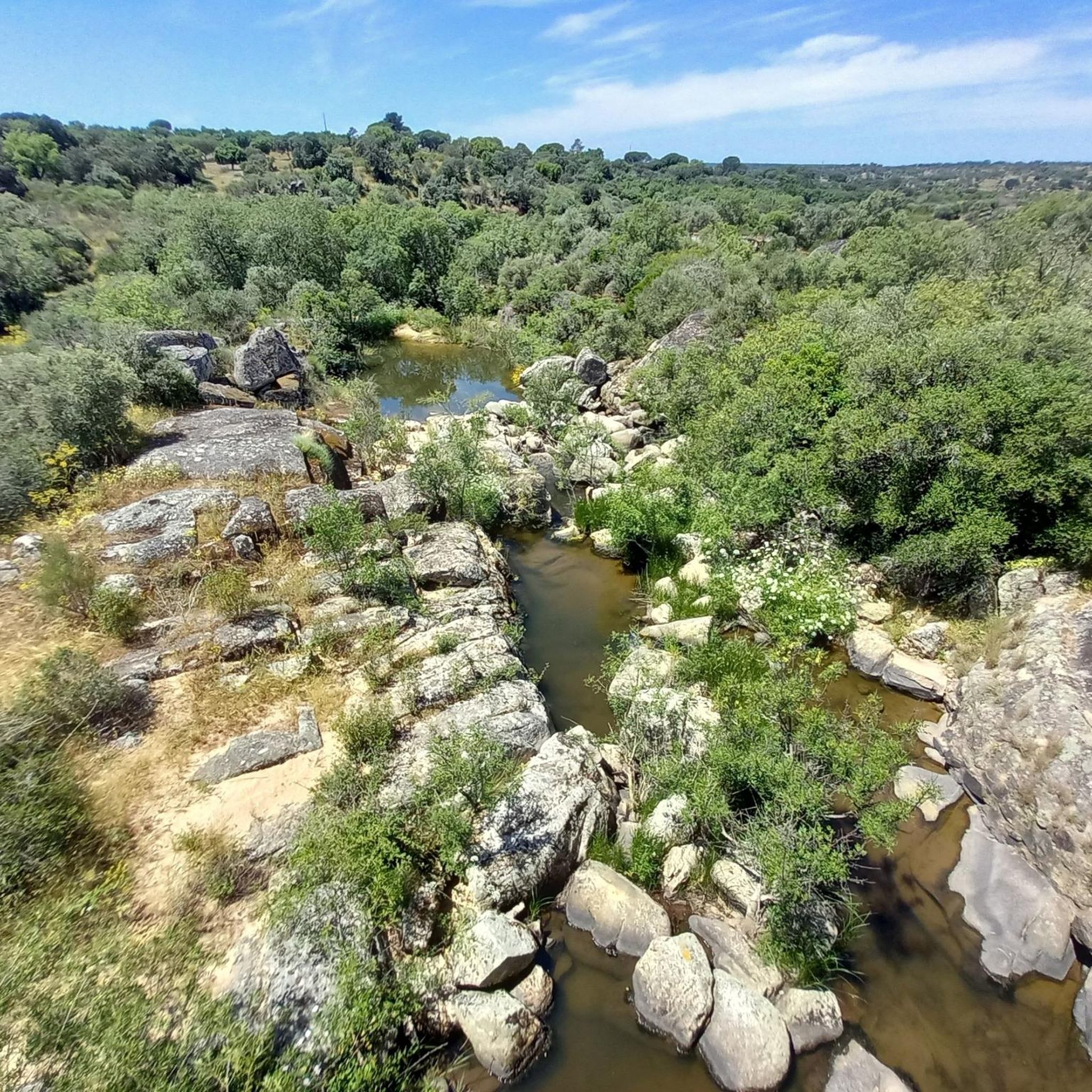
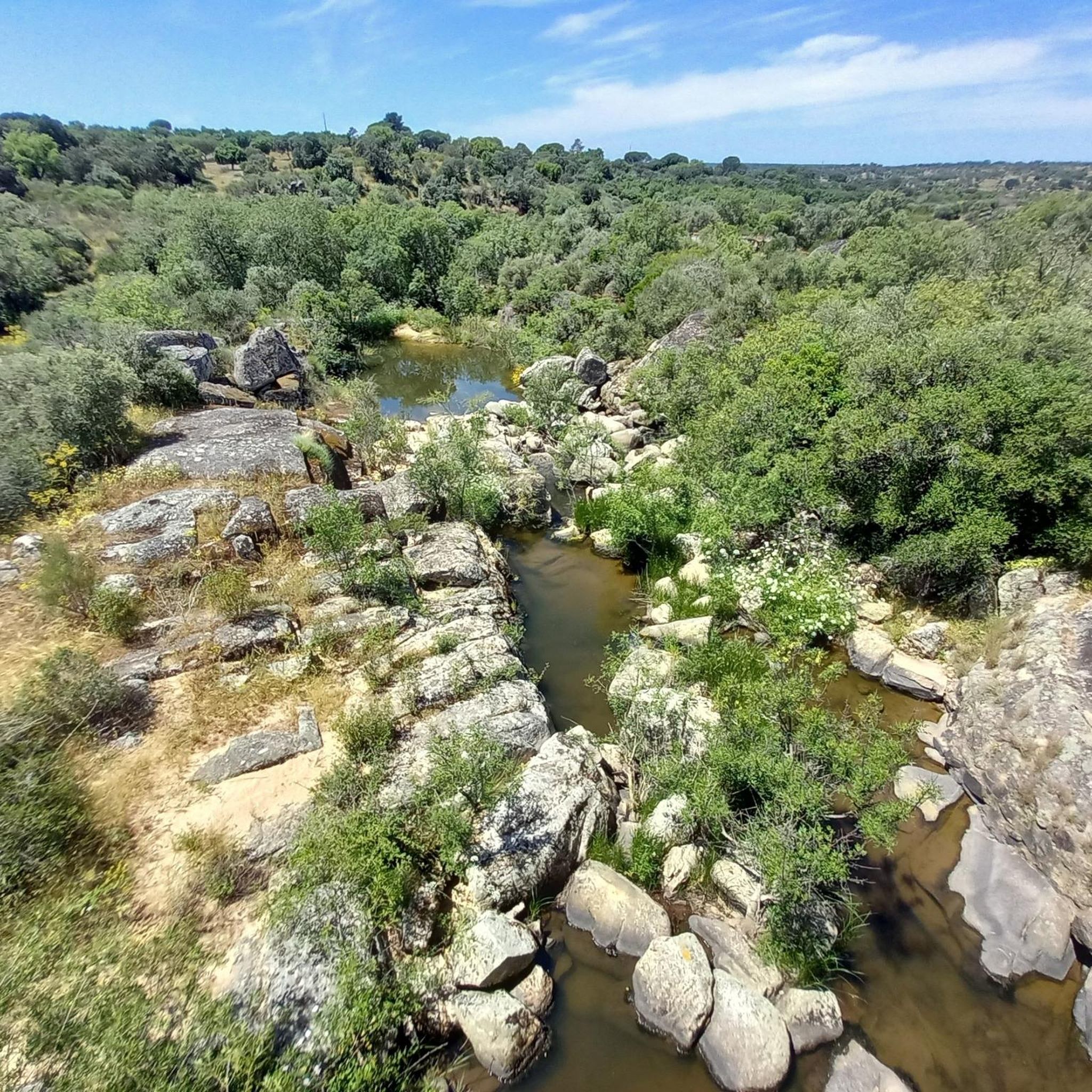
We are in the Central Alentejo, in the district of Évora, in the municipality of Montemor-o-Novo, to visit the parish of São Cristovão. Halfway between Montemor-o-Novo and Alcácer do Sal, São Cristovão is a village on the sea plain on the way to the beaches. The origin of this village is closely linked to a legend, in which Saint Christopher is credited with choosing the location of the church, which is why the people chose this Saint as their Patron Saint and the unifying symbol of their Faith. The narrow valley of the Ribeira de São Cristovão is home to several "monuments" of natural architecture. On the edge of the village is the Church of São Cristovão, built in the 16th century. Inside it is a curious 16th century sculpture of the Patron Saint. The visit to São Cristovão continues with a trip to the so-called "Heel of the World" and the megalithic complex of Tojal. The "Heel of the World" is a large rock in the narrow and impressive valley of the Ribeira de São Cristovão. The foundation of this parish must have been before 1534. The old parish of São Cristovão, in the Montemor-o-Novo area, was a parish under the presentation of the Archbishop of Évora. Its economic activity is based on agriculture, livestock farming, baking and cattle breeding. São Cristovão is a white and welcoming village, smiling at each visitor, a natural heritage open to those who know how to discover it. It is undoubtedly worth a visit, especially for lovers of Alentejo cuisine.
5
0

The railway line, which was closed in 1988, was given new life in March 2009. Now known as the "Ecopista do Montado", the old route serves as a cycle and hiking path and runs for a total of 12.87 kilometers from the old Montemor-o-Novo train station over an old railway bridge, through the "Serra de Monfurado" nature reserve, to the old "Torre da Gadanha" train station. https://www.portugalismo.de/montemor-o-novo-alentejo/
2
0

Beautiful facility that has been closed off for safety reasons.
2
1

Unfortunately, access is currently restricted and there is a fence around the site. The vegetation needs to recover so that the soil is protected against erosion again.
6
2
Frequently Asked Questions
How many touring cycling routes are available around Nossa Senhora Da Vila?
There are over 10 touring cycling routes available around Nossa Senhora Da Vila, primarily located in the Montemor-o-Novo region of Portugal. These routes cater to various skill levels, from easy to difficult.
What kind of terrain can I expect on touring cycling routes in Nossa Senhora Da Vila?
The terrain around Nossa Senhora Da Vila features a mix of rolling countryside, agricultural landscapes with vineyards and olive groves, and greenways built on old railway lines. Cyclists can expect varied surfaces, including paved roads and some dirt roads, particularly on routes like the View of Montemor-o-Novo – Dirt road in Monfurado loop from Montemor-o-Novo.
Are there any easy touring cycling routes suitable for beginners?
Yes, there are easy touring cycling routes available. An example is the Dirt road in Monfurado – Estrada da Canada loop from Santiago do Escoural, which offers a more gentle experience through the region's landscapes.
What historical landmarks can I see along the touring cycling routes?
Many routes offer views of historic sites. You can cycle past the impressive Montemor-o-Novo Castle, which is a prominent feature in the region. Another notable historical site is the Almendres Cromlech, a significant megalithic monument.
Are there any circular touring cycling routes in the area?
Yes, many touring cycling routes around Nossa Senhora Da Vila are designed as loops. For instance, the View of Montemor-o-Novo loop from Montemor-o-Novo offers a moderate circular ride with views of the historic castle.
What are the best viewpoints to experience while cycling?
The region offers several panoramic viewpoints, often from higher elevations. The historic Montemor-o-Novo Castle, situated atop the highest hill, provides excellent views. While not directly on a route, the broader region of Vila Flor, also associated with Nossa Senhora Da Vila, is known for hilltop sanctuaries offering breathtaking landscapes and views extending up to 100 km.
What do other touring cyclists say about the routes in Nossa Senhora Da Vila?
The touring cycling routes in Nossa Senhora Da Vila are highly rated by the komoot community, with an average score of 4.7 stars from several reviews. Cyclists often praise the varied terrain, the historic sites, and the peaceful agricultural landscapes.
Are there any routes that follow old railway lines or greenways?
Yes, a significant feature for touring cyclists in the Montemor-o-Novo area is the Ecopista of the Ramal de Mora. This greenway, constructed along an old railway line, offers a mostly natural setting, often isolated from villages, making it ideal for relaxed cycling.
Can I find routes that are suitable for families with children?
While specific family-friendly routes are not detailed, the presence of greenways like the Ecopista of the Ramal de Mora suggests options for easier, flatter rides that could be suitable for families. These routes often provide a safer, more relaxed environment away from heavy traffic.
What is the best time of year to go touring cycling in Nossa Senhora Da Vila?
Given the region's characteristics, spring and autumn generally offer the most pleasant weather for touring cycling, with milder temperatures and beautiful natural scenery. Summers can be quite hot, especially in the Alentejo region of Portugal.
Are there any longer, more challenging touring cycling routes?
For experienced cyclists seeking a challenge, routes like the View of Montemor-o-Novo – Dirt road in Monfurado loop from Montemor-o-Novo offer a difficult 56.0-mile (90.2 km) path that traverses dirt roads through the Monfurado area, providing a more rugged and demanding experience.
What kind of natural features can I expect to see while cycling?
The routes showcase the natural beauty of the Alentejo region, including extensive agricultural fields, olive groves, and vineyards. You'll also encounter rolling hills and, in some areas, more rugged, natural landscapes like those found in the Monfurado area.
Most popular attractions around Nossa Senhora Da Vila

Get inspired with the komoot mobile app


Explore more
Browse the best Cycling routes in other regions.
