Attractions and Places To See around Vera Cruz - Top 18
Best attractions and places to see around Vera Cruz include historical sites, religious buildings, and natural viewpoints. This region offers a mix of cultural heritage and scenic landscapes, providing diverse exploration opportunities. Visitors can discover ancient monuments and expansive reservoirs. The area is characterized by its historical significance and natural beauty.
Best attractions and places to see around Vera Cruz
- The most popular attractions is View of Alqueva Reservoir, a viewpoint that offers impressive views over Western Europe's largest…
Last updated: August 26, 2026
Vidigueira Clock Tower
Highlight • Monument
Translated by Google •
Tip by

Vera Cruz Church and the Holy Fountain.
Highlight • Religious Site
Translated by Google •
Tip by

Sign up now to discover places like this
Get recommendations on the best single tracks, peaks, & plenty of other exciting outdoor places.
Sign up for free
View of Alqueva Reservoir
Highlight • Viewpoint
Translated by Google •
Tip by
Hike Among Blooming Rockroses
Highlight • Trail
Tip by

Vera Cruz de Marmelar
Highlight • Religious Site
The parish of Vera Cruz, …
Translated by Google •
Tip by
Sign up for free to discover even more attractions around Vera Cruz.
Sign up for free
Already have an account?
Start today with a free account
Your next adventure awaits.
Login or Signup
Popular around Vera Cruz
Tips from the Community

A historic parish, very old, in 1257, when D. João Peres de Aboim arrived here, the Monastery of Vera Cruz probably already existed. It is the oldest monument in the municipality and owes its fame to the Relic of the Holy Wood, brought by a knight after the Seventh Crusade. Like the vast majority of inland Alentejo villages, it has been losing inhabitants. In 1960, it had over a thousand inhabitants; today, it has less than four hundred.
2
0

The "Esteva" (Cistus ladanifer, gum rock rose or cistus rose) covers the mountains and valleys in spring with millions of beautiful, sweet-smelling white flowers. The flower itself is delicate and beautiful, but the evergreen it grows on is tough and shaggy with sticky branches and leaves. It is a plant from the rock rose family (Cistaceae) that grows in dry, rocky places where nothing else wants to grow and can grow up to 2 meters high. The sticky resin is labdanum, a highly aromatic resin. This resin protects the plant from the harsh and dry climate and it also inhibits the growth of competing plants in its environment. Because of this last characteristic you often find entire hills overgrown with Esteva. Esteva grows on acidic, non-calcareous soils, made of shale, granite and quartz. It is a very fast-growing pioneer plant that is a good biological indicator of soil degradation due to, for example, overgrazing or constant fires, as it is one of the first plants to appear in the space where oaks once grew. In the past, charcoal was extracted from the root of the Esteva, which is extremely hard and woody. This wood was also traditionally used to fire bread ovens. It is still great good wood to start a hot fire with. In moist soil it is not so difficult to pry the plants root and all out of the soil. Because this plant is full of resin and oil, it's best to make sure it doesn't grow within at least 50 meters of your home and other buildings.
2
0
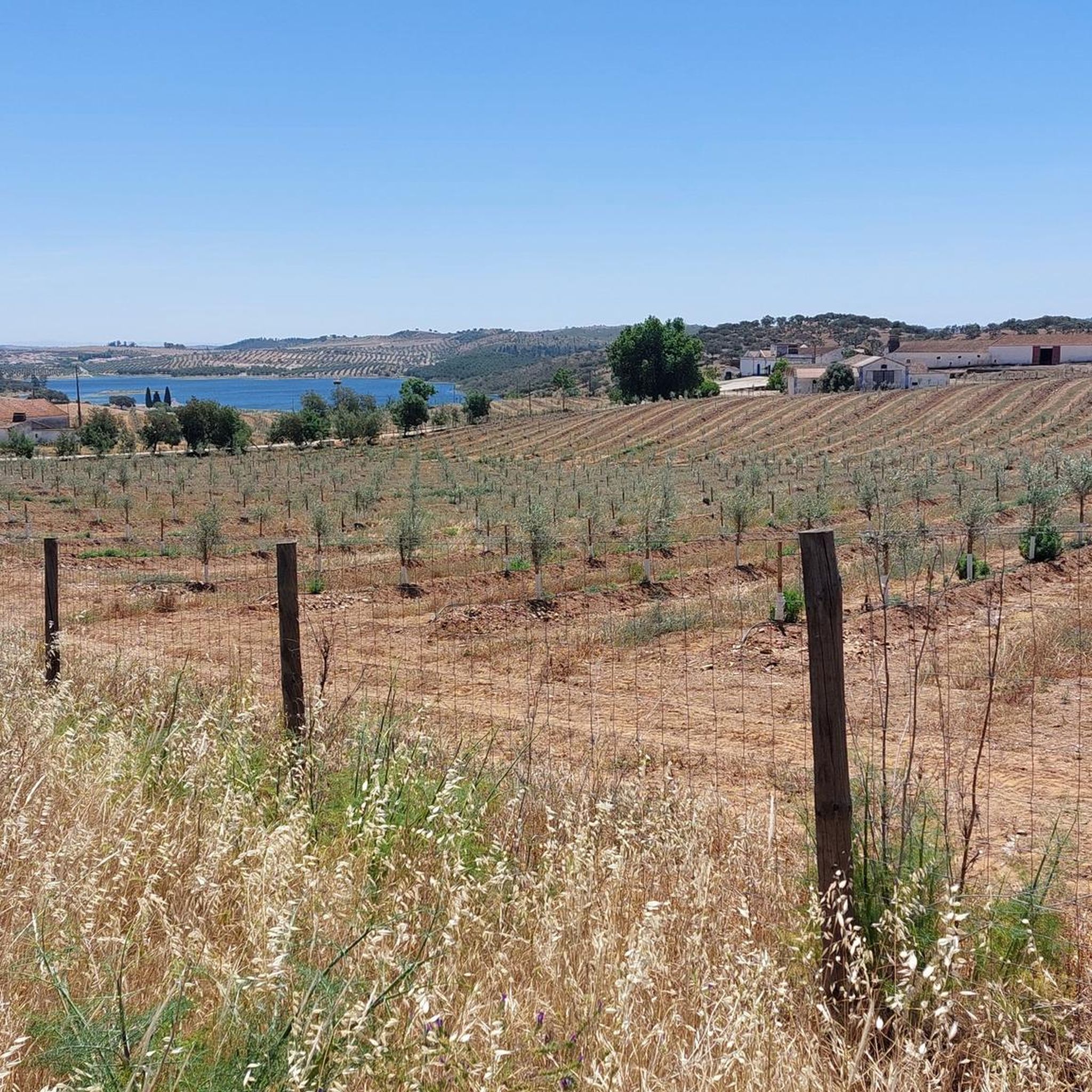
The Alqueva Dam, located in the heart of the Alentejo, is one of Europe’s largest dams. Constructed on the Guadiana River and completed in 2002, it creates the Alqueva Reservoir, Western Europe’s largest artificial lake. The dam plays a crucial role in regional irrigation, water supply, and hydroelectric power generation. Additionally, it supports local tourism and wildlife habitats and exemplifies a completely transformational engineering achievement.
4
0
The origins of the founding of the Church-Monastery of Vera Cruz de Marmelar are quite remote, since the current temple was built on previous foundations. The parish of Vera Cruz, previously called Marmelar or at least known as the place of S. Pedro de Marmelar in documents from the 13th century, is a very old and historic town, and this Monument has accompanied its steps over the centuries. According to various studies, a previous Visigothic or Mozarabic temple existed before this construction, of which there are still remains. In 1240, the knights of the Order of the Hospitallers founded the village and promoted the conversion of the Christian building into a monastery. The structure of the temple that has survived to this day generally dates from the Gothic period, although it underwent later works, particularly in the 17th century. The Church of Vera Cruz de Marmelar also went down in history for holding an important relic: a part of the cross on which Jesus Christ was allegedly crucified, the famous relic of the Holy Wood, probably collected in the Battle of Salado, thus making Marmelar one of the four temples in the kingdom where the memory of this glorious battle was evoked (Évora Cathedral, Lisbon Cathedral and Santiago do Cacém Parish Church).
4
0


It seems like an endless stretch over the reservoir. If you look to one side you have impressive views and if you look to the other…they are even better! Absolutely recommended.
8
0

Of the profane monuments in Vidigueira, the Torre do Relógio is one of the most interesting, not so much because of the tower itself, but whose construction date we ignore, as we did not find any reference to it that would elucidate us, but because of the bell it houses, commissioned by by Vasco da Gama in 1520, as stated in the inscription that reads: This bell ordered Mr. Count Dom Vasco Admiral of India. During the restoration work, the hands that had never been on the clock were placed on the clock, so that Vidigueirão residents can not only hear the familiar sound of its bells, but also know the time whenever they look at it. The tower is a quadrangular building, with a guard at the top, to which you can go up by a spiral staircase, with brick railings and ornaments in each corner, and in the middle, as a finishing touch, a guardhouse or spire, which houses the bell already mentioned and opens on each side by a look with an arch all the way around. in https://www.freguesiavidigueira.pt/index.php/patrimonio/torre-do-relogio accessed on 6/8/2023.
3
0

Road crossing the lake of Alqueva. You feel like you are flying over the lake.
16
0
Frequently Asked Questions
What historical sites can I visit around Vera Cruz?
The region around Vera Cruz offers several historical sites. You can explore the Vera Cruz Church and the Holy Fountain, a very old parish church that once housed fragments of the cross of Christ. Another significant historical monument is the Vidigueira Clock Tower, notable for its bell commissioned by Vasco da Gama in 1520. Additionally, the Vera Cruz de Marmelar church-monastery has ancient origins, with parts dating back to the Gothic period and even earlier Visigothic or Mozarabic foundations.
Are there any family-friendly attractions in Vera Cruz?
Yes, several attractions around Vera Cruz are suitable for families. The Vidigueira Clock Tower and the Vera Cruz Church and the Holy Fountain are both categorized as family-friendly historical sites. Additionally, the View of Alqueva Reservoir offers impressive scenic views that can be enjoyed by all ages.
Where can I find scenic viewpoints or natural features?
For breathtaking natural views, visit the View of Alqueva Reservoir. This viewpoint offers impressive vistas over Western Europe's largest artificial lake, where you can feel like you're flying over the water. It's an endless stretch of water with spectacular views on both sides.
What is unique about the Vidigueira Clock Tower?
The Vidigueira Clock Tower is unique because it houses a bell commissioned by Vasco da Gama in 1520. It is a quadrangular building with a guard at the top, accessible by a spiral staircase, offering a glimpse into the region's rich history.
What is the significance of the Vera Cruz Church?
The Vera Cruz Church and the Holy Fountain is a historic parish church that once temporarily housed fragments of the cross of Christ. It is also a former monastery of the Order of Malta, making it a site of significant religious and historical importance.
Are there opportunities for road cycling near these attractions?
Yes, there are several road cycling routes available around Vera Cruz. You can find routes like the 'Restaurant "O Artur" – View of Alqueva Reservoir loop from Portel' or various loops starting from Vidigueira, including one that passes by Alvito Castle. For more details and route options, you can explore the Road Cycling Routes around Vera Cruz guide.
Can I go hiking near Vera Cruz?
Yes, you can find hiking opportunities in the area. For example, there's a highlight called Hike Among Blooming Rockroses, which is an intermediate trail through forests and natural landscapes. This trail allows you to experience the beautiful, sweet-smelling white flowers of the 'Esteva' (Cistus ladanifer) that cover the mountains and valleys in spring.
What is the Alqueva Reservoir known for?
The Alqueva Reservoir, visible from the View of Alqueva Reservoir, is Western Europe’s largest artificial lake. It plays a crucial role in regional irrigation, water supply, and hydroelectric power generation, and is also a significant site for local tourism and wildlife habitats.
What can I expect to see at Vera Cruz de Marmelar?
At Vera Cruz de Marmelar, you can explore a very old and historic church-monastery. The current temple has foundations that date back to previous Visigothic or Mozarabic structures, with the main building generally from the Gothic period. It is also historically significant for having held a part of the cross on which Jesus Christ was allegedly crucified.
What do visitors enjoy most about the attractions around Vera Cruz?
Visitors particularly enjoy the impressive and endless views over the Alqueva Reservoir, often describing it as feeling like flying over the lake. The historical significance of sites like the Vera Cruz Church, with its fragments of the cross, and the Vidigueira Clock Tower, with its Vasco da Gama-commissioned bell, also captivate visitors. The natural beauty of the blooming rockroses on hiking trails is also a highlight for those exploring the outdoors.
Most popular routes around Vera Cruz

Get inspired with the komoot mobile app


Explore more
Still not found the Highlight you’re looking for? See guides of the top attractions in other regions:
