The best road cycling routes around Almeida
5.0
(1)
118
riders
23
rides
Road cycling routes around Almeida offer a diverse landscape, characterized by varied terrain ranging from flat plains to rugged granite slopes. The region features deep river valleys, such as the Côa, and routes that often approach or cross rivers like the Tourões and Aguiar. Cyclists can expect a mix of paved surfaces and quiet roads, often passing through historical villages and past significant landmarks like the Almeida Fortress.
Best road cycling routes around Almeida
- The most popular road cycling route…
Last updated: July 2, 2026
2
riders
Moderate road ride. Good fitness required. Mostly well-paved surfaces and easy to ride.
1
riders
Moderate road ride. Good fitness required. Mostly well-paved surfaces and easy to ride.

Sign up for free
13
riders
79.5km
04:13
1,210m
1,210m
Hard road ride. Very good fitness required. Some segments of this route may be unpaved and difficult to ride.
11
riders
75.7km
03:44
1,120m
1,120m
Hard road ride. Very good fitness required. Some segments of this route may be unpaved and difficult to ride.
12
riders
47.1km
02:07
480m
480m
Moderate road ride. Good fitness required. Mostly well-paved surfaces and easy to ride.
Get access to more routes and recommendations from other explorers.
Sign up for free
Already have an account?
Our route recommendations are based on thousands of hikes, rides, and runs completed by other people on komoot.
Start today with a free account
Your next adventure awaits.
Login or Signup


Tips from the Community

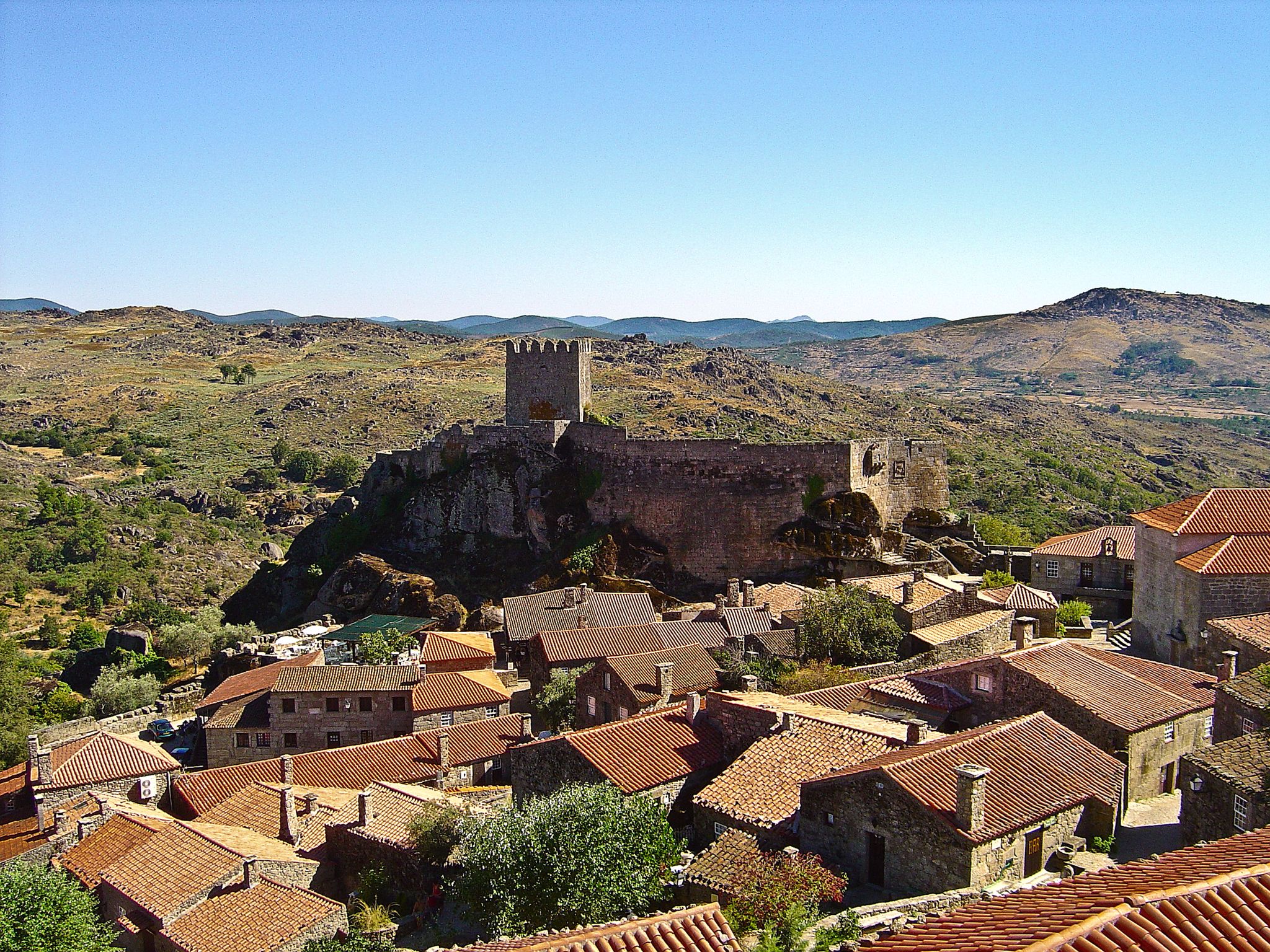
Castelo Rodrigo holds millennia of history, from Paleolithic and Roman remains to the Muslim presence in the castle. Conquered and reconquered between the 12th and 13th centuries, it became a town and municipality under King Alfonso IX of León and passed definitively to Portugal in 1297, when King Dinis rebuilt and repopulated the castle. Marked by wars, charters, and restorations, it welcomed pilgrims on their way to Santiago and remains today one of the twelve Historic Villages of Portugal.
3
0
At the entrance to Castelo Rodrigo, the Monastery of Santa Maria de Aguiar rises among chestnut trees, founded in 1174 by King Afonso Henriques and handed over to the Cistercian Order. From the sober church to the monks' quarters and the guesthouse loggia with its 1704 coat of arms, everything testifies to centuries of faith and hospitality for pilgrims to Santiago. Despite the damage caused by the French invasions and its abandonment in 1834, the monastery's former beauty remains intact.
2
0
Malpartida stands serenely on the border plain, preserving in its main church, with its romantic bell tower, the most visible trace of its memory. But the past here goes far beyond the stones: from the cave tombs of the Nave de Mouros to the ancient watchtower of the Restoration, from the echoes of the Castilian sack of 1762 to the fierce battle against the French in 1808. Even generals left their mark; Ney established his headquarters here, and Brenier boldly escaped the siege of Almeida. Malpartida is, therefore, a land where every stone tells of battles, losses, and exploits.
2
0
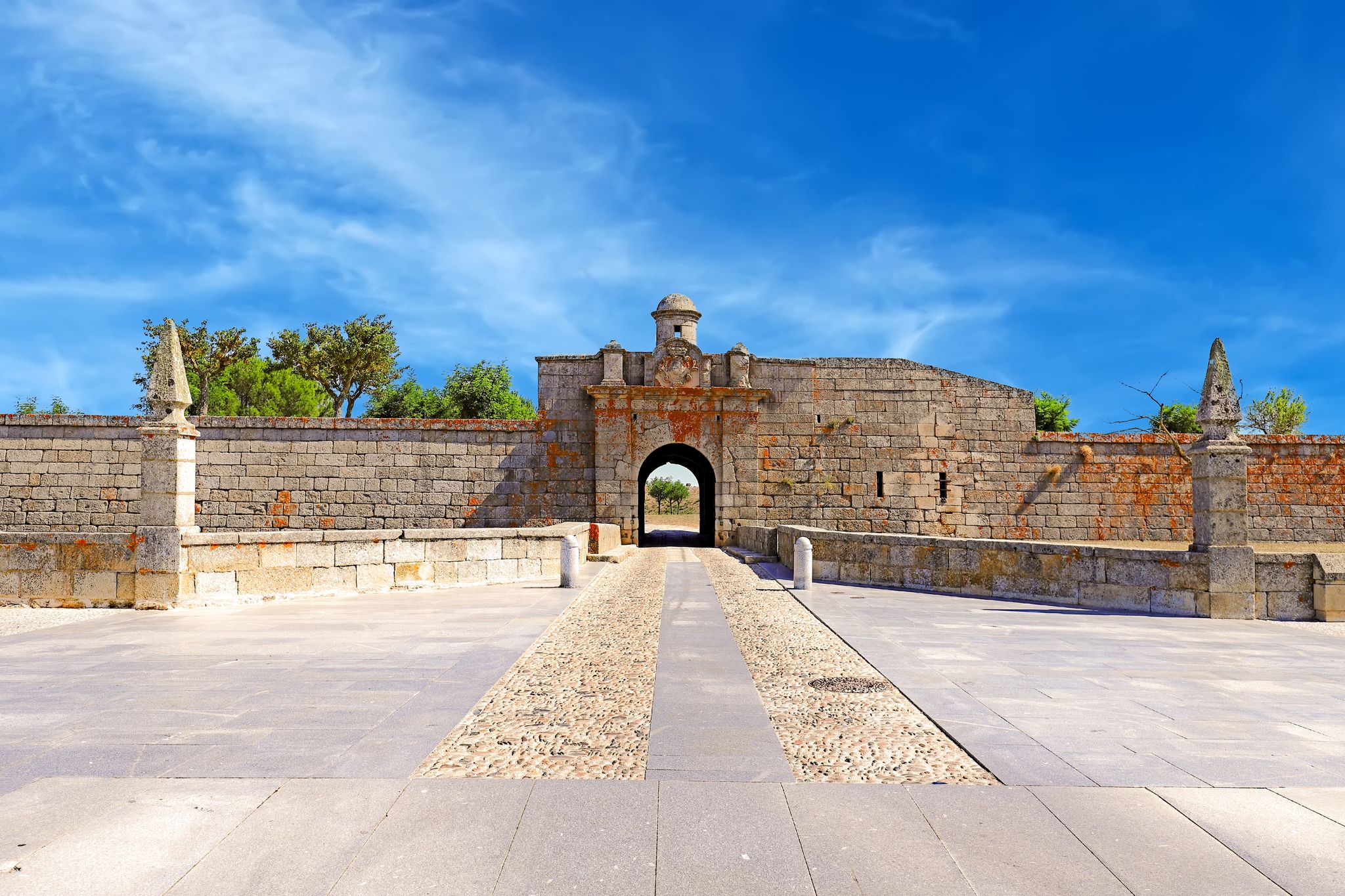
Almeida stands on the plateau like a table set for history: "Al-Mêda" was the name given to it by the Arabs. Previously, it had been a Lusitanian, Roman, and then Christian fort, conquered in 1190 and definitively Portuguese in 1297. Around the medieval castle grew the town, still marked by the Puerta do Sol. After the Restoration, the town transformed into a veritable war machine: the six-pointed star-shaped fortress, with bastions, ravelins, and underground galleries that served as both shelter and prison. It was the scene of decisive battles, devastated by the explosion of 1810 and contested in the liberal wars, always rising from the ruins.
3
0
For centuries, crossing the Côa Valley was only possible via two bridges: the São Roque Bridge and this one, the Ponte Grande, the gateway to Almeida. Built in the 17th century and renovated in the 19th century, the Ponte Grande was forever linked to the Battle of the Côa in 1810, when the Portuguese-British forces resisted the third Napoleonic invasion. Today, the bridge remains a silent guardian of that memory.
3
0
Castelo Rodrigo is a village with a medieval soul, where time has left its deep marks: walls, stone streets and remains of an ancient community of New Christians. Surrounded by magnificent landscapes, from the Douro International Natural Park to the Côa Valley, passing through the Serra da Marofa and the Faia Brava Reserve, this village is an invitation to contemplation and to taste. Here, history is served at the table: Marofa lamb, octopus in migas or rice are flavors that count as much as the books.
2
0

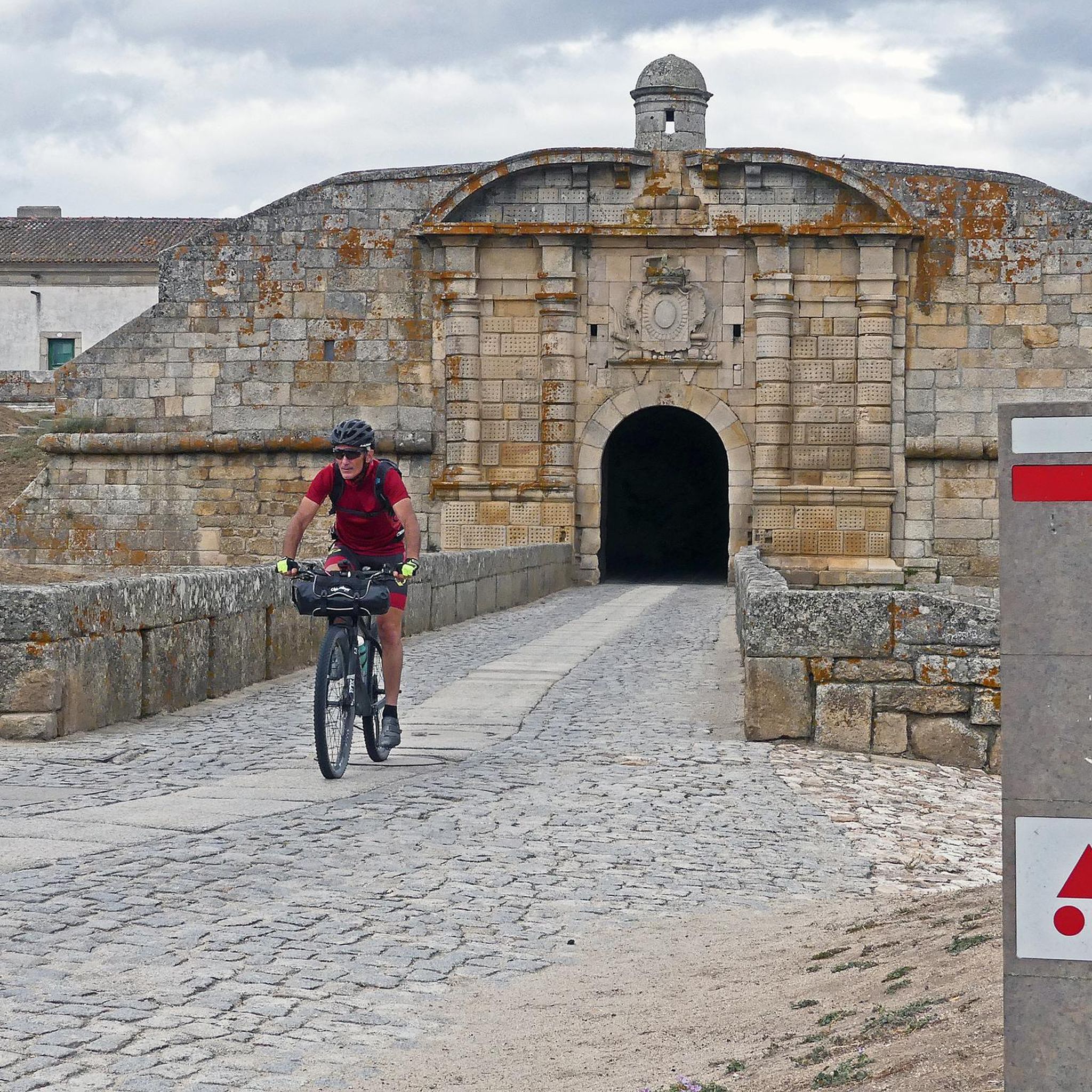
The Almeida Fort, originally founded as a castle in the 12th century, is one of the best-preserved fortifications in Portugal. It played an important role throughout its history, particularly during the Napoleonic Wars. It was heavily damaged during the Siege of Almeida in 1810 but was later rebuilt. The star fort is known for its bastions and deep moats, which were once intended to provide protection against invaders.
3
1

We stopped there for a break during our 2023 Lisbon-Porto-Madrid tour. The historic city with its mighty walls impressed us greatly. Definitely worth a trip. 👌
0
0
Frequently Asked Questions
What kind of terrain can I expect on road cycling routes around Almeida?
Road cycling routes around Almeida offer a diverse landscape, ranging from flat plains to rugged granite slopes. You'll find a mix of paved surfaces and quiet roads, often traversing deep river valleys like the Côa, and approaching or crossing rivers such as the Tourões and Aguiar. The varied geomorphology, natural parks, and protected regions ensure a scenic and engaging ride.
How many road cycling routes are available in the Almeida region?
There are over 20 road cycling routes available in the Almeida region, catering to various skill levels. These routes are highly rated by the komoot community, with an average score of 5.0 stars.
Are there any easy road cycling routes suitable for beginners in Almeida?
While there are no routes specifically classified as 'easy' in the komoot data for Almeida, there are 16 routes rated as 'moderate'. These routes offer a good starting point for those with some cycling experience, allowing you to enjoy the region's beauty without extreme difficulty.
What are some challenging road cycling routes around Almeida?
For experienced cyclists seeking a challenge, Almeida offers 7 routes classified as 'difficult'. An example is the Castelo Rodrigo Village – Almeida Castle loop from Lamegal, which covers 49.4 miles (79.5 km) with significant elevation gain, often completed in about 4 hours 13 minutes.
What historical landmarks or points of interest can I see along the road cycling routes?
Many routes pass through or near significant historical sites. You can cycle around the impressive star-shaped Almeida Castle, explore the Historic Village of Almeida, or visit the Real Fuerte de la Concepción. Routes often connect to other charming Historical Villages of Portugal, such as Castelo Rodrigo, offering a rich historical immersion.
Are there any circular road cycling routes in Almeida?
Yes, many road cycling routes in Almeida are circular. For instance, the Almeida and Puerto Seguro - circular route through the Duero Special Protection Area is a popular 35.6-mile (57.3 km) loop offering scenic views. Another option is the Río Turones, Fuerte de la Concepción e Ponte Romana Malpartida — circular por ele Zona de Proteção Especial do Douro Internacional e Vale do Rio Águeda, a 46.0-mile (74.1 km) loop exploring the Douro Internacional.
What is the best time of year for road cycling in Almeida?
The region's climate makes it suitable for cycling for much of the year. Spring and autumn generally offer the most pleasant temperatures for road cycling. Summers can be warm, but early mornings or late afternoons can still provide enjoyable rides. Winters are typically mild, though some routes might be affected by rain.
Are there family-friendly road cycling options in Almeida?
While specific 'family-friendly' classifications are not provided, the region's emphasis on eco-sustainable tourism and low-traffic, scenic roads makes it generally welcoming for families. Moderate routes, particularly those on paved surfaces and away from major roads, could be suitable for families with older children or those comfortable with longer distances. Always check the route details for distance and elevation before setting out.
What kind of natural features and wildlife can I encounter while cycling in Almeida?
The region is rich in natural beauty. You'll cycle through diverse flora including white broom, pine forests, Pyrenean oak, holm oaks, cork oaks, and chestnut trees, especially in the Côa valley. The area is also home to varied avifauna, such as Eurasian griffons nesting in rock formations, red-capped larks, Eurasian golden orioles, and even the elusive Bonelli's eagle, particularly around river gorges.
Are there accommodations or places to stop for refreshments along the routes?
Almeida is part of the 'Historical Villages of Portugal' network, which promotes tourism infrastructure. Many routes connect to or pass through charming villages where you can find local cafes, restaurants, and guesthouses. The tranquil reservoir of the Santa Maria de Aguiar Dam is also a noteworthy stop, offering picnic spots. For more information on cycling-friendly accommodations, you might look for 'Bikotel' options in the region.
How can I find more information about the network of cycle routes in the Historical Villages of Portugal?
The Historical Villages of Portugal actively promote an extensive network of cycle routes. You can find more information about these routes and their commitment to eco-sustainable tourism on their official website: aldeiashistoricasdeportugal.com.
Most popular routes around Almeida
Most popular attractions around Almeida

Get inspired with the komoot mobile app


Explore more
Browse the best Road cycling routes in other regions.
