The best road cycling routes around Castelo Mendo
5.0
(1)
70
riders
18
rides
Road cycling around Castelo Mendo features diverse landscapes, from quiet country roads winding through rolling hills, vineyards, and olive groves, to varied terrain with flat sections and challenging ascents. The region is characterized by its proximity to the Côa River Valley, offering a mix of rugged granite slopes and expansive plateaus. Cyclists can explore a network of routes that combine paved roads with occasional climbs, passing through areas of grain fields, low broom undergrowth, and historic villages. The landscape is…
Last updated: June 28, 2026
16
riders
89.2km
03:55
770m
770m
Moderate road ride. Good fitness required. Mostly well-paved surfaces and easy to ride.
5.0
(1)
9
riders
51.7km
02:39
690m
690m
Moderate road ride. Good fitness required. Some segments of this route may be unpaved and difficult to ride.

Sign up for free
8
riders
Moderate road ride. Good fitness required. Mostly well-paved surfaces and easy to ride.
6
riders
43.5km
02:13
640m
640m
Moderate road ride. Good fitness required. Some segments of this route may be unpaved and difficult to ride.
5
riders
58.9km
02:58
840m
840m
Moderate road ride. Good fitness required. Mostly well-paved surfaces and easy to ride.
Get access to more routes and recommendations from other explorers.
Sign up for free
Already have an account?
Our route recommendations are based on thousands of hikes, rides, and runs completed by other people on komoot.
Start today with a free account
Your next adventure awaits.
Login or Signup
Popular around Castelo Mendo
Other adventures around Castelo Mendo

Tips from the Community

The Alcázar Gate in Ciudad Rodrigo is one of the historic entrances to the city walls and has great heritage and scenic value. It was opened in 1507 by Antonio del Águila, warden of the Alcázar, when he built the defensive barrier in that area. It is located next to the Castle of Henry II of Trastámara, in the section of the wall facing the Águeda River, known as the Battery, due to the cannons that were once installed there.
4
0

Almeida stands on the plateau like a table set for history: "Al-Mêda" was the name given to it by the Arabs. Previously, it had been a Lusitanian, Roman, and then Christian fort, conquered in 1190 and definitively Portuguese in 1297. Around the medieval castle grew the town, still marked by the Puerta do Sol. After the Restoration, the town transformed into a veritable war machine: the six-pointed star-shaped fortress, with bastions, ravelins, and underground galleries that served as both shelter and prison. It was the scene of decisive battles, devastated by the explosion of 1810 and contested in the liberal wars, always rising from the ruins.
3
0
For centuries, crossing the Côa Valley was only possible via two bridges: the São Roque Bridge and this one, the Ponte Grande, the gateway to Almeida. Built in the 17th century and renovated in the 19th century, the Ponte Grande was forever linked to the Battle of the Côa in 1810, when the Portuguese-British forces resisted the third Napoleonic invasion. Today, the bridge remains a silent guardian of that memory.
3
0
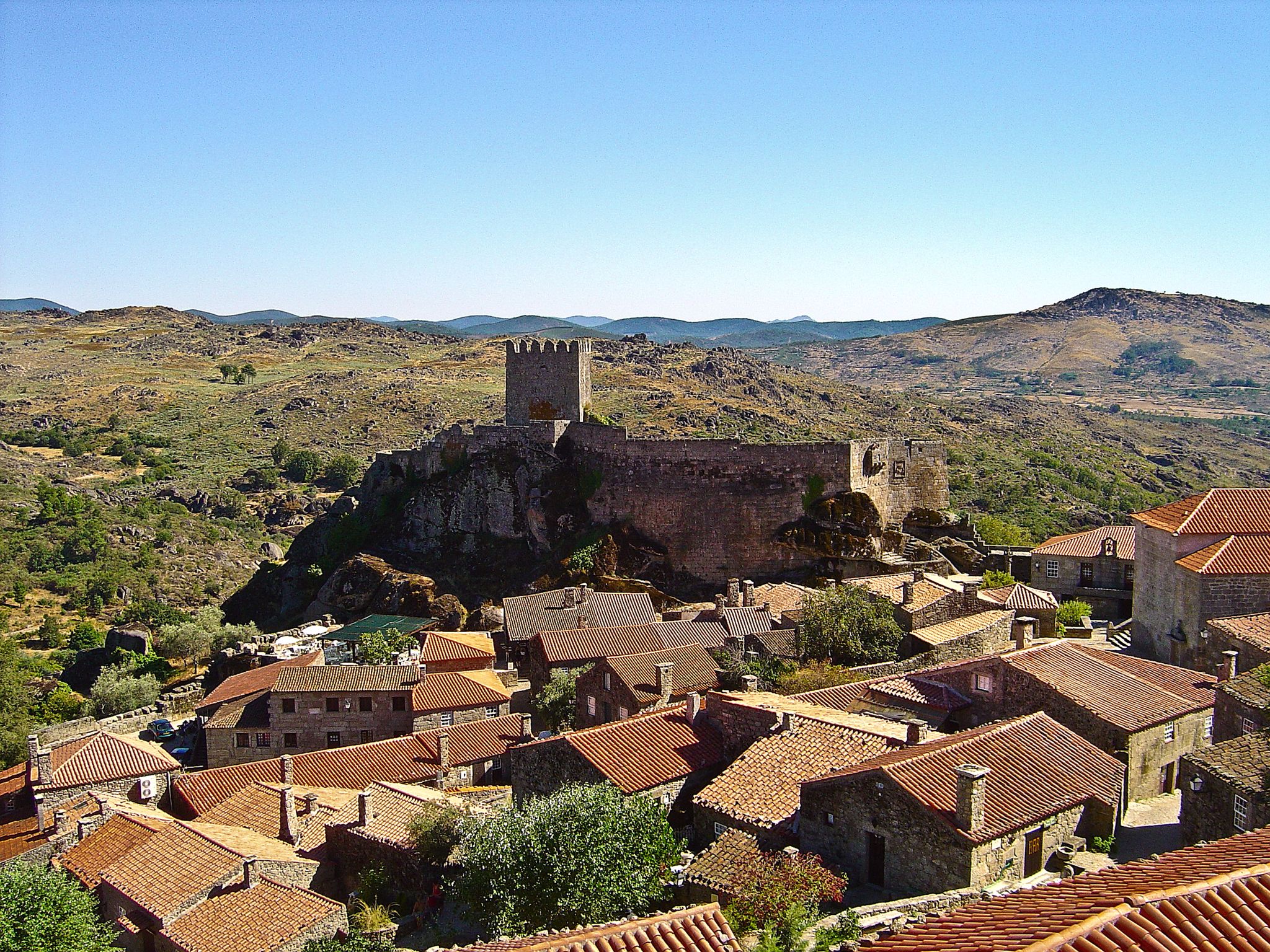
Castelo Mendo is a historic village with medieval roots, marked by two walls: the oldest, dating from the 12th century, surrounds the old town with its castle and the church of Santa Maria; the second, built by King Dinis in the 14th century, protected the Gothic suburb. The site was a living border between Portugal and León until the Treaty of Alcanices (1297), guarding strategic passages over the Côa River. At the entrance, two Vetón bellows, stone figures in the shape of wild boars, recall even more remote origins. Classified as a Property of Public Interest since 1984, Castelo Mendo today stands as a rare testament to the border region's history and Portuguese medieval splendor.
2
0
Freineda, a small border village, welcomed Lord Wellington between late 1812 and the spring of 1813, during the Peninsular War. In a stone house next to the church, the general established his headquarters, while the rest of the general staff dispersed to neighboring villages. Although described at the time as poverty-stricken, the village became the scene of major military decisions. Today, it remains modest and small, but keeps the memory of that time alive: on the facade of the house where Wellington lived, a plaque commemorates his visit.
2
0
Malhada Sorda, a name evoking ancient sheepfolds and shepherds' huts, was born from the transhumance of cattle across the border. In the heart of the village stands the Church of São Miguel, dating from the late 16th century, flanked by a bell tower that once served as a prison and whose bells still echo manually during processions. Another landmark is the so-called Esnoga or Clock House, a recently restored 17th-century building, which popular tradition suggests may have been a secret synagogue.
2
0

The Almeida Fort, originally founded as a castle in the 12th century, is one of the best-preserved fortifications in Portugal. It played an important role throughout its history, particularly during the Napoleonic Wars. It was heavily damaged during the Siege of Almeida in 1810 but was later rebuilt. The star fort is known for its bastions and deep moats, which were once intended to provide protection against invaders.
3
1
Castelo Mendo is surrounded by a fortified wall with six medieval gates. Two wild boar sculptures stand to the left and right of the main entrance. The simple stone houses originally consisted of two floors. The ground floor housed livestock, while the upper floor served as a residential building. The extremely narrow streets made it relatively easy to defend the town, which was repeatedly a battlefield during the wars in which Portugal participated, especially against Spain.
2
2
Frequently Asked Questions
How many road cycling routes are available around Castelo Mendo?
There are over 15 road cycling routes around Castelo Mendo, offering a variety of experiences. These include 5 easy routes, 7 moderate routes, and 3 more challenging options, catering to different skill levels.
What kind of terrain can I expect on road cycling routes near Castelo Mendo?
The region around Castelo Mendo offers diverse terrain for road cyclists. You can expect quiet country roads winding through rolling hills, vineyards, and olive groves. Routes feature varied landscapes, from flat sections to undulating paths and challenging ascents, including some steep, cobbled roads. The area is known for its often car-free environment, especially along the Côa River Valley.
What landmarks and historical sites can I see along road cycling routes in Castelo Mendo?
Road cycling routes in Castelo Mendo offer access to rich historical sites. You can explore the Castelo Mendo Historic Village itself, with its medieval castle and ancient walls. Other routes might lead you past the Old Bridge Over the Côa River, or through historic settlements like Vilar Formoso and Freineda. The region is also part of the Grande Rota das Aldeias Históricas, connecting many of Portugal's historic villages.
Are there scenic viewpoints or natural features to enjoy while cycling?
Absolutely. The region is rich in natural beauty. You'll find routes with panoramic views of the Côa River Valley, which transitions from tranquil beginnings to dramatic, deeper sections. The Castelo Mendo Historic Village itself, perched at 762 meters, offers expansive views of surrounding fields and mountain ranges. The nearby Serra da Malcata Nature Reserve and Faia Brava Reserve also contribute to the scenic beauty and biodiversity of the area.
Are there easy road cycling routes suitable for beginners in Castelo Mendo?
Yes, there are several easy road cycling routes perfect for beginners. For example, the Vilar Formoso – Freineda loop from Vilar Formoso is an easy 27.5 km (17.1 miles) route with minimal elevation gain. Another accessible option is the Vilar Formoso – Rooster of Vale da Mula loop from Vilar Formoso, which covers 33.2 km (20.6 miles) and is also rated as easy.
Are there challenging road cycling routes for experienced cyclists?
Yes, experienced cyclists will find challenging routes with significant elevation gain. The region's varied terrain includes undulating landscapes and demanding ascents. While specific 'difficult' routes are available, even moderate routes like the Fortress of Almeida – Almeida Castle loop from Fuentes de Oñoro, with over 700 meters of elevation gain over 54.8 km (34.0 miles), offer a good workout. Some sections of the Grande Rota do Côa, while mixed-surface, can also present challenging climbs.
Can I find circular road cycling routes around Castelo Mendo?
Yes, many of the road cycling routes in the Castelo Mendo area are designed as loops, allowing you to start and end in the same location. Popular examples include the Fortress of Almeida – Almeida Castle loop from Castelo de Castelo Mendo and the Castelo Mendo Historic Village – Vilar Formoso loop from Vilar Formoso. These circular routes are ideal for exploring the region without needing to retrace your path.
What is the best time of year for road cycling in Castelo Mendo?
The best time for road cycling in Castelo Mendo is generally during the spring (April to June) and autumn (September to October). During these seasons, the weather is typically milder and more pleasant, avoiding the intense heat of summer and the colder, potentially wetter conditions of winter. This allows for comfortable exploration of the region's diverse landscapes and historical sites.
Is there parking available for cyclists in Castelo Mendo?
Yes, parking is generally available in and around Castelo Mendo village, particularly in designated areas for visitors. As a historic village and a hub for outdoor activities, there are facilities to accommodate tourists, including those arriving by car with bikes. It's advisable to check local signage upon arrival for the most convenient parking spots.
Can I access road cycling routes in Castelo Mendo using public transport?
While Castelo Mendo is a historic village, direct public transport options for cyclists bringing bikes might be limited. The nearest larger town, Vilar Formoso, is a key point on some routes and has a train station, which might offer more options for transporting bikes. However, for flexibility and direct access to trailheads, driving to the area is often the most convenient method for cyclists.
Are there any family-friendly road cycling options in the area?
For families, the region offers easier, less challenging road cycling routes with flatter sections. While dedicated paved paths specifically for families might be limited, routes rated as 'easy' with lower elevation gain, such as the Vilar Formoso – Freineda loop from Vilar Formoso, can be suitable. These routes often follow quiet country roads, providing a safer and more enjoyable experience for all ages.
What amenities are available for cyclists in Castelo Mendo, such as cafes or bike repair?
Castelo Mendo, as one of Portugal's Historic Villages, offers basic amenities for visitors, including local cafes and restaurants where cyclists can refuel. While dedicated bike repair shops might be found in larger nearby towns, the village itself provides essential services. It's always a good idea to carry a basic repair kit for minor issues when cycling in more remote areas.
What do other road cyclists enjoy the most about road cycling in Castelo Mendo?
The area is highly rated by the komoot community, with an average score of 5.0 stars. Road cyclists often praise the region's diverse landscapes, the quiet and often car-free roads, and the opportunity to combine cycling with exploring rich historical sites like the Castelo Mendo Historic Village and the Côa River Valley. The varied terrain, from rolling hills to challenging ascents, also contributes to a rewarding experience.
Most popular attractions around Castelo Mendo

Get inspired with the komoot mobile app


Explore more
Browse the best Road cycling routes in other regions.
