The best road cycling routes around Vilar Maior
25
riders
11
rides
Road cycling routes around Vilar Maior navigate a region characterized by a blend of historical context and diverse landscapes. The area features quiet secondary roads, deep valleys, and open plateaus, with the Cesarão River flowing through. Proximity to the Serra da Estrela Natural Park offers demanding and varied terrain, including granite crags and rugged peaks. The region's topography provides a mix of undulating roads and challenging mountain passes suitable for road cycling.
Best road cycling routes around Vilar Maior
- The…
Last updated: May 16, 2026
5
riders
59.6km
02:56
770m
770m
Moderate road ride. Good fitness required. Mostly well-paved surfaces and easy to ride.
3
riders
67.1km
03:23
930m
930m
Hard road ride. Very good fitness required. Some segments of this route may be unpaved and difficult to ride.

Sign up for free
3
riders
Moderate road ride. Good fitness required. Some segments of this route may be unpaved and difficult to ride.
4
riders
28.2km
01:19
330m
330m
Moderate road ride. Good fitness required. Mostly well-paved surfaces and easy to ride.
2
riders
57.6km
03:05
940m
940m
Hard road ride. Very good fitness required. Some segments of this route may be unpaved and difficult to ride.
Get access to more routes and recommendations from other explorers.
Sign up for free
Already have an account?
Our route recommendations are based on thousands of hikes, rides, and runs completed by other people on komoot.
Start today with a free account
Your next adventure awaits.
Login or Signup
Popular around Vilar Maior
Other adventures around Vilar Maior

Tips from the Community

Sabugal Castle is one of the most imposing and well-preserved medieval fortifications in Portugal. It is known as the "Castle of the Five Corners" due to the unusual shape of its impressive pentagonal keep, the castle's most iconic feature. Its pentagonal (five-cornered) plan is considered unique in Portuguese military architecture. It is approximately 30 meters high and offers incredible views. The castle has a double ring of walls. You can walk along the ramparts on top of the walls for a panoramic view over the city and the Côa River. From the top, you can see the Côa River winding its way through the city and the natural landscape of the Serra da Malcata mountain range.
0
0
Sabugal, a town that deserves a visit to its castle and the entire surrounding area, especially the magnificent river beach on the Côa River.
0
0

Freineda, a small border village, welcomed Lord Wellington between late 1812 and the spring of 1813, during the Peninsular War. In a stone house next to the church, the general established his headquarters, while the rest of the general staff dispersed to neighboring villages. Although described at the time as poverty-stricken, the village became the scene of major military decisions. Today, it remains modest and small, but keeps the memory of that time alive: on the facade of the house where Wellington lived, a plaque commemorates his visit.
1
0
Malhada Sorda, a name evoking ancient sheepfolds and shepherds' huts, was born from the transhumance of cattle across the border. In the heart of the village stands the Church of São Miguel, dating from the late 16th century, flanked by a bell tower that once served as a prison and whose bells still echo manually during processions. Another landmark is the so-called Esnoga or Clock House, a recently restored 17th-century building, which popular tradition suggests may have been a secret synagogue.
1
0
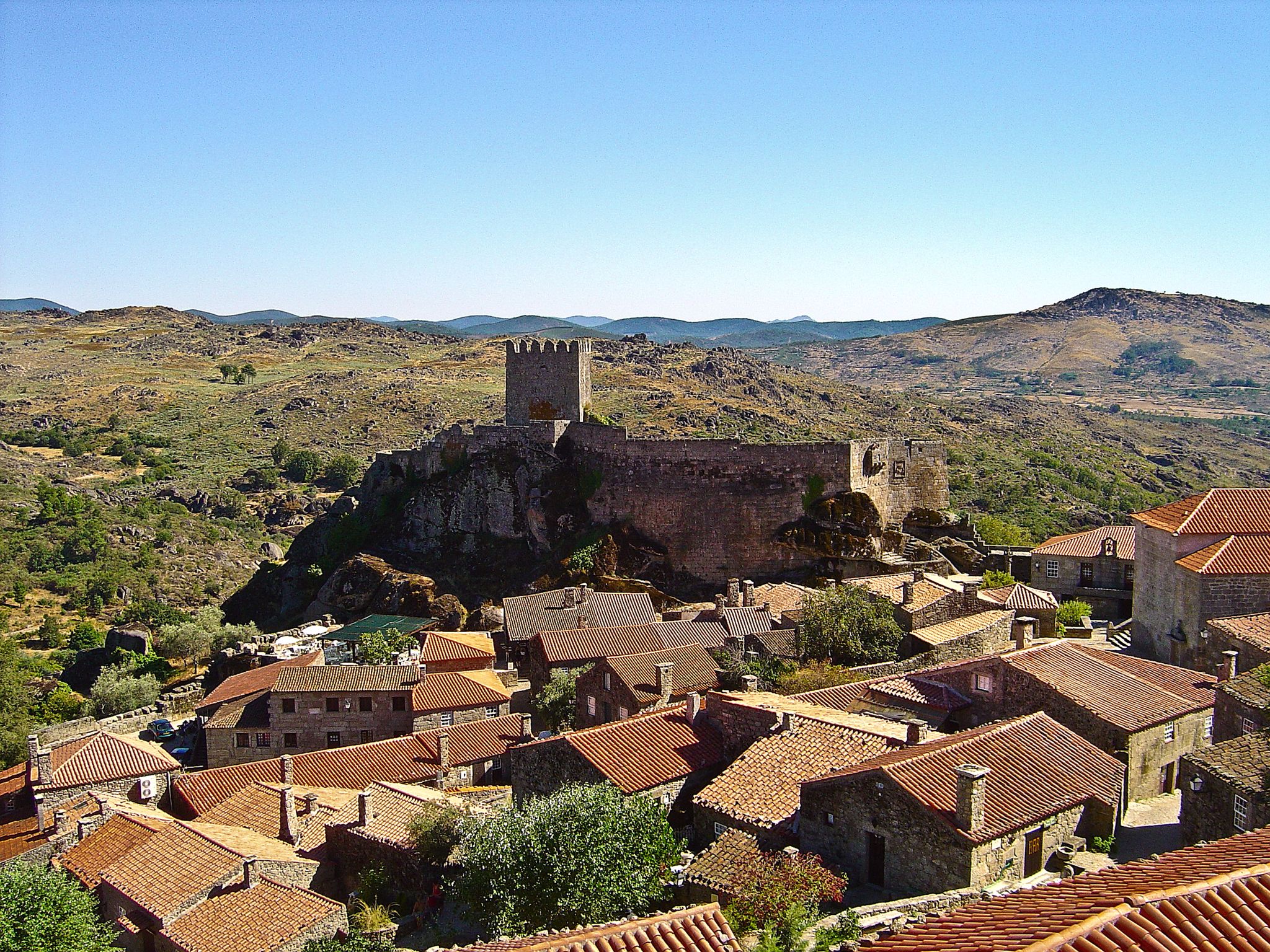
Vilar Maior breathes history in every stone. From the 11th century until the Treaty of Alcanices in 1297, it passed from the Kingdom of León to Portugal under King Dinis, who reinforced the castle with the keep. Between medieval walls, the ruins of the Church of Santa Maria, the Manueline pillory, and prehistoric engravings, the place holds centuries of memory. Today, the streets descend from the old fortress to the plain, where manor houses, bridges, and churches continue to tell the long story of this border town.
2
0
Alfaiates holds centuries of history intertwined with the very formation of Portugal. Its castle, once called Castillo de la Luna (Moon Castle) because it seemed to touch the sky, was built in the 13th century and passed to Portuguese territory by the Treaty of Alcañices in 1297. Between charters, royal alliances, and battles, it was the scene of moments of glory and strategic defense, even withstanding the French invasions. Today, amid crumbling walls and living traditions like the capeia arraiana (a bullfight in which the bull is faced by 20 or 30 men who hold off its charges with a huge pitchfork), Alfaiates continues to reveal the charm of its legendary memory.
2
0
Soito, also called Souto, is now a village, a title it acquired in 1999. The name comes from the chestnut trees that once graced the local landscape. As early as 1527, according to the Royal Register, this was the most important center of the municipality, with 160 residents.
1
0
Among the secret corners of Portugal, the Côa River is a discreet treasure. It rises in Fóios and flows through valleys and hills until it joins the Douro River in Vila Nova de Foz Côa. Even here, where it flows gently and seems like just a trickle, the valley reveals all its magic. It's the ideal place to rest for a moment, cool your feet, and let yourself be enveloped by the river's serenity before resuming your journey.
1
0
Frequently Asked Questions
What is the typical terrain and difficulty for road cycling around Vilar Maior?
The Vilar Maior region offers a diverse road cycling landscape. You'll encounter quiet secondary roads, deep valleys, and open plateaus. Proximity to the Serra da Estrela Natural Park means some routes feature demanding and varied terrain, including granite crags and rugged peaks, providing a mix of undulating roads and challenging mountain passes. Routes range from moderate, like the Alfaiates – Bridge over the Côa River loop from Alfaiates, to difficult, such as the Freineda – Vila Maior loop from Praia fluvial de Vale das Éguas.
How many road cycling routes are available in the Vilar Maior area?
There are over 10 road cycling routes documented on komoot for the Vilar Maior region. These routes offer a variety of distances and elevation profiles, catering to different fitness levels and preferences.
Are there road cycling routes suitable for beginners in Vilar Maior?
While many routes in the Vilar Maior region feature moderate to difficult terrain, there are options that can be suitable for beginners or those looking for less strenuous rides. The guide includes one route classified as easy, and several moderate routes, such as the Bridge over the Côa River – Soito loop from Praia fluvial de Vale das Éguas, which covers 46.2 km with a manageable elevation gain.
Where can I find challenging road cycling routes in the Vilar Maior region?
For advanced road cyclists seeking a challenge, the Vilar Maior region, particularly its proximity to Serra da Estrela, offers demanding routes with significant elevation changes. An example of a difficult route is the Bridge over the Côa River – Cabeço Queimado loop from Miuzela, which features nearly 940 meters of ascent over 57.5 km. These routes often include long, steady climbs and offer a world-class mountain cycling experience.
What historical landmarks and scenic viewpoints can I explore while road cycling near Vilar Maior?
Road cycling around Vilar Maior allows you to immerse yourself in rich history and stunning scenery. You can cycle through Vilar Maior itself, one of the 'Historical Villages of Portugal,' and explore its well-preserved castle. Other notable attractions in the vicinity include the Castelo Mendo Historic Village and the charming settlement of Freineda. Many routes also offer panoramic views of the Côa River valley and the rugged peaks of Serra da Estrela.
Are there family-friendly road cycling options around Vilar Maior?
While the region is known for its challenging terrain, families can find suitable road cycling options by choosing shorter, moderate routes with less elevation gain. The quiet secondary roads connecting historical villages offer a safer and more enjoyable experience for families. It's advisable to check the elevation profile of specific routes, such as the Alfaiates – Aldeia da Ponte Stream loop from Alfaiates, to ensure they match your family's comfort level.
What do other road cyclists enjoy most about road cycling in Vilar Maior?
Road cyclists using komoot often praise the Vilar Maior region for its unique blend of historical charm and diverse natural landscapes. The opportunity to cycle through medieval villages, explore ancient structures, and experience the varied terrain—from undulating roads to challenging mountain passes—is frequently highlighted. The quiet roads and stunning scenery, including the Cesarão River and views towards Serra da Estrela, also contribute to a highly authentic and rewarding cycling experience.
Can I find circular road cycling routes starting from Vilar Maior?
Yes, many of the road cycling routes in the Vilar Maior area are designed as loops, allowing you to start and finish in the same location. For example, the Alfaiates – Bridge over the Côa River loop from Alfaiates is a popular circular route that takes you through varied landscapes and back to your starting point.
What is the best time of year for road cycling in Vilar Maior?
The region around Vilar Maior and Serra da Estrela offers cycling opportunities throughout the seasons. However, spring and autumn generally provide the most pleasant weather conditions for road cycling, with milder temperatures and beautiful scenery. Summer can be warm, especially in the valleys, while winter can bring colder temperatures and potentially snow at higher elevations in Serra da Estrela, making it more challenging.
Are there any specific long-distance cycling routes that pass through Vilar Maior?
Vilar Maior is integrated into the 'Grande Rota of the Historical Villages of Portugal' (GR22), a significant long-distance route. This route links all 12 historical villages across nearly 600 km, offering cyclists an extensive journey through diverse cultural and natural landscapes. While the GR22 is often recommended for e-bikes due to its elevation, it provides an excellent framework for multi-day road cycling adventures. You can find more information about this route on the Historical Villages of Portugal website.
What kind of natural features will I encounter on road cycling routes near Vilar Maior?
The region boasts a rich diversity of natural features. You'll often ride alongside or near the Cesarão River, an affluent of the Côa River, offering serene natural settings. The area is also close to the Serra da Malcata SIC (Site of Community Importance) and the Natural 2000 Network, highlighting its ecological value. Furthermore, the dramatic landscapes of the Serra da Estrela Natural Park, with its granite crags and rugged peaks, provide a spectacular backdrop for many routes.
Most popular attractions around Vilar Maior

Get inspired with the komoot mobile app


Explore more
Browse the best Road cycling routes in other regions.
