Attractions and Places To See around Coz - Top 20
Best attractions and places to see around Coz include a diverse range of natural phenomena, historical sites, and cultural monuments in Portugal. This region is particularly known for its dramatic coastal landscapes and significant architectural heritage. Visitors can explore ancient monasteries, witness impressive ocean waves, and discover unique local landmarks. The area offers a blend of natural beauty and rich history for exploration.
Best attractions and places to see around Coz
- The most popular attractions is Alcobaça Monastery, a…
Last updated: July 1, 2026
Nazaré — Giant Waves
Highlight • Beach
Translated by Google •
Tip by

Praia do Norte Cliffs
Highlight • Beach
Translated by Google •
Tip by
Sign up now to discover places like this
Get recommendations on the best single tracks, peaks, & plenty of other exciting outdoor places.
Sign up for free
Vado Statue by Adália Alberto
Highlight • Monument
Translated by Google •
Tip by

Alcobaça Monastery
Highlight • Religious Site
Tip by

Sanctuary of Our Lady of Nazaré
Highlight • Religious Site
Translated by Google •
Tip by

Sign up for free to discover even more attractions around Coz.
Sign up for free
Already have an account?
Start today with a free account
Your next adventure awaits.
Login or Signup

Tips from the Community

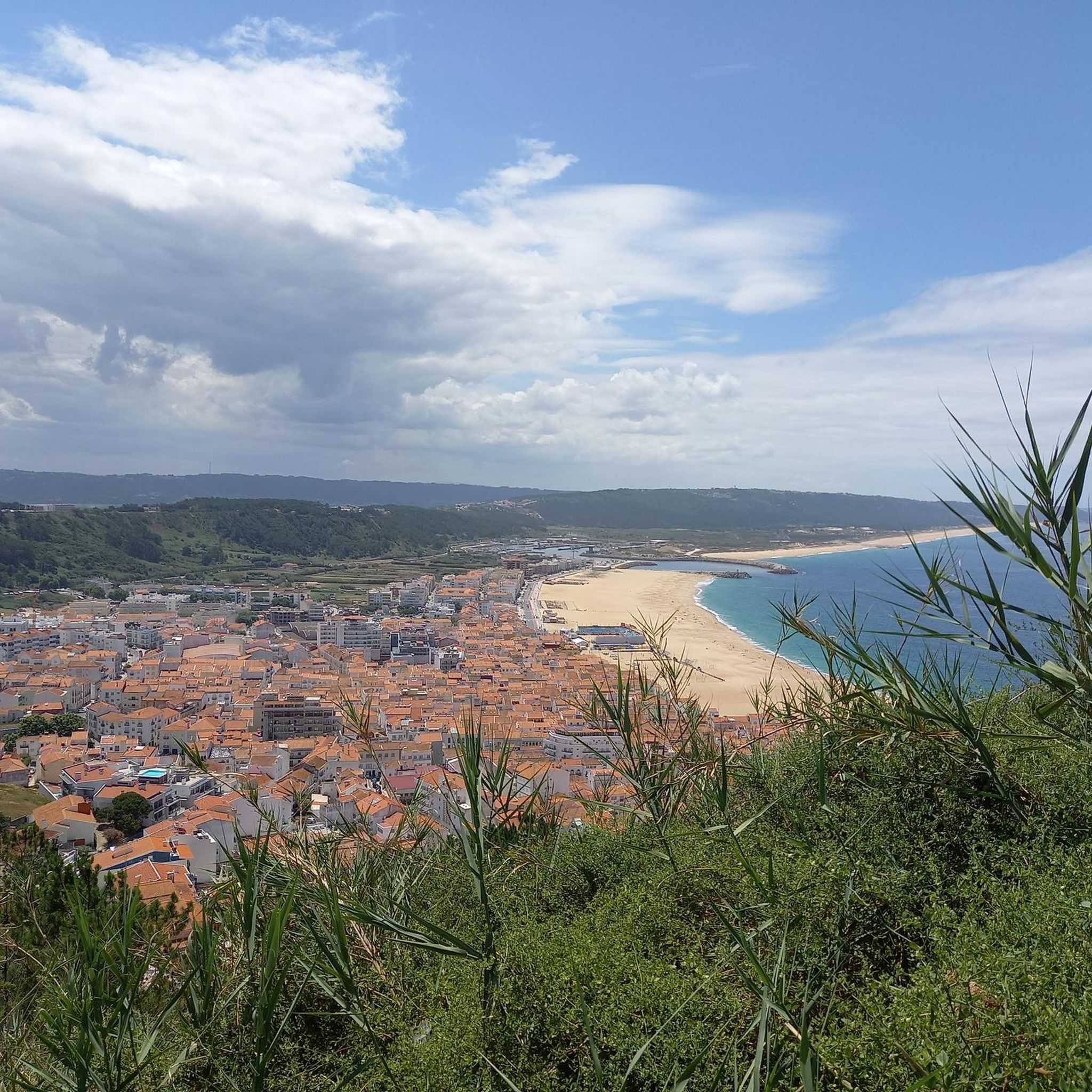
Nazaré refers not only to the city of the same name, Nazaré, but also to a surf spot in Portugal. The waves breaking here are among the largest surfable waves in the world under the right conditions.
2
0

Opening Hours: The sanctuary is open every day, generally from 9 am to 6 pm. It is a place of worship, therefore masses are also held regularly. Price: Entry to the sanctuary is free. Accessibility: It has wheelchair accessible parking. How to Get There: Access to the site can be made by car or by the Nazaré Elevator (funicular), which connects the beach to the upper part of the city and provides a scenic route.
2
0
The Legend: The story of the image is told through the paintings in the church and sacristy, which allude to the miracle that occurred near the cliff. Location: The sanctuary is next to the famous Miradouro do Sítio da Nazaré (or Suberco), which offers a fantastic view of the beach and the village of Nazaré.
2
0
Architecture and History: The church was built on the site where, according to legend, the Virgin Mary saved the knight D. Fuas Roupinho from falling off the cliff. The facade has inscriptions in Latin, including "Deiparae Virgini a Nazareth" ("Virgin of Nazareth, Mother of God"). The interior houses the Sacred Image of the Black Virgin, carved in wood and which, according to tradition, was brought to the site in the year 711.
2
0
The Sanctuary of Our Lady of Nazaré is located in Sítio da Nazaré, the upper part of the town of Nazaré, in Portugal. It is a place of great religious and historical importance, intimately linked to the legend that gave rise to the devotion to Our Lady of Nazaré.
2
0

From the chapter house on the ground floor, a staircase leads up to the dormitory. This staircase was rediscovered during renovations beginning in 1930. Located on the first floor, the dormitory extends 66.5 meters in length and 21.5 to 17.5 meters in width along the entire east side of the medieval part of the abbey, thus covering an area of almost 1,300 square meters. In its current form, restored through renovation, it presents itself in its original medieval state. At the southern end, the dormitory opens with a large round-arched doorway to the northern transept of the church. A staircase formerly led down from there, as the Cistercian rule required two separate entrances to the communal sleeping quarters. At the northern end of the dormitory were the latrines, which—again according to a general rule of the order—had to be separated from the sleeping quarters by a separate room. The wastewater flowed into the abbey's garden on the north side. The monks slept together in the dormitory, fully clothed, separated from their neighbors only by a movable partition. The abbot alone had his own cell, located on the south side facing the church. This arrangement is typical of most Cistercian monasteries of this period. A narrow door in the center of the western side leads to a narrow spiral staircase, which today provides access to the kitchen, but in the Middle Ages led to the calefactory (warming room, see below). This staircase also provided access to the upper cloister. https://de.wikipedia.org/wiki/Kloster_Alcoba%C3%A7a
2
0
The entrance to the chapter house features a particularly striking facade with staggered columns. The chapter house served as the meeting place for the monks and was, after the church, the most important room in the monastery. It bears this name because the chapters of the Rule of St. Benedict were read aloud there daily. Elections and similar communal ceremonies of the monks also took place there. In the entrance area to the chapter house is the gravestone of an abbot whose identity is no longer known. The floor of the chapter house was formerly completely covered with such gravestones, as a Cistercian rule from 1180 stipulated that abbots had to be buried in the chapter house, meaning that the monks made their decisions on the graves of their deceased abbots. This type of burial was a significant exception to the general Cistercian rule, which forbade the burial of monks within the monastery. That's why you'll find a door leading south in the southern transept called the Porta da Morte (Door of Death), because deceased monks were carried out through it for burial. https://de.wikipedia.org/wiki/Kloster_Alcoba%C3%A7a
1
0
To the west of the new kitchen lies the refectory, the dining hall for the monks, a three-aisled hall measuring approximately 620 square meters (29 x 21.5 meters). Above its entrance, in medieval Latin, is the difficult-to-interpret inscription: "respicte quia peccata populi comeditis," meaning: "Remember that you are eating the sins of the people." The room impresses with its beautiful proportions. It has windows facing north and east, overlooking the new kitchen. On the west side, a stone staircase leads to the pulpit of the lector, who read from monastic texts during meals. The monks sat facing the walls and ate their meals in silence. The abbot sat with his back to the north wall, observing the proceedings. At the southern end of the west side, the refectory opens into the former medieval kitchen, now a side room leading to the cloister of the Cathedral of Afonso VI. A few meters further along, another opening can be found in the same wall, two meters high and 32 cm wide. It leads to the aforementioned side room, and there is no scientifically sound explanation for it. A long-standing legend claims that this opening served to monitor the monks' weight. They were supposed to pass through this door once a month, which is only possible by leaning sideways. If they were too heavy, they were put on a diet. The damage caused by the conversion of the refectory into a theater in 1840 (with 301 seats, 120 of which were in the galleries, and 5 boxes) was largely repaired during the restoration. https://de.wikipedia.org/wiki/Kloster_Alcoba%C3%A7a
1
0
Frequently Asked Questions
What types of attractions can I find around Coz?
Around Coz, you can explore a diverse range of attractions, including significant historical sites like the Alcobaça Monastery, natural wonders such as the famous Nazaré — Giant Waves, and unique man-made monuments like the Vado Statue by Adália Alberto. The area offers a blend of cultural heritage and stunning coastal landscapes.
Are there family-friendly attractions in the Coz region?
Yes, several attractions around Coz are suitable for families. The Alcobaça Monastery offers an engaging historical experience for all ages. In Nazaré, families can enjoy the views from the Ferris Wheel at Sítio da Nazaré and visit the nearby Sanctuary of Our Lady of Nazaré. The Vado Statue by Adália Alberto also provides a great viewpoint for families to enjoy the sea.
What historical sites can I visit near Coz?
The most prominent historical site is the Alcobaça Monastery, a UNESCO World Heritage Site established in 1153, known for its impressive architecture, church, and cloister. Additionally, the Sanctuary of Our Lady of Nazaré, located in Sítio da Nazaré, holds significant religious and historical importance, linked to an ancient legend.
Where can I experience impressive natural phenomena around Coz?
For a truly impressive natural spectacle, visit Nazaré — Giant Waves. This beach is world-renowned for its exceptionally high waves, especially during the winter months, attracting surfers and spectators alike. Even 'medium' waves here are considered impressive and beautiful to witness.
Are there opportunities for outdoor activities like hiking or cycling near these attractions?
Yes, the region around Coz offers various outdoor activities. You can find easy hiking trails, such as the 'Swinging above the abyss loop from Nazaré' or the 'Cistercian Arch – Alcobaça Monastery loop from Alcobaça'. For cycling enthusiasts, there are routes like the 'Nazaré road to the top – Atlantic Coast Cycle Path loop' for gravel biking, or the 'Alcobaça Monastery – View of Nazaré Coastline loop' for touring bicycles. You can explore more routes in the easy hikes around Coz guide, the gravel biking around Coz guide, or the cycling around Coz guide.
What do visitors enjoy most about the attractions around Coz?
Visitors particularly appreciate the dramatic natural beauty of the Nazaré — Giant Waves, often describing them as very impressive and a great spectacle. The historical and architectural grandeur of the Alcobaça Monastery is also highly recommended. Many enjoy the wonderful sea views from viewpoints like the Vado Statue by Adália Alberto and the Ferris Wheel at Sítio da Nazaré.
Are there any viewpoints offering panoramic sea views?
Yes, several spots provide excellent sea views. The Vado Statue by Adália Alberto offers a wonderful view of the sea. Additionally, the Sítio da Nazaré, where the Ferris Wheel and Sanctuary of Our Lady of Nazaré are located, is considered the best viewpoint in town, offering expansive vistas of the Atlantic coastline.
What is the best time to visit the outdoor attractions in Coz, especially for the giant waves?
The 'biggest' waves at Nazaré — Giant Waves are typically expected 2-3 times a year during the winter half-year. For general outdoor activities and enjoying the coastal views, the milder seasons like spring and autumn often provide pleasant weather conditions.
Is parking available near the main attractions?
Parking can be found near many attractions, though it might require some luck, especially in popular areas like Sítio da Nazaré. Near the Ferris Wheel at Sítio da Nazaré, there are parking lots, but they can get busy. It's advisable to arrive early or be prepared for a short walk.
Can I find cafes or facilities near hiking trails around Coz?
In popular areas like Nazaré and Alcobaça, you'll find cafes and other facilities. For instance, the large square at Sítio da Nazaré, near the Ferris Wheel and Sanctuary, has numerous shops and cafes. When venturing onto more secluded trails, it's always a good idea to carry your own refreshments.
What is the significance of the Vado Statue in Nazaré?
The Vado Statue by Adália Alberto is a 6-meter high, 10-ton monument that serves as a reminder of a local Nazaré legend. It commemorates the deer that once roamed the area, and it is strategically positioned to look out towards the point in the sea where the largest waves form, connecting the region's past with its present-day surfing fame.
Most popular attractions around Coz

Get inspired with the komoot mobile app


Explore more
Still not found the Highlight you’re looking for? See guides of the top attractions in other regions:
