The best cycling routes around Vilar
93
riders
14
rides
Touring cycling around Vilar offers routes characterized by significant elevation changes and views of the Serra de Montejunto mountain range. The region features a landscape of rolling hills and varied terrain, providing challenging climbs and descents. These routes traverse both open areas and more sheltered paths, suitable for experienced touring cyclists.
Best touring cycling routes around Vilar
- The most popular touring cycling route is Quinta da Abrigada – View of Serra de Montejunto loop from Abrigada, a 28.5 miles…
Last updated: June 24, 2026
14
riders
45.8km
04:01
780m
780m
Hard bike ride. Very good fitness required. Mostly paved surfaces. Suitable for all skill levels.
12
riders
28.2km
02:39
550m
550m
Hard bike ride. Very good fitness required. Mostly paved surfaces. Suitable for all skill levels.

Sign up for free
9
riders
38.9km
03:54
1,030m
1,030m
Hard bike ride. Very good fitness required. You may need to push your bike for some segments of this route.
11
riders
Hard bike ride. Very good fitness required. Mostly paved surfaces. Suitable for all skill levels.
11
riders
36.0km
02:36
710m
710m
Hard bike ride. Very good fitness required. Mostly paved surfaces. Suitable for all skill levels.
Get access to more routes and recommendations from other explorers.
Sign up for free
Already have an account?
Our route recommendations are based on thousands of hikes, rides, and runs completed by other people on komoot.
Start today with a free account
Your next adventure awaits.
Login or Signup

Tips from the Community

Using only the natural power of the wind as the driving force, the heavy millstones are moved, and for example, grain kernels are ground into flour (grain mills) or olives are pressed into oil (oil mills). Miguel de Cervantes (1547 to 1616) also created a literary monument to the ancient tradition of windmills: the most famous character of the author, considered Spain's national poet, whose work can certainly be appreciated as world literature: "Don Quixote," also known as the "Knight of the Sorrowful Countenance." He is always accompanied by his loyal squire Sancho Panza, and in one of the highly imaginatively narrated episodes, he engages in a – naturally hopeless – battle against windmills, in which he believes he recognizes four-armed giants.
0
0

Located on the Atlantic coast of Portugal, in the province of Estremadura and part of the Lisbon Wine Region, Adega Cooperativa de Cadaval was opened in 1969. Currently, the brands sold by Adega Cooperativa de Cadaval are CONFRARIA for top-of-the-range wines, sparkling wines and brandy, ADEGA DA CONFRARIA for mid-range regional wines (still and light), DACEPA and BELACEPA for table wines (popular range).
3
0
At this location at the top of the Serra de Montejunto, also known as "Torre" due to the various antennas that were installed there, is the Chapel of Our Lady of the Snows, which may have been built in the 13th century and remodelled and expanded during the 16th century and later. Inside, the altars covered with 17th century tiles and the altarpiece of the main altar, from the 18th century, stand out. Next to the Chapel of Our Lady of the Snows, are the ruins of what is considered to be the first Dominican Convent in Portugal, built in the 12th century and abandoned after the extinction of the religious orders, and is currently in ruins. Also nearby are the ruins of the Royal Ice Factory, classified as a National Monument. Here, in the 18th century, the Dominican monks took advantage of the climatic and geological conditions and opened large tanks connected by narrow passages, one part for the production of ice and the other for its preparation, storage and conservation. The ice was later transported to Lisbon, to supply the court and the café at Terreiro do Paço, later known as Martinho da Arcada (Fernando Pessoa's Café)
2
0
Agricultural farm located in the town of Abrigada, which was once known as Amieiro because of the trees until the 16th century. The new name Abrigada seems to derive from "A Brigada" due to the presence of brigantes in this area, near the road that runs from Alenquer to Leiria at the end of the 16th century, during the period of the Portuguese wars of succession after the death of Cardinal-King Henry I of Portugal, or because it is an area sheltered from the natural elements of the geographical and climatic zone in which it is located. Source of historical information: Wikipedia
1
0

The "Moinho de Avis" is not only a beautiful sight, the miller, Senhor Miguel Nobre, is using the mill for what it was built for: milling flour! Miguel Nobre was originally a cabinet maker, then specialized in restoring windmills all over Portugal. When he came into possession of the Moinho de Avis (and the one next to it) he was determined to bring it back to life and use it. The milling stones never came in contact with pesticides as the mill had fallen into disrepair before these chemicals were used. He was determined to keep it like this. He is growing and milling mainly ancient Portuguese grains (Preto-Amarello, Barbela and Aveia Selvagem). Following a recipe from his Grandfather he is mixing these grains for his "Mistura de Avó" (Grandfather Mixture). When I visited the last time (May 2024) he was super happy because his "Mistura de Avó" had just been declared national heritage by the United Nations. The mill is usually open for visitors on the weekends.
0
0

Very beautiful location, very good road
0
0

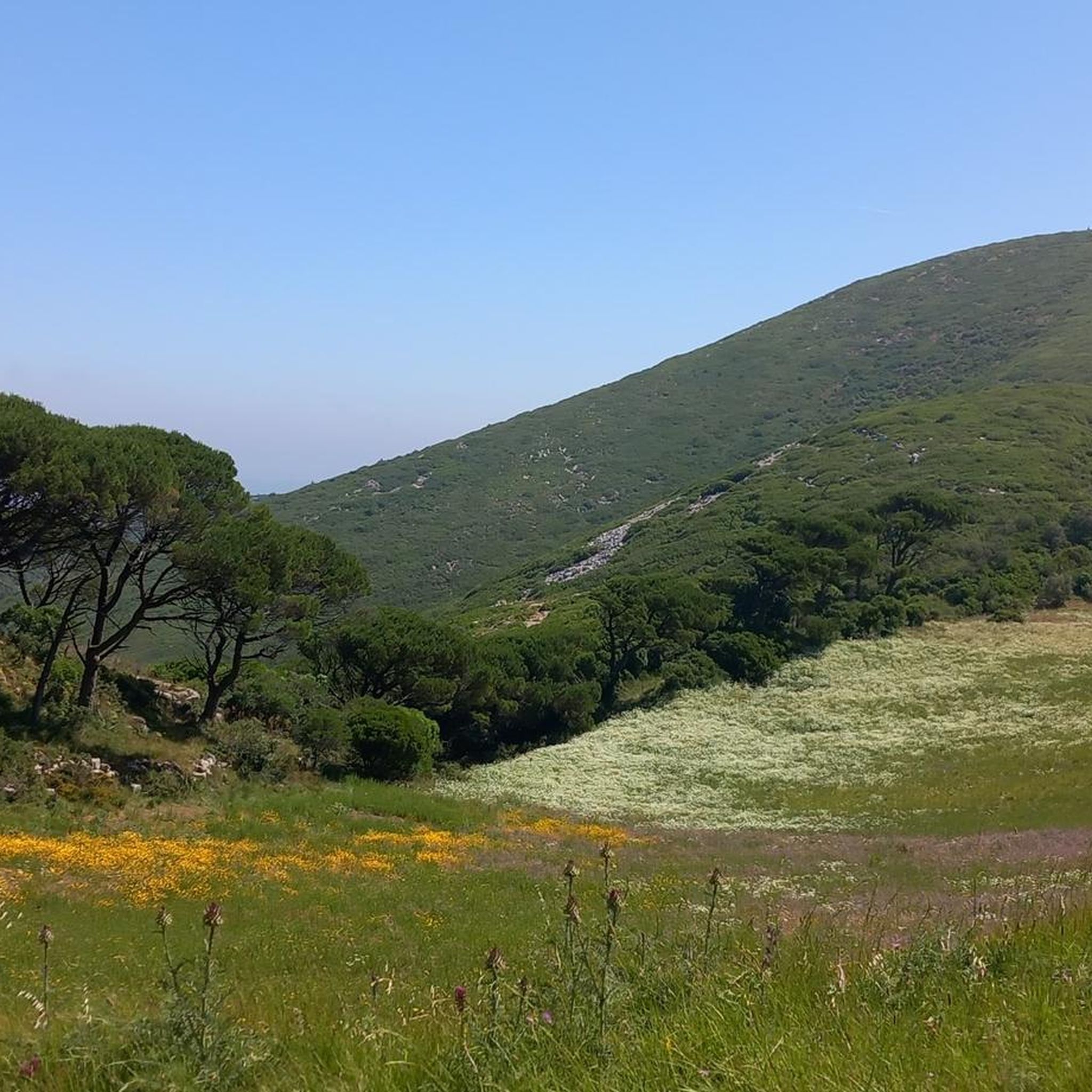
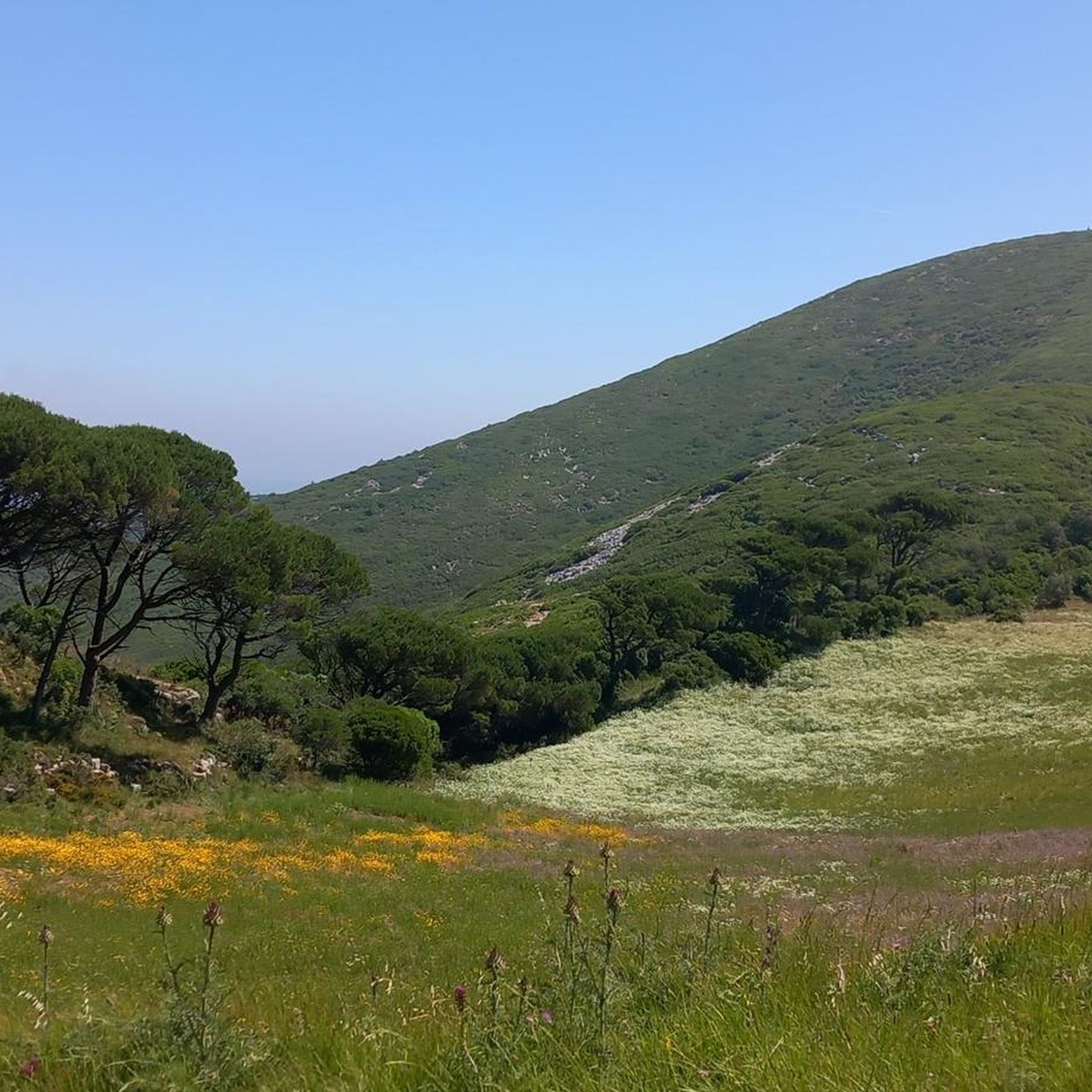
The karst landscape of Montejunto, in the extreme southwest of the Estremenho Limestone Massif, displays deep valleys, lages, gravel pits and lapiás, formed by aquatic erosion over geological eras. Freezing of water in rock fissures results in gravel deposits.
0
0
The Nossa Senhora das Neves Chapel, located at the top of the Serra de Montejunto, has been a place of pilgrimage since the medieval period, prior to the construction of the first Dominican monastery in the 13th century.
1
0
Frequently Asked Questions
What is the general difficulty level of touring cycling routes around Vilar?
Touring cycling around Vilar is characterized by significant elevation changes and hilly terrain. The majority of the routes, specifically 13 out of 16, are classified as difficult. There are also 3 moderate routes available for those seeking a slightly less strenuous experience.
Are there any touring cycling routes suitable for less experienced cyclists in Vilar?
While many routes in Vilar are challenging, there are 3 moderate touring cycling routes available. These routes still feature the region's characteristic rolling hills but may offer a more manageable experience than the difficult options.
Which routes offer challenging climbs and panoramic views for advanced touring cyclists?
For advanced touring cyclists seeking challenging climbs and panoramic vistas, the View of Serra de Montejunto – View of the Serra de Montejunto loop from Abrigada is an excellent choice. This difficult 34.5-mile (55.6 km) route features over 930 meters of elevation gain and offers extensive views of the Serra de Montejunto mountain range.
Are there circular touring cycling routes available in Vilar?
Yes, many of the touring cycling routes around Vilar are designed as loops, allowing you to start and finish at the same point. Examples include the popular Quinta da Abrigada – View of Serra de Montejunto loop from Abrigada and the Meia Encosta Trail – Moinho de Avis loop from Lamas e Cercal.
What kind of views can I expect on Vilar's touring cycling routes?
The touring cycling routes in Vilar offer extensive views of the prominent Serra de Montejunto mountain range. You can expect to see rolling hills, varied terrain, and scenic viewpoints across the landscape. Highlights like the Serra de Montejunto Watchtower and Cabeço Pardal offer particularly rewarding panoramas.
Are there any notable landmarks or points of interest along the touring cycling routes?
Yes, the region around Vilar features several points of interest. Along your rides, you might encounter natural monuments such as the Gravel Bend or the Ota River. Man-made monuments like the Windmills of Serra de Montejunto also add to the scenic appeal.
What is the best time of year for touring cycling in Vilar?
The best time for touring cycling in Vilar is typically during the spring (April to June) and autumn (September to October) months. During these periods, the weather is generally mild and pleasant, making the challenging climbs more enjoyable. Summers can be quite hot, and winters, while mild, may bring more rain.
Can I go touring cycling in Vilar during winter?
Touring cycling in Vilar during winter is possible, as the climate is generally mild compared to more northern regions. However, you should be prepared for cooler temperatures and a higher chance of rain. Always check the local weather forecast before heading out and ensure you have appropriate gear.
Are there options for longer touring cycling trips around Vilar?
Yes, Vilar offers several longer touring cycling routes. For example, the Castro de Pragança – Chapel of Saint John the Baptist loop from Cadaval covers approximately 36 miles (58 km), providing a substantial ride for those looking for extended time in the saddle.
Where can I park my car when cycling around Vilar?
While specific parking areas are not detailed for each route, many touring cycling routes around Vilar start from towns or villages like Abrigada, Lamas e Cercal, or Cadaval. You can typically find public parking available in these areas, often near local amenities or community centers.
Is Vilar accessible by public transport for cyclists?
Vilar and its surrounding towns are generally accessible by regional bus services, which may accommodate bicycles depending on the operator and available space. For specific routes and bicycle policies, it's advisable to check with local public transport providers in advance, especially if you plan to bring your bike on board.
Are there places to stop for refreshments or food along the touring cycling routes?
The touring cycling routes often pass through or near small villages and towns where you can find local cafes, restaurants, or small shops to refuel. It's always a good idea to carry sufficient water and snacks, especially on longer or more remote sections, as services may not be continuously available.
Most popular routes around Vilar
Most popular attractions around Vilar

Get inspired with the komoot mobile app


Explore more
Browse the best Cycling routes in other regions.
