The best cycling routes around Paul do Mar
4.9
(5)
46
riders
4
rides
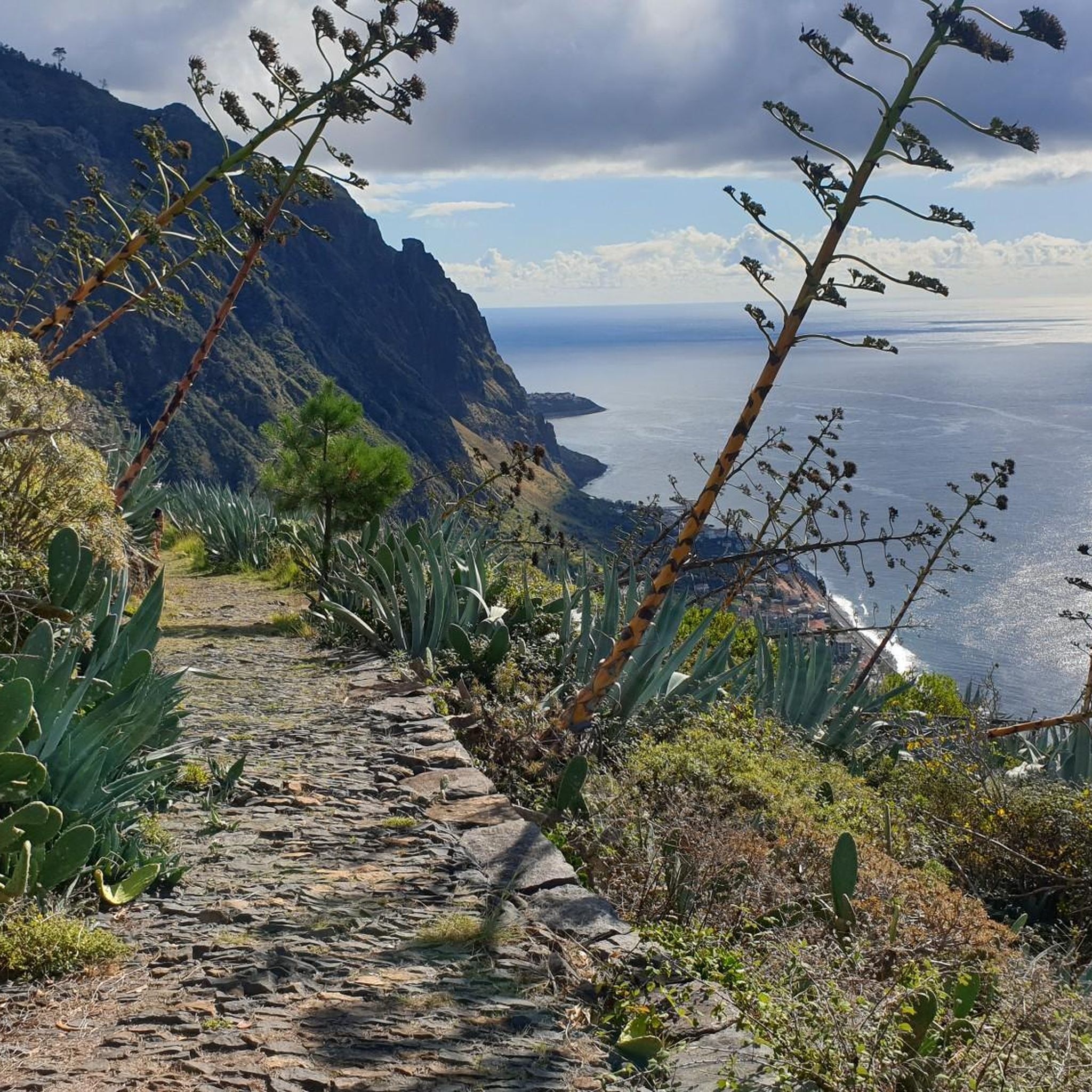
Touring cycling around Paul do Mar features routes that navigate the island's varied topography, including coastal roads and ascents into the interior. The region is characterized by its dramatic coastline, agricultural terraces, and winding regional roads. Elevation changes are a common feature, offering panoramic views of the Atlantic Ocean and the surrounding landscape.
Best touring cycling routes around Paul do Mar
- The most popular touring cycling route is Quiet Regional Road – Igreja do Amparo loop from Lombo da Rocha…
Last updated: July 3, 2026
4.8
(5)
32
riders
29.5km
02:11
720m
720m
Hard bike ride. Very good fitness required. Mostly paved surfaces. Suitable for all skill levels.
8
riders
33.1km
02:47
1,110m
1,110m
Hard bike ride. Very good fitness required. Mostly paved surfaces. Suitable for all skill levels.

Sign up for free
5.0
(1)
7
riders
81.1km
06:27
2,360m
2,360m
Hard bike ride. Very good fitness required. Mostly paved surfaces. Suitable for all skill levels.
3
riders
23.5km
02:34
1,340m
1,340m
Hard bike ride. Very good fitness required. Mostly paved surfaces. Suitable for all skill levels.
Our route recommendations are based on thousands of hikes, rides, and runs completed by other people on komoot.
Start today with a free account
Your next adventure awaits.
Login or Signup
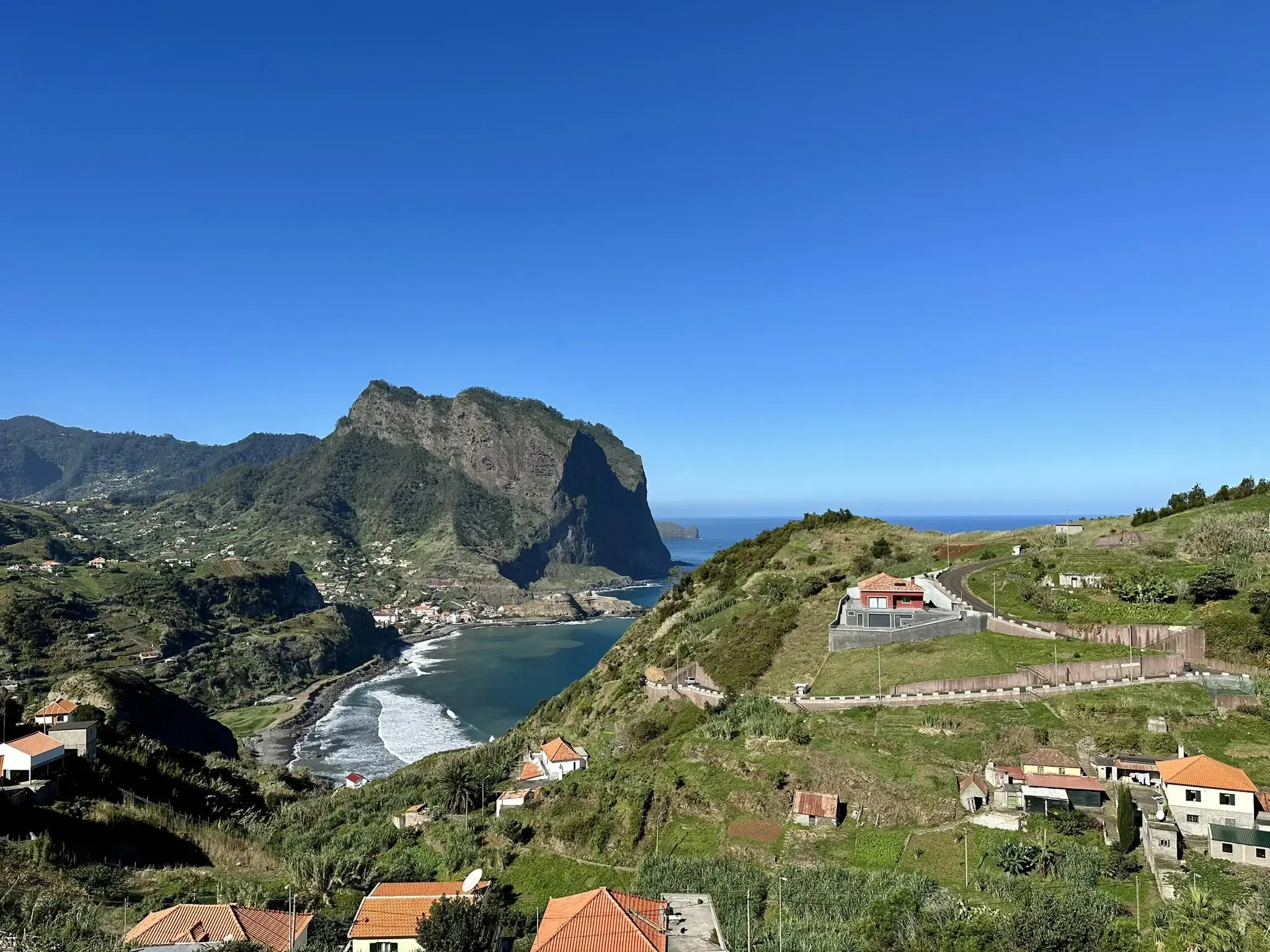
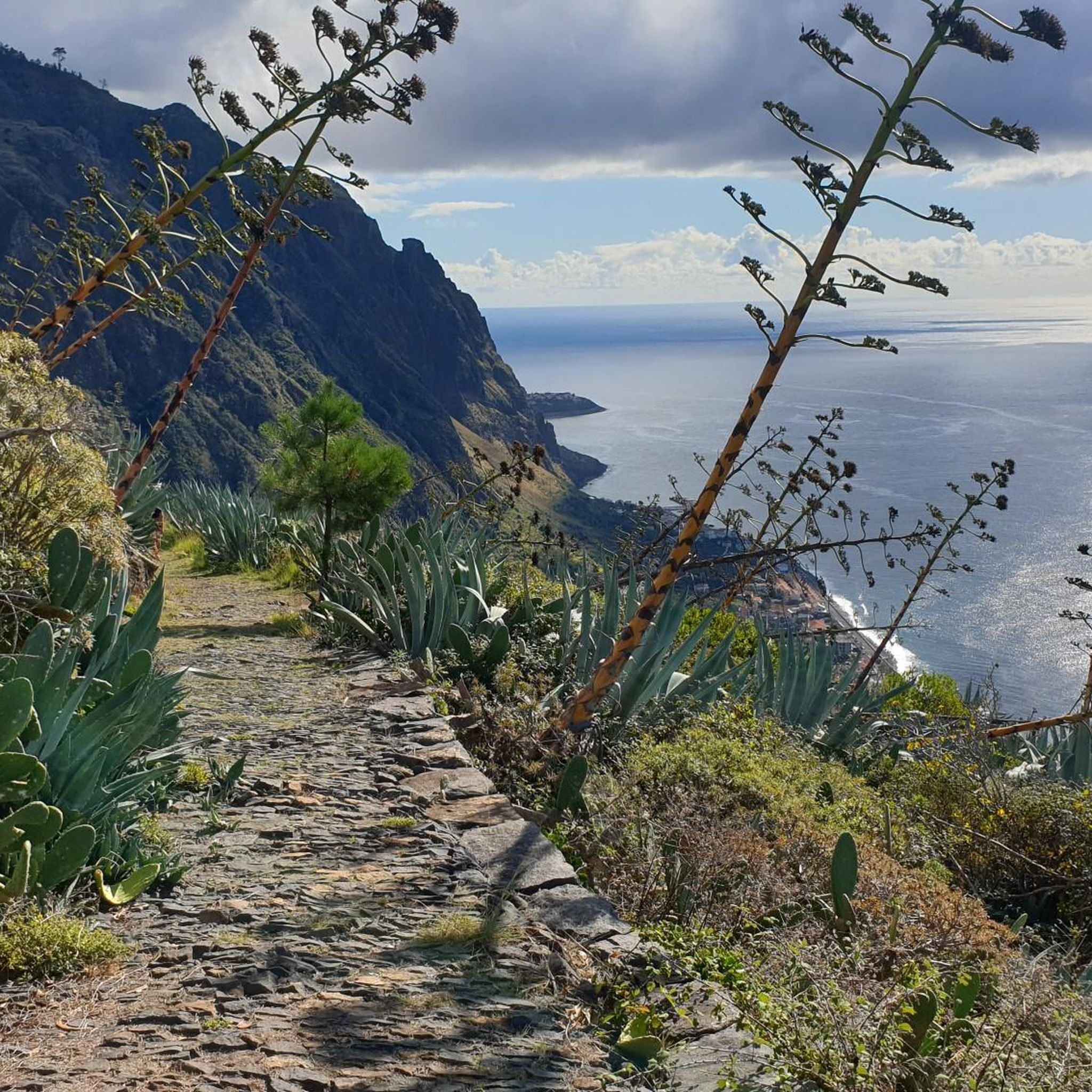
Other adventures around Paul do Mar

Tips from the Community

The church is situated on a square that lies below sea level. It used to be regularly flooded and renovated by the locals. Currently, it is protected by a breakwater with a promenade.
1
0

great educational garden
0
0
The educational garden can also be viewed from the outside, many chickens or corns, an emu and various other birds, there is a café in the park
0
0

Upstairs, with a bit of art (during the flower festival), and downstairs, a sandy beach. (There are also restaurants in between.)
1
0

Nice road with fewer cars than in other estradas regionais
2
0
Dont miss the view!
0
0
Patrícia Sumares presents us with a sculptural mural of large proportions, composed of over three thousand face sculp tures. These were created from two hundred and fifty molds of not only local residents of Ponta do Sol, but also tourists and others who showed an interest in taking part in this project. To this end, the artist has been creating the face molds at her atelier over this past year (in between the two editions of the Aqui Acola festival), capturing the essence of each physiognomy and calling upon the public at large to take an active part in her work. The onlooker takes on the role of co-creator, insofar that they participate in the mak-ing of the work, "lending" their face and becoming a living part of the panel itself. But they are more than mere faces; they are the expressions and feelings of a community, its life stories and collective memories. They are human landscapes of hope which reveal a certain sense of spirituality and civic union. The face and its underlying symbolic issues have been a re-curring theme in Patrícia Sumares work, through sculptural installations that propose a philosophical examination of life, the perennial, hope, and memory. The subtlety and po-etry of her visual discourse have come to characterize how she approaches the art of sculpture, creating pieces that function as metaphors for the human condition. Contrary to the more conventional artworks that make up a large part of Madeira's public art, the artist proposes an artistic intervention with a sense of community, as it calls upon the citizens to "show their faces" for the project. This cooperative relationship and creative partnership is intrin sic to the spirit of a public art that foments a societal com mitment to the valorization and promotion of an effective participation of society in the artistic endeavor. The artist's work also reflects an effort to demystify Art itself, making it acessible to the common citizen, since it allows for their direct involvement in and sharing of the creative act. In this sense, art can be seen as a catalyzer for the collective energy and development of the human potential. However, it is not merely through the different faces that the artist establishes a specific relationship with the locale where the artistic intervention is to take place. Contrasting with the background, a "flock" of bird silhouettes, charac-teristic of Madeira's fauna, appears. These mirrored shapes, imbued with an intense visual dynamic, emerge from the mural creating a diversity of fruitive possibilities, through their forceful interaction with the surrounding space. This is achieved through the interplay of their reflective surfac-es with the encompassing landscape, and through exploring different chromatic effects produced by the way the light is focused. The mirrored surfaces not only duplicate the land-scape, creating new spatial relations, but also warp the visual perception, introducing another dimension to the work. In this intercalated organization of shapes, one can observe how the expressive values of light and shadow are wrought so as to truly stimulate the onlookers imagination-leading to the discovery of its diverse symbolic associations. It also calls for an introspective contemplation from its onlookers, giving rise to a sort of collective identification.
1
0
Frequently Asked Questions
What is the general difficulty level of touring cycling routes around Paul do Mar?
Touring cycling routes in the Paul do Mar region are generally considered challenging. All the routes listed in this guide, such as the Quiet Regional Road – Igreja do Amparo loop from Lombo da Rocha, are rated as 'difficult' due to significant elevation changes and varied terrain.
What are the typical distances for touring cycling routes in Paul do Mar?
The touring cycling routes around Paul do Mar vary in length, catering to different endurance levels. You can find routes ranging from approximately 14 miles (23 km) to over 53 miles (85 km). For example, the Rabaçal Waterfall – Praia da Calheta loop from Calheta is about 14 miles, while the Quiet Regional Road – A Taberna Madalena do Mar loop from Ribeira Brava extends to 53.3 miles.
Are there any family-friendly touring cycling routes in Paul do Mar?
The touring cycling routes highlighted in this guide around Paul do Mar are primarily rated as 'difficult' due to their challenging ascents and varied terrain. These routes are generally more suited for experienced cyclists. For families with younger children or those seeking easier rides, it might be advisable to look for flatter sections or dedicated cycling paths in other areas of Madeira, as the Paul do Mar region is known for its dramatic and demanding landscapes.
What kind of views can I expect along the touring cycling routes?
The touring cycling routes around Paul do Mar offer panoramic views of the Atlantic Ocean, dramatic coastlines, and the island's unique agricultural terraces. As you ascend into the interior, you'll also encounter rural landscapes and lush vegetation. Routes like the Quiet Regional Road – Igreja do Amparo loop from Lombo da Rocha are specifically noted for their scenic vistas along quieter roads.
Are there any circular touring cycling routes available?
Yes, many touring cycling routes around Paul do Mar are designed as loops, allowing you to start and finish in the same location. Examples include the Quiet Regional Road – Igreja do Amparo loop from Lombo da Rocha, the Prazeres Educational Farm – Estreito da Calheta loop from Calheta, and the Rabaçal Waterfall – Praia da Calheta loop from Calheta.
What are some interesting places to explore or landmarks near the touring cycling routes?
While cycling around Paul do Mar, you'll find several natural attractions nearby. Notable highlights include the stunning 25 Fontes (25 Springs) Waterfall and the impressive Risco waterfall. You can also explore the ancient Fanal Laurel Forest, a UNESCO World Heritage site, or visit the Viento Lagoon.
What do other touring cyclists enjoy most about cycling in Paul do Mar?
The touring cycling experience around Paul do Mar is highly rated by the komoot community, with an average score of 4.8 stars from 4 reviews. Cyclists often praise the region's dramatic coastline, challenging ascents, and the rewarding panoramic views of the Atlantic Ocean. The varied terrain and quiet regional roads also contribute to a memorable ride.
Are there any routes that pass by waterfalls?
Yes, the region around Paul do Mar is home to several beautiful waterfalls. The Rabaçal Waterfall – Praia da Calheta loop from Calheta is a route that brings you close to the natural beauty of the Rabaçal area, known for its cascades. Additionally, nearby attractions include the famous 25 Fontes (25 Springs) Waterfall and the Risco waterfall.
What is the best time of year for touring cycling in Paul do Mar?
Paul do Mar, like much of Madeira, enjoys a mild climate year-round. However, the best time for touring cycling is generally during the spring (April to June) and autumn (September to November) when temperatures are pleasant, and rainfall is typically lower. Summers can be warm, and winters, while mild, may bring more rain and stronger winds, especially at higher elevations.
How many touring cycling routes are available in the Paul do Mar area?
There are several touring cycling routes available around Paul do Mar, with this guide highlighting four distinct and challenging options. These routes showcase the region's diverse topography, from coastal roads to ascents into the island's interior.
Is public transport an option to reach the starting points of these routes?
While specific public transport connections to every trailhead are not detailed in this guide, many of the routes start from or pass through towns and villages such as Lombo da Rocha, Calheta, and Ribeira Brava. These locations are generally accessible by local bus services on Madeira, which could provide a way to reach your starting point.
What should I know about the elevation changes on these routes?
Touring cycling around Paul do Mar is characterized by significant elevation changes. Routes often involve substantial climbs and descents, offering both a physical challenge and rewarding views. For instance, the Prazeres Educational Farm – Estreito da Calheta loop from Calheta features over 1150 meters (3770 feet) of elevation gain, making it suitable for experienced cyclists.
Most popular attractions around Paul do Mar

Get inspired with the komoot mobile app


Explore more
Browse the best Cycling routes in other regions.
