Attractions and Places To See around Coronado (São Mamede) - Top 20
Best attractions and places to see around Coronado (São Mamede) offers a blend of historical, cultural, and natural points of interest within the municipality of Trofa, Portugal. While recognized as an industrial center, the area provides access to significant religious sites and local traditions. Visitors can explore ancient monuments and enjoy outdoor activities in nearby natural settings. This region provides diverse experiences for those interested in history, culture, and nature.
Best attractions and places to see around Coronado (São Mamede)
…Last updated: May 21, 2026
Monastery of Saint Benedict, Santo Tirso
Highlight • Religious Site
Translated by Google •
Tip by

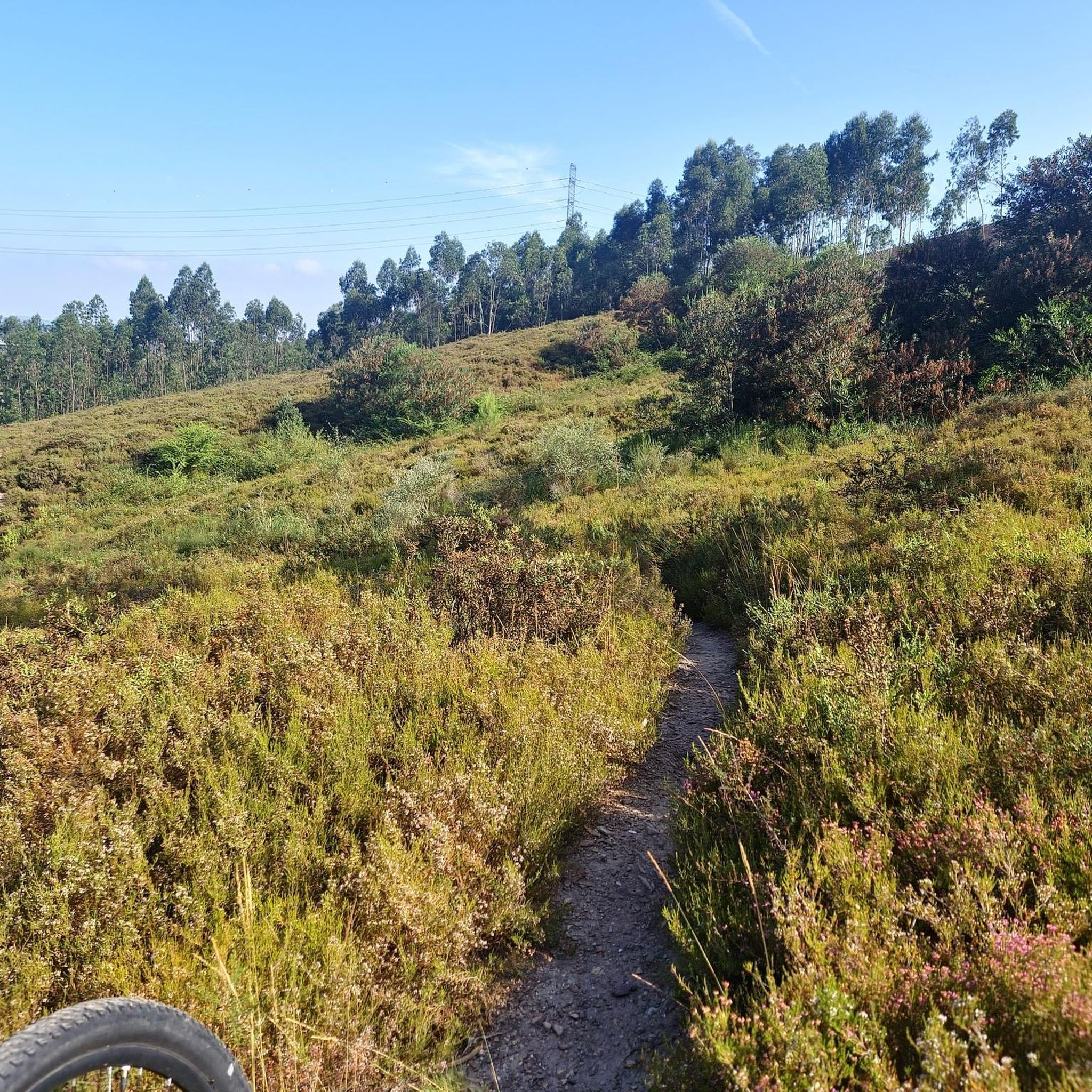
ProjetoPEDAL Short Track Circuit
Highlight • MTB Park
The route is the usual place for classes/training at Projetopedal academy.
Translated by Google •
Tip by

Sign up now to discover places like this
Get recommendations on the best single tracks, peaks, & plenty of other exciting outdoor places.
Sign up for free
Cruzeiro do Padrão da Légua
Highlight • Monument
Translated by Google •
Tip by

Mosteiro de Leça do Balio
Highlight • Religious Site
Translated by Google •
Tip by
Monument to the Triumph of the People of Maia
Highlight • Monument
Translated by Google •
Tip by
Sign up for free to discover even more attractions around Coronado (São Mamede).
Sign up for free
Already have an account?
Start today with a free account
Your next adventure awaits.
Login or Signup



Tips from the Community

Nearby Tourist Attractions Ave Riverbank Promenade: A riverside walkway, ideal for relaxing strolls. Monte Padrão Hillfort: Ancient ruins for those interested in history and archaeology.
1
0
Highlights and Architecture Main Church: Built between 1659 and 1679, the monastery church is an imposing example of local religious architecture. Cloisters: The monastery has serene cloisters, one of which still displays a Gothic sculpture of the Virgin and Child in one of the corners. Cloister Fountain: In the center of the cloister stands a slender granite fountain with a polylobed basin, dating from 1649. Style: Over the centuries, the monastery has been rebuilt, combining Baroque and Neoclassical elements.
1
0
Opening Hours and Visits The monastery is open for visits, but guided tours of the cloisters and other areas (besides the church) generally require prior booking by telephone with the Santo Tirso City Hall office. General Hours (Church): Daily (Monday to Sunday): 08:00–12:00 and 15:00–19:00. Accessibility: The entrance and parking are wheelchair accessible.
1
0
The Monastery of São Bento, also known as the Monastery of Santo Tirso, is located on the left bank of the Ave River, in the city of Santo Tirso, Portugal. Founded in 978, it belonged to the Benedictine Order and was one of the most powerful monasteries in Portugal. Currently, it is classified as a National Monument.
1
0

The very well-known German comedian Hape (Hans-Peter) Kerkeling embarked on the Camino de Santiago through Spain in 2001, keeping a diary that was later published as a book. In the 'Real Monasterio San Zoilo', he notes an observation that I would also like to offer the viewer of this sacred small monument: „Directly above it hangs the huge crucifix, and for the first time, I consciously notice that the crucified one is clearly looking in one direction: From our perspective, Jesus Christ looks to the left in most depictions. To the west. Towards the sunset, the night, death. But from his perspective, he is looking to the right, to the east. Towards the sunrise and life. What appears to us as a dark end is, in truth, the radiant beginning for him. And undoubtedly, only his perception can be considered the correct one.“ (Hape Kerkeling in „Ich bin dann mal weg. Meine Reise auf dem Jakobsweg“)
2
0
The cross at Padrão da Légua marked the separation of the roads, one headed towards Viana do Castelo and Barcelos, and the other, the old one, headed towards Vila do Conde after crossing the Leça River on the D. Goimil Bridge.
2
0
The cross, a place of worship, displays a sculpted image of the Crucified Christ, dating from the 17th century, with the symbolic function of sacralizing the “Way”.
3
0

Based on the classic concept of the Arc de Triomphe in three volumes, it nevertheless reflects the simplicity and rectitude of the people of Maia when it uses smooth planes and rectilinear shapes. The side volumes, contrary to what is normal, have openings in a different direction from the central volume, which evokes a pluralism of visions and perspectives that has always been the prerogative of the Maiatos, as well as a unified vision of development, regardless of the cardinal point of the Maia territory. The raw materials also evoke two of its basic characteristics: bronze, which recalls religiosity, but also strength, tenacity and resistance, the paradigm of which is that of church bells; gold recalls the nobility of the Maiatos, but also the dominant colour of the corn cobs, a source of food and the wealth of this fertile land. The three volumes correspond to three fundamental pillars of the Maiata idiosyncrasy: religiosity, work and rural popular culture. The insertion of volumes with rectilinear shapes in a circular space such as the roundabout evokes the foreseen and planned rupture that Maia has experienced since the 1970s, which led to the municipality, from a very modest plan, becoming one of the five most important municipalities in the country, ceasing to be a rural municipality to become truly urban, without however losing the positive aspects of rurality: work, honesty, spirit of sacrifice, volunteerism, love for the land. These characteristics were the reason for the triumph of the people of Maia. A triumph that is embodied and embodied in some immortal winners, such as Lidador, Viscount Barreiros and Doctor José Vieira de Carvalho, as will be in the future all those who are capable, today, of learning from these examples and of building the future based on the foundations of the work and example of these builders of Maia. It celebrates the selfless effort of our People in the construction of our Land, and expresses the triumph of their work, which is clearly evident in the development that the municipality is experiencing.
1
0
Frequently Asked Questions
What historical and cultural sites can I explore around Coronado (São Mamede)?
The region offers several significant historical and cultural sites. You can visit the Monastery of Saint Benedict, Santo Tirso, a National Monument founded in 978 with impressive architecture and serene cloisters. Another notable site is the Mosteiro de Leça do Balio, a fortified religious building that was once a Roman temple site. Don't miss the Cruzeiro do Padrão da Légua, a historic stone cross marking ancient road divergences, featuring a 17th-century sculpted image of Christ.
Are there any family-friendly attractions in the area?
Yes, families can enjoy the ProjetoPEDAL Short Track Circuit, a mountain bike park designed for all skill levels, including beginners. The Cruzeiro do Padrão da Légua and Mosteiro de Leça do Balio are also considered family-friendly historical sites for a cultural outing.
What kind of outdoor activities can I do near Coronado (São Mamede)?
The area around Coronado (São Mamede) is great for outdoor enthusiasts. You can find various routes for hiking, running, and mountain biking. For hiking, explore trails like the 'Corredor Verde do Leça – Ponte da Pedra loop from Maia' or 'Ecocaminho Mandim–Brandinhães – Ecocaminho Brandinhães–Souto loop from Mandim'. Mountain biking options include the 'Forest Trail – Downhill Trail With Jumps loop from Castêlo da Maia'. For more details on these and other routes, check out the dedicated guides for hiking, running, and MTB trails.
Are there any accessible attractions for visitors with mobility needs?
The Monument to the Triumph of the People of Maia is noted as wheelchair accessible, offering an opportunity to appreciate its unique design and historical significance. Additionally, the entrance and parking at the Monastery of Saint Benedict, Santo Tirso are also wheelchair accessible.
Where can I go for mountain biking in the region?
For mountain biking, the ProjetoPEDAL Short Track Circuit is an excellent spot. It's a small circuit specifically designed for initiating and developing mountain biking skills, used for classes and training by the Projetopedal academy. You can also find various MTB trails in the wider region, such as the 'Forest Trail – Downhill Trail With Jumps loop from Castêlo da Maia', detailed in the MTB Trails around Coronado (São Mamede) guide.
What natural features or parks are near Coronado (São Mamede)?
While Coronado (São Mamede) is more urbanized, it is close to the expansive Natural Park of Serra de São Mamede. This park offers high mountains, diverse flora and fauna, pedestrian trails, and waterfalls like the São Julião cascade, providing excellent opportunities for nature exploration and panoramic views.
What is the significance of the Mosteiro de Leça do Balio?
The Mosteiro de Leça do Balio is a historically rich religious building. It was originally a Roman temple site before a church was built there, later fortified, and is now classified as a national monument. It's known for its military character due to expansions by the Hospitalarios and was the site of King D. Fernando's wedding to D. Leonor Teles.
Can I visit the Monastery of Saint Benedict, Santo Tirso, and what are its highlights?
Yes, the Monastery of Saint Benedict, Santo Tirso is open for visits. Its main church, built between 1659 and 1679, is a prime example of local religious architecture. The monastery also features serene cloisters, one of which preserves a Gothic sculpture of the Virgin and Child. Guided tours of the cloisters often require prior booking with the Santo Tirso City Hall office.
What do visitors enjoy most about the attractions around Coronado (São Mamede)?
Visitors appreciate the blend of historical depth and outdoor activity options. The ancient sculptures and historical significance of sites like the Cruzeiro do Padrão da Légua are often highlighted. The well-maintained ProjetoPEDAL Short Track Circuit is popular for its focus on mountain biking skill development. The community also values the rich history and architectural beauty of the religious buildings in the area.
Are there any unique local traditions or cultural aspects in Vila do Coronado?
Vila do Coronado is known for its distinct identity as the 'Berço da Arte Sacra' (Cradle of Sacred Art) and the 'Capital da Vassoura' (Broom Capital), reflecting unique local traditions and economic activities. The area also celebrates 'Festas e Romarias' (Festivals and Pilgrimages), offering insights into local customs centered around its patron saints.
What is the Monument to the Triumph of the People of Maia?
The Monument to the Triumph of the People of Maia is a significant man-made monument. It reflects the simplicity and rectitude of the people of Maia through its smooth planes and rectilinear shapes, while also evoking a pluralism of visions. It celebrates the selfless effort of the Maiata people in building their land and their triumph in development, honoring figures like Gonçalo Mendes da Maia, known as 'O Lidador'.
Are there any easy hiking trails suitable for beginners near Coronado (São Mamede)?
Yes, there are several easy hiking options. For instance, the 'Ecocaminho Brandinhães–Souto – Ecocaminho Souto–Brandinhães loop from Fórum Maia' and 'Ecocaminho Brandinhães–Souto – Ecocaminho Souto–Brandinhães loop from Maia' are both rated as easy. You can find more details and other routes in the Hiking around Coronado (São Mamede) guide.

Get inspired with the komoot mobile app


Explore more
Still not found the Highlight you’re looking for? See guides of the top attractions in other regions:
