Attractions and Places To See around Almeirim - Top 20
Attractions and places to see around Almeirim, a city in the Santarém District of Portugal, offer a mix of historical landmarks, cultural sites, and natural features. Situated on the Tagus River, the region is known for its agricultural heritage, including wine production and traditional gastronomy. Visitors can explore ancient bridges, religious buildings, and significant natural landscapes, experiencing local history and scenic river views.
Best attractions and places to see around Almeirim
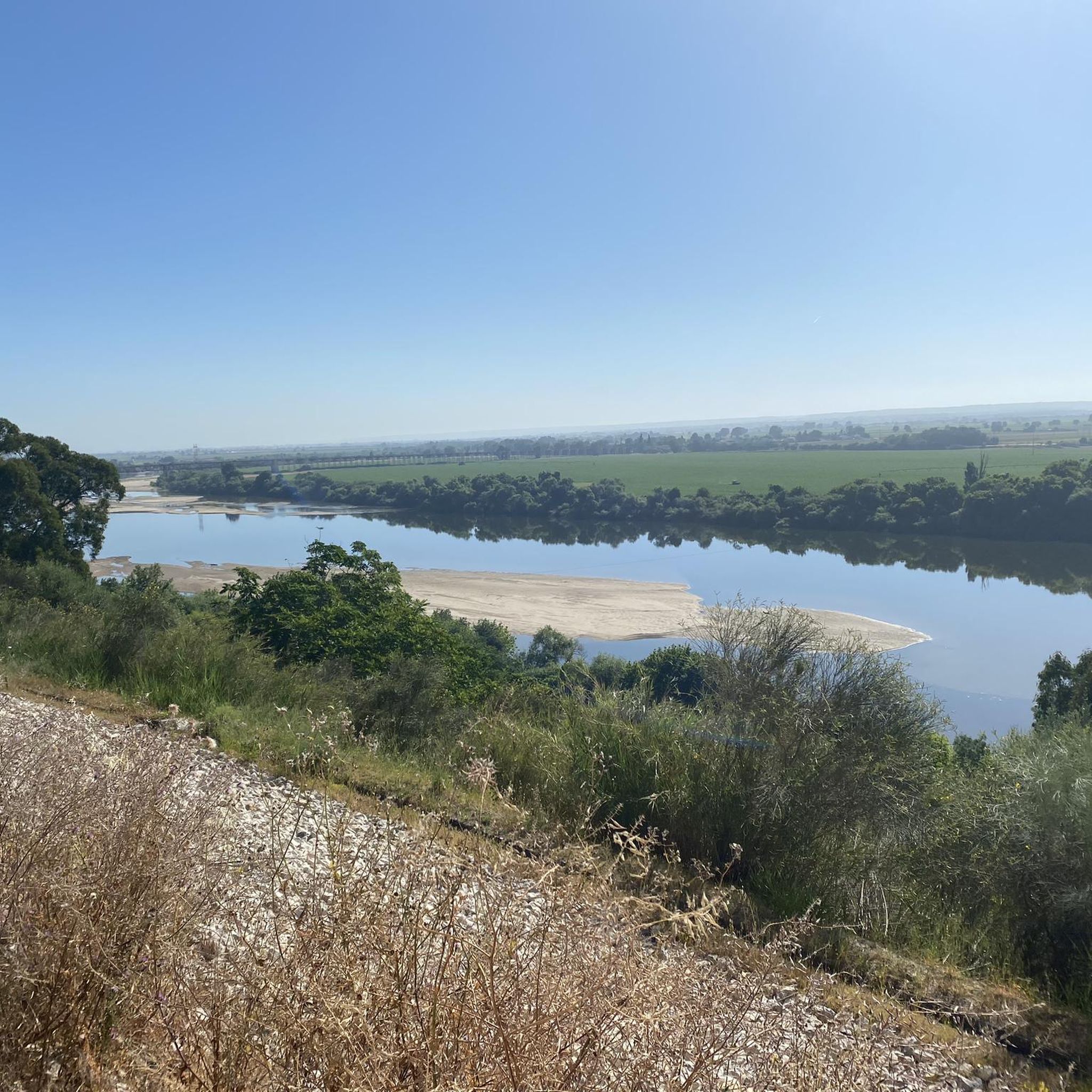
- The most popular attractions is Ponte Rainha D. Amélia, a bridge offering superb views of the Tagus River. This man-made monument is a significant crossing point in the region.
- Another must-see spot is Roman Bridge of Muge, a historical bridge built during the Roman period. This structure crosses the Muge stream and features construction techniques from both Roman and medieval times.
- Visitors also love Ponte D. Luís I of Santarém, a bridge over the Tagus River. Inaugurated in 1881, it was once considered one of the largest bridges in Europe and connects Santarém to Almeirim.
- Almeirim is known for its historical bridges, religious buildings, and natural features like the Tagus River. The area offers a variety of attractions, from ancient Roman structures to significant architectural landmarks.
- The attractions around Almeirim are appreciated by the komoot community, with more than 30 upvotes and over 15 photos shared by visitors.
Last updated: May 21, 2026
Ponte Rainha D. Amélia
Highlight • Bridge
Translated by Google •
Tip by

Roman Bridge of Muge
Highlight • Bridge
The Roman presence in the parish of Muge is clearly evident in the area of Porto de Sabugueiro. The most striking vestiges of this historical period are found here.
Porto de Sabugueiro, due to its proximity to the Tagus River, was an important river port during the Roman period. Excavations and published studies define this location as an important Roman village, with ceramic production, due to the existence of a ceramic kiln found here in the 1960s.
Approximately 400 meters from this location is the Roman Bridge, which crosses the Muge stream. The construction techniques used, especially in the larger arch, undoubtedly indicate a Roman origin; however, the two smaller arches, due to their typology, are attributable to the Middle Ages.
This bridge was one of the main crossing points connecting Muge to the interior of the country (Alentejo) and to the city of Santarém.
It possesses undeniable historical value, forming part of the memory and heritage identity of the municipality of Salvaterra de Magos.
(Source: salvaterrademagos.pt)
Translated by Google •
Tip by
Sign up now to discover places like this
Get recommendations on the best single tracks, peaks, & plenty of other exciting outdoor places.
Sign up for free
Ponte D. Luís I of Santarém
Highlight • Bridge
It was inaugurated on September 17, 1881 and was considered at the time, the largest in the Iberian Peninsula, the third in Europe and the sixth in the World, remaining as one of the examples of iron architecture.
It had a total length of 1,213 meters, a width of 6 meters and a height of 22 meters
The bridge was enlarged in 1956 with an innovative project by Edgar Cardoso.
On a headstone it says:
And the iron bridge extends its musculature of an antediluvian animal at the service of progress, uniting Estremadura and Alto Alentejo.
Translated by Google •
Tip by

Cathedral of Santarém
Highlight • Religious Site
Translated by Google •
Tip by

Hoopoe Mural by Bordalo II, Rua 1º de Novembro, Santarém
Highlight • Monument
Translated by Google •
Tip by
Sign up for free to discover even more attractions around Almeirim.
Sign up for free
Already have an account?
Start today with a free account
Your next adventure awaits.
Login or Signup

Tips from the Community

Built during the Roman period, it is an important vestige of that people's presence in the municipality. The Roman presence in the parish of Muge is clearly evident in the area of Porto de Sabugueiro. The most striking vestiges of this historical period are found here. Porto de Sabugueiro, due to its proximity to the Tagus River, was an important river port during the Roman period. Excavations and published studies define this location as an important Roman village, with ceramic production, due to the existence of a ceramic kiln found here in the 1960s. Approximately 400 meters from this location is the Roman Bridge, which crosses the Muge stream. The construction techniques used, especially in the larger arch, undoubtedly indicate a Roman origin; however, the two smaller arches, due to their typology, are attributable to the Middle Ages. This bridge was one of the main crossing points connecting Muge to the interior of the country (Alentejo) and to the city of Santarém. It possesses undeniable historical value, forming part of the memory and heritage identity of the municipality of Salvaterra de Magos. (Source: www.salvaterrademagos.pt)
16
0

Ride on the path dedicated for bikes. The road isn’t suitable for bikes, rough and slippery.
1
0

Watch out it can be slippery
1
0

The city has a certain charm, but it has faded for many years... As if the city had its heyday in the 1980s. Unfortunately, many shops are empty and the houses are falling into disrepair. Here and there, restoration and new construction is taking place, after all, it has remained Portuguese since 1147 AD. What is still very well preserved is the market hall with its typical ceramic tiles.
10
2
I can only agree with Marian, it is really beautiful and impressive, and the location is well chosen. Along with the bee in Lisbon and the rabbit in Porto, this is another work of art made from rubbish.
23
2

Worth seeing cathedral on the main square of the city of Santarem. Headquarters of the diocese of Santarém. The gilded wood carvings in the side altars are beautiful.
2
9

The Rainha D. Amélia Bridge, also known as Ponte D. Amélia, is an old railway bridge inaugurated on January 14, 1904. It was later converted to road use, with alternating circulation in both directions. The bridge allows pedestrians or bicycles to cross it via two narrow side roads. Crossing it is always a strong emotion.
6
0
Roman bridge, renovated in medieval times, which crosses the Muge stream, with a pebble deck and guardrails opened through slits, resting on 3 unequal arches, with a perfect turn. From the construction apparatus used, especially the larger arch, it is undoubtedly Roman in origin, however the other two smaller arches, due to their typology, are attributable to the Middle Ages. This Bridge was once one of the main crossing points, which connected Muge, both to the interior of the country (Alentejo) and to the city of Santarém.
8
0
Frequently Asked Questions
What historical sites can I explore around Almeirim?
Almeirim and its surroundings are rich in history. You can visit the ancient Roman Bridge of Muge, which features construction techniques from both Roman and medieval times. Other significant historical landmarks include the remains of Paço dos Negros, a former royal palace, and the 16th-century Igreja Matriz de Almeirim, known for its artifacts and ceiling fresco. The Cathedral of Santarém is also a notable historical and religious building nearby.
Are there any family-friendly attractions in the Almeirim area?
Yes, several attractions cater to families. The Cathedral of Santarém is listed as family-friendly. For outdoor family time, Aldeia de Valada offers a beautiful riverside setting with a river beach, picnic area, and campsite along the Tagus River. Parque Zona Norte de Almeirim also provides a local green space ideal for family outings and picnics.
What natural features or outdoor spaces can I visit near Almeirim?
The region boasts several natural highlights. The Tagus River itself is a prominent feature, offering scenic views, especially from bridges like Ponte Rainha D. Amélia. The Ribeira de Muge area is central to a walking trail winding through cork oak groves and fertile meadows, rich in biodiversity with numerous bird and mammal species. Aldeia de Valada provides a pleasant riverside setting with a river beach.
What kind of outdoor activities can I do around Almeirim?
Almeirim is a great base for various outdoor activities. You can find numerous routes for road cycling, mountain biking, and hiking. For example, there are easy hikes like the 'From Planalto de Santarém to Rio Tejo (PR 2)' circular route. Cycling enthusiasts can explore routes such as the 'Roman Bridge of Muge – Ponte Rainha D. Amélia loop from Almeirim'. You can find more details on these activities in the dedicated guides for road cycling, MTB trails, and easy hikes around Almeirim.
Where can I see impressive architecture or engineering near Almeirim?
The region is home to several impressive architectural and engineering feats. The Ponte D. Luís I of Santarém, inaugurated in 1881, was once considered one of the largest bridges in Europe and is a significant example of iron architecture. The Ponte Rainha D. Amélia also offers superb views and is a notable man-made monument. The Bullring of Almeirim is another significant civic building with historical value.
What cultural experiences or local traditions can I discover in Almeirim?
Almeirim is famous for its rich gastronomy, particularly the traditional 'Sopa da Pedra' (stone soup). You can also savor local delicacies like sausages, 'bolo finto,' and fried eels, often paired with regional wines. The Almeirim Rota do Vinho (Wine Route) offers opportunities to explore vineyards and taste local wines. The Galeria Municipal hosts various thematic exhibitions showcasing local and regional artistic talent.
Are there any unique art installations or murals to see?
Yes, in nearby Santarém, you can find the impressive Hoopoe Mural by Bordalo II. This six-meter-tall figure is made from recycled rubbish, offering a unique and thought-provoking artistic experience in the heart of the historic center.
What do visitors particularly enjoy about the attractions around Almeirim?
Visitors frequently appreciate the superb views of the Tagus River from bridges like Ponte Rainha D. Amélia. The historical significance of sites like the Roman Bridge of Muge and the architectural grandeur of the Ponte D. Luís I of Santarém are also highly valued. The blend of historical depth, natural beauty, and rich cultural traditions makes the area an inviting destination.
Are there any accessible attractions for visitors with mobility needs?
The Hoopoe Mural by Bordalo II in Santarém is noted as wheelchair accessible, making it a good option for visitors with mobility needs. While specific accessibility details for all sites are not available, many outdoor spaces like Parque Zona Norte de Almeirim and Jardim da República may offer easier access.
What are some lesser-known or 'hidden gems' in the Almeirim area?
Beyond the main attractions, consider visiting the Casa dos Patudos-Museu de Alpiarça, a Neo-Renaissance mansion housing a vast collection of antiques and art. The Fountain of São Roque, also known as Fonte dos Namorados (Lover's Fountain), is another historical point of interest, though little remains of its original structure, offering a glimpse into local folklore.
Can I find places for relaxation and picnics near Almeirim?
Yes, Aldeia de Valada, located along the Tagus River, is an excellent spot for relaxation, featuring a river beach, picnic area, and campsite. Parque Zona Norte de Almeirim also provides a local green space perfect for picnics and leisurely activities. Additionally, Jardim da República in Almeirim is a pleasant and tranquil garden ideal for unwinding.

Get inspired with the komoot mobile app


Explore more
Still not found the Highlight you’re looking for? See guides of the top attractions in other regions:
