The best road cycling routes around Vila Chã De Ourique
4.4
(25)
1,157
riders
12
rides
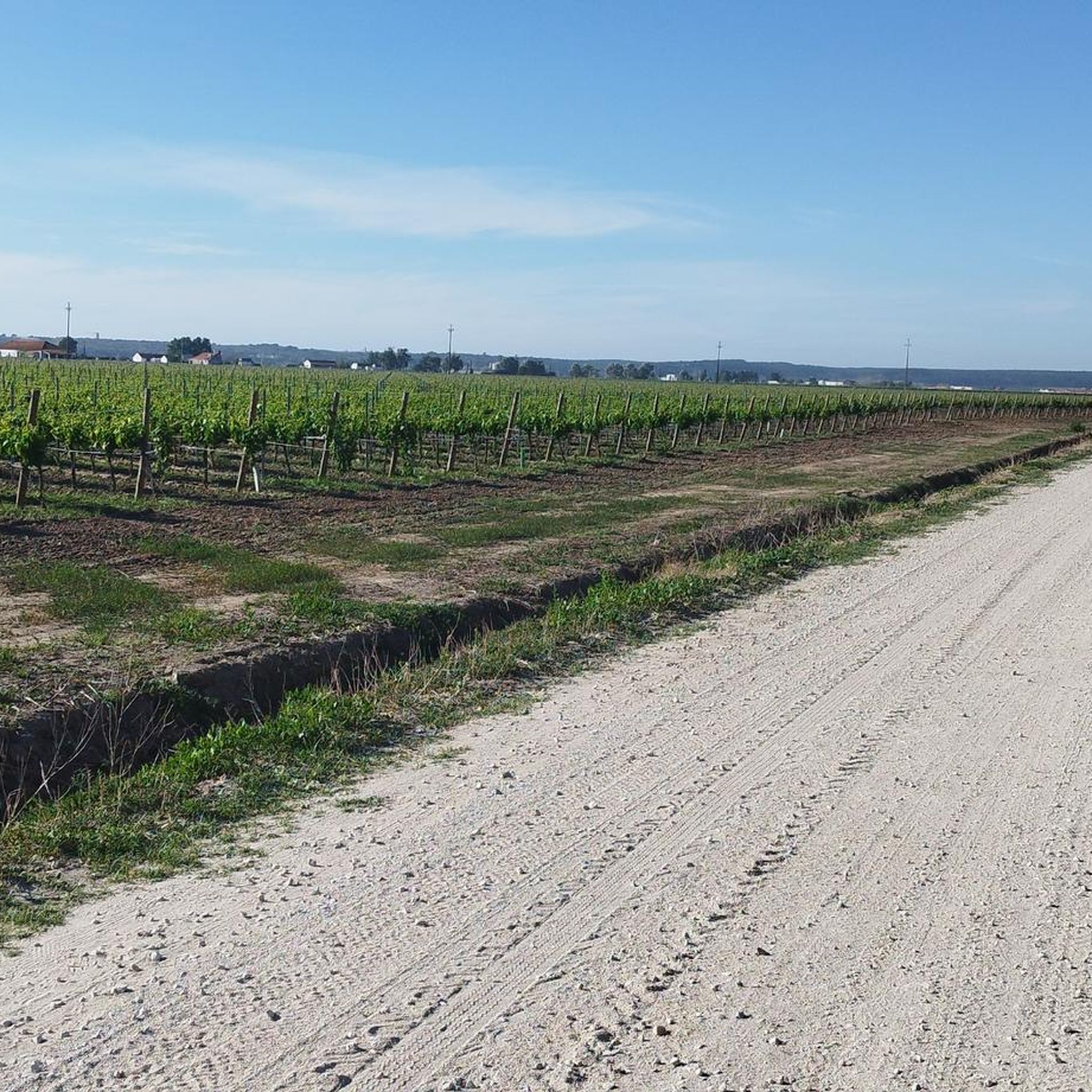
Road cycling around Vila Chã De Ourique offers a diverse landscape characterized by rolling hills, river valleys, and agricultural plains. The region features a mix of open countryside and routes passing through historical towns like Santarém, providing varied scenery for road cyclists. Elevation gains on some routes indicate a moderately challenging terrain with opportunities for sustained climbs. The area's network of roads connects vineyards and cultural sites, making it suitable for exploring by road bike.
Best road cycling routes around…
Last updated: May 28, 2026
30
riders
Easy road ride. Great for any fitness level. Mostly well-paved surfaces and easy to ride.
16
riders
111km
04:50
930m
930m
Hard road ride. Very good fitness required. Mostly well-paved surfaces and easy to ride.

Sign up for free
14
riders
83.4km
03:44
790m
790m
Moderate road ride. Good fitness required. Mostly well-paved surfaces and easy to ride.
3.0
(1)
14
riders
Moderate road ride. Good fitness required. Mostly well-paved surfaces and easy to ride.
9
riders
120km
05:21
1,210m
1,210m
Hard road ride. Very good fitness required. Mostly well-paved surfaces and easy to ride.
Get access to more routes and recommendations from other explorers.
Sign up for free
Already have an account?
Our route recommendations are based on thousands of hikes, rides, and runs completed by other people on komoot.
Start today with a free account
Your next adventure awaits.
Login or Signup


Tips from the Community

The Sanctuary of Senhor Jesus da Pedra is located in the parish of Santa Maria, in the municipality of Óbidos, in the western region of Portugal. The Sanctuary was classified as a Monument of Public Interest in 2013.
1
0

Ride on the path dedicated for bikes. The road isn’t suitable for bikes, rough and slippery.
1
0

The website www.visitportugal.com recommends this church, stating: "Don't miss a visit to this sanctuary, located outside the city walls of Óbidos. Its octagonal exterior silhouette stands out from afar and is crowned by a large pyramid covered with green glazed tiles. It was built between 1740 and 1747, during the Baroque period. However, its details were never completed. Perhaps this is why several of the windows are strangely reversed. It is dedicated to Senhor da Pedra, and the pilgrimage to this site takes place on May 28th."
2
0

Very beautiful
1
0

The Sanctuary of Senhor da Pedra is a Baroque temple located on the outskirts of Óbidos. It has the particularity of articulating a cylindrical volume (exterior) with a hexagonal polygon (interior), in a centered plan to which three bodies are attached (two corresponding to the towers and another corresponding to the sacristy). In its program of symmetries, the play of inverted windows stands out. Its interior has three chapels: the main chapel dedicated to Calvary, with a painting by André Gonçalves, and the side chapels dedicated to Our Lady of the Conception and the Death of Saint Joseph, with paintings by José da Costa Negreiros. The “strange” stone image of the Crucified Christ, on its own pedestal on the High Altar, was kept in a small chapel next to the road to Caldas da Rainha until the inauguration of the Sanctuary, where it was the object of great devotion, particularly by King D. João V. The construction of the Sanctuary is due to the miracle that occurred with King D. João V “Valha-me o Senhor da Pedra” (The Lord of the Stone).
17
0

Watch out it can be slippery
1
0
publication of the royal charter of 26 July 1811, which, in order to mitigate the devastating effects of the French invasions, prescribed, among many other measures, the distribution of seeds to farmers in order to re-establish cereal production. The Real Celeiro was active for over sixty years, between 1812 and 1873, but, quoting Guilherme Henriques, “it died, like all good institutions, annihilated by abuses”. The City Council now holds the archive of the old Celeiro, which, although not very voluminous, nevertheless allows us to reconstruct almost the entire history of this important local institution of the 19th century. Commissioned to be rebuilt by the Municipality of Alenquer in 2002, it opened its doors as the Wine Museum and headquarters of the Lisbon Wine Route in 2006. Its interior was remodeled and its museology project renewed at the end of 2018, and it reopened its doors to visitors in February 2019. (Source: www.alenquer.pt)
10
0

Santarem has been Portuguese since 1147 and, with an old town center of almost 2 square kilometers, is one of the largest in the country. The city may be a little old, but it is definitely worth a visit.
24
1
Frequently Asked Questions
What kind of terrain can I expect when road cycling around Vila Chã De Ourique?
The region offers a diverse landscape, characterized by rolling hills, river valleys, and agricultural plains. You'll find a mix of open countryside and routes that pass through historical towns like Santarém, providing varied scenery. Some routes feature significant elevation gains, indicating moderately challenging terrain with opportunities for sustained climbs.
How many road cycling routes are there in the Vila Chã De Ourique area?
There are over 115 road cycling routes available around Vila Chã De Ourique, catering to various skill levels and preferences. This includes a good mix of easy, moderate, and difficult options.
Are there road cycling routes suitable for beginners or those looking for an easy ride?
Yes, Vila Chã De Ourique offers a selection of easier road bike trails. Approximately 18 routes are classified as easy, providing gentler gradients and less demanding distances for a more relaxed cycling experience.
What are some challenging road cycling routes for experienced riders?
For advanced cyclists seeking a challenge, there are 15 routes classified as difficult. An example is the Alenquer Wine Museum – Alenquer loop from Santana-Cartaxo, which covers 69.0 miles (111.1 km) with substantial elevation gain through wine country and historical areas.
Are there any good loop routes for road cycling in Vila Chã De Ourique?
Many routes in the area are designed as loops. A popular moderate loop is the Ponte D. Luís I of Santarém – Ponte Rainha D. Amélia loop from Santana-Cartaxo, offering a scenic 31.0 miles (49.8 km) ride along river areas and through the local landscape.
What kind of attractions or landmarks can I see along the road cycling routes?
The routes often connect vineyards and cultural sites. You can encounter historical bridges like Ponte Rainha D. Amélia and Ponte D. Luís I of Santarém, or even pass through charming settlements like Valada Village. The region's agricultural plains and river views also provide scenic points of interest.
What is the best time of year for road cycling in Vila Chã De Ourique?
While specific weather data isn't provided, the region's diverse landscape suggests that spring and autumn would likely offer the most pleasant conditions for road cycling, with milder temperatures and vibrant scenery. Summer can be warm, and winter might bring cooler, potentially wetter weather, but cycling is generally possible year-round.
What do other road cyclists say about the routes in Vila Chã De Ourique?
The road cycling routes in Vila Chã De Ourique are highly rated by the komoot community, with an average score of 4.3 stars from more than 20 reviews. Cyclists often praise the varied terrain, the mix of open countryside and historical towns, and the scenic river views.
Are there any routes that offer particularly good viewpoints?
Many routes traverse rolling hills and river valleys, naturally offering scenic vistas. For example, the Alenquer Wine Museum – View of Alcoentre loop from Santana-Cartaxo is designed to include specific viewpoints, allowing you to appreciate the regional landscape.
Is there a long-distance road cycling route available?
Yes, for those looking for a longer ride, the Ponte D. Luís I of Santarém – Restaurante O Torgal loop from Vale de Santarém is a substantial 56.0 miles (90.1 km) route. It's classified as moderate and features significant elevation gain through varied terrain.
Can I find routes that pass through historical areas?
Absolutely. Many routes are designed to connect historical towns and cultural sites. The Cathedral of Santarém – Municipal Market of Santarém loop from Santana-Cartaxo, for instance, takes you through the historic heart of Santarém, allowing you to explore its heritage while cycling.
Most popular routes around Vila Chã De Ourique
Most popular attractions around Vila Chã De Ourique

Get inspired with the komoot mobile app


Explore more
Browse the best Road cycling routes in other regions.
