Attractions and Places To See around Fráguas - Top 12
Best attractions and places to see around Fráguas, Portugal, encompass a range of historical, natural, and cultural sites. The region, with its ancient roots dating back to at least 961 AD, is known for its protohistoric settlements and a historical connection to ironworking. Visitors can explore unique natural features and significant man-made structures. Fráguas offers diverse attractions for those interested in history, nature, and local heritage.
Best attractions and places to see around Fráguas
- The most popular attractions is Rio…
Last updated: July 1, 2026
Rio Maior Salt Pans
Highlight • Monument
Translated by Google •
Tip by

Assentiz Roman Bridge
Highlight • Bridge
Translated by Google •
Tip by

Sign up now to discover places like this
Get recommendations on the best single tracks, peaks, & plenty of other exciting outdoor places.
Sign up for free
Serra dos Candeeiros Wind Farm
Highlight (Segment) • Structure
Translated by Google •
Tip by
Alcanede Castle
Highlight • Castle
Translated by Google •
Tip by
Bocas Gorge
Highlight (Segment) • Gorge
Translated by Google •
Tip by
Sign up for free to discover even more attractions around Fráguas.
Sign up for free
Already have an account?
Start today with a free account
Your next adventure awaits.
Login or Signup
Tips from the Community

Salt is extracted from compartments – pits – made of cement or stone, of varying sizes and shallow depths, to which salt water is taken from a well through irrigation channels. Currently, the water is raised by means of a motor and distributed according to a system that is jointly accepted and respected (not always) by all the owners. The sewers, threshing floors and wooden houses for storing salt complete the set of what is called the Salt Mines of Rio Maior. According to technicians, a large and deep rock salt mine, crossed by an underground current that feeds a well, makes the water extracted from it salty, seven times saltier than that of the sea. The salt is obtained from its exposure to the sun and wind and the consequent evaporation of the water, deposited at the bottom of the pits, which is then placed in pyramid-shaped piles to dry until it is collected. The process is rudimentary and similar to that used in the salt mines on the seashore. The only difference is the picturesque valley that surrounds them, the well, the unique style of the sailors (as the men who work in the salt mines are known), the wooden houses and the country air that can be breathed.
3
0
The Roman bridge of Assentiz originally had two arches, but after a major flood in the 18th century, one of the sides gave way, leaving the bridge with only one arch. Analysing the way the stones in the arch area are placed, it is possible to conclude that this bridge is not in fact Roman, especially since it is now known that the Roman road did not pass through here. The bridge was part of the royal road built by order of Queen Maria I at the beginning of the 18th century, which followed the route of the old Roman road for most of its route. This royal road facilitated access to the region, allowing the flow of its products and also the passage of the mail carrier (transport of mail and people) that had a change point in Alto da Serra. The bridge is in urgent need of refurbishment and consolidation works. There is currently a bridge adjacent to it to connect Assentiz and Arrouquelas.
3
0
Located at an altitude of approximately 487 meters, the Serra dos Candeeiros Wind Farm has 37 wind turbines dispersed along a corridor that covers the parishes of Rio Maior and Alcobertas. Each generating machine has a capacity of 3MW which gives a total capacity of 111MW. The wind farm is crossed by a dirt road, which can be traveled along its entire length by any type of bicycle. Usually a windy place (as you would expect) it is worth a visit for the surrounding landscapes.
4
0
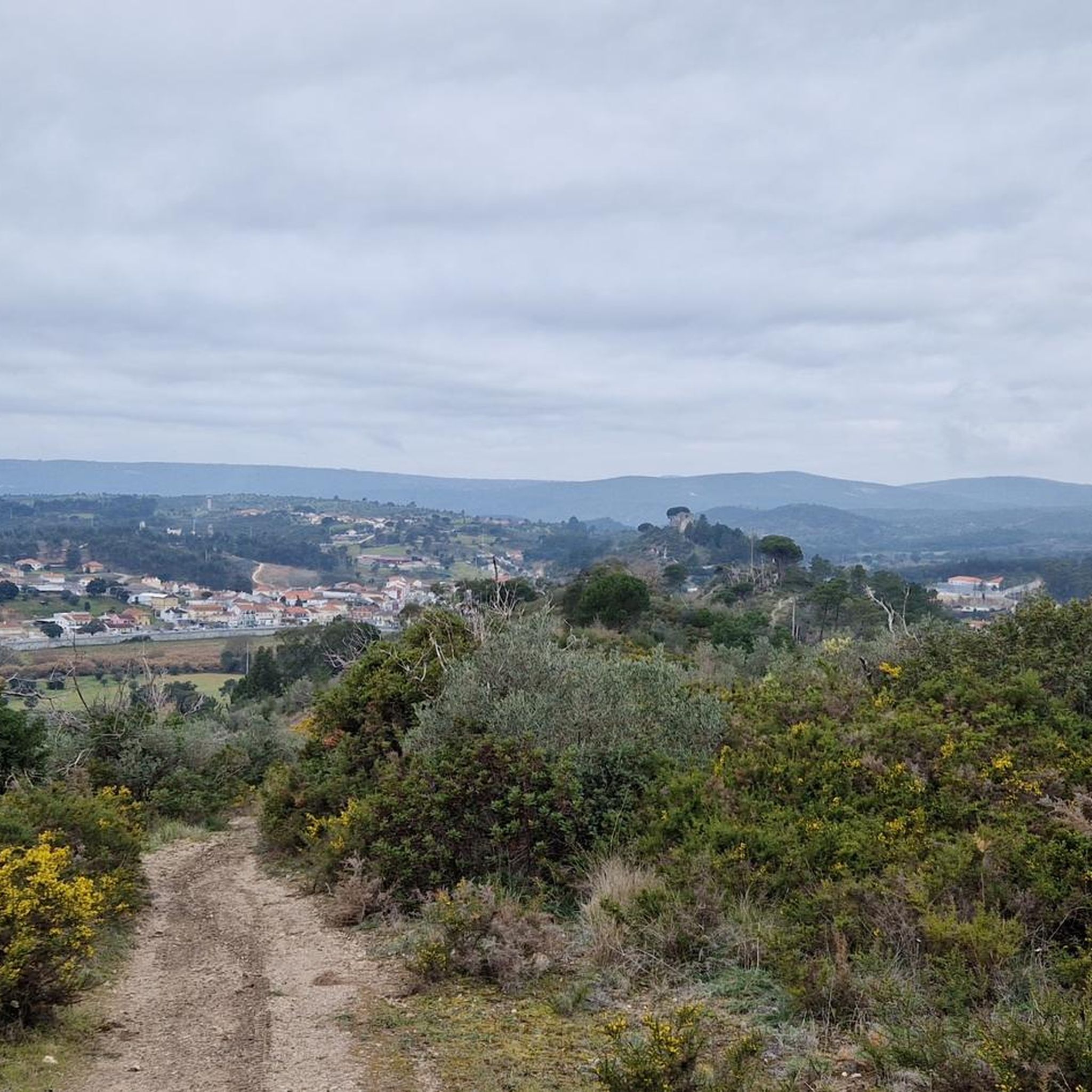
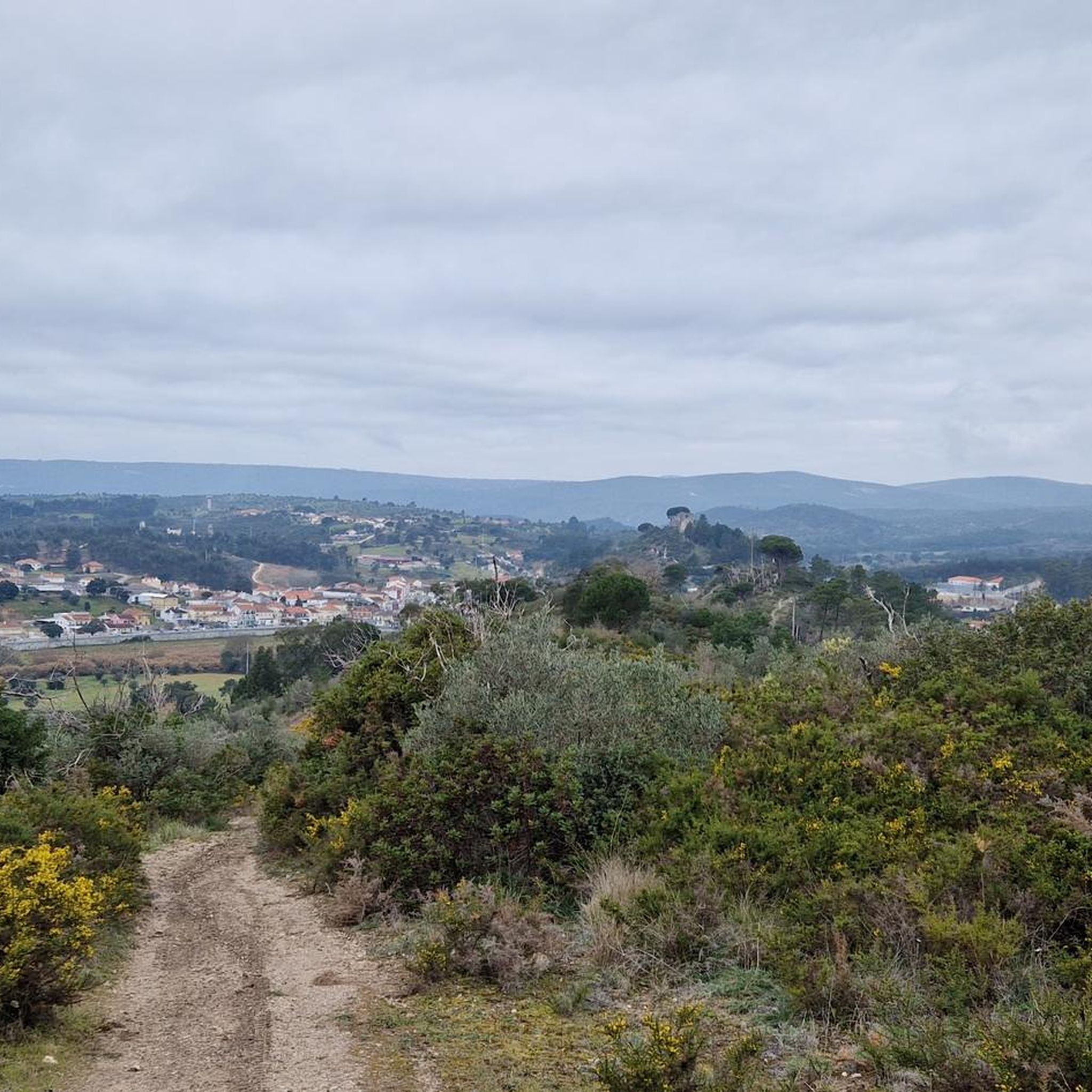
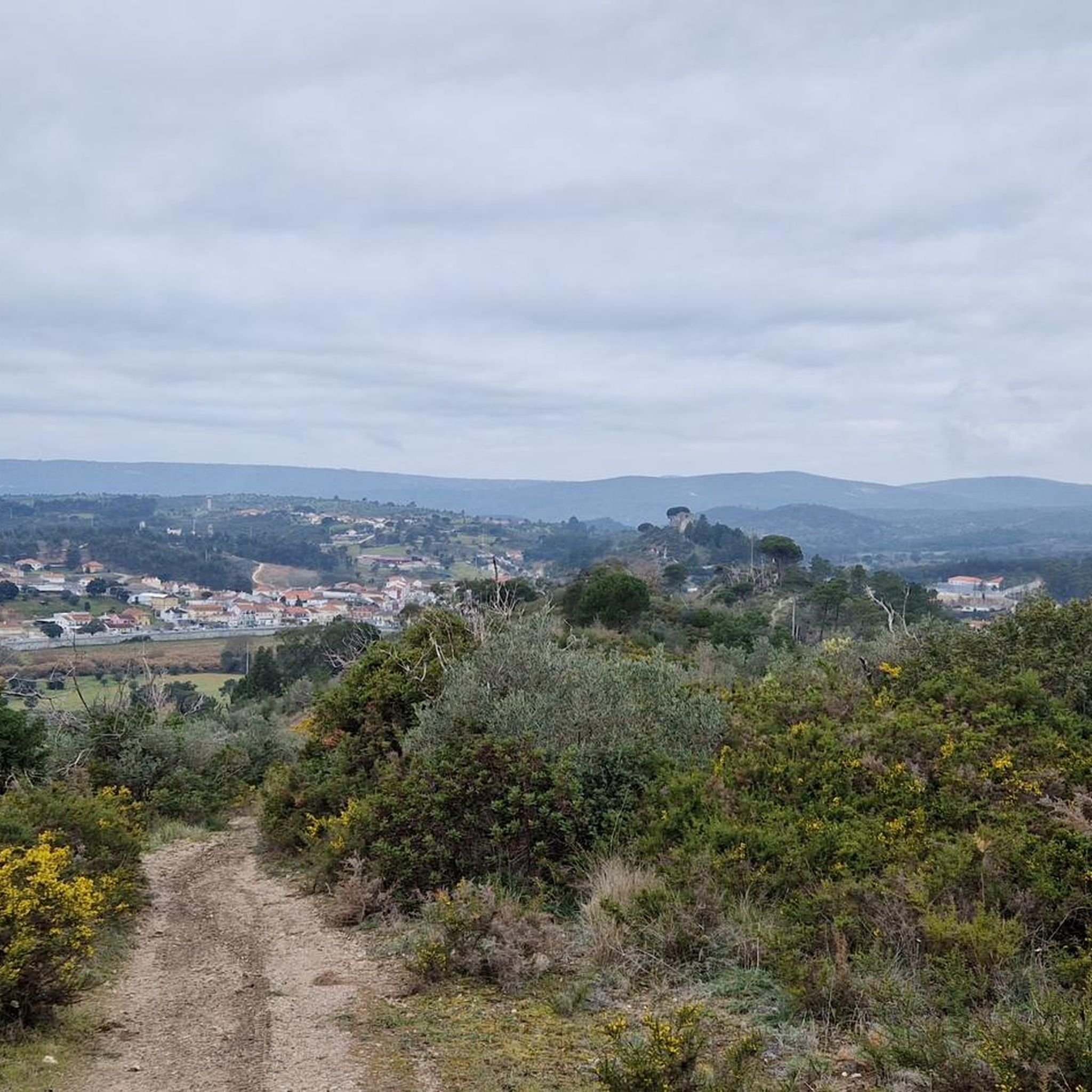
Swing built next to Alcanede Castle. It stands out for its location and superb view towards the south.
3
0
Alcanede Castle is located in the parish of the same name, in the municipality and district of Santarém, Portugal. It is believed that the earliest human occupation of the site dates back to a prehistoric castrum, fortified at the time of the Roman occupation and later reinforced and expanded. At the time of the Christian Reconquest of the Iberian Peninsula it was taken by Count D. Henrique (1091) and later recovered by the Moors. Its definitive possession was obtained from the conquest by King D. Afonso Henriques (1112-1185), in the context of the conquests of Santarém and Lisbon. Its first mayor was D. Gonçalo Mendes de Sousa, chief butler of D. Afonso Henriques, who was responsible for rebuilding and expanding the walled enclosure and populating and organizing the town, before 1163. The 1531 earthquake shook its structure, marking the beginning of its decline. With no military function or strategic importance, there was no interest in repairing it, plunging it into abandonment and oblivion. At the beginning of the 1940s, it was subject to restoration work seeking to return it to its approximate form at the end of the Middle Ages, conserving it as a historical landmark in the region's landscape.
2
0
At the end of this segment, towards Rio Maior, on the right side of the road there is a small park where it is possible to stop and walk a little to observe the magnificent natural caves on the banks of the Rio Maior, a practically forgotten river that gave its name to the current city from Rio Maior. Currently, the flow of the river is very low, drying up completely in the summer months. A little of history: "The Rio Maior rises in a picturesque place called «Bocas», a large gorge that cuts the mountain range, through which the Santarém-Peniche road also passes, located west of the city of Rio Maior. the picnic on Good Summer Day. It is said that in the mid-19th century, still on the Maior river, in winter or in times of plenty of water, boats sailed, almost all sailing or rowing, approaching the Tagus to change the loads to other larger boats." Source: Memories of Rio Maior - https://memoriasderiomaior.blogs.sapo.pt/2023.html
3
0

The Salinas de Rio Maior are located about 3 km from the city center and are located in a valley at the foot of the Serra dos Candeeiros, in the heart of the Serras de Aire e Candeeiros Natural Park. Classified as a Property of Public Interest since December 1997, these are the only inland salt pans in Portugal, and the only ones that are fully operational in Europe. The first reference to its existence dates from 1177, but it is thought that the use of rock salt would have been made since prehistoric times.
5
0
Frequently Asked Questions
What unique historical sites can I explore around Fráguas?
You can visit the Rio Maior Salt Pans, the only operational inland salt pans in Portugal, with a history dating back to 1177. Another significant historical landmark is Alcanede Castle, believed to have origins as a prehistoric castrum and later fortified by Romans and during the Christian Reconquest. Additionally, the Assentiz Roman Bridge, though not truly Roman, is an interesting historical structure from the 18th century that was part of a royal road.
Are there any natural attractions or scenic viewpoints near Fráguas?
Yes, the Bocas Gorge offers magnificent natural caves along the banks of the Rio Maior, providing a unique natural landscape. For panoramic views, the Serra dos Candeeiros Wind Farm, located at an altitude of approximately 487 meters, provides stunning vistas of the surrounding area.
What kind of outdoor activities can I do near these attractions?
The area around Fráguas is excellent for outdoor activities, particularly hiking and running. You can find various routes, including easy hikes like the 'Cineteatro de Rio Maior – Salinas de Rio Maior loop' or the 'Parque do Rio – Roman Villa loop'. For more challenging options, consider moderate hikes such as the 'Olho de Água de Alcobertas loop'. Explore more options on the hiking guide or the running trails guide for the region.
Are there family-friendly attractions in the Fráguas area?
Absolutely. The Rio Maior Salt Pans are considered family-friendly, offering an educational and unique experience for all ages to learn about salt extraction. Alcanede Castle is also a great family-friendly option, allowing visitors to explore historical ruins and enjoy the views.
Where can I find easy walking trails around Fráguas?
For easy walks, you can explore routes listed in the Easy hikes around Fráguas guide. Examples include the 'Cineteatro de Rio Maior – Salinas de Rio Maior loop' (7.3 km) and the 'Parque do Rio – Roman Villa loop' (5 km), both starting from Rio Maior.
What is special about the Rio Maior Salt Pans?
The Rio Maior Salt Pans are unique as they are the only inland salt pans in Portugal and are fully operational in Europe. They are located in a valley at the foot of the Serra dos Candeeiros and have been classified as a Property of Public Interest since 1997. Visitors can observe the traditional salt extraction process, where salty water from a well is evaporated by the sun and wind in shallow pits.
Can I visit the Serra dos Candeeiros Wind Farm?
Yes, the Serra dos Candeeiros Wind Farm is accessible. It features 37 wind turbines and is crossed by a dirt road that can be traveled by bicycle. It's known for being a windy place, offering impressive views of the surrounding landscapes.
What is the historical significance of Alcanede Castle?
Alcanede Castle has a rich history, with its origins potentially tracing back to a prehistoric castrum. It was fortified during Roman occupation and later reinforced. It played a role in the Christian Reconquest, being taken by Count D. Henrique and later by King D. Afonso Henriques. Despite suffering damage from an earthquake in 1531, it underwent restoration in the 1940s to preserve its historical importance.
Are there any archaeological sites in the broader Fráguas region?
Beyond the specific highlights, the broader Fráguas region is rich in archaeological significance. Fráguas, Vila Nova de Paiva, is an ancient village with roots dating back to 961 AD and is known for its protohistoric settlements. The Archaeological Site of Cabeço das Fráguas, near Benespera, is an emblematic protohistoric settlement with an extensive wall, houses, and a sanctuary, featuring a famous inscription detailing ancient religious rituals.
What do visitors enjoy most about the attractions around Fráguas?
Visitors particularly appreciate the unique historical and natural aspects of the region. The Rio Maior Salt Pans are often highlighted for their distinct operational process and historical context. The scenic views from places like the Serra dos Candeeiros Wind Farm and the historical depth of sites like Alcanede Castle also receive positive feedback, with many photos shared by the komoot community.
Can I find places for wild swimming or river activities in the area?
While the Bocas Gorge features the Rio Maior, its flow is very low and can dry up in summer, making it unsuitable for swimming. However, the Fráguas area in Vila Nova de Paiva is known for its delightful river beach on the Rio Paiva, which offers opportunities for relaxation and recreation by the water.
What are the best times to visit the Fráguas region for outdoor activities?
The region is generally pleasant for outdoor activities, but for hiking and exploring, spring and autumn offer milder temperatures. Summer can be quite warm, especially for longer hikes, though river beaches provide a refreshing option. The wind farm can be particularly windy, as expected, so check local weather conditions before visiting.

Get inspired with the komoot mobile app


Explore more
Still not found the Highlight you’re looking for? See guides of the top attractions in other regions:
