The best road cycling routes around Alvalade
26
riders
4
rides
Road cycling around Alvalade, a neighborhood in Lisbon, offers urban routes within a relatively low average elevation. The area is characterized by green spaces and a developing cycling infrastructure that connects to wider city networks. While Alvalade itself provides flatter urban rides, its connectivity allows access to varied terrain across the broader Lisbon region. This includes routes along the Tagus River path and connections to areas that offer more significant elevation gains.
Best road cycling routes around Alvalade
- The most…
Last updated: June 27, 2026
16
riders
73.4km
03:12
560m
560m
Moderate road ride. Good fitness required. Mostly well-paved surfaces and easy to ride.
4
riders
87.3km
03:53
700m
700m
Moderate road ride. Good fitness required. Some segments of this route may be unpaved and difficult to ride.

Sign up for free
3
riders
89.5km
03:56
710m
710m
Moderate road ride. Good fitness required. Some segments of this route may be unpaved and difficult to ride.
3
riders
86.5km
03:35
490m
490m
Moderate road ride. Good fitness required. Mostly well-paved surfaces and easy to ride.
Our route recommendations are based on thousands of hikes, rides, and runs completed by other people on komoot.
Start today with a free account
Your next adventure awaits.
Login or Signup
Popular around Alvalade

Tips from the Community

Only sparse ruins remain at this site today, testifying to the monastery that once stood here, a place of lived faith for several centuries. User @Kathrin has already written a detailed post about the history, citing sources. Perhaps an explanation of the patronage is also interesting: people entrusted themselves to the Mother of God of Loreto. Loreto is an international Marian pilgrimage site in central Italy (the Marche region). The House of Mary, formerly located in Nazareth (Israel), is venerated there. It was probably dismantled and brought to Europe by crusaders at the end of the 13th century, when the era of Christian kingdoms in the Holy Land came to an end. However, this very rational assumption is contradicted by a much more interesting legend: According to this legend, four angels carried out the translation of the "Santa Casa" by flying the building across the Mediterranean.
1
1

The castle has a roughly rectangular floor plan and its walls still show traces of a Muslim fortress. The castle of Santiago do Cacém has been classified as a national monument since 1910. What is actually unusual is the cemetery within the castle walls.
4
2

To the south of Santiago do Cacém, ruins recall the presence of the convent of Our Lady of Loreto, built in the 15th century. In addition to its historical aspect, the old stones bring during the summer a pleasant freshness which invites to the pause and the contemplation.
2
1

Cemetery within the castle walls
2
1
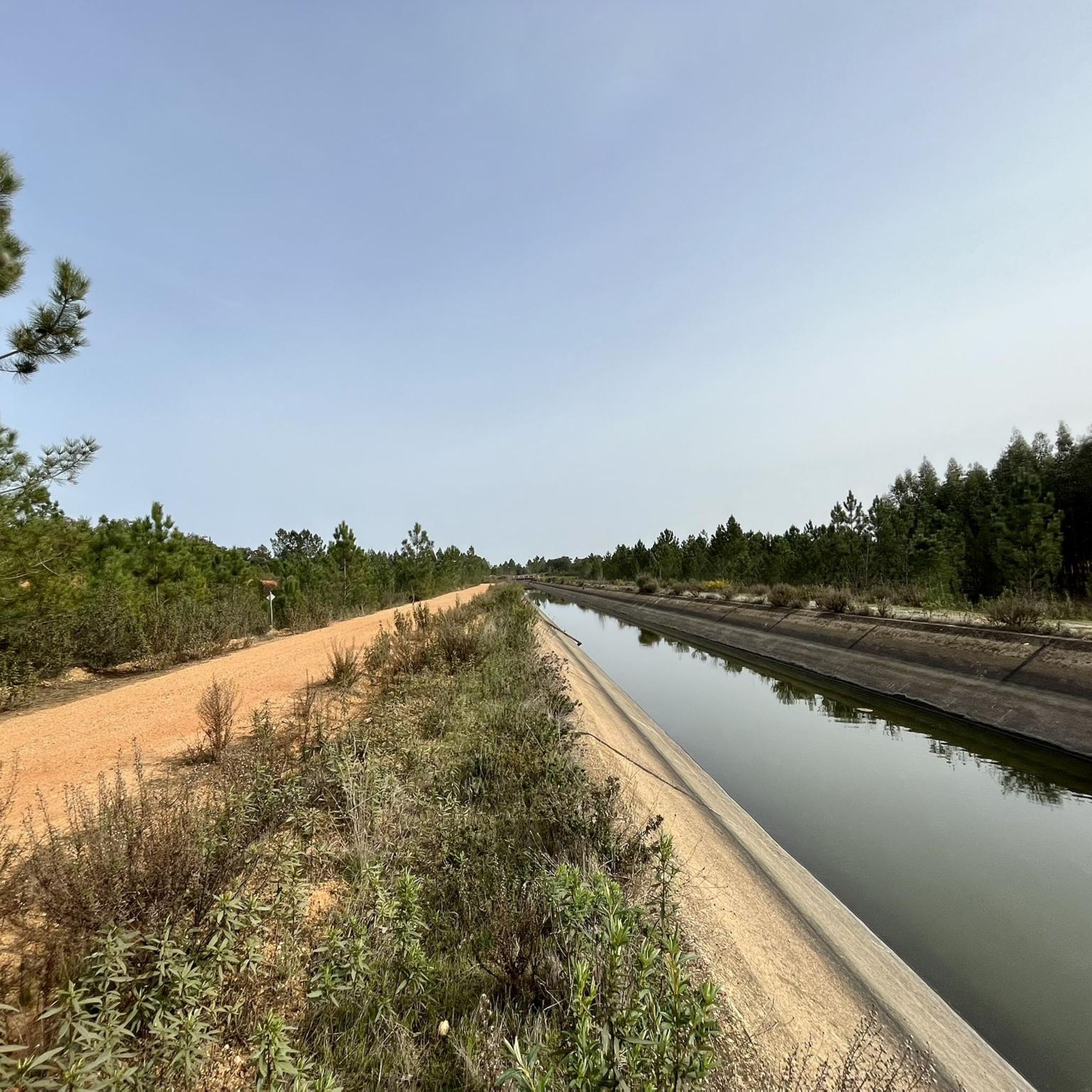
Completed in 1954, the large Campilhas dam lake can be used to produce electricity, supply drinking water and maintain an irrigation network. Due to repeated droughts, the lake can no longer recover the levels of its creation.
2
0
Erected on a round hill overlooking the picturesque village of Santiago do Cacém, the castle has watched over the surroundings since the 12th century, when the country was occupied by the Moors. Today considered a national monument, its square keeps and loopholes that encircle the walls are a reminder of its major role in history.
3
0

Small village with many restaurants, bars and grocery stores where you can buy regional products. This village is halfway between Lisbon and Faro. Before the existence of the motorway linking Lisbon to Faro in the Algarve, Mimosa was a place where all motorists and coaches stopped to take a break and have something to eat.
10
0

Wonderful views of the Alentejo coast The Castel is worth a visit. Unfortunately the church was closed.
13
0
Frequently Asked Questions
How many road cycling routes are available around Alvalade?
There are currently 4 dedicated road cycling routes available around Alvalade, all rated as moderate difficulty. These routes offer a good balance for experienced riders looking for substantial distances.
What is the typical terrain like for road cycling in Alvalade?
Alvalade itself features a relatively low average elevation, making for flatter urban rides. The area is characterized by green spaces and a developing cycling infrastructure. While immediate routes are often urban, Alvalade's connectivity within Lisbon allows access to more varied terrain, including routes along the Tagus River path and connections to areas with more significant elevation gains for those seeking a challenge.
Are there any family-friendly road cycling routes in Alvalade?
While the listed routes are moderate and cover substantial distances, Alvalade's green spaces and developing cycling infrastructure offer potential for family-friendly rides. The Dr. Mário Soares Garden (Campo Grande Garden) and José Gomes Ferreira Park provide tranquil settings and paths suitable for leisurely cycling, though these are not dedicated road cycling routes.
What kind of landmarks or natural features can I expect to see on road cycling routes around Alvalade?
The road cycling routes around Alvalade, particularly those starting from Ermidas-Sado or Santiago do Cacém, often traverse a mix of rural and urban landscapes. While Alvalade itself is known for its green spaces like José Gomes Ferreira Park, the broader region offers points of interest such as the Lousal Ciência Viva Science Center and the Lousal Mining Museum, which provide a glimpse into the area's heritage.
Are there any circular road cycling routes available?
Yes, all the featured road cycling routes around Alvalade are circular. For example, you can explore the Mimosa loop from Ermidas-Sado, the Mimosa – Vale Seco Café loop from Ermidas-Sado, or the Vale Seco Café – Mimosa loop from Santiago do Cacém, all designed as loops for convenient riding.
What is the average distance and elevation gain for road cycling routes in this area?
The road cycling routes around Alvalade are generally long, ranging from approximately 73.7 km (45.8 miles) to 89.6 km (55.7 miles). Elevation gains vary, with routes like the Mimosa – Vale Seco Café loop from Ermidas-Sado featuring around 704 meters (2,312 feet) of ascent, indicating a moderate challenge suitable for experienced riders.
Are there options for less crowded road cycling routes?
While Alvalade is an urban neighborhood, Lisbon's expanding cycling network includes routes that connect to quieter areas. The routes listed, such as the Campilhas Reservoir – Mimosa loop from Ermidas-Sado, often venture into more rural landscapes outside the immediate city center, potentially offering a less crowded experience.
What is the best time of year for road cycling around Alvalade?
Lisbon and its surrounding areas generally offer pleasant cycling conditions for much of the year. Spring and autumn provide mild temperatures, ideal for longer rides. Summer can be warm, especially in the afternoon, so early morning or late afternoon rides are often preferred. Winters are typically mild, making year-round cycling possible, though occasional rain may occur.
Are there any cafes or places to stop for refreshments along the routes?
The routes often pass through or near small settlements like Mimosa, which may have local cafes or shops. The Taberna Alegrill is also noted as a restaurant in the broader area, providing potential refreshment stops. It's always a good idea to check opening hours and availability, especially in smaller villages.
How does Alvalade connect to the wider Lisbon cycling network?
Alvalade is integrated into Lisbon's actively expanding cycling network. A new cycle-pedestrian bridge links Alvalade and Campo Grande to the eastern part of the capital, including areas like Marvila and Parque das Nações. Ongoing projects aim to improve cycle paths on key avenues, creating safe and connected routes within and around the city's central axis, enhancing accessibility to various parts of Lisbon for road cyclists.
Are the road cycling routes around Alvalade suitable for challenging rides?
While Alvalade itself is relatively flat, its connectivity allows access to more challenging terrain. The listed routes, such as the Vale Seco Café – Mimosa loop from Santiago do Cacém, feature moderate difficulty with significant distances and elevation gains (around 712 meters), providing a good workout for experienced road cyclists. For even greater challenges, the broader Lisbon region offers routes with more substantial climbs.
What public transport options are available for accessing road cycling routes near Alvalade?
Alvalade is a well-connected neighborhood in Lisbon, served by public transport options including the metro (Alvalade station) and various bus lines. This makes it convenient to reach starting points within Alvalade or connect to other parts of the city's cycling network. For routes starting further afield, like Ermidas-Sado or Santiago do Cacém, regional transport options would be necessary, though these are outside the immediate Alvalade area.
Most popular routes around Alvalade
Most popular attractions around Alvalade

Get inspired with the komoot mobile app


Explore more
Browse the best Road cycling routes in other regions.
