The best road cycling routes around Ermidas-Sado
33
riders
5
rides
Road cycling routes around Ermidas-Sado traverse the Alentejo region, characterized by cork oak forests and open countryside. The area offers diverse terrain, from tranquil stretches along the Sado River basin to more challenging ascents towards the Serra da Arrábida Natural Park. Its location provides access to both inland landscapes and coastal areas.
Best road cycling routes around Ermidas-Sado
- The most popular road cycling route is Mimosa loop from Ermidas-Sado, a 45.8 miles (73.7 km) trail that takes 3 hours…
Last updated: May 15, 2026
16
riders
73.7km
03:15
570m
570m
Moderate road ride. Good fitness required. Mostly well-paved surfaces and easy to ride.
7
riders
Hard road ride. Very good fitness required. Some segments of this route may be unpaved and difficult to ride.

Sign up for free
4
riders
87.3km
03:53
700m
700m
Moderate road ride. Good fitness required. Some segments of this route may be unpaved and difficult to ride.
3
riders
89.5km
03:56
710m
710m
Moderate road ride. Good fitness required. Some segments of this route may be unpaved and difficult to ride.
3
riders
86.5km
03:35
490m
490m
Moderate road ride. Good fitness required. Mostly well-paved surfaces and easy to ride.
Our route recommendations are based on thousands of hikes, rides, and runs completed by other people on komoot.
Start today with a free account
Your next adventure awaits.
Login or Signup
Popular around Ermidas-Sado

Tips from the Community

Grândola, Vila Morena is a famous Portuguese protest song composed in 1971 by singer-songwriter José Afonso. It became internationally famous when it was broadcast on the radio as a secret signal for the start of the Carnation Revolution of April 25, 1974, which ended Salazar's dictatorship. The song owes its strength to a strong message of brotherhood, equality, and power to the people. You can delve deeper into its history and social impact by consulting the article by Cultweek, or discover the lyrics, chords, and translation on IlDeposito.org.
1
0

The link to Zeca Afonso's song, "Grândola, Vila Morena", is as follows: https://youtu.be/gaLWqy4e7ls?is=IVnBFCPiYAqt0hJk
9
0
Grândola, Vila Morena is a poem and song composed and sung by José Afonso, chosen by the Armed Forces Movement (MFA) as the second signal to set the rebellious military in motion, initiating the Revolution of April 25, 1974. The song, revolutionary from the start, became the anthem of the Revolution. It was written and recorded in October 1971, after a visit to the Sociedade Musical Fraternidade Operária Grandolense in Grândola, in Alentejo. The song was released on the album Cantigas do Maio with the direction of José Mário Branco, recorded in Hérouville, France, which came out in December of that year. Although not initially conceived as a protest song, the changes made at the time of recording gave it a highly political message in the context of the Estado Novo dictatorship. Grândola, Vila Morena became a symbol of the popular struggle and a national heritage, known by Portuguese society at large. (Source: Wikipedia) https://youtu.be/gaLWqy4e7ls?is=74KdykCGenB6jR6R
12
0

Only sparse ruins remain at this site today, testifying to the monastery that once stood here, a place of lived faith for several centuries. User @Kathrin has already written a detailed post about the history, citing sources. Perhaps an explanation of the patronage is also interesting: people entrusted themselves to the Mother of God of Loreto. Loreto is an international Marian pilgrimage site in central Italy (the Marche region). The House of Mary, formerly located in Nazareth (Israel), is venerated there. It was probably dismantled and brought to Europe by crusaders at the end of the 13th century, when the era of Christian kingdoms in the Holy Land came to an end. However, this very rational assumption is contradicted by a much more interesting legend: According to this legend, four angels carried out the translation of the "Santa Casa" by flying the building across the Mediterranean.
1
1

The castle has a roughly rectangular floor plan and its walls still show traces of a Muslim fortress. The castle of Santiago do Cacém has been classified as a national monument since 1910. What is actually unusual is the cemetery within the castle walls.
4
2

To the south of Santiago do Cacém, ruins recall the presence of the convent of Our Lady of Loreto, built in the 15th century. In addition to its historical aspect, the old stones bring during the summer a pleasant freshness which invites to the pause and the contemplation.
2
1

Cemetery within the castle walls
2
1
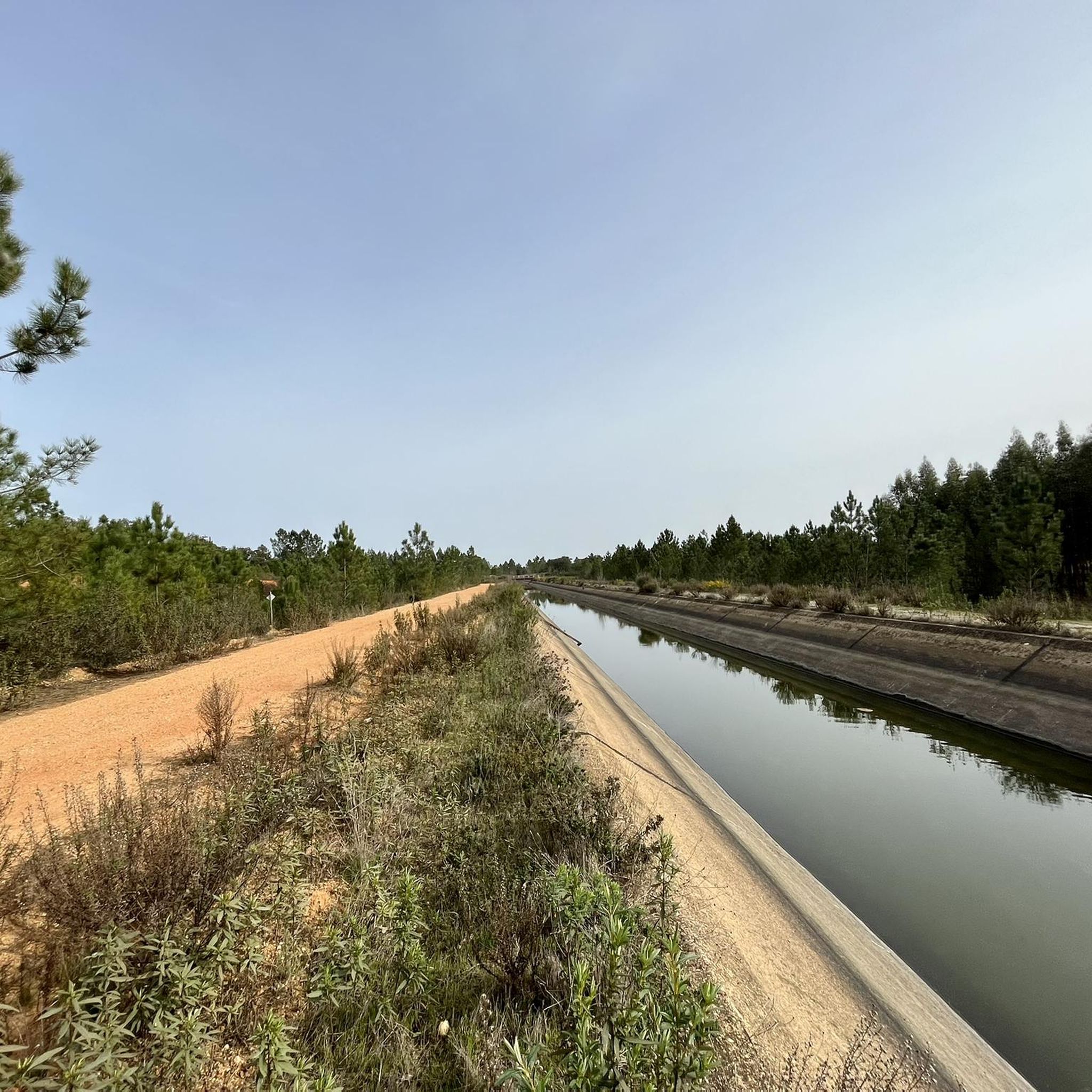
Completed in 1954, the large Campilhas dam lake can be used to produce electricity, supply drinking water and maintain an irrigation network. Due to repeated droughts, the lake can no longer recover the levels of its creation.
1
0
Frequently Asked Questions
How many road cycling routes are available around Ermidas-Sado?
There are currently 5 curated road cycling routes around Ermidas-Sado on komoot, offering a range of experiences from moderate loops to more challenging ascents.
What kind of terrain can I expect on road cycling routes in Ermidas-Sado?
Road cycling routes around Ermidas-Sado traverse the Alentejo region, characterized by extensive cork oak forests and open countryside. You'll find diverse terrain, from tranquil stretches along the Sado River basin to more challenging ascents, particularly towards the Serra da Arrábida Natural Park.
Are there any challenging road cycling routes for experienced riders?
Yes, for experienced riders seeking a challenge, the Estrada do Badoca Park – Ribeira de Grândola loop from Santiago do Cacém is a difficult 110.3 km path featuring significant elevation gain through the region.
What are some popular moderate road cycling routes in the area?
Popular moderate routes include the Mimosa loop from Ermidas-Sado, a 73.7 km trail exploring the local countryside, and the Mimosa – Vale Seco Café loop from Ermidas-Sado, which is 87.3 km and leads through cork oak forests and rural landscapes.
Are there any loop road cycling routes available?
Yes, all the featured road cycling routes around Ermidas-Sado are designed as loops, allowing you to start and finish at the same point. Examples include the Mimosa loop from Ermidas-Sado and the Campilhas Reservoir – Mimosa loop from Ermidas-Sado.
What is the best time of year for road biking in Ermidas-Sado?
The Alentejo region, including Ermidas-Sado, generally offers pleasant cycling conditions during spring (March to May) and autumn (September to November) when temperatures are milder. Summers can be very hot, while winters are typically mild but may have more rainfall.
What natural features can I see while road cycling near Ermidas-Sado?
The region is rich in natural beauty. You'll cycle through characteristic cork oak forests and open Alentejo countryside. The nearby Sado Estuary Nature Reserve is a haven for birdwatching, and the Serra da Arrábida Natural Park offers stunning coastal views and Mediterranean vegetation.
Are there any interesting landmarks or attractions near the road cycling routes?
Yes, while cycling, you might pass by or be near several points of interest. For example, the settlement of Mimosa is featured in several routes. Other nearby attractions include the Lousal Ciência Viva Science Center and the Lousal Mining Museum, offering cultural insights into the region's history.
Can I find places to eat or rest along the routes?
Some routes, like the Mimosa – Vale Seco Café loop from Ermidas-Sado, specifically mention cafes, suggesting opportunities for refreshments. The region's rural nature means you should plan your stops, but small villages often have local establishments. The Taberna Alegrill is a nearby restaurant highlight.
What makes road cycling in Ermidas-Sado unique compared to other regions?
Ermidas-Sado offers a unique blend of Alentejo's tranquil cork oak forests and open countryside, combined with proximity to the diverse landscapes of the Sado River basin and the coastal beauty of the Serra da Arrábida Natural Park. This allows for varied rides, from flat stretches to scenic climbs, all within a relatively unspoiled natural environment.
Is there public transport access to the starting points of these routes?
Ermidas-Sado is a railway town, suggesting some public transport connectivity. However, for specific route starting points, it's advisable to check local public transport schedules and accessibility for bicycles, as many routes begin directly from the town or nearby villages.
Are there any routes that offer coastal views?
While Ermidas-Sado itself is inland, its strategic location provides access to coastal areas. The wider region, particularly towards the Serra da Arrábida Natural Park, offers routes with stunning coastal views where the deep blue sea meets green hills. For more information on this area, you can visit Visit Portugal's guide to Serra da Arrábida and Sado Estuary.
Most popular routes around Ermidas-Sado
Most popular attractions around Ermidas-Sado

Get inspired with the komoot mobile app


Explore more
Browse the best Road cycling routes in other regions.
