The best walks and hikes around Verdoejo
4.3
(364)
2,228
hikers
48
hikes
Hiking around Verdoejo features trails that traverse the Minho River valley, offering views of the surrounding hills and historic border towns. The landscape is characterized by a mix of agricultural areas, riverside paths, and forested sections. This region provides a variety of routes suitable for different hiking preferences.
Best hiking trails around Verdoejo
- The most popular hiking route is Tui - Rio Louro trail, an 8.6 miles (13.9 km) moderate trail that takes 3 hours 39 minutes to complete,…
Last updated: June 20, 2026
4.6
(7)
18
hikers
13.9km
03:40
120m
130m
Moderate hike. Good fitness required. Easily-accessible paths. Suitable for all skill levels.
4.8
(31)
198
hikers
7.42km
02:03
130m
130m
Moderate hike. Good fitness required. Easily-accessible paths. Suitable for all skill levels.

Sign up for free
4.9
(23)
160
hikers
7.83km
02:10
130m
140m
Moderate hike. Good fitness required. Easily-accessible paths. Suitable for all skill levels.
4.5
(22)
118
hikers
23.4km
06:16
270m
270m
Hard hike. Very good fitness required. Easily-accessible paths. Suitable for all skill levels.
4.3
(11)
88
hikers
20.7km
05:30
220m
220m
Hard hike. Very good fitness required. Easily-accessible paths. Suitable for all skill levels.
Get access to more routes and recommendations from other explorers.
Sign up for free
Already have an account?
Our route recommendations are based on thousands of hikes, rides, and runs completed by other people on komoot.
Start today with a free account
Your next adventure awaits.
Login or Signup

Tips from the Community

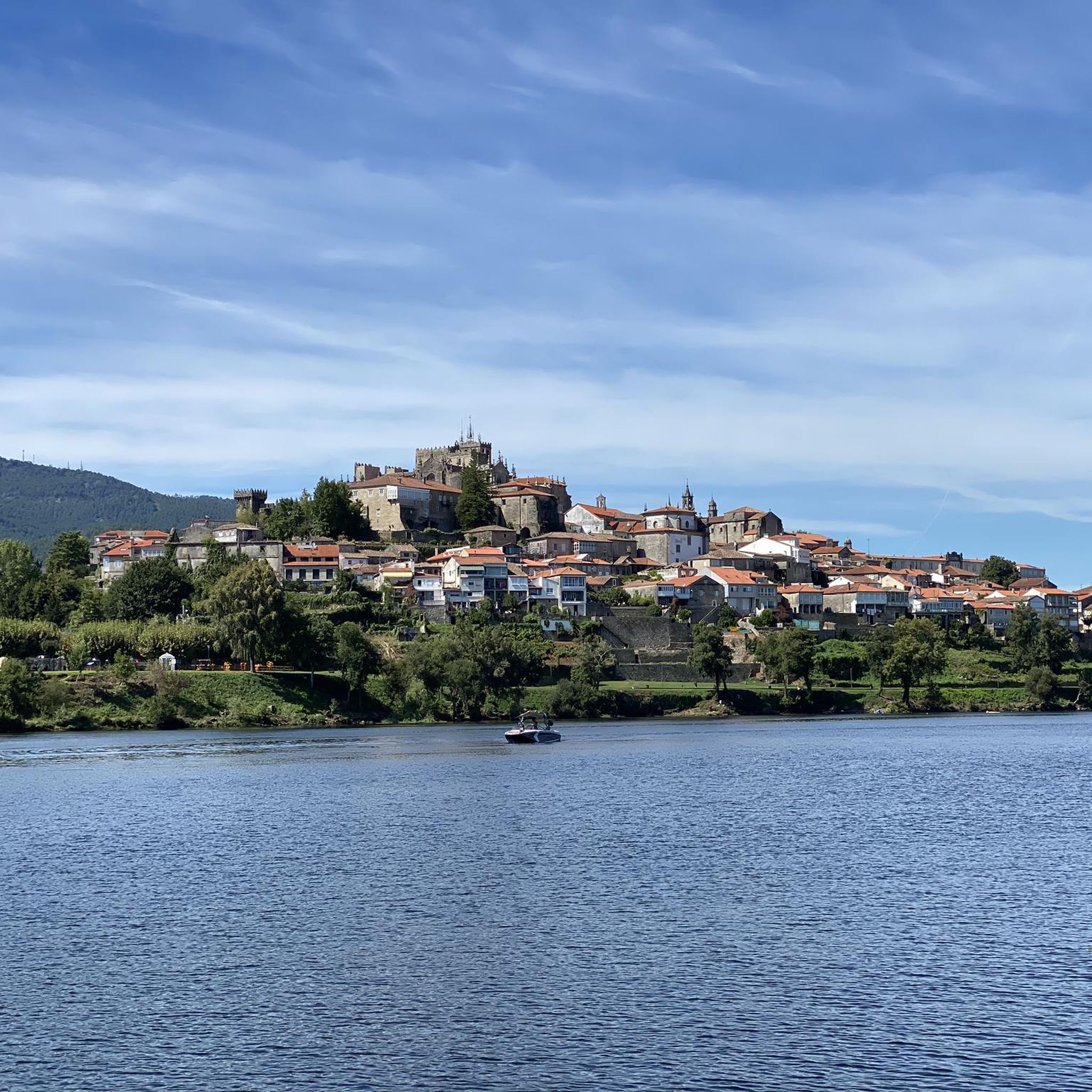
Valença Fortress, also known as Praça-forte de Valença do Minho, is an imposing jewel of Portuguese military architecture with over eight centuries of history. Its origins date back to the 13th century, when King Sancho I and later Afonso III fortified it to protect the border with Galicia. During the Restoration War (17th–18th centuries), it was transformed into a Vauban-style fortress under the engineer Miguel de l’École and the architect Manuel Pinto de Vilalobos, being completed in 1713. The fortress withstood attacks during the Restoration, was captured and recaptured several times, and was also defended during the Napoleonic Wars and the Liberal Wars.
4
0

The imposing Valença Fortress rises atop a hill, dominating the landscape and leaving an unforgettable impression on those who arrive. More than a symbol, it is the soul of the city, preserving centuries of history within its walls. Built in the 17th century on the ruins of an ancient 13th-century castle, the fortress is a masterful example of military architecture of the period, with its star-shaped walls stretching for an impressive 5.5 kilometers. Upon entering, one immediately senses the strength and grandeur of Valença, one of the oldest towns in Portugal.
2
0
This chapel is an example of traditional religious architecture and is often associated with devotion to Saint Sebastian, a saint highly venerated in the Iberian Peninsula, especially for his role as a protector against epidemics.
3
0

The rear façade is blind and the sides have a small framed window, while the one on the east side has a door. The entrance portal to the chapel has a chamfered round arch and is topped by a rectangular cartouche in relief with the coat of arms of Bishop D. Rodrigo Pereira. Inside the nave, which is free of plaster, there is an altar supported on the pedestal with a front covered in standard white, blue and yellow tiles. Above, in the centre of the back wall, there is a niche with an image of the Martyr St. Sebastian.
0
0

Many memorabilia to acquire
4
0
Beautiful little church
5
0
Frequently Asked Questions
How many hiking trails are available around Verdoejo?
There are nearly 50 hiking trails around Verdoejo, offering a diverse range of experiences. This includes 25 easy routes, 18 moderate trails, and 6 more challenging options for experienced hikers.
What kind of terrain can I expect on hikes around Verdoejo?
Hiking around Verdoejo features trails that traverse the Minho River valley, offering views of the surrounding hills and historic border towns. The landscape is characterized by a mix of agricultural areas, riverside paths, and forested sections, providing varied terrain for exploration.
Are there any family-friendly hiking routes in Verdoejo?
Yes, Verdoejo offers several easy routes suitable for families. These trails often follow gentler paths along the river or through agricultural areas, providing a pleasant experience for all ages. Look for routes marked as 'easy' on komoot for suitable options.
Can I bring my dog on the hiking trails around Verdoejo?
Many trails around Verdoejo are suitable for dogs, especially those that follow riverside paths or forested sections. However, it's always recommended to check specific route details on komoot for any restrictions and to keep your dog on a leash, particularly in agricultural areas or near wildlife.
What are some notable landmarks or attractions I can see while hiking in the area?
Hikers can discover several interesting landmarks. You might encounter historical sites like the Fortress of Valença or cross impressive structures such as the Roman Bridge of Orbenlle. Natural highlights include Monte Aloia and the Monte Aloia Natural Park, offering scenic views and natural beauty.
Are there any circular hiking routes available in Verdoejo?
Yes, Verdoejo has several excellent circular routes. For example, the View of Tui – Tui Old Town loop from Valença is a moderate 4.6-mile (7.4 km) path offering views of Tui. Another option is the more challenging Tui Old Town – Roman Bridge of Orbenlle loop from Guillarei, covering 20.6 km.
What is the best time of year to go hiking in Verdoejo?
The region around Verdoejo is generally pleasant for hiking during spring and autumn, when temperatures are milder. Summer can be warm, especially in the river valleys, while winter offers a different charm with cooler weather, though some paths might be muddier. Always check local weather forecasts before heading out.
Are there options for longer, more challenging hikes?
Yes, for those seeking a greater challenge, there are difficult routes available. An example is the Fortress of Valença – View of Tui loop from Tui, which spans over 23 km with significant elevation changes, providing a demanding yet rewarding experience.
What do other hikers enjoy most about the trails in Verdoejo?
The area is highly rated by the komoot community, with an average score of 4.2 stars from over 780 reviews. Hikers often praise the diverse scenery, which includes river valleys, historic towns, and rolling hills, as well as the variety of routes suitable for different ability levels.
Is public transport available to reach trailheads in Verdoejo?
While specific public transport options to every trailhead may vary, the region's proximity to towns like Tui and Valença, which have some transport links, can facilitate access to certain starting points. It's advisable to research local bus schedules or consider carpooling for more remote trailheads.
Are there any facilities like cafes or restaurants near the hiking routes?
Given the region's mix of historic towns and agricultural areas, you can often find cafes and restaurants in the nearby towns such as Tui and Valença, which are frequently part of or close to many hiking routes. These provide opportunities for refreshments and meals before or after your hike.
Are there any hidden gems or less-traveled paths in Verdoejo?
While specific 'hidden gems' are often discovered through local exploration, the region's extensive network of trails means there are many paths beyond the most popular ones. Exploring some of the less-frequented easy or moderate routes can lead to peaceful discoveries away from the crowds.
Most popular attractions around Verdoejo

Get inspired with the komoot mobile app


Explore more
Browse the best Hikes in other regions.
