Attractions and Places To See around okres Trnava - Top 20
Best attractions and places to see around okres Trnava include a diverse range of historic landmarks, cultural sites, and natural landscapes in western Slovakia. The region is characterized by the Little Carpathians mountain range and the historic city of Trnava, known for its numerous churches. Visitors can explore medieval city walls, castles, and significant religious buildings. Natural features like the Trnava Ponds and Hlbočiansky Waterfall offer outdoor exploration opportunities.
Best attractions and places to see around okres Trnava
- The most…
Last updated: July 1, 2026
St. Nicholas Basilica (Trnava)
Highlight • Religious Site
Translated by Google •
Tip by

Ruins of Katarínka Monastery and Church
Highlight • Historical Site
Translated by Google •
Tip by

Sign up now to discover places like this
Get recommendations on the best single tracks, peaks, & plenty of other exciting outdoor places.
Sign up for free
Trnava Old Town, Main Square and City Tower
Highlight • Historical Site
City tower, cathedral and many other churches.
More information: de.wikipedia.org/wiki/Trnava#Stadtbild_und_Bauwerke
Translated by Google •
Tip by

Church of St. Helena
Highlight • Religious Site
Tip by
Záruby Summit Cross
Highlight • Summit
Translated by Google •
Tip by

Orthodox Synagogue Trnava
Highlight • Religious Site
Showing Translation
Tip by
City Arena – Anton Malatinský Stadium
Highlight • Structure
Translated by Google •
Tip by

Ostrý Kameň Castle Ruins
Highlight • Castle
Translated by Google •
Tip by
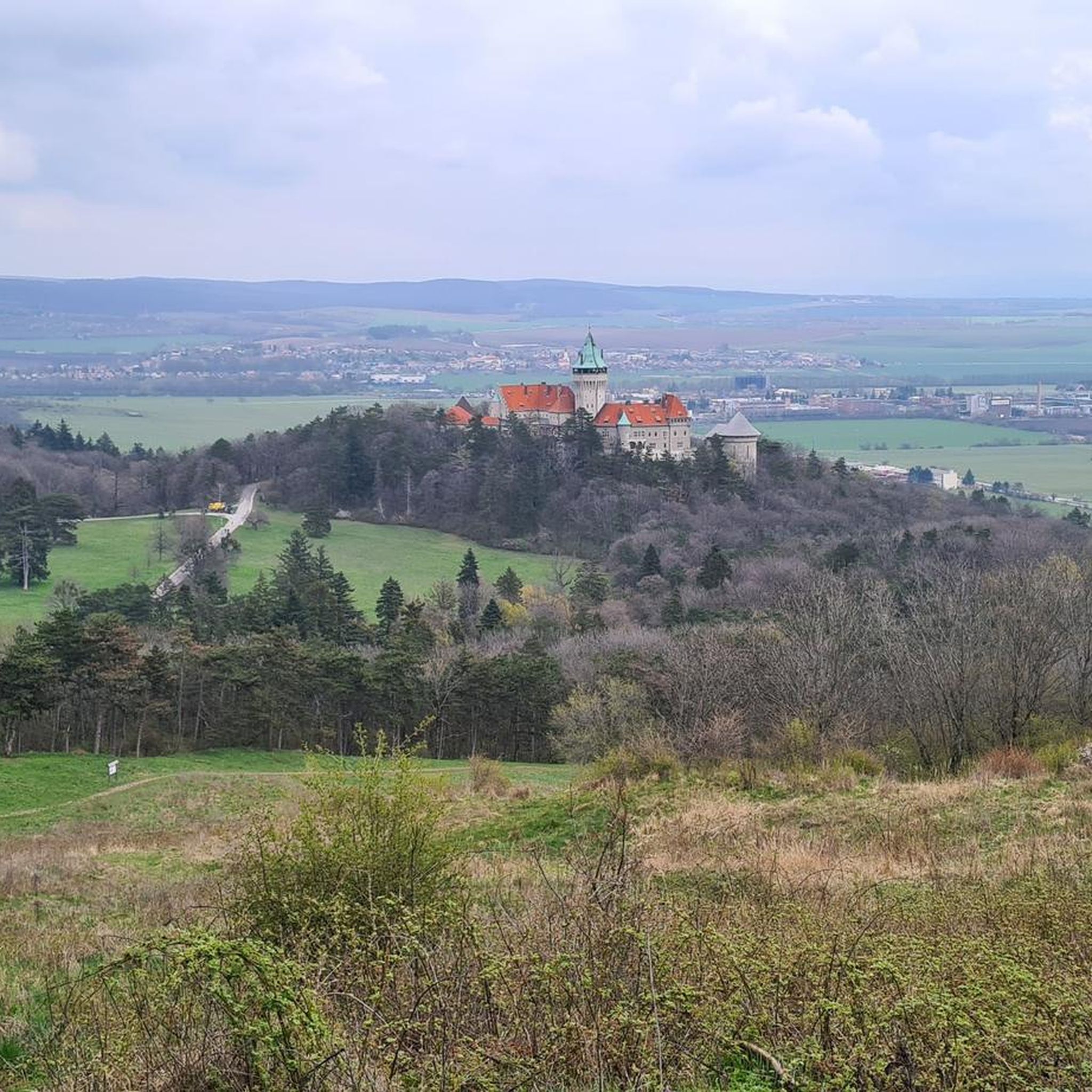
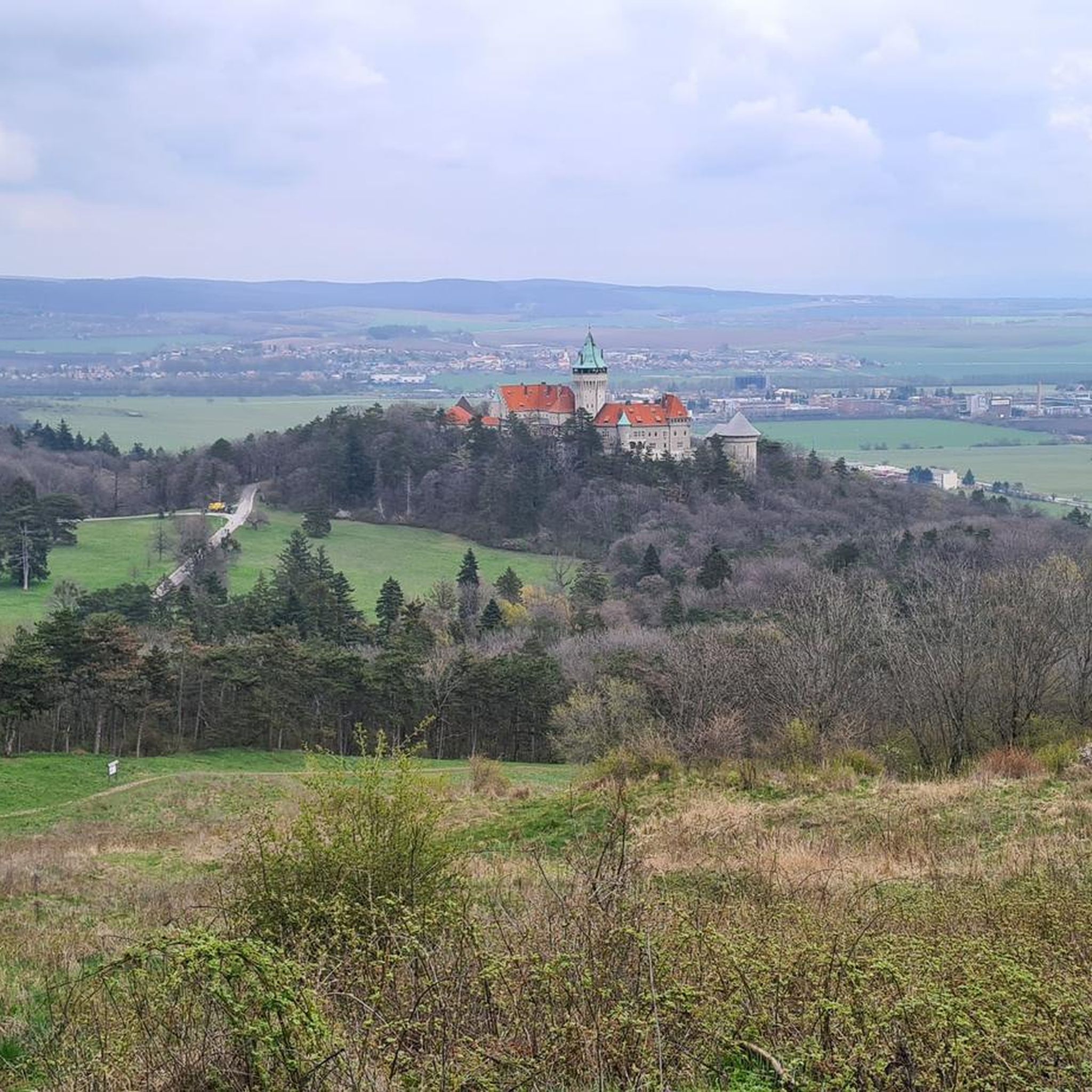
View of Smolenice Castle
Highlight • Viewpoint
Tip by

City Wall and Tower of Skalica
Highlight • Historical Site
Translated by Google •
Tip by
Sign up for free to discover even more attractions around okres Trnava.
Sign up for free
Already have an account?
Start today with a free account
Your next adventure awaits.
Login or Signup
Tips from the Community

Today there is a great cafe in the old synagogue. You can sit either under the old vault or in one of the "booths" in the side aisles.
0
0

Images from a computer-generated 3D reconstruction of the presumed appearance of the Church and Monastery of St. Catherine during its final construction phase at the end of the 18th century. The monastery consisted of a church and monastic buildings with a ground plan based on two quadrangles, each with a square courtyard. The smaller courtyard, closer to the church, served as the Paradise Court, around which the monastery buildings were grouped. The larger courtyard was surrounded by outbuildings and the novitiate. The church tower, with its onion dome and stone statues of four Franciscan saints at its corners, dominated the townscape. These statues have been located at the Pálffy tomb in Smolenice since 1905. Access to the church was through profiled stone portals, similar to those at the main entrance of the monastery. The simple, mostly smooth facades were articulated by white bands that contrasted with the gray plaster. The roofs were covered with fired tiles.
0
0

On the way to the top of Záruby in the Little Carpathians, you will pass several signposts and crossroads. They are very well marked. The path from the Drina cave to the top of Záruby is quite difficult. We sweated a lot.
3
0

Anton Malatinský Stadium (also known as City Arena) is a football stadium in Trnava.
2
0

Saint Nicholas, Bishop of Myra, to whom the church in Trnava is dedicated, is - alongside Saint Martin - one of the most popular saints of all. His memorial day, December 6th, is probably known to almost every child in Germany - and far beyond. On the eve of this day, children used to put their shoes or boots - which had of course been carefully polished - in front of the door so that Saint Nicholas could fill them with gifts during the night. In more agricultural areas, it was also customary for children to put out a small gift of food for the donkey, Saint Nicholas's mount (according to another tradition, it was a white horse).
0
0
Saint Helena, to whom the church here in Trnava is dedicated, was the mother of Emperor Constantine the Great (who, after his victory at the Milvian Bridge in front of Rome, recognized Christianity as a religion and ended the long period of persecution with the Edict of Toleration of Milan). In the early fourth century, she made a pilgrimage to the Holy Land (Israel/Palestine) and brought numerous relics back to Europe, including the True Cross on which Jesus Christ was crucified. She is therefore often depicted in paintings or as a statue with a cross as an attribute. According to Catholic tradition, Saint Helena's feast day in the calendar of saints is August 18, but in the Orthodox churches it is March 6 and May 21.
1
0
The Jewish communities in Europe, whose centuries-old tradition is often only evidenced by memorial plaques or monuments, have – especially in these difficult times with a strongly growing, openly expressed antisemitism – been honored by the awarding of the "International Charlemagne Prize of Aachen" to the President of the Conference of European Rabbis, Chief Rabbi Pinchas Goldschmidt, and the Jewish communities in Europe. "In recognition of his outstanding work for peace, the self-determination of peoples and European values, for tolerance, pluralism and understanding, and in recognition of his significant commitment to interreligious and intercultural dialogue, the Directorate of the Society for the Awarding of the International Charlemagne Prize of Aachen in 2024 honors the President of the Conference of European Rabbis, Chief Rabbi Pinchas Goldschmidt, and together with him the Jewish communities in Europe. With this award, the Charlemagne Prize Directorate wants to send the signal that Jewish life is naturally part of Europe and that there must be no place for antisemitism in Europe. Jewish life is an important part of European history and the present – now and in the future. (...) With the President of the Conference of European Rabbis, Chief Rabbi Pinchas Goldschmidt, and the Jewish communities in Europe, the Directorate of the Society for the Awarding of the International Charlemagne Prize of Aachen in 2024 honors the outstanding representative of European Jewry and Jewish life in Europe, which has enriched our continent for centuries and will always have and must have its place here."
0
0

One of the greatest attractions of the eastern foot of the Little Carpathians is the "fairytale castle" of Smolenice. It is one of the most important buildings in Slovakia, modeled on the castles of central France and rebuilt in the Romantic style. The castle was built on the site of a 14th century castle. The castle protected the border passes in the Carpathians and the Bohemian Way. From 1777 it was owned by the Pálffys, who rebuilt it in the Romantic style in the second half of the 19th century. Smolenice Castle is dominated by a mighty tower with a viewing terrace. The steep roofs, towers, the fortified courtyard with a chapel and bastions, and the beautiful greenery complete the fairytale charm. Today the castle is the seat of the Slovak Academy of Sciences - the Slovak Academy of Sciences Congress Centre, and numerous conferences and symposia are held there throughout the year. Every Saturday, newlyweds stroll in and around the castle to take photos and film. During the summer months of July and August, the castle is open to the public. The romantic appearance of the castle is also reinforced by the surrounding park, which merges into a dense forest.
0
0
Frequently Asked Questions
What historical landmarks can I explore in okres Trnava?
The region is rich in history. You can wander through Trnava Old Town, Main Square and City Tower, which offers panoramic views. Don't miss the picturesque Smolenice Castle, a fairytale-like reconstruction, or the atmospheric Ostrý Kameň Castle Ruins, which provide great views and a sense of ancient history. The preserved sections of the medieval City Fortification in Trnava are also worth exploring.
Are there any significant religious sites to visit in Trnava?
Trnava, often called 'Little Rome,' boasts numerous churches. Key religious sites include the impressive St. Nicholas Basilica (Trnava), a Gothic masterpiece, and the Church of St. Helena, the oldest standing church in Trnava. The Cathedral of St. John the Baptist is also notable as Slovakia's first completely Baroque building. For a unique cultural experience, visit the Orthodox Synagogue Trnava, which now serves as a Center of Contemporary Art.
Where can I find natural beauty and outdoor activities in the region?
The Little Carpathians mountain range provides a stunning backdrop for outdoor enthusiasts, offering numerous hiking trails. You can visit the unique water and swamp biotope of the Trnava Ponds, known for its ornithological significance, or discover the scenic Hlbočiansky Waterfall near Smolenice. The Driny Cave, one of the few accessible caves in the Little Carpathians, is another natural wonder. For a relaxing stroll, Bernolákov Park and Kamenný Mlyn Recreation Area offer peaceful green spaces.
What are some family-friendly attractions in okres Trnava?
Families can enjoy exploring the historic Trnava Old Town and its City Tower. The View of Smolenice Castle is also a popular spot for all ages. For sports enthusiasts, the City Arena – Anton Malatinský Stadium offers a modern football experience. Additionally, the region features parks like Bernolákov Park and Ružový Park, perfect for leisurely walks and picnics.
Are there good hiking trails near these attractions?
Yes, the region offers a variety of hiking trails, especially in the Little Carpathians. You can find routes that lead to historical sites like the Ruins of Katarínka Monastery and Church or challenging ascents to the Záruby Summit Cross, the highest point of the Little Carpathians. For more options, explore the waterfall hikes around okres Trnava, which include routes like the 'Záruby Summit Cross – Havrania Skala loop from Smolenice'.
What cycling opportunities are available in okres Trnava?
Cyclists can enjoy various routes throughout the district. The natural area of Štrky features cycling paths around a lake, ideal for a leisurely ride. For those seeking more adventure, there are several gravel biking routes. You can find detailed options, including the 'Trnava Ponds – Railway Crossing loop from Hrnčiarovce nad Parnou', in the gravel biking guide around okres Trnava.
What is the best time to visit okres Trnava?
The region is enjoyable throughout the year, but spring and autumn offer pleasant weather for exploring historical sites and natural landscapes. Summer is ideal for outdoor activities like hiking and cycling, though it can be warmer. Winter brings a different charm, especially for those interested in crisp walks and fewer crowds.
Can I find viewpoints with scenic vistas in the area?
Absolutely. The City Tower in Trnava provides panoramic views of the city and the surrounding Little Carpathians. The Ostrý Kameň Castle Ruins also offer excellent vantage points. For natural vistas, the Záruby Summit Cross, while a challenging ascent, rewards hikers with a sense of accomplishment at the highest point of the Little Carpathians.
Are there any unique cultural or art attractions?
Beyond the historical churches, the Orthodox Synagogue Trnava, now a Center of Contemporary Art, is a unique cultural gem showcasing modern art in a stunning Moorish-Byzantine building. The Western Slovakia Museum (Západoslovenské múzeum) offers deep insights into the region's history, customs, and folk art, while the Ján Koniarek Gallery focuses on modern and contemporary art exhibitions.
What are some lesser-known or 'hidden gem' attractions?
For those looking beyond the main highlights, the Ruins of Katarínka Monastery and Church offer a serene and historically rich hiking destination. The newly opened Archeopark Cífer – Pác provides a fascinating glimpse into Roman-Germanic and early medieval life with reconstructed historical buildings. The Water Edge-Runner Mill Jelka is another charming historical point of interest.
What do visitors enjoy most about the attractions in okres Trnava?
Visitors frequently praise the historical depth and architectural beauty of the region. Many enjoy the challenge and rewarding views from places like the Záruby Summit Cross and the atmospheric Ostrý Kameň Castle Ruins. The monumental interior of St. Nicholas Basilica also leaves a lasting impression, with its rich history and intricate details.
Most popular routes around okres Trnava
Most popular attractions around okres Trnava

Get inspired with the komoot mobile app


Didn’t find what you were looking for?
Are you keen on exploring more awesome places nearby? Browse our guides:
Explore more
Still not found the Highlight you’re looking for? See guides of the top attractions in other regions:
