Top 20 Castles around Groß-Siegharts
Best castles around Groß-Siegharts are located in the Waldviertel region of Lower Austria, an area recognized for its historical significance and architectural heritage. The town itself features Schloss Groß Siegharts, a Renaissance castle that functions as the town hall, showcasing centuries of history. The region offers a combination of preserved historical sites and natural landscapes, providing insights into its past.
Best castles around Groß-Siegharts
- The most popular castles is Ruins of Kollmitz Castle, a castle that is enthroned on…
Last updated: June 23, 2026
Ruins of Kollmitz Castle
Highlight • Castle
Translated by Google •
Tip by

Eibenstein Castle Ruins
Highlight • Castle
The relatively well-preserved complex, picturesquely enthroned on a vertically falling rock above the …
Translated by Google •
Tip by

Sign up now to discover places like this
Get recommendations on the best single tracks, peaks, & plenty of other exciting outdoor places.
Sign up for free
Raabs an der Thaya Castle
Highlight • Castle
Translated by Google •
Tip by
Wildberg Castle
Highlight • Castle
Translated by Google •
Tip by

Karlstein Castle
Highlight • Castle
Translated by Google •
Tip by

Sign up for free to discover even more castles around Groß-Siegharts.
Sign up for free
Already have an account?
Start today with a free account
Your next adventure awaits.
Login or Signup
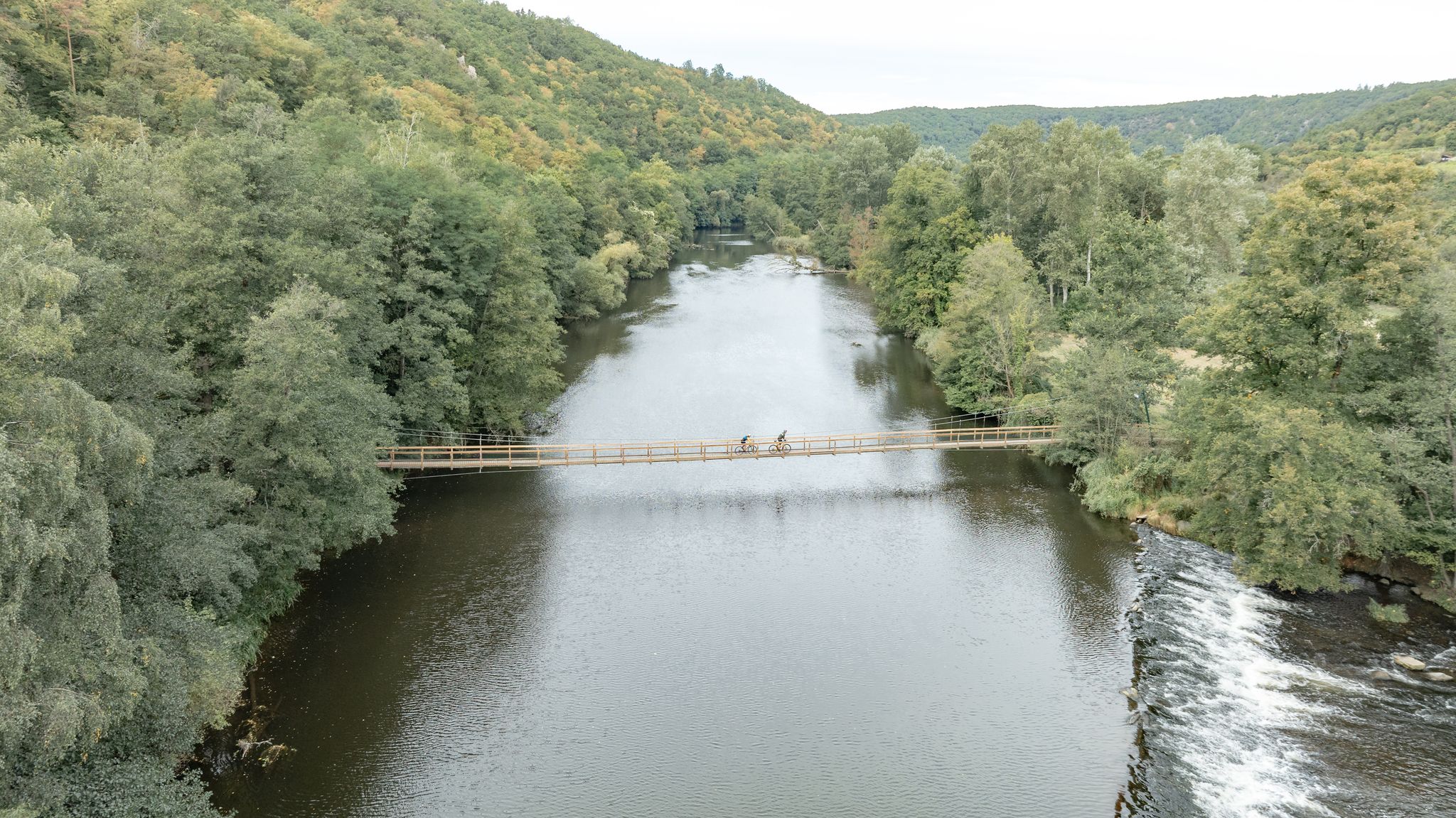

Other adventures around Groß-Siegharts

Tips from the Community

Karlstein was first mentioned in 1112 as "Chadelstain." As a fiefdom, Karlstein belonged to the respective territorial princes, who granted this rule to knightly families, although no continuous dynasty established itself here. Since the castle was never owned by a single family for an extended period, it was continually rebuilt and expanded. Practically nothing remains of the original castle. In the following centuries, the border region was repeatedly raided by enemy armies (Ottokar, Hussites, Matthias Corvinus). After the suppression of the Peasants' Revolt in 1597, the leader, Andreas Schrembser, was presumably imprisoned in Karlstein Castle. In 1645, the Swedes besieged Karlstein Castle in vain. In 1663, it served as a refuge during the Turkish threat. In 1914, an internment camp was established in the castle, despite it being uninhabitable. The Montenegrin General Staff was also imprisoned there. After the war, the Hungarian communist leader Béla Kun was interned here. Later, the castle was used as a youth hostel, and in the 1960s, it also served as a guesthouse. The castle is now privately owned and no longer open to the public.
0
0

A lovingly maintained castle ruin in the middle of the Waldviertel Kamp landscape
1
0

Opening Hours 2025: April 26 - September 28 Saturdays, Sundays, and Public Holidays Hourly guided tours from 10 a.m. to 6 p.m., no registration required (last tour at 5 p.m.) Group tours and weekdays by appointment with Mr. Karl Michael Liemberger at +43677/623 412 26
1
0

Museum of the Kollmitz RuinsThe two former castle rooms in the outer bailey to the right of the entrance have been adapted as a museum and snack bar. Exhibits on the history of the castle and various finds are on display here. A documentation on the life and work of the topographer Georg Matthäus Vischer (1628 - 1696) can also be viewed.VisitYou can get the key for the towers and for the museum visit at the snack bar of the Kollmitz Ruins: open daily from May to October from 10 a.m. to 5 p.m. in good weather, July & August until 6 p.m.Admission: adults € 2.00, children € 1.00.Free admission for NÖ-CARD holders! For group registrations please call +43 664 4615881 (Mrs. Martina Rieder).
1
0

Beautiful old ruin to visit, in summer also a snack station on site
1
0
Knives are usually associated with Wildberg Castle, which is now privately owned. But Messern offers much more... for example, the starting point for many nice hikes
0
0
Raabs Castle on the Thaya is one of the earliest stone castles built in what is now Austria. In the 16th and 18th centuries, the medieval castle was finally transformed into a palace by the Puchheimers and is now privately owned by Richard Pils. Website Raabs Castle: https://www.bibliothekderprovinz.at/schloss-raabs/ guides from the arcaded courtyard over the bridge to the hunger tower, past the keep, into the courtyards, to the castle fountain, via the baroque staircase to the exhibition rooms, through the large and small knight's hall to the balcony with a view of the town of Raabs. May 26 – September 25, 2022 on Saturdays, Sundays and public holidays on the hour from 10 a.m. to 5 p.m outside of guided tour times for groups by prior arrangement If you are coming from further away, it is advisable to contact us in advance, otherwise you may find yourself standing in front of closed gates (note is on the gate)! Raabs Castle can only be visited inside as part of a guided tour. Direct contact tours: Karl Michael Liemberger Phone ++43 (0) 677 623 412 26
1
0
Parking near the quarry, short walk to the castle ruins. The narrow path begins opposite the quarry. The relatively well-preserved complex, picturesquely enthroned on a vertically falling rock above the Thaya, is relatively well-preserved. The initially accessible area is conditionally suitable for families, but the other parts require sure-footedness and (because of the steep drops) appropriate caution. A lot of interesting information about the castle ruins can be found here: http://noeburgen.imareal.sbg.ac.at/result/burgid/1855
2
0
Frequently Asked Questions
What historical significance do the castles around Groß-Siegharts hold?
The castles in the Groß-Siegharts region are rich in history, reflecting centuries of architectural and cultural evolution. Schloss Groß Siegharts, for instance, dates back to around 1200 and has transformed from a fortification to a residential castle, now serving as the town hall. It features impressive Renaissance elements like stucco ceilings and Carlo Carlone frescoes. Other sites like the Ruins of Kollmitz Castle and Raabs an der Thaya Castle were crucial for border defense and are among the earliest stone castles in Austria, showcasing the region's strategic importance through various historical periods.
Are there any castles in Groß-Siegharts that are still in use or open to the public?
Yes, Schloss Groß Siegharts, located directly in the town, functions as the municipal office (town hall) and can be visited by appointment during its opening hours. Raabs an der Thaya Castle also offers guided tours on weekends and public holidays from April to September, with specific times available on their website. Other castles like Wildberg Castle and Karlstein Castle are privately owned and generally not open to the public.
What kind of architectural features can I expect to see at these castles?
The castles in the region display a range of architectural styles. Schloss Groß Siegharts is a Renaissance gem with quadrangular towers, crenelated crowns, stucco ceilings, and wall paintings. The Ruins of Kollmitz Castle showcase medieval fortifications with meter-high walls, two round towers, and ramparts. Raabs an der Thaya Castle, originally one of Austria's earliest stone castles, was transformed into a palace in the 16th and 18th centuries, blending medieval and baroque elements.
Are there family-friendly activities or areas at the castles?
Schloss Groß Siegharts offers a welcoming 30,000 m² castle park with old trees, a duck pond, and a playground, making it suitable for families. While the ruins like Eibenstein Castle Ruins offer adventurous exploration, some parts require sure-footedness and caution due to steep drops, so supervision is advised for children. The snack station at Ruins of Kollmitz Castle can also be a pleasant stop for families.
What outdoor activities can I do near the castles around Groß-Siegharts?
The region around Groß-Siegharts offers various outdoor activities. You can find numerous hiking trails, including routes like the 'Wayside Cross – Vogelpark Nature Trail loop'. For cyclists, there are road cycling routes such as the 'Thaya Railway Cycle Path – Karlstein Castle loop' and MTB trails like the 'Viewpoint of Raabs Castle – Thaya River loop'. Many of these routes pass by or offer views of the historic castles and the scenic Thaya river.
Are there good viewpoints near the castles?
Yes, many of the castles are strategically located on elevated positions, offering excellent viewpoints. The Ruins of Kollmitz Castle are enthroned high above the Thaya, providing wonderful views of the surroundings. Similarly, Eibenstein Castle Ruins are picturesquely situated on a vertically falling rock above the Thaya, offering scenic vistas. Raabs an der Thaya Castle also provides a balcony with a view of the town of Raabs during guided tours.
What is the best time to visit the castles in the Groß-Siegharts region?
The best time to visit is generally from spring to autumn (May to October) when the weather is pleasant for exploring outdoor ruins and castle parks. During this period, snack stations at sites like Ruins of Kollmitz Castle are typically open, and guided tours for Raabs an der Thaya Castle are available. While some castles can be visited in winter, access to certain areas or services might be limited.
Are there any cafes or snack options near the castles?
Yes, the Ruins of Kollmitz Castle feature a snack station that is open from May to October, weather permitting. For other castles, it's advisable to check local amenities in nearby towns like Groß-Siegharts or Raabs an der Thaya, especially if you plan a longer visit or hike.
Can I visit the castles with my dog?
Many outdoor castle ruins and their surrounding areas, like the Ruins of Kollmitz Castle and Eibenstein Castle Ruins, are generally accessible for walks with dogs, provided they are kept on a leash. For indoor castle visits, such as Schloss Groß Siegharts or guided tours at Raabs an der Thaya Castle, it's best to inquire directly about their pet policies before your visit.
What are some lesser-known or 'hidden gem' castles in the area?
While not widely publicized, Wildberg Castle, high above the Taffatal, has a rich history from the 12th century and was once a center of Protestantism. Although privately owned and not open to the public, its historical significance and location make it an interesting sight from afar. Similarly, Karlstein Castle, first mentioned in 1112, has a fascinating past with various owners and historical events, though it is also privately owned and not open for visits.
How long should I plan for a visit to a castle?
The duration of your visit depends on the castle. For ruins like Ruins of Kollmitz Castle, you might spend 1-2 hours exploring the grounds and enjoying the views. Guided tours at Raabs an der Thaya Castle typically last about an hour. If you're visiting Schloss Groß Siegharts by appointment, the duration will depend on your interest in the historical interiors and the castle park. Consider adding travel time between locations if you plan to visit multiple sites.
Most popular routes around Groß-Siegharts
Most popular attractions around Groß-Siegharts

Get inspired with the komoot mobile app


Explore more
Looking for the best castles somewhere else? Discover other guides around Groß-Siegharts:
