The best walks and hikes in Great Bear Wilderness
4.8
(14)
233
hikers
28
hikes
Hikes in Great Bear Wilderness explore a landscape of rugged mountains, dense coniferous forests, and river valleys. Part of the Bob Marshall Wilderness Complex, the region's terrain ranges from low-lying river bottoms along the Middle Fork of the Flathead River to high-elevation alpine meadows. Elevations in the area climb from around 4,000 feet (1,219 m) in the valleys to over 8,700 feet (2,652 m) on the highest peaks.
Best hiking trails in Great Bear Wilderness
- The most popular hiking route is Scalplock Mountain Fire Lookout — Glacier National Park, a 9.9 mile (16.0 km) trail that takes around 5 hours 40 minutes to complete. This difficult hike involves a significant elevation gain of 3,008 feet (917 m) to reach the lookout.
- Another top favourite among local hiking enthusiasts is Marion Lake Trail — Flathead National Forest, a moderate 6.4 mile (10.2 km) path. The route ascends through forest to an alpine lake.
- Local hiking enthusiasts also love the Elk Lake via Devil Creek Trail — Flathead National Forest, a 12.0 mile (19.4 km) trail leading through forests and past waterfalls, often completed in about 6 hours 10 minutes.
- Hiking in Great Bear Wilderness is defined by forested river valleys, alpine lakes, and rugged mountain ridges. The trail network provides a mix of moderate valley floor routes and more strenuous multi-day backpacking trips into the high country.
- The routes in Great Bear Wilderness are highly rated by the komoot community with an average score of 4.7 stars from more than 15 reviews. More than 250 hikers have used komoot to explore Great Bear Wilderness's varied terrain.
Last updated: May 15, 2026
5.66km
02:55
1,080m
10m
Hike the difficult 3.5-mile Ousel Peak Trail in Flathead National Forest for panoramic views and a challenging 3551-foot ascent.
6
hikers
16.0km
05:40
920m
920m
Hike the challenging 9.9-mile Scalplock Lookout Trail in Glacier National Park for expansive mountain views and a historic fire lookout.

Sign up for free
4
hikers
10.2km
03:45
630m
630m
Hike the moderate 6.4-mile Marion Lake Trail in Flathead National Forest, gaining 2061 feet to reach the beautiful Marion Lake.
1
hikers
19.4km
06:09
820m
820m
Hike the difficult 12.0-mile Elk Lake via Devil Creek Trail in Great Bear Wilderness, gaining 2703 feet to a picturesque alpine lake.
24.0km
08:04
1,170m
1,170m
This challenging 14.9-mile hike to Loneman Lookout in Glacier National Park offers significant elevation gain and panoramic views.
Get access to more routes and recommendations from other explorers.
Sign up for free
Already have an account?
Our route recommendations are based on thousands of hikes, rides, and runs completed by other people on komoot.
Start today with a free account
Your next adventure awaits.
Login or Signup
Popular around Great Bear Wilderness

Tips from the Community

Devil Creek Trail is a challenging trail with 2,500 feet of elevation gain. It is full of scenic views and peaceful forested areas. It eventually branches off on to Elk Lake Trail and intersects with Vinegar Mountain Trail. Some areas of the trail can be muddy and wet, so be sure to hike this trail with appropriate footwear.
0
0
This is another pristine alpine lake in Flathead National Forest. The trail leading up to the lake is a steady climb, but then has a sudden drop down near the end. This is also a great spot for snowshoeing or backcountry skiing in the winter. To arrive at Marion Lake, you can follow the trail starting at Forest Service Road 1640, which eventually merges with the Marion Lake Trail. You can also drive part of the way up and park along the forest road for a shorter hike depending on your vehicle and road conditions.
0
0

Standing at 7149 feet, the views from Ousel Peak are fantastic. That said, this trail is challenging — about halfway up you will encounter a number of downed trees and the incline is steep. There is a false summit around 0.75 miles from the true peak, but during the entire final stretch the views are great.
0
0
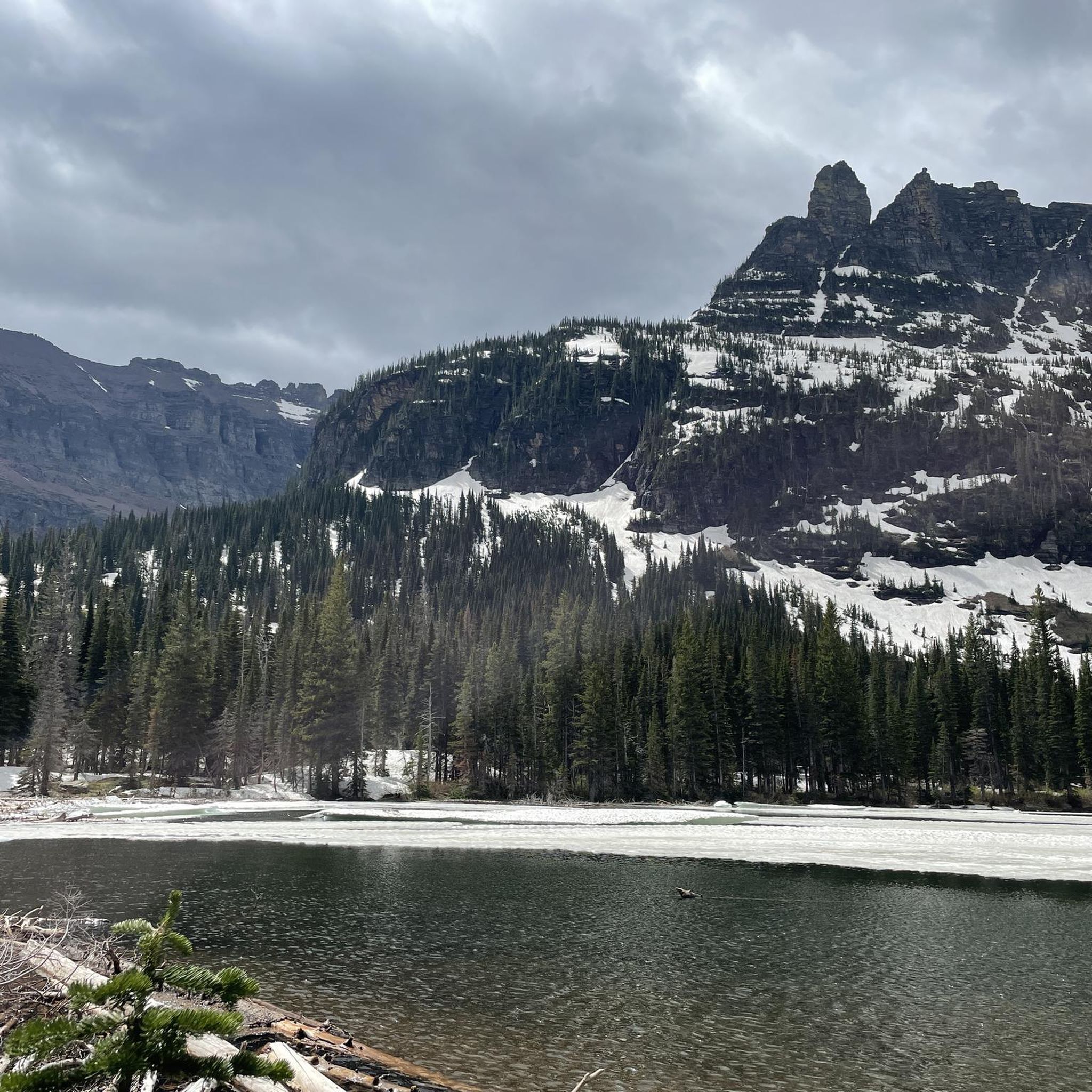
The towering white slopes cradling the crescent lake make this stretch of the hike a genuine reward for making it halfway up the trail.
0
0
From the summit of Loneman Mountain you are treated to possibly the best views in lower Glacier. There is a fire lookout at the top and level ground to pitch a tent.
0
0
As you walk south from Nyack along the rail tracks keep an eye out for an orange marker on your left as you approach where the bridge crosses the railroad. You can follow the markers to the river crossing and up to the South Boundary Trail from here. After that the trail gets much easier to follow and you are rewarded with exceptional views from the top.
0
0

In a more remote area this is definitely one of the best destination hikes in this part of Glacier National Park. The Fire Lookout on Scalplock Mountain is a two story timber building on the summit of Scalplock and gives incredible views allround.
0
0
Frequently Asked Questions
Do I need a permit to hike or camp in the Great Bear Wilderness?
No, permits are generally not required for individuals or small groups for hiking or overnight camping within the Great Bear Wilderness. However, it's always a good practice to check with the local Hungry Horse Ranger District for the most current regulations, group size limits, and any potential fire restrictions before your trip.
When is the best time of year to hike here?
The primary hiking season is from July through September. During this period, the weather is typically more stable, and the high-elevation trails are mostly free of snow. Spring can be challenging due to snowmelt, which causes high and potentially dangerous stream crossings. Always check trail conditions before you go.
What are the trail conditions generally like?
Trail conditions vary significantly. While some trails are well-maintained, many are remote and may be poorly marked or overgrown, requiring navigation skills and even some 'bushwhacking'. Be prepared for numerous stream crossings, which can be hazardous, especially in the spring.
What kind of wildlife might I encounter?
The wilderness lives up to its name. It is a prime habitat for grizzly and black bears, so carrying bear spray and knowing how to use it is essential. You might also see elk, moose, mountain goats, bighorn sheep, wolverines, and lynx. Always store food securely and maintain a safe distance from all wildlife.
Are there any easy hikes suitable for a family day out?
Yes, the area offers several easier hikes. While many trails are strenuous, you can find less demanding options along the low-lying forested river bottoms. These routes often provide a great wilderness experience without significant elevation gain. Look for trails rated as 'easy' that stay within the valleys.
Which trail is good for seeing an alpine lake?
For a beautiful alpine lake destination, consider the Marion Lake Trail — Flathead National Forest. This moderate 6.4-mile (10.2 km) hike ascends through the forest to the scenic lake, offering a rewarding experience.
Are there good options for multi-day backpacking trips?
Absolutely. The vastness of the Great Bear Wilderness is ideal for backpacking. The extensive trail system allows for creating long-distance loops and point-to-point treks into the remote high country. The challenging Loneman Mountain — Glacier National Park route is an example of the strenuous but rewarding multi-day adventures available.
What's a good hike to see waterfalls?
The Elk Lake via Devil Creek Trail is an excellent choice. This trail leads hikers through forests and past waterfalls on the way to Elk Lake, combining several beautiful natural features into one long day hike.
Which trail offers the best panoramic views?
For incredible panoramic views, the hike to the Scalplock Mountain Fire Lookout is a fantastic option. It's a difficult 9.9-mile (16.0 km) trek with significant elevation gain, but the rewarding views of the surrounding wilderness and into Glacier National Park are well worth the effort.
How challenging is the climb up Ousel Peak?
The Ousel Peak Trail is a difficult hike. It involves a steep ascent with over 3,500 feet (1,092 m) of elevation gain in just over 3.5 miles one way, making it a strenuous outing recommended for experienced hikers.
What is the elevation range in the Great Bear Wilderness?
The terrain is quite varied. Elevations start around 4,000 feet (1,219 m) in the river valleys, such as along the Middle Fork of the Flathead River, and rise to over 8,700 feet (2,652 m) on the highest peaks like Great Northern Mountain.
How extensive is the trail system?
The Great Bear Wilderness contains an extensive network of over 300 miles of trails. This offers a huge variety of options, from relatively moderate valley floor trails to strenuous multi-day backpacking trips into the high country.

Get inspired with the komoot mobile app


Explore more
Browse the best Hikes in other regions.
