Top 9 Castles around Sankt Paul im Lavanttal
Best castles around Sankt Paul im Lavanttal offer insights into the region's rich history and strategic importance. The area is characterized by its valley setting, with historical structures often situated on elevated rocky outcrops. These sites provide cultural experiences and panoramic views of the surrounding landscape. Sankt Paul im Lavanttal features a blend of well-preserved historical buildings and significant ruins.
Best castles around Sankt Paul im Lavanttal
- The most popular castles is Rabenstein Castle Ruins, a castle, historical site,…
Last updated: July 8, 2026
Thürn Castle
Highlight • Castle
Translated by Google •
Tip by

Rabenstein Castle Ruins
Highlight • Castle
Translated by Google •
Tip by

Sign up now to discover places like this
Get recommendations on the best single tracks, peaks, & plenty of other exciting outdoor places.
Sign up for free
Weißenegg Castle
Highlight • Castle
Translated by Google •
Tip by

Griffen Castle Ruins
Highlight • Castle
Translated by Google •
Tip by

Haimburg Castle
Highlight (Segment) • Castle
Translated by Google •
Tip by

Sign up for free to discover even more castles around Sankt Paul im Lavanttal.
Sign up for free
Already have an account?
Start today with a free account
Your next adventure awaits.
Login or Signup
Popular around Sankt Paul im Lavanttal
Sunny adventures on the Southern Alps Panorama Trail
9 days of relaxation and wonder in Austria – Lavant Valley Trail
Gentle peaks with a guaranteed view —Welcome to the Lavanttal
The Lavanttal — hiking on the sunny side of Carinthia
Cycling around Sankt Paul im Lavanttal
MTB Trails around Sankt Paul im Lavanttal
Road Cycling Routes around Sankt Paul im Lavanttal
Hiking around Sankt Paul im Lavanttal
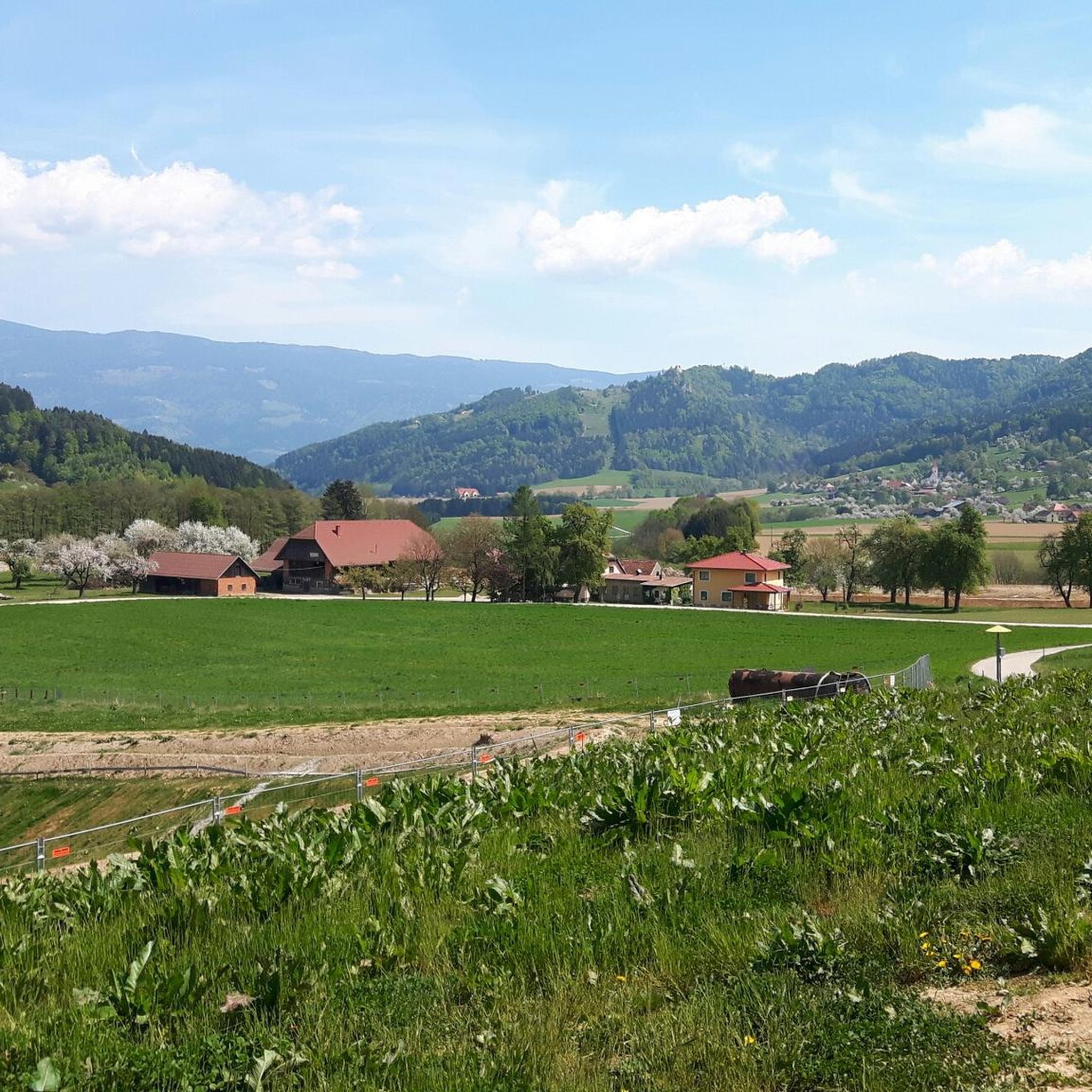
Running Trails around Sankt Paul im Lavanttal
Gravel biking around Sankt Paul im Lavanttal
Other adventures around Sankt Paul im Lavanttal


Tips from the Community

Beautiful view over Griffen and the surrounding area.
1
0

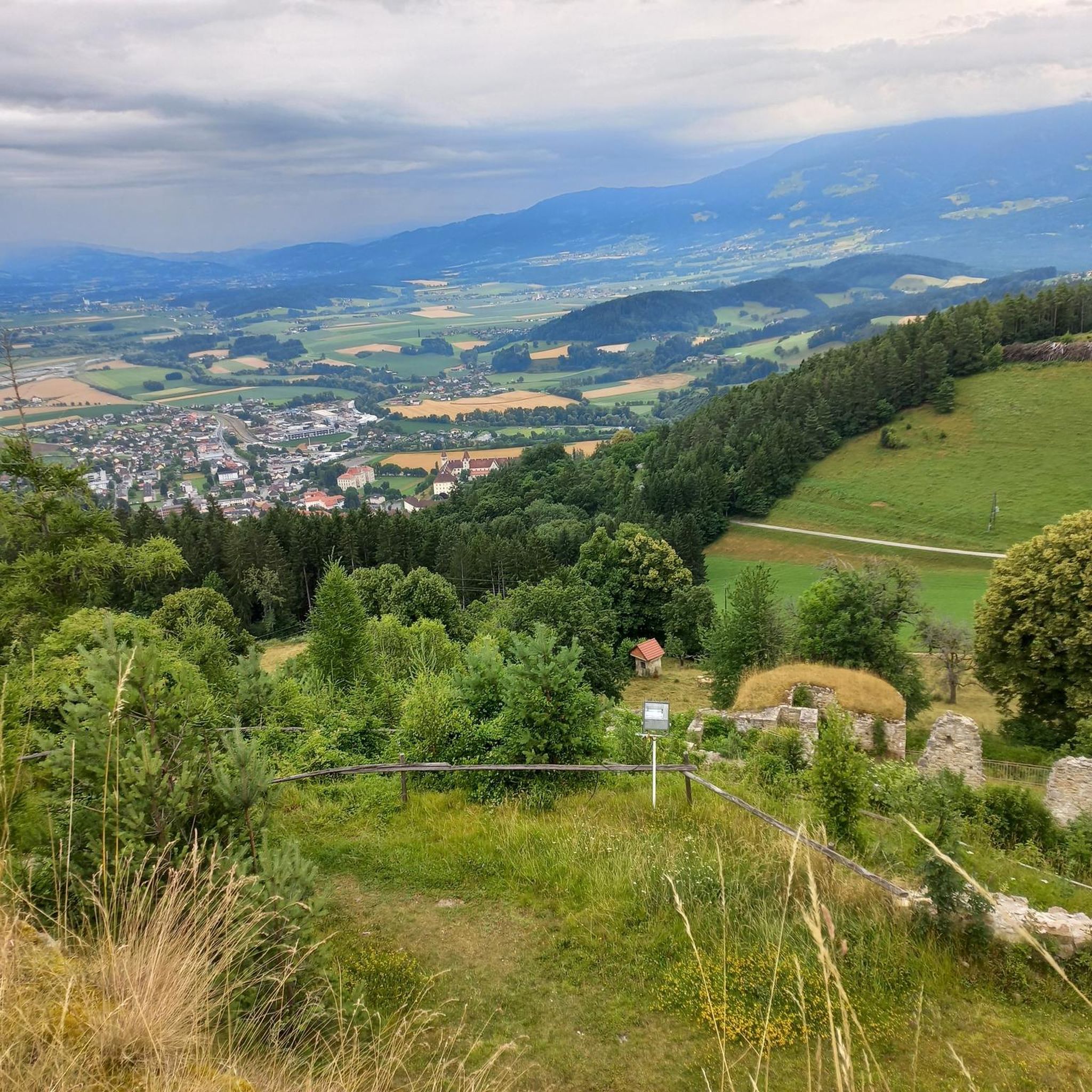
Rabenstein Castle was built in the 12th century to protect the St. Paul Monastery in the Lavanttal. After a fire in 1636 it fell into disrepair, so that today only ruins can be seen.
4
0

There is a nice bike path from Haimburg to Griffen
1
0
At the entrance to the stalactite cave you will find a sign describing all three ascent options to Griffen Castle
1
0
There were a total of four castles with the name Weißenegg in the Austrian provinces, of which the castle near Ruden was probably the ancestral castle of the Weißeneggers. The oldest known descendant of the Weißenegger family is said to have been Wülfing von Wizzeneck, who is said to have lived around 1120. The castle was first mentioned in a document in 1243 as dominus de Wizenekke. Dietmar von Weißenegg, a ministerial of the diocese of Bamberg, appears several times in documents between 1244 and 1263. In the 13th and 14th centuries, the Weißeneggers were an important noble family in Carinthia, they provided several bishops and were also active in the military. From the year 1300 Weißenegg was the seat of a district court, which also included Ruden. In 1332 the property was sold to the Lords of Walsee. Eberhard von Walsee († 1363), who had no descendants, inherited the castle and dominion from his cousins Ulrich and Hermann I von Cilli. The Counts of Cilli stayed on Weißenegg until 1425, then Hermann II von Cilli exchanged Weißenegg and Hartneidstein with the bishopric of Bamberg for the lordship of Mauthenberg (Hohenmauthen/Muta). Weißenegg remained in Bamberg until 1759, when the diocese sold its estates in Carinthia to the Austrian Empire. The castle was already deserted at this point. In 1775 Maximilian Thaddäus Freiherr von Egger acquired the castle, which from then on remained in the possession of his descendants for over a century. In 1885 the barons Ferdinand and Karl Helldorf bought the property, and in 1936 the extensive forests with the ruins passed to the Leitgeb family of industrialists from Kühnsdorf, who are still the owners today.
6
0

Inside the 130 m high Schlossberg is the Griffen stalactite cave. The mountain consists of yellowish limestone.
1
0

Along the way you will come across the Griffen monastery. Highly recommended to visit.
1
0

A varied section with an impressive landscape.
0
0
Frequently Asked Questions
What makes the castles around Sankt Paul im Lavanttal unique?
The castles and historical sites in the Lavanttal region offer a blend of medieval fortifications and significant religious architecture. For example, the Rabenstein Castle Ruins, built in the 12th century, protected the St. Paul Monastery, showcasing the strategic importance of these structures. The Benedictine Abbey of St. Paul itself, while a monastery, has a castle-like presence due to its defensive origins and grand architecture, housing vast art collections and historical libraries.
Beyond traditional castles, what other historical structures can I visit in Sankt Paul im Lavanttal?
The Benedictine Abbey of St. Paul im Lavanttal is a prominent historical structure with a castle-like presence. Known as the 'Treasury of Carinthia,' it was founded in 1091 on a former Roman fort. It features a Romanesque basilica, an extensive library with ancient manuscripts, a museum with medieval art, and a crypt containing Habsburg family members. You can explore its rich history, art, and beautiful gardens.
Which castles offer the best panoramic views of the Lavanttal region?
For stunning panoramic views, the Rabenstein Castle Ruins are highly recommended. Situated on a high rock spur, they provide unique vistas of the surrounding area. Similarly, Griffen Castle Ruins and Haimburg Castle also serve as excellent viewpoints.
Are there family-friendly castles or historical sites to visit in the area?
Many of the castle ruins, like the Rabenstein Castle Ruins and Griffen Castle Ruins, are accessible via hiking trails, making them suitable for families who enjoy a walk. The Benedictine Abbey of St. Paul also offers a museum and gardens that can be engaging for various ages, providing an educational and historical experience.
What is the best time of year to visit the castles around Sankt Paul im Lavanttal?
The spring, summer, and early autumn months (roughly April to October) are generally the best times to visit. During these periods, the weather is more favorable for exploring outdoor ruins and hiking to castle sites. The Benedictine Abbey of St. Paul is open year-round, but its gardens are best enjoyed in warmer months.
Are there hiking trails that connect or lead to these castles?
Yes, several hiking trails lead to or pass by the castles. For instance, a hiking trail leads up to the Griffen Castle Ruins. You can also find routes like the 'St. Paul's Abbey – Rabenstein Castle Ruins loop' which connects two significant historical sites. For more hiking options, explore the hiking guide for Sankt Paul im Lavanttal.
Can I find any natural features or caves near the castles?
Yes, near the Griffen Castle Ruins, you can explore the Griffen stalactite cave, which is located inside the 130-meter-high Schlossberg. This offers a unique combination of historical exploration and natural wonder.
What kind of historical significance do the castles in this region hold?
The castles around Sankt Paul im Lavanttal are deeply rooted in the region's medieval history and strategic importance. Many, like Rabenstein Castle Ruins, were built to protect vital institutions like the St. Paul Monastery. Others, such as Thürn Castle, have undergone centuries of alterations, reflecting changing architectural styles and ownership by influential families and religious orders.
Are there any cycling routes near the castles?
Yes, the region offers cycling opportunities. For example, the 'Grutschner Kreuz 652m – View of Griffen Castle Ruins loop' is a moderate road cycling route that provides views of the Griffen Castle Ruins. You can find more road cycling routes in the road cycling guide for Sankt Paul im Lavanttal.
What are some of the lesser-known or 'hidden gem' castles in the area?
While not as widely known as Rabenstein, Weißenegg Castle is a historical site with a long lineage, first mentioned in 1243 and serving as the ancestral castle of the Weißeneggers. Though now in ruins, its history as a district court and its connection to important Carinthian noble families make it an interesting, albeit less preserved, site to explore for those interested in deeper historical context.
How long does it typically take to visit a castle ruin or the Abbey?
Visiting a castle ruin like Rabenstein Castle Ruins or Griffen Castle Ruins, especially if combined with a hike, can take anywhere from 1 to 3 hours depending on the trail length and how much time you spend exploring the ruins and enjoying the views. The Benedictine Abbey of St. Paul, with its museum, library, and church, could easily take 2-4 hours to fully appreciate its extensive collections and architecture.
Most popular routes around Sankt Paul im Lavanttal
Most popular attractions around Sankt Paul im Lavanttal

Get inspired with the komoot mobile app


Explore more
Looking for the best castles somewhere else? Discover other guides around Sankt Paul im Lavanttal:
