The best running trails in Glacier Peak Wilderness
5
runners
6
runs
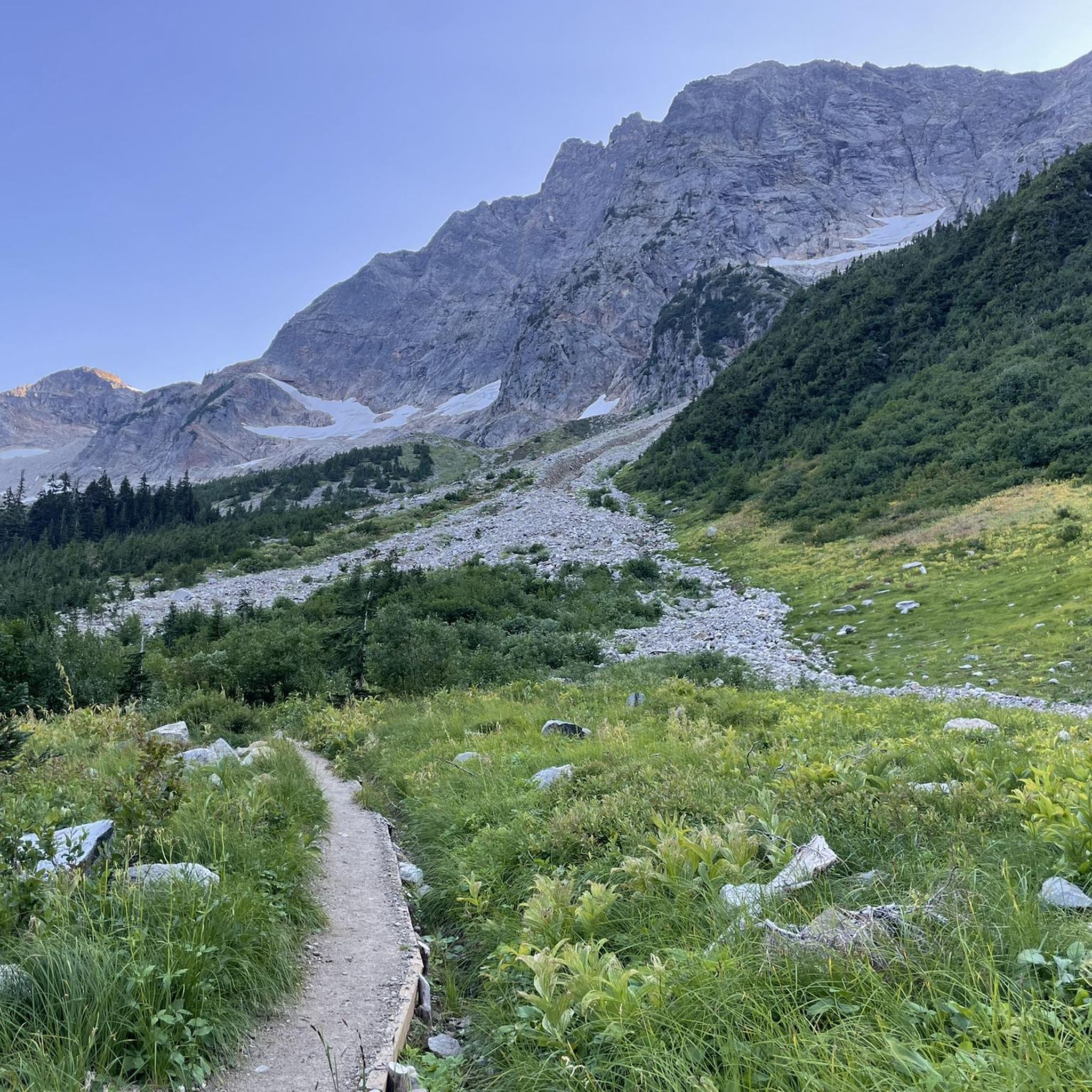
Jogging in Glacier Peak Wilderness offers a challenging and rewarding experience through a remote and pristine landscape. The region is characterized by rugged, glaciated peaks, extensive old-growth forests, and numerous alpine lakes and deep valleys. Its vast network of trails provides diverse terrain for trail running, from heavily forested stream courses to high mountain passes.
Best jogging routes in Glacier Peak Wilderness
- The most popular jogging route is Cloudy Pass Trail, a 7.3 miles (11.8 km) trail that takes…
Last updated: May 12, 2026
1
runners
11.8km
01:20
300m
300m
Moderate run. Good fitness required. Mostly paved surfaces. Suitable for all skill levels.
26.3km
03:10
900m
900m
Hard run. Very good fitness required. Mostly paved surfaces. Suitable for all skill levels.

Sign up for free
7.62km
01:07
330m
330m
Hard run. Very good fitness required. Mostly paved surfaces. Suitable for all skill levels.
22.5km
02:59
600m
600m
Hard run. Very good fitness required. Mostly paved surfaces. Suitable for all skill levels.
26.2km
03:56
1,140m
1,140m
Hard run. Very good fitness required. Mostly paved surfaces. Suitable for all skill levels.
Our route recommendations are based on thousands of hikes, rides, and runs completed by other people on komoot.
Start today with a free account
Your next adventure awaits.
Login or Signup
Popular around Glacier Peak Wilderness
Tips from the Community

Lake Chelan, nestled in the North Cascades of Washington, is a 50.5-mile long natural lake. Known for its crystal-clear waters, the lake is surrounded by vineyards, orchards, and mountainous terrain.
0
0

Nestled deep into the North Cascades National Park lies the tiny town of Stehekin. It is less than 100 miles from the Canadian border and only accessible by foot, boat or seaplane. It is eleven miles from the Pacific Crest Trail on a dirt road. Two shuttle companies run at least four times a day to get you here. Most hikers send their final resupply package to Stehekin. The small town has a friendly post office, an excellent restaurant, a small store, hotel, campground and a laundromat with showers. You should definitely stop at the bakery outside of town and get some delicious cinnamon rolls – my personal favorite. The shuttle stops there, too.
7
0
Frequently Asked Questions
What kind of terrain can I expect on running trails in Glacier Peak Wilderness?
Running in Glacier Peak Wilderness offers a diverse and challenging experience. You'll encounter rugged, glaciated peaks, extensive old-growth forests, and numerous alpine lakes and deep valleys. Trails range from heavily forested stream courses to high mountain passes, often featuring uneven terrain, steep sections, rocks, and roots, making it ideal for those seeking a true trail running adventure.
Are there options for less experienced runners in Glacier Peak Wilderness?
While Glacier Peak Wilderness is known for its challenging and remote trails, there are some routes that might be more approachable. For example, the Cloudy Pass Trail (7.3 miles) is rated as moderate and offers access to high alpine scenery without the extreme difficulty of longer routes. However, most trails in this wilderness area lean towards difficult, so a good level of fitness and trail running experience is generally recommended.
How many running routes are available in Glacier Peak Wilderness?
Our guide features 6 curated running routes in Glacier Peak Wilderness. However, the wilderness encompasses an extensive network of approximately 450 miles across as many as 100 trails, offering a vast array of options for different fitness levels and preferences.
What natural features or landmarks can I see while jogging in Glacier Peak Wilderness?
While jogging, you can experience breathtaking natural features. Keep an eye out for stunning viewpoints like the Grassy Ridge junction or the Green Mountain Lookout. You might also pass through areas like Agnes Gorge, or near serene alpine lakes such as Mica Lake. The region is also home to numerous glaciated peaks, extensive old-growth forests, and deep river valleys.
Do I need any permits to go jogging in Glacier Peak Wilderness?
Yes, permits are often required for overnight stays in Glacier Peak Wilderness, and sometimes for day use in specific areas or during peak seasons. It's crucial to check with the relevant forest service office (e.g., Okanogan-Wenatchee National Forest or Mount Baker-Snoqualmie National Forest) for the most current regulations before your visit, as requirements can vary.
What is the best time of year to go running in Glacier Peak Wilderness?
The best time for running in Glacier Peak Wilderness is typically from late spring through early autumn (roughly June to September). During these months, snow has usually melted from lower and mid-elevation trails, and weather conditions are generally more favorable. However, even in summer, high-elevation passes can retain snow, and weather can change rapidly, so always be prepared for varied conditions.
Are there any running routes that offer views of Glacier Peak itself?
Many trails in the wilderness offer expansive mountain views, and some provide glimpses of Glacier Peak, the dominant 10,541-foot peak. Routes like the longer version of the Cloudy Pass Trail often provide stunning vistas of the glaciated terrain and surrounding peaks, including Glacier Peak, which is the most remote major volcanic peak in the Cascade Range.
Can I bring my dog on the running trails in Glacier Peak Wilderness?
Generally, dogs are allowed on trails in the Glacier Peak Wilderness, but they must be kept on a leash to protect wildlife and ensure a pleasant experience for all users. Always practice Leave No Trace principles, including packing out all pet waste. Specific regulations can vary, so it's wise to check with the U.S. Forest Service before heading out.
Are there any loop running trails in the area?
Yes, there are loop options for runners seeking varied scenery without retracing their steps. The Larch Lakes Loop via Entiat River Trail is an example of a challenging loop route that takes you through diverse landscapes.
What do other runners enjoy most about jogging in Glacier Peak Wilderness?
The komoot community highly rates the running experience in Glacier Peak Wilderness. Runners frequently praise the spectacular scenery, including glaciated peaks, alpine meadows, and pristine lakes. The remote and wild character of the area, offering a sense of solitude and immersion in nature, is also a significant draw for those seeking adventurous trail runs.
Are there any long-distance running opportunities in Glacier Peak Wilderness?
Absolutely. The Glacier Peak Wilderness is ideal for long-distance running and fastpacking. The Pacific Crest Trail (PCT) traverses the area for about 60 miles, providing a significant route for extended runs. Other long trails, such as the Cloudy Pass Trail (16.4 miles) or the Chelan Lakeshore Trail (14 miles), also offer substantial distances through stunning landscapes.
What kind of wildlife might I encounter while running in Glacier Peak Wilderness?
Glacier Peak Wilderness is home to abundant wildlife. While running, you might spot deer, elk, and various bird species. More elusive animals like bear, mountain goat, cougars, martens, and lynx also inhabit the area. Wolverines and grey wolves have even been sighted in this remote region of the North Cascades, adding to the wild experience.
Most popular routes in Glacier Peak Wilderness
Most popular attractions in Glacier Peak Wilderness

Get inspired with the komoot mobile app


Explore more
Browse the best Running Trails & Routes in other regions.
