Top 20 Castles around Pfaffstätten
Best castles around Pfaffstätten offers a glimpse into the region's rich history, from medieval fortifications to Baroque country estates. Pfaffstätten, a community in Lower Austria, is situated near the Vienna Woods and the Föhrenberge Nature Park. The area is characterized by its historical sites and natural landscapes, providing a setting for exploring centuries of architectural evolution. These historical structures reflect the area's past as a significant noble residence and defensive location.
Best castles around Pfaffstätten
- The most popular castles is…
Last updated: June 22, 2026
Ruins of Mödling Castle
Highlight • Castle
Translated by Google •
Tip by

Liechtenstein Castle
Highlight • Castle
Translated by Google •
Tip by

Sign up now to discover places like this
Get recommendations on the best single tracks, peaks, & plenty of other exciting outdoor places.
Sign up for free
Laxenburg Palace Blue Court
Highlight • Castle
Translated by Google •
Tip by

Perchtoldsdorf Castle, Parish Church, and Watchtower
Highlight • Castle
Translated by Google •
Tip by

Ruins of the Pfefferbüchsel Chapel
Highlight • Religious Site
Translated by Google •
Tip by

Sign up for free to discover even more castles around Pfaffstätten.
Sign up for free
Already have an account?
Start today with a free account
Your next adventure awaits.
Login or Signup
Other adventures around Pfaffstätten

Tips from the Community

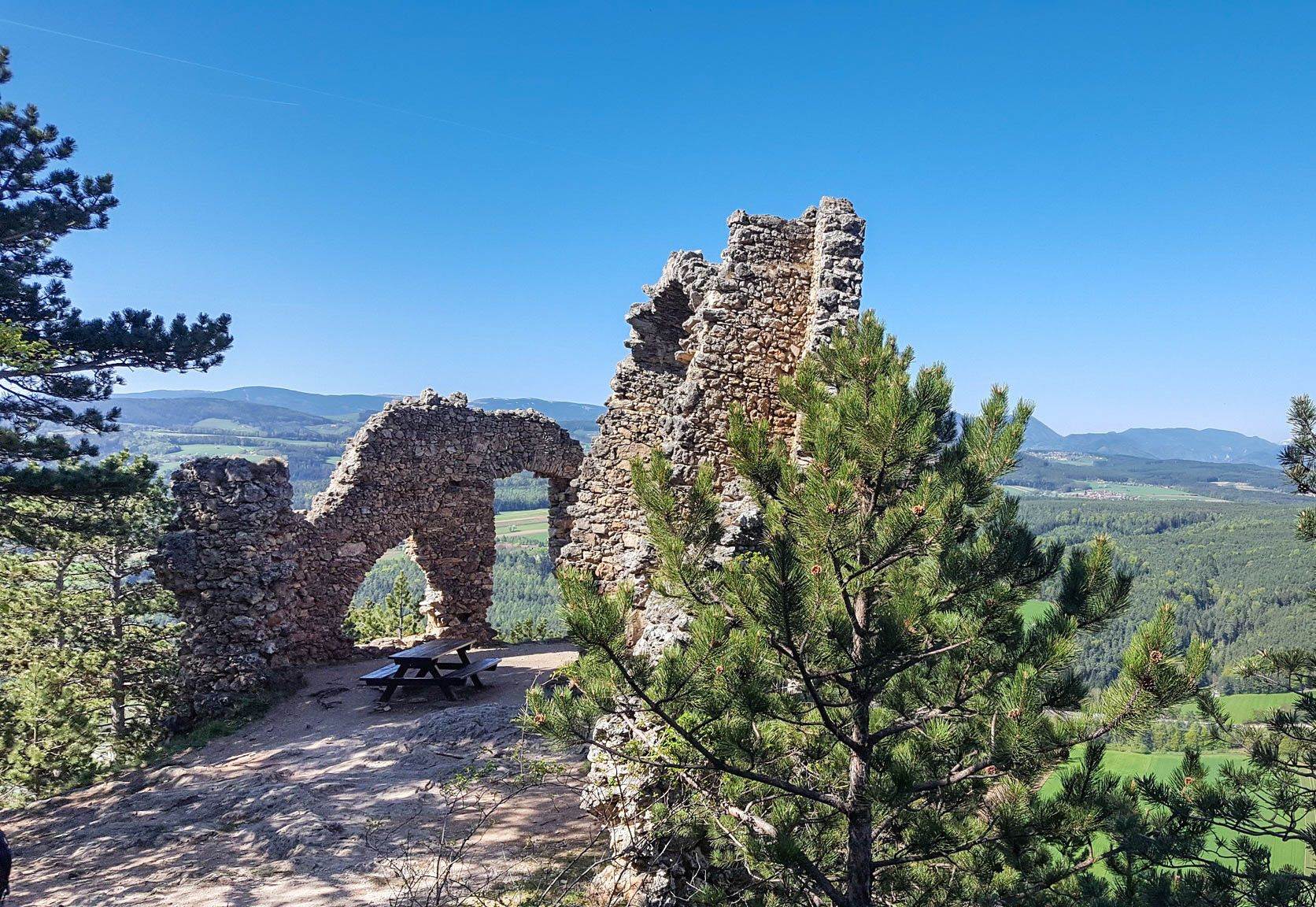
The Mödling castle ruins are picturesquely located in the Föhrenberge Nature Park and are one of the most impressive historical sites in the region. Originally built in the 12th century, it once served as an important fortress before falling into disrepair in the 16th century. Today, the well-preserved remains offer a fascinating insight into medieval history and are a popular destination for hikers. From the ruins you can also enjoy a breathtaking view of Mödling and the surrounding area.
6
0

Remains of the walls of the so-called Johannes or pilgrimage chapel, which Prince Johann I of Liechtenstein had built in the pine forest of the Kalenderberg in 1818. Because of its somewhat unusual roof shape, this chapel was popularly known as the "Pfefferbüchsel". It was destroyed in the revolutionary year of 1848 and not rebuilt. Source: www.mariaenzersdorf.gv.at/Pfefferbuechsel_2
6
2

(1) CYCLING in the Laxenburg Palace Park is prohibited for general safety reasons. Children up to the age of 6 are exempt from this, provided that they are riding children's bikes that either have an outer rim diameter of no more than 300 mm and a maximum speed of 5 km/h, or are equipped with side support wheels. (2) In addition, taking bicycles into the Laxenburg Palace Park is prohibited. Bicycles can be parked in the marked areas at all entrances (directly next to the park ticket offices). Source: www.schloss-laxenburg.at/besucherordnung/
4
1
Blue Court or New Castle, the Blue Court (or also called New Castle) was first mentioned in 1544 as Freihof. During the occupation period after the Second World War, the Blue Court was a command post of the Red Army. (Lower Austria was part of the Soviet occupation zone until 1955.) Today, neither the dining room wing nor the castle theater are open to the public; they are managed by the IIASA and used as a conference center. Source: https://de.wikipedia.org/wiki/Schl%C3%B6sser_von_Laxenburg
5
1

The Pfefferbüchsel is a former chapel on the calendar mountain that was built in the 19th century by the Prince of Liechtenstein. It had an unusual roof shape that was reminiscent of a spice jar, and was therefore popularly called the pepper box. The chapel was destroyed in the revolutionary year of 1848 and was not rebuilt. The remains were renovated in 2018 and are now an interesting testimony to the history and culture of the Calendar Mountain. The Calendar Mountain is a popular excursion and hiking spot in the Vienna Woods, which offers many historical and natural sights, such as Liechtenstein Castle, the amphitheater, the Black Tower and the Eye Glasses. The mountain also has archaeological significance as it has finds from the Neolithic and Bronze Age, referred to as the Calendar Mountain culture. The mountain is part of the Föhrenberge Nature Park and offers a diverse range of flora and fauna.
2
0
The castle and church of Perchtoldsdorf are two historical sights in the market town of Perchtoldsdorf in the Mödling district in Lower Austria. The castle is a tower castle that was built before the year 1000 to protect the Babenberg area from the Hungarians. The church was originally the castle chapel, which was elevated to a parish church in the 13th century. The castle and church form a mighty complex on the market square in Perchtoldsdorf, which offers a beautiful view over the Vienna Woods and the city of Vienna. The castle and church of Perchtoldsdorf have a long and eventful history that is associated with many personalities and events. The castle was the ancestral home of the Lords of Perchtoldsdorf, who took part in important battles such as Dürnkrut and Jederspeigen. The castle was destroyed and rebuilt several times, including by Duke Frederick the Quarrelsome and the Turks. The castle was also owned by the Dukes of Austria, who used it as a hunting lodge. The church was expanded and redesigned several times, including Gothic frescoes, Baroque altars and a Rococo organ front. The church also houses the burial place of the Lords of Perchtoldsdorf, which is decorated with artistic gravestones. Today, the castle and church of Perchtoldsdorf are not only cultural monuments, but also lively places for events, guided tours and church services. The castle offers various rooms and courtyards for conferences, congresses, celebrations, banquets, weddings and much more. The church is an active parish that regularly offers masses, devotions, concerts and other spiritual offerings.
2
0
Frequently Asked Questions
What is the main historical castle directly in Pfaffstätten?
The primary historical castle within Pfaffstätten itself is Schloss Pfaffstätt. This site has a rich history, evolving from a medieval water castle to a Baroque country estate, with alleged influences from architect Johann Bernhard Fischer von Erlach. While not a public museum, it is known for hosting events and its picturesque parkland. You can learn more about its history on Wikipedia.
Are there any prominent castle ruins near Pfaffstätten that are good for hiking?
Yes, the Ruins of Mödling Castle are a popular destination for hikers. Once the largest Romanesque castle in Austria, its well-preserved remains offer a fascinating insight into medieval history and provide breathtaking views of Mödling and the surrounding area. The ruins are located within the Föhrenberge Nature Park.
Which castles near Pfaffstätten are particularly family-friendly?
Several castles in the area are considered family-friendly. The Ruins of Mödling Castle and Liechtenstein Castle are both great options. Kottingbrunn Castle also offers a museum and restaurant, making it an enjoyable visit for all ages.
Can I visit Liechtenstein Castle, the ancestral seat of the Princes of Liechtenstein?
Yes, Liechtenstein Castle is open to visitors. It's not a museum in the traditional sense but a living historical site that attracts thousands annually. It was completely renovated in the 19th century and still belongs to the House of Liechtenstein, serving as a temporary family museum. Over 60% of its building material is Romanesque, making it a significant historical site.
What kind of outdoor activities can I do near the castles around Pfaffstätten?
The region around Pfaffstätten offers various outdoor activities. You can find numerous hiking trails, including easy hikes, that often pass by historical sites. For example, there are routes like the 'Sandra Platzl Viewpoint – Einöd Cave loop' or the 'Auer's Organic Wine Vending Machine – Schafler Wine Tavern loop'. You can explore more options in the Easy hikes around Pfaffstätten guide. There are also running and road cycling routes available, such as the 'Helenental – Mayerling Castle loop'.
Are there castles near Pfaffstätten that offer good views?
Absolutely. The Ruins of Mödling Castle provide breathtaking views of Mödling and the surrounding area. Similarly, from the balconies and tower of Liechtenstein Castle, you can enjoy a fantastic panorama that stretches all the way to Vienna. The complex of Perchtoldsdorf Castle, Parish Church, and Watchtower also offers beautiful views over the Vienna Woods and the city of Vienna.
What is unique about Kottingbrunn Castle?
Kottingbrunn Castle is a beautiful moated castle. It features a small, interesting museum and a restaurant. Its square was recently renovated, and it often hosts events, making it a lively historical site to visit.
What is the best time of year to visit the castles around Pfaffstätten?
The castles are generally enjoyable year-round. Spring and autumn offer pleasant weather for exploring the grounds and nearby hiking trails. Summer can be lovely, especially for events like the 'Lavendeltage' at Schloss Pfaffstätt. Even in winter, many castles, like Perchtoldsdorf Castle, are impressive to see, particularly at night.
Are there any castles near Pfaffstätten that are accessible by public transport?
While specific public transport routes to each castle vary, many towns like Mödling and Perchtoldsdorf, which host castles such as the Ruins of Mödling Castle and Perchtoldsdorf Castle, are well-connected by regional public transport from Vienna. It's advisable to check local transport schedules for the most up-to-date information when planning your visit.
What do visitors enjoy most about the castles in the Pfaffstätten area?
Visitors frequently appreciate the rich history and architectural beauty of the castles, from medieval fortifications to renovated estates. The stunning views from sites like the Ruins of Mödling Castle and Liechtenstein Castle are often highlighted. The komoot community has shared over 800 photos and given more than 500 upvotes, reflecting the area's appeal for its historical significance and picturesque settings.
Are there accommodations or places to eat near the castles in Pfaffstätten?
Pfaffstätten and the surrounding towns offer various options for accommodation, including hotels and guesthouses. You'll also find cafes, pubs, and traditional 'Heuriger' (wine taverns) in the area, perfect for a meal or refreshment after exploring the castles. Many of these establishments are conveniently located near hiking trails and historical sites.
Most popular routes around Pfaffstätten
Most popular attractions around Pfaffstätten

Get inspired with the komoot mobile app


Explore more
Looking for the best castles somewhere else? Discover other guides around Pfaffstätten:
