Top 20 Castles around Übersaxen
Best castles around Übersaxen are found in the broader vicinity of this municipality in the Austrian state of Vorarlberg. Übersaxen itself is characterized by natural beauty, hiking trails, and smaller historical sites like chapels, rather than prominent castle structures. The region's historical context includes Walser settlement in the 14th century, but no castles are noted within the municipality. Significant historical fortresses are located in nearby areas, offering insights into the region's past.
Best castles around Übersaxen
- The most popular castles…
Last updated: November 21, 2026
Schattenburg Castle
Highlight • Castle
The Schattenburg towers over the city and was the seat of the Counts of Montfort until the end of the 14th century. The keep, the highest part …
Translated by Google •
Tip by

Untere Burg Schellenberg
Highlight • Castle
Translated by Google •
Tip by
Sign up now to discover places like this
Get recommendations on the best single tracks, peaks, & plenty of other exciting outdoor places.
Tosters Castle Ruins
Highlight • Castle
There is a very interesting assumption about Tostner Castle that it was a large, unfinished castle complex, of which only the ring wall, dating …
Translated by Google •
Tip by
Amberg Castle
Highlight • Castle
Schloss Amberg was probably built around 1500 by city magistrate Felix Merklin. In 1510, it was purchased by the Habsburg Emperor Maximilian I, …
Showing Translation
Tip by
Obere Burg Schellenberg
Highlight • Castle
There are two castle ruins in Schellenberg, the so-called Upper Castle being a very popular tourist destination and accessible after a short …
Translated by Google •
Tip by
Sign up for free to discover even more castles around Übersaxen.
Already have an account?
Start today with a free account
Your next adventure awaits.
Popular around Übersaxen
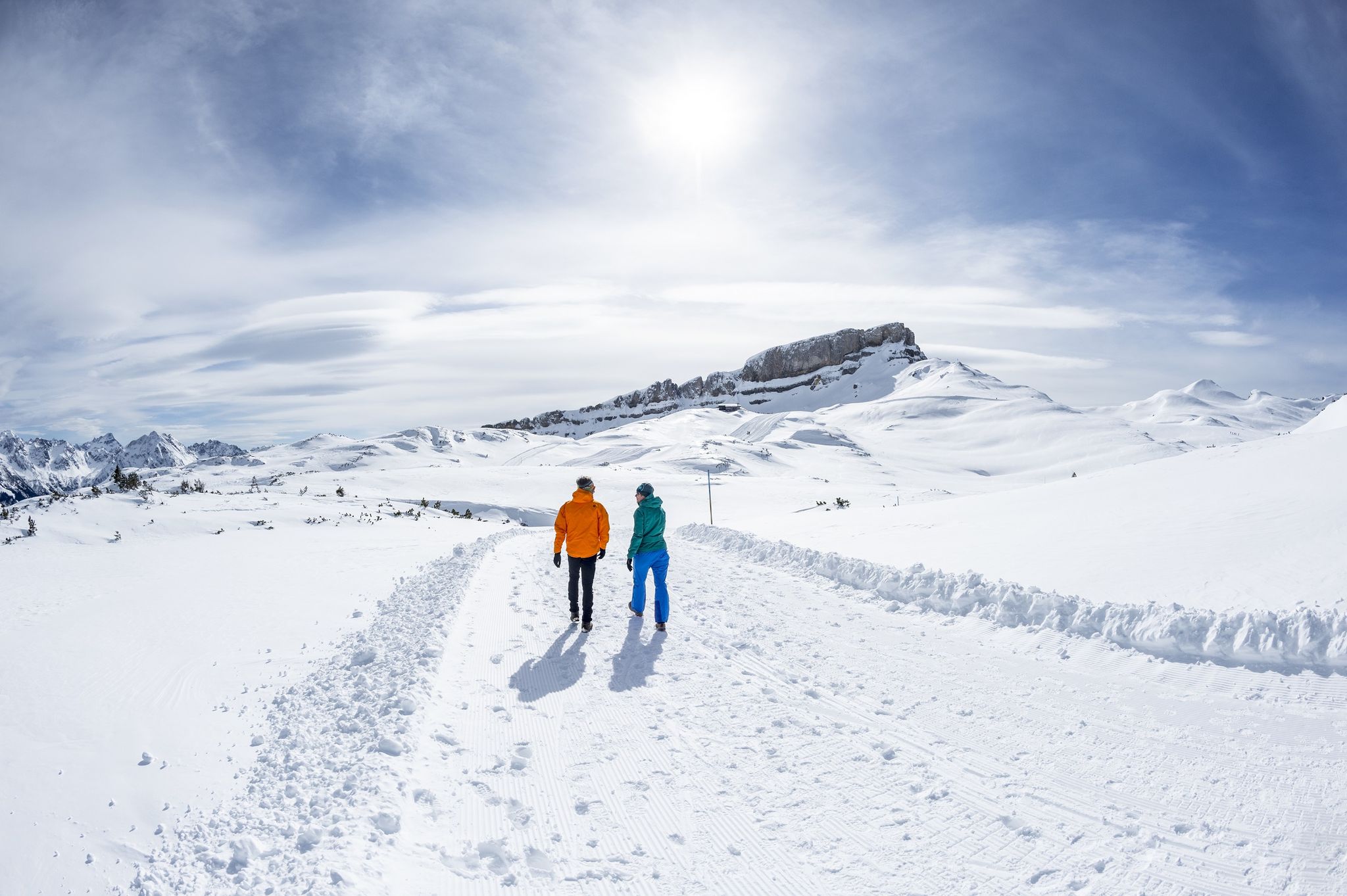
On white paths – winter hikes in Vorarlberg
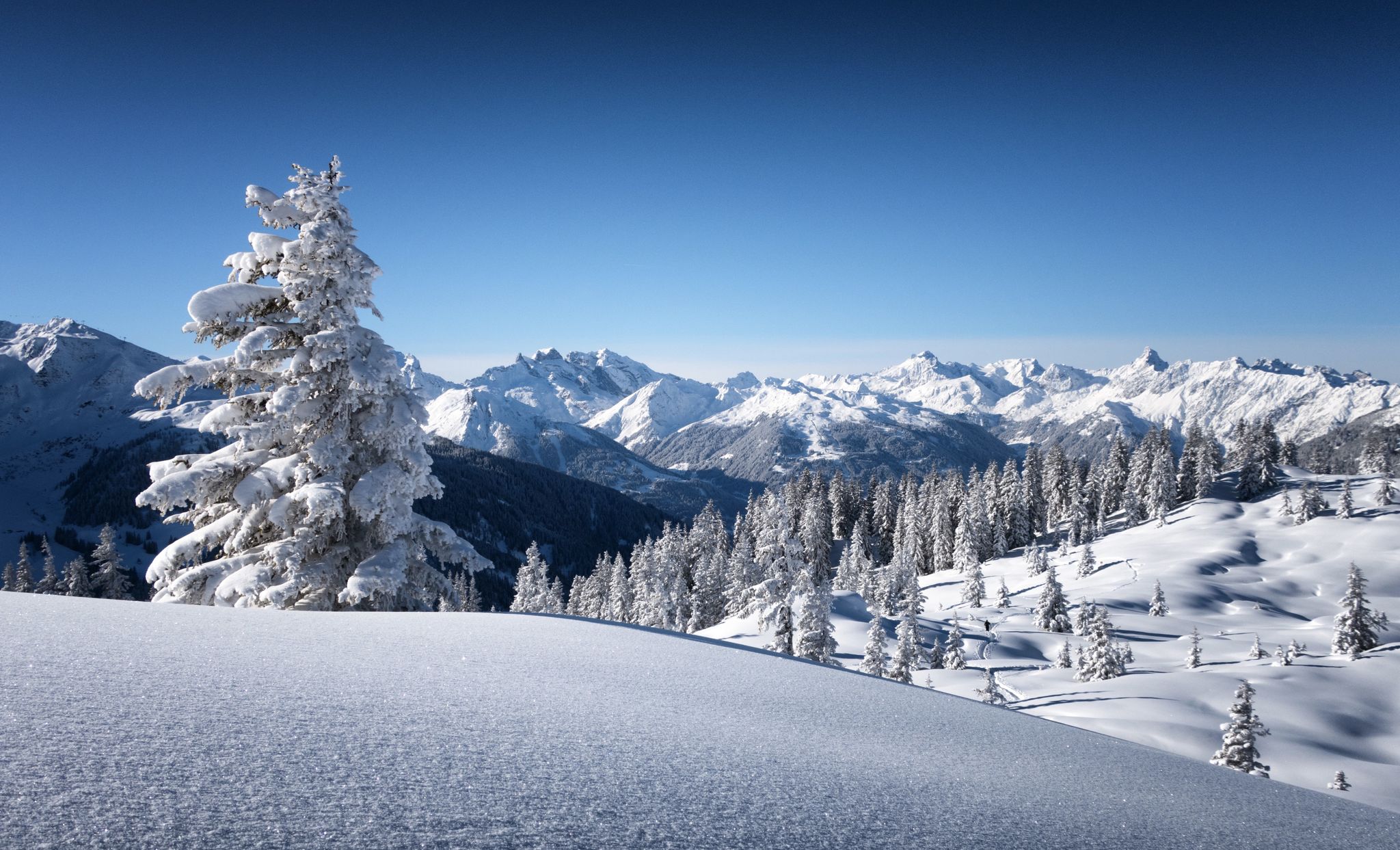
Following snow-covered trails – winter hiking in Vorarlberg
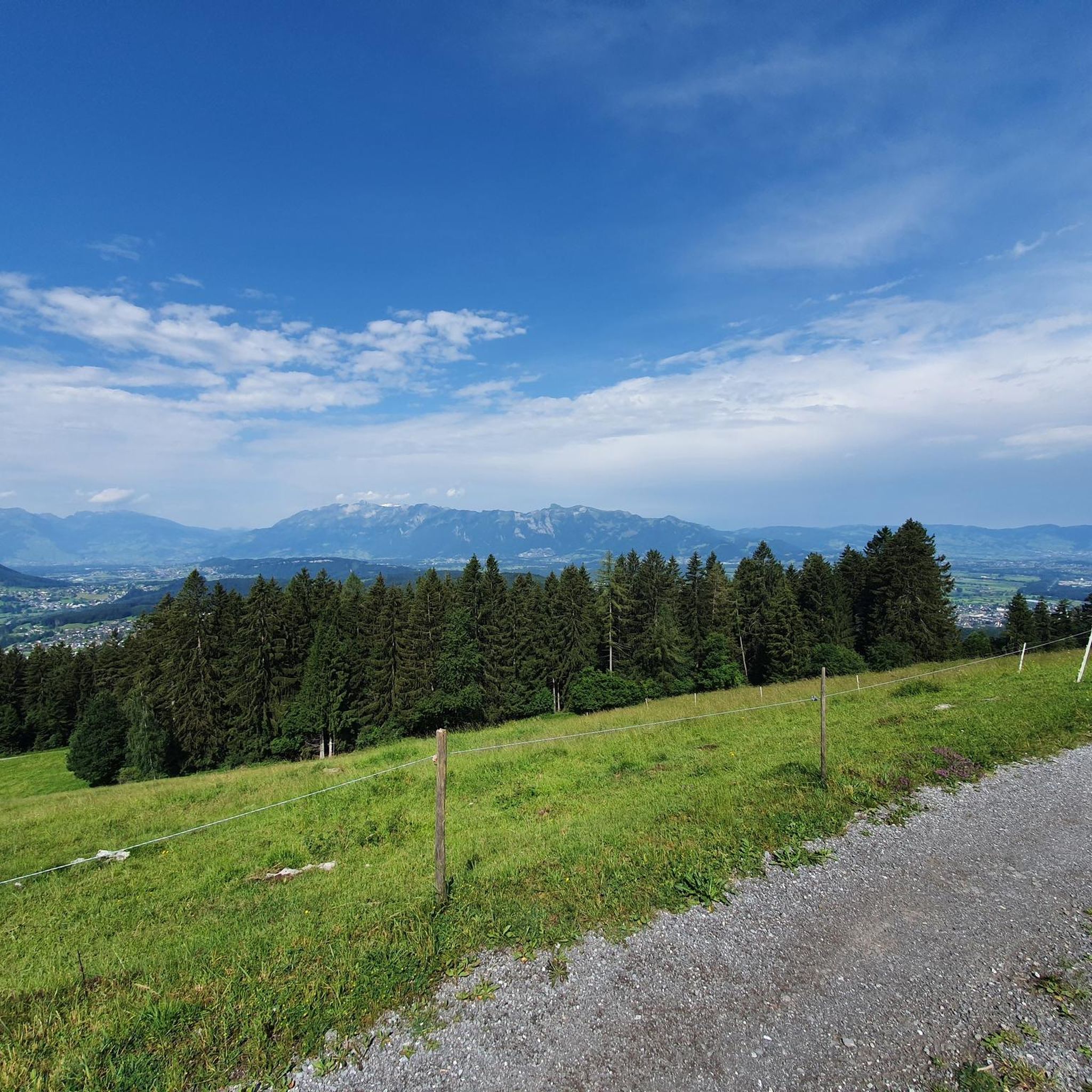
Hiking around Übersaxen
Road Cycling Routes around Übersaxen
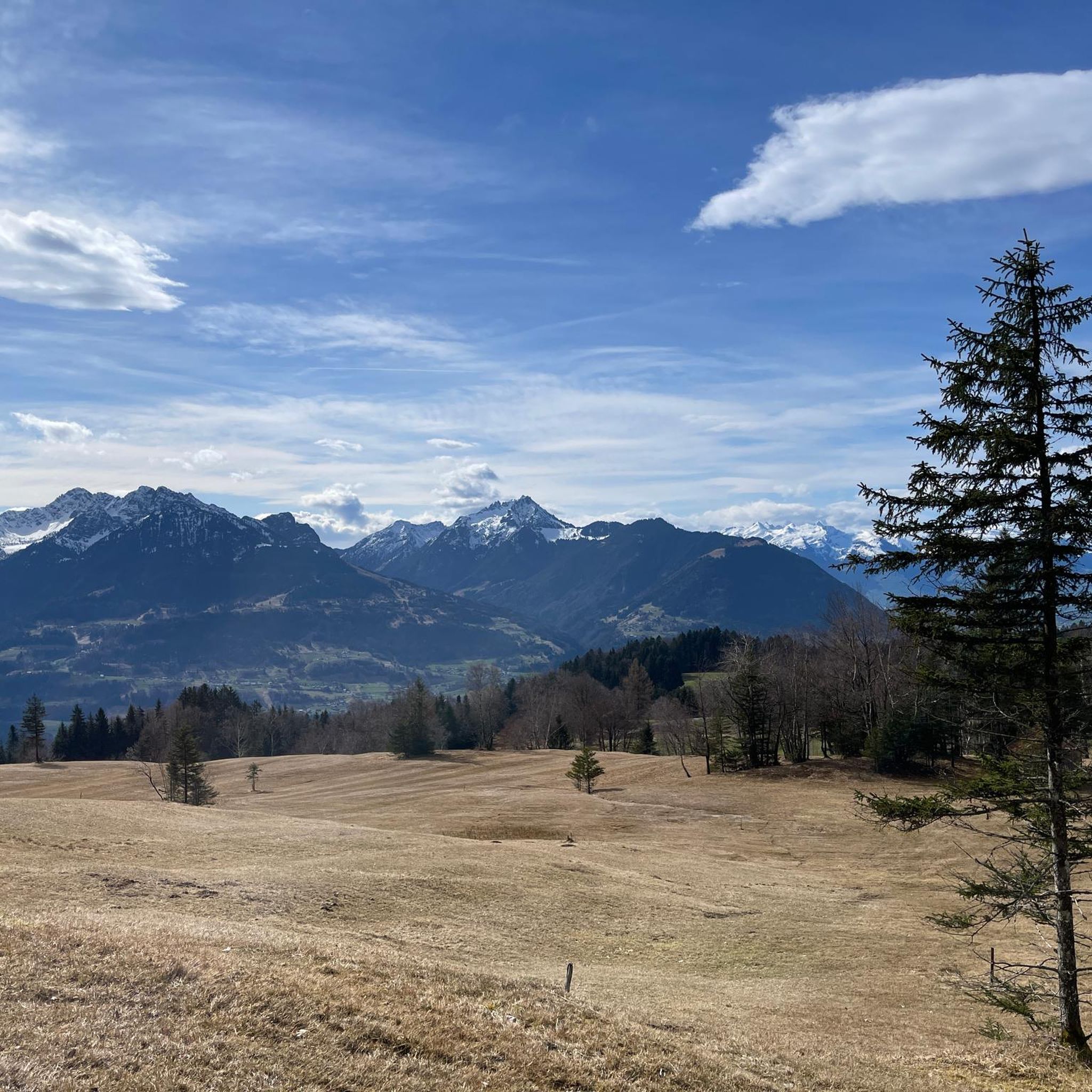
Cycling around Übersaxen
Mountain Hikes around Übersaxen

Gravel biking around Übersaxen
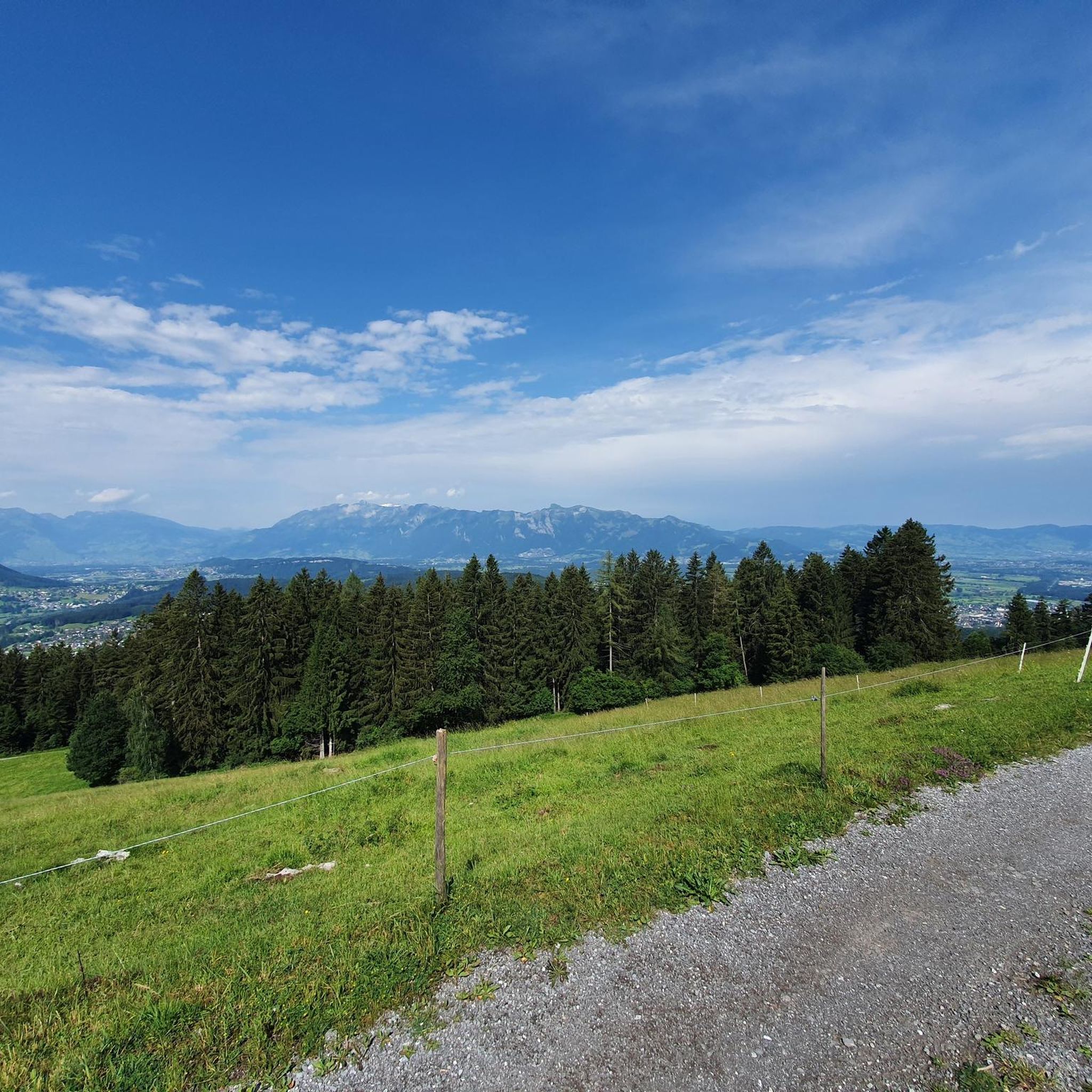
MTB Trails around Übersaxen
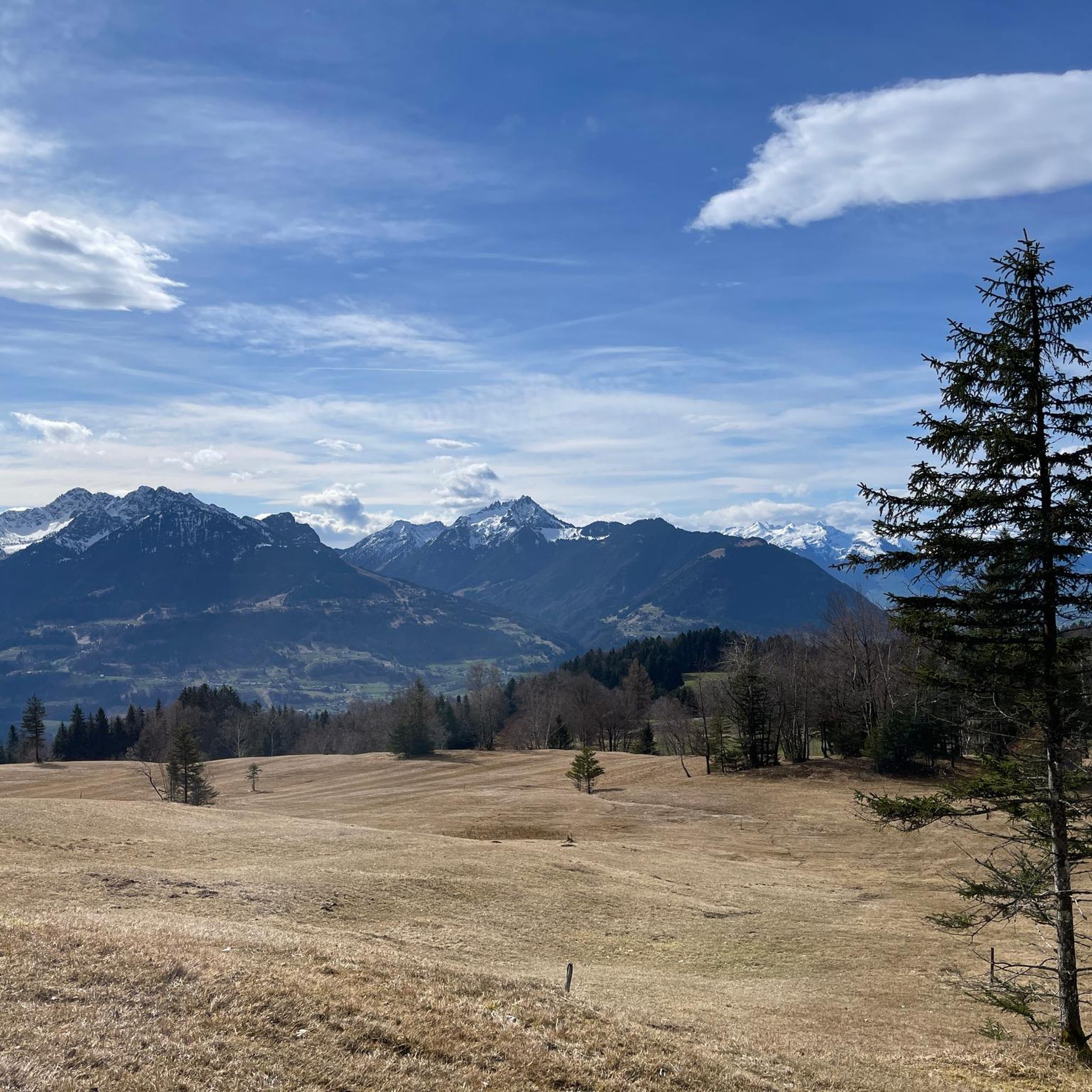
Running Trails around Übersaxen


Tips from the Community

Ambergschlössle Feldkirch Above Levis - between Altenstadt and Feldkirch - lies the small Amberg castle on the so-called Amberg rock. The Feldkirch city magistrate (1490, 1492, and 1497) Felix Merklin (Märkle) built a small castle around 1502 on the "Gut zue Altenburg" with "corridors and other necessities"; before that, however, he had to clear and demolish "much rubble and old masonry," because sparse wall remains obviously belonged to an older structure, behind which Montfort servants are suspected. From 1510, Anna von Helfenstein - the concubine of Emperor Maximilian (concubina ut dicitur Imperatoris Maximiliani) - lived in the small castle; she bore him an illegitimate son, who fell at a young age during military events in Milan. Another (illegitimate) son from this union was the noble Colonel Friedrich Max von Amberg, who became the owner of the castle in 1535. After his death in 1553, the property and its accessories returned to the possession of Habsburg-Austria; Ferdinand I gifted the Amberg residence to his court vice-chancellor Jakob Jonas from Götzis, ennobled as "von Buch und Udelberg." Subsequently, a series of high-born persons were owners of the castle: Heinrich Vogler (1561), Othmar Pappus (1582), and Georg von Altmannshausen (1591). From 1601 to 1686, the Furtenbach family was the owner, then until 1697 the city of Feldkirch, and finally until 1793 the family of the Counts of Travers. In 1795, three Feldkirch citizens - Gehring, Lerch, and Ludescher - purchased the small castle; after division by lottery, the Lerch family remained the sole owner. Then followed Schatzmann in 1845, and the Leone and Attlmayr families in 1873. At the turn of the 19th to the 20th century, the Silesian master carpenter Ludwig lived in the already very neglected building; in this house, Paula Ludwig - who became a renowned poet - was born on January 5, 1900; she also spent her first childhood years at Amberg Castle. Since 1928, the castle has been in the possession of the Scheyer family, who stylishly renovated the property throughout. Today, Amberg Castle is made available for events; a visit outside of these times is only possible from the outside. Text / Source: WALGAU WIKI https://wiki.imwalgau.at/Ambergschl%C3%B6ssle_Feldkirch
6
0
Schloss Amberg, Feldkirch – “the pearl of the middle Rhine Valley” Or also called: “the pearl of the middle Rhine Valley”. Rightly so! The 15th-century castle is arguably one of the most beautiful estates in the Lake Constance region. Still today. It offers a fantastic view of the entire front Rhine Valley all the way to Lake Constance – with a bit of luck even as far as Lindau. Text / source: Schloss Amberg, Amberggasse 43, Feldkirch https://www.schlossamberg.at/
6
0
Schloss Amberg, Feldkirch - The "Pleasure Palace" Schloss Amberg was probably built around 1500 by city magistrate Felix Merklin. In 1510, it was purchased by the Habsburg Emperor Maximilian I, who gifted it to his mistress, Countess Anna von Helfenstein, which is why the name "Lustschlösschen" (pleasure palace) also appears in literature. Their union produced a son, Friedrich Maximilian. The castle subsequently had many different unknown owners. In 1900, the writer Paula Ludwig, daughter of a Silesian artisan family, was born at the castle. In 1929, the dilapidated castle was bought by master builder Fidel Scheyer and has remained in the possession of the Scheyer family to this day, now in its fourth generation. Today, Schloss Amberg hosts wedding celebrations and events of all kinds. Find out more about the history of the castle, its owners, and how it is used today at https://www.schlossamberg.at/ Text / Source: Text / Source: Tourismus- und Kartenbüro Feldkirch, Palais Liechtenstein Schlossergasse, Feldkirch https://feldkirch-leben.at/entdecken/sehenswuerdigkeiten/burgen-schloesser
6
0
Upper Castle, Schellenberg / Castle Ruins in Schellenberg There are two castle ruins in Schellenberg, the so-called Upper Castle being a very popular tourist destination and accessible after a short walk. The upper and larger complex in the Hinterschloss district of Schellenberg was built from 1200 onwards and already possessed all the important elements of a medieval castle. The Upper Castle was first mentioned in a document dated January 10, 1348. The Lower Castle was built around 1250 as a smaller complex and only reached its final form and size after 1350. The first documented mention of this castle dates back to 1317. Presumably, both castles had been uninhabited since the 16th century and gradually fell into disrepair. Prince Franz Josef II donated the heavily overgrown ruins to the Historical Society in 1956, which subsequently had them researched and preserved. Text / Source: Liechtenstein Marketing / Official Tourism Website of the Principality of Liechtenstein https://tourismus.li/lie/ort/Burgruinen%20in%20Schellenberg/
15
0
The Construction History of Tostner Castle There is a very interesting assumption about Tostner Castle that it was a large, unfinished castle complex, of which only the ring wall, dating from the end of the 12th century/beginning of the 13th century, was built. The present keep, gatehouse, and palace (possibly also outbuildings) were built into these in the second half of the 13th century. This theory is supported primarily by the truly remarkable placement of the palace, which was placed right above the ring wall and occupies a remarkable position within the castle complex. During the Appenzell Wars, which raged heavily in this region, Tostner Castle was also severely damaged in 1405, but was rebuilt after 1408. The very spacious, yet sparsely built castle complex, was abandoned before 1616 and has since fallen into disrepair. The keep was restored in 1938/39, and extensive renovations followed in 1974 and 1980. Text / Source: Tosters Castle Ruins Tourist Information, Schlossergasse 8, A-6800 Feldkirch http://www.burgenkunde.at/vorarlberg/vbg_Burgruine_Tosters/vbg_Burgruine_Tosters.htm
13
0


Well preserved and worth a visit, from here the rock band path is also recommended.
8
1

Frequently Asked Questions
What types of castles can I visit near Übersaxen?
While Übersaxen itself doesn't have prominent castles, the surrounding region offers a variety of historical fortresses, primarily castle ruins. You can explore sites like Untere Burg Schellenberg, Tosters Castle Ruins, and Welsch-Ramschwag Castle Ruins, which provide insights into medieval history. For a fully preserved castle with a museum and restaurant, Schattenburg Castle in Feldkirch is a notable option.
What is the historical significance of the castles in this region?
The castles around Übersaxen, particularly the ruins, are deeply rooted in the region's medieval history. Many, like Tosters Castle Ruins and Welsch-Ramschwag Castle Ruins, were built by powerful families like the Counts of Montfort or Knights of Ramschwag and played roles in conflicts such as the Appenzell War in the early 15th century. These sites offer a glimpse into the defensive strategies and noble life of the past.
Are there family-friendly castles to visit near Übersaxen?
Yes, several castles in the vicinity are suitable for families. Schattenburg Castle in Feldkirch is a great choice, featuring a museum and an inn. The ruins, such as Tosters Castle Ruins and Blatten Castle Ruins, are also marked as family-friendly, offering open spaces for exploration and scenic views that can engage younger visitors.
What outdoor activities can I combine with a castle visit?
The region around Übersaxen is ideal for combining castle visits with various outdoor activities. You can find numerous mountain hikes, running trails, and gravel biking routes that often lead to or pass by these historical sites. Many castle ruins are located on hilltops, making them excellent destinations for a scenic walk or hike.
Are there any castles with restaurants or facilities nearby?
Yes, Schattenburg Castle in Feldkirch houses an inn famous for its giant schnitzel, making it a perfect spot for a meal. Additionally, Blatten Castle Ruins in Oberriet (Switzerland) features a castle restaurant that operates from April to September, offering refreshments after your exploration.
What are some less crowded castle ruins to explore?
For a quieter experience, consider visiting Welsch-Ramschwag Castle Ruins. While appreciated by the komoot community, it might offer a more serene atmosphere compared to more prominent sites. Its location and historical context provide a unique exploration opportunity away from larger crowds.
Can I find scenic viewpoints at these castles?
Absolutely. Many of the castles and ruins are strategically located on elevated positions, offering panoramic views of the surrounding landscapes. Schattenburg Castle's keep serves as a viewing platform over Feldkirch, and both Tosters Castle Ruins and Welsch-Ramschwag Castle Ruins are known for their scenic viewpoints.
What is the best time of year to visit the castles around Übersaxen?
The best time to visit is generally during the warmer months, from spring to early autumn (April to October). During this period, the weather is more favorable for exploring the outdoor ruins and hiking to their locations. Some castle restaurants, like the one at Blatten Castle Ruins, are also open seasonally from April to September.
Are there any easy walks to castle ruins for beginners?
While specific 'easy' routes depend on your starting point, many castle ruins, including Untere Burg Schellenberg and Tosters Castle Ruins, are accessible via intermediate trails. These paths often involve some elevation but are generally manageable for those with a basic level of fitness, offering rewarding views without extreme difficulty.
What other historical sites are near Übersaxen besides castles?
Beyond the castles, Übersaxen and its immediate surroundings offer other historical points of interest. The municipality itself features smaller historical sites like the St. Anna Kapelle and St. Rochuskapelle. Additionally, the nearby village of Sonntag hosts a local history museum in an old Walser house, providing insight into the life of ancestors in the Großes Walsertal.
Can I bring my dog to the castle ruins?
Many outdoor historical sites and trails in the region are dog-friendly, especially the castle ruins which are often accessed via hiking paths. It's generally advisable to keep dogs on a leash, particularly in areas with wildlife or other visitors. Always check local regulations or signage at specific sites for any restrictions.
How long does it typically take to visit a castle ruin?
The duration of a visit can vary. For castle ruins like Untere Burg Schellenberg or Tosters Castle Ruins, the visit itself might take 30 minutes to an hour for exploration. However, factoring in the hike to reach them, a complete outing could range from 1.5 to 3 hours, depending on the trail's length and your pace.
Most popular routes around Übersaxen
Most popular attractions around Übersaxen

Get inspired with the komoot mobile app


Explore more
Looking for the best castles somewhere else? Discover other guides around Übersaxen:
