Top 20 Castles around Zwischenwasser
Castles near Zwischenwasser Austria are found in its immediate vicinity and the broader Feldkirch district. These historical sites provide insight into the region's past. Visitors can explore various castle ruins and well-preserved castles, offering both historical context and scenic views. The area offers a range of historical landmarks viewpoints Zwischenwasser.
Best castles around Zwischenwasser
- The most popular castles is Alt-Ems Castle Ruins, a castle that is considered the longest medieval castle in Austria. It offers views over the Rhine…
Last updated: May 25, 2026
Alt-Ems Castle Ruins
Highlight • Castle
Translated by Google •
Tip by

Schattenburg Castle
Highlight • Castle
The Schattenburg towers over the city and was the seat of the Counts of Montfort until the end of the 14th century. The keep, the highest part …
Translated by Google •
Tip by

Sign up now to discover places like this
Get recommendations on the best single tracks, peaks, & plenty of other exciting outdoor places.
Sign up for free
Tosters Castle Ruins
Highlight • Castle
The ruins of Tosters are the ruins of a hilltop castle on a north-facing foothill of the Schellenberg, bordered by rocky steep slopes, in the Feldkirch district …
Translated by Google •
Tip by
Welsch-Ramschwag Castle Ruins
Highlight • Castle
Welsch-Ramschwag Castle was built between 1270 and 1290 by the Knights of Ramschwag, a noble family from the canton of St. Gallen (CH). Their family castle …
Translated by Google •
Tip by
Blatten Castle Ruins
Highlight • Castle
Blatten Castle is a ruined castle in the municipality of Oberriet, in the canton of St. Gallen, Switzerland. The square keep stands not far from the Rhine …
Translated by Google •
Tip by
Sign up for free to discover even more castles around Zwischenwasser.
Sign up for free
Already have an account?
Start today with a free account
Your next adventure awaits.
Login or Signup
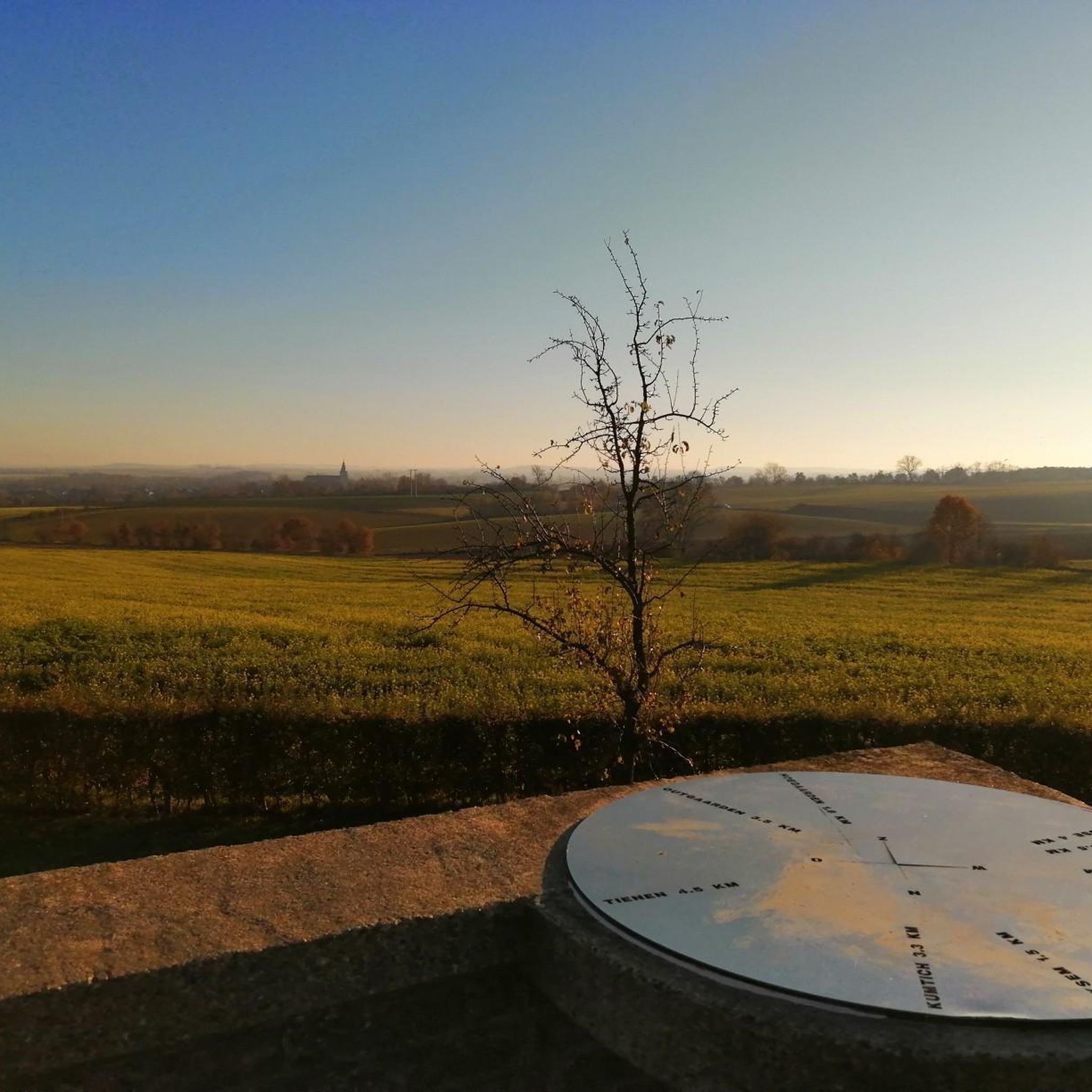
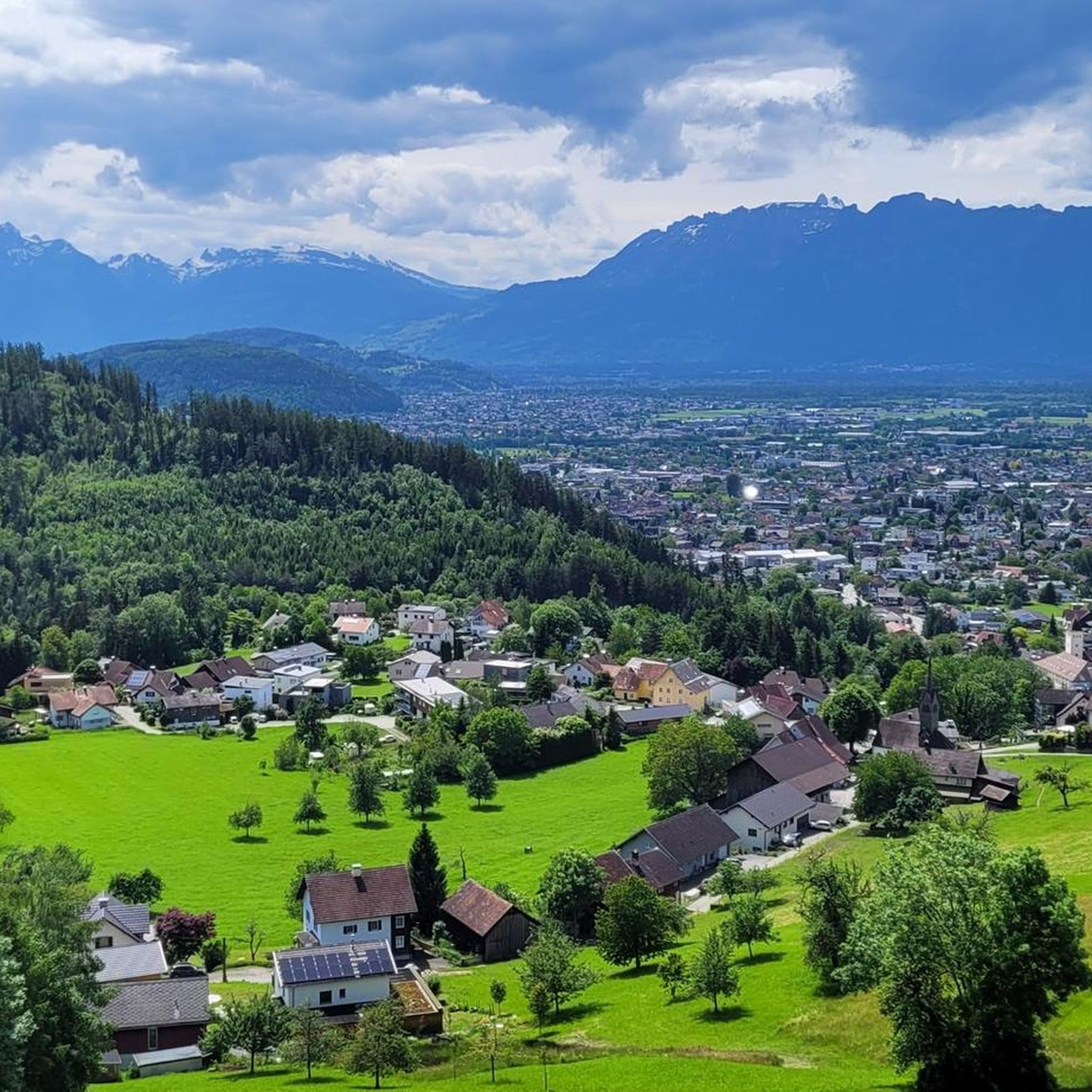

Tips from the Community

Blatten Castle Ruins, Oberriet / Oberriet's Landmark Obert's landmark, once a proud castle fortress, has a rich history. It was built around 1230 by Abbot Berchtold von Falkenstein to defend his property. The castle has seen several landowners and was set on fire in 1799 during the battle for the Blatten ferry. The surviving remains consist of parts of the tower and the castle ramparts, as well as the vaulted cellar. The castle ruins are located in the southernmost part of the municipality of Oberriet on the Blattenberg, idyllically situated on the edge of the forest. On the fitness trail, which runs almost entirely through the forest, you can practice sports in complete harmony with nature. The castle restaurant is open from April to September. Members of the ski club host guests every Sunday and welcome visitors. The hut can be rented by the public from Monday to Saturday. Tours are welcome on Sundays. Text / Source: Municipality of Oberriet https://www.oberriet.ch/sehenswuerdigkeiten/7474
14
0
Platten Castle, Oberriet Blatten Castle is a ruined castle in the municipality of Oberriet, in the canton of St. Gallen, Switzerland. The square keep stands not far from the Rhine on a rock south of the municipality of Oberriet. The family was first mentioned in 1170 with Burkardus de Blattûn and in 1229 with Ulricus de Blattenn. As chronicler Christian Kuchimeister reports, the castle was built shortly before 1270 by the Abbot of St. Gallen, Berchtold von Falkenstein, as protection against the Counts of Montfort-Werdenberg, in the territory of the Imperial Court of Kriessern, which, along with the Vogtherrschaft (reign of Thurgau and Zürichgau), had been granted to Heinrich Walter von Ramschwag (Lords of Ramschwag) in 1278 for his assistance to King Rudolf in the Battle of Marchfeld. It was then granted to Ulrich von Ramschwag in 1277. Due to his involvement in the Appenzell War, the castle and the lordship were temporarily confiscated as fiefs. In 1458, Walter Heinrich and Ulrich von Ramschwag sold the castle and estate to Jakob Mangold, a citizen of Constance. In 1486, it was repurchased by Abbot Ulrich Rösch of St. Gallen. From 1637 to 1640, Abbot Pius Reher commissioned renovations. The complex then served as the official residence of the Vögte von Kriessern until 1798. The castle was destroyed in the French War of Independence in 1799. Around 1911, part of the complex was used as a quarry. Plaque commemorating the restoration. The Canton of St. Gallen undertook the initial renovation of the tower. Further restorations were carried out on the tower in 1977 and on the surrounding walls and the remains of the castle gate in 1985. Aerial photograph (2016) The castle ruins are known to the people of the Rhine Valley as Blatten Castle. The grounds of the former castle complex and the interior of the tower (there are no longer any floors) are freely accessible. A later-built wooden building stands on top of the preserved vaulted cellar. This building is operated as a castle restaurant by the Oberriet Ski Club from April to September. Text / Source: Wikipedia https://de.wikipedia.org/wiki/Burg_Blatten
14
0
The Construction History of Tostner Castle There is a very interesting assumption about Tostner Castle that it was a large, unfinished castle complex, of which only the ring wall, dating from the end of the 12th century/beginning of the 13th century, was built. The present keep, gatehouse, and palace (possibly also outbuildings) were built into these in the second half of the 13th century. This theory is supported primarily by the truly remarkable placement of the palace, which was placed right above the ring wall and occupies a remarkable position within the castle complex. During the Appenzell Wars, which raged heavily in this region, Tostner Castle was also severely damaged in 1405, but was rebuilt after 1408. The very spacious, yet sparsely built castle complex, was abandoned before 1616 and has since fallen into disrepair. The keep was restored in 1938/39, and extensive renovations followed in 1974 and 1980. Text / Source: Tosters Castle Ruins Tourist Information, Schlossergasse 8, A-6800 Feldkirch http://www.burgenkunde.at/vorarlberg/vbg_Burgruine_Tosters/vbg_Burgruine_Tosters.htm
11
0


Lots of great things, fitness trail, barbecue area and much more...
4
0
Blatten Castle is a castle ruin in the municipality of Oberriet, in the canton of St. Gallen in Switzerland. The square keep stands not far from the Rhine on a rock south of the municipality of Oberriet. Source: Wikipedia
7
0

Great castle ruins with a tower visible from far away.
2
1
Castle ruins (Welsch-)Ramschwag, Nenzing Welsch-Ramschwag Castle was built between 1270 and 1290 by the Knights of Ramschwag, a noble family from the canton of St. Gallen (CH). Their family castle is in Häggenschwil, Canton St. Gallen. Before 1352 the castle came into the possession of the lords of Landenberg-Greifensee. In 1352 it was sold to Count Rudolf von Montfort-Feldkirch. When the Werdenbergs attacked the castle in 1360 as a result of a feud with the Montfort family, Hartmann von Prasberg from an Allgäu noble family was castellan. He defended the keep for many hours until help came from Feldkirch and the attackers were successfully driven away. In the same year, Welsch-Ramschwag Castle came to the Habsburgs. The castle did not last long, because angry Walgau farmers destroyed it on the evening of September 28, 1405 during the Appenzell War and it has been a ruin ever since. At the same time, other castles in the Walgau (Jagdberg, Blumenegg and Rosenegg) also went up in flames. The almost square complex had an elevated, central residential tower with simple light slits and a surrounding curtain wall. This was 1.20 meters thick and included the courtyard with an area of about 42 x 38 meters. In the west, two artificial wall-ditch systems were built as obstacles to the approach. As is the case today, the entrance to the main gate was in the east. The first attempts at restoration date back to 1912. Another attempt failed in 1925/26 due to a lack of funds. In 1947, parts of the ring wall were destroyed by the construction of a ski jump, which is now closed again. From 1997 to 2000 the ruins were restored in several stages by the market town of Nenzing in cooperation with the Federal Monuments Office and volunteers. The Castle Committee of the State Museum Association carried out the graphic reconstruction of the keep and the floor plan. Text / source: Vorarlberg Tourismus GmbH, Poststraße 11, 6850 Dornbirn https://www.vorarlberg.travel/poi/nenzing-burgruine-welsch-ramschwag/
14
0
Frequently Asked Questions
Which castles near Zwischenwasser offer the best views?
Many castles in the region provide excellent panoramic views. For instance, Alt-Ems Castle Ruins, located at 740 meters above sea level, offers breathtaking views over the Rhine Valley. Schattenburg Castle also features a keep that functions as a viewing platform, providing expansive views over Feldkirch. Additionally, Tosters Castle Ruins and Welsch-Ramschwag Castle Ruins are known for their scenic locations and vistas.
Are there family-friendly castles to visit near Zwischenwasser?
Yes, several castles are suitable for families. Schattenburg Castle is particularly family-friendly, housing a museum and an inn. The Tosters Castle Ruins and Blatten Castle Ruins are also categorized as family-friendly, offering historical exploration in an outdoor setting.
What historical insights can I gain from visiting these castles?
The castles around Zwischenwasser offer a deep dive into the region's medieval history. Schattenburg Castle, for example, was the seat of the Counts of Montfort and has been preserved almost unchanged, housing a museum that details its past. The ruins of Tosters Castle and Welsch-Ramschwag Castle tell stories of medieval conflicts, such as the Appenzell War, and the changing hands of power in the region.
Are there hiking trails that lead to or past these castles?
Yes, many castles are integrated into hiking routes. For instance, the ascent to Alt-Ems Castle Ruins is described as a rewarding experience. You can find various hiking options, including easy and moderate trails, in the area. Explore routes that incorporate these historical sites in our guides for Easy hikes around Zwischenwasser and Hiking around Zwischenwasser.
What is the best time of year to visit the castles around Zwischenwasser?
While castles can be visited year-round, spring, summer, and early autumn generally offer the most pleasant weather for exploring the outdoor ruins and enjoying the scenic views. During these seasons, hiking trails to the castles are more accessible, and castle restaurants, like the one at Blatten Castle Ruins, are typically open.
Can I find food and drink options near the castles?
Yes, some castles offer dining facilities. Schattenburg Castle houses an inn famous for its giant schnitzel, inviting visitors to linger. At Blatten Castle Ruins, a castle restaurant operates from April to September, hosted by the local ski club on Sundays.
What are some unique features of the castles in this region?
The castles near Zwischenwasser each have unique characteristics. Alt-Ems Castle Ruins is notable as the longest medieval castle in Austria. Schattenburg Castle is remarkable for its almost unchanged complex and its role as a museum. Tosters Castle Ruins is known for its prominent tower, which survived a major fire in 1405.
Are there any easy walks to castle ruins for those seeking less strenuous options?
While some castle visits involve intermediate ascents, the region offers various easy hiking trails that can be combined with castle exploration. For example, the area around Blatten Castle Ruins includes a fitness trail that runs through the forest. You can find easy routes in our guide for Easy hikes around Zwischenwasser.
What kind of natural features can I expect to see around the castles?
The castles are often set amidst beautiful natural landscapes. Many are located on hilltops or foothills, offering forest surroundings and commanding views. For instance, Alt-Ems Castle Ruins provides stunning views over the Rhine Valley, and Blatten Castle Ruins is idyllically situated at the edge of a forest.
How much time should I allocate for visiting a castle?
The time needed varies depending on the castle. For a well-preserved castle like Schattenburg Castle with its museum and inn, you might spend 2-3 hours. For castle ruins like Alt-Ems Castle Ruins or Tosters Castle Ruins, an hour or two might suffice, especially if combined with a hike to the site.
Are there any lesser-known or 'hidden gem' castles worth exploring?
While the main castles are popular, exploring the various ruins can feel like discovering hidden gems. Welsch-Ramschwag Castle Ruins, with its history of changing hands and destruction during the Appenzell War, offers a compelling historical narrative in a less frequented setting. Similarly, Blatten Castle Ruins provides a peaceful exploration opportunity with a seasonal restaurant.
What do visitors particularly enjoy about the castles around Zwischenwasser?
Visitors frequently praise the stunning views and the historical atmosphere. The 'fabulous view' from Alt-Ems Castle Ruins is often highlighted, as is the well-preserved nature of Schattenburg Castle. The sense of reward after an ascent to a ruin and the opportunity to explore centuries-old structures are also highly valued.
Most popular routes around Zwischenwasser
Most popular attractions around Zwischenwasser

Get inspired with the komoot mobile app


Explore more
Looking for the best castles somewhere else? Discover other guides around Zwischenwasser:
