Top 19 Castles around Göfis
Best castles around Göfis are found in this municipality in Vorarlberg, Austria, which is known for its historical sites. The region features a rich historical landscape with various castles and ruins. These sites offer insights into medieval history and the noble families that shaped the area. Many are situated in scenic locations, providing accessible recreational areas.
Best castles around Göfis
- The most popular castles is Untere Burg Schellenberg, a castle ruin located about 150 meters above the Rhine Valley.…
Last updated: November 20, 2026
Schattenburg Castle
Highlight • Castle
The Schattenburg towers over the city and was the seat of the Counts of Montfort until the end of the 14th century. The keep, the highest part …
Translated by Google •
Tip by

Untere Burg Schellenberg
Highlight • Castle
Translated by Google •
Tip by
Sign up now to discover places like this
Get recommendations on the best single tracks, peaks, & plenty of other exciting outdoor places.
Tosters Castle Ruins
Highlight • Castle
There is a very interesting assumption about Tostner Castle that it was a large, unfinished castle complex, of which only the ring wall, dating …
Translated by Google •
Tip by
Amberg Castle
Highlight • Castle
Schloss Amberg was probably built around 1500 by city magistrate Felix Merklin. In 1510, it was purchased by the Habsburg Emperor Maximilian I, …
Showing Translation
Tip by
Obere Burg Schellenberg
Highlight • Castle
There are two castle ruins in Schellenberg, the so-called Upper Castle being a very popular tourist destination and accessible after a short …
Translated by Google •
Tip by
Sign up for free to discover even more castles around Göfis.
Already have an account?
Start today with a free account
Your next adventure awaits.

Tips from the Community

Ambergschlössle Feldkirch Above Levis - between Altenstadt and Feldkirch - lies the small Amberg castle on the so-called Amberg rock. The Feldkirch city magistrate (1490, 1492, and 1497) Felix Merklin (Märkle) built a small castle around 1502 on the "Gut zue Altenburg" with "corridors and other necessities"; before that, however, he had to clear and demolish "much rubble and old masonry," because sparse wall remains obviously belonged to an older structure, behind which Montfort servants are suspected. From 1510, Anna von Helfenstein - the concubine of Emperor Maximilian (concubina ut dicitur Imperatoris Maximiliani) - lived in the small castle; she bore him an illegitimate son, who fell at a young age during military events in Milan. Another (illegitimate) son from this union was the noble Colonel Friedrich Max von Amberg, who became the owner of the castle in 1535. After his death in 1553, the property and its accessories returned to the possession of Habsburg-Austria; Ferdinand I gifted the Amberg residence to his court vice-chancellor Jakob Jonas from Götzis, ennobled as "von Buch und Udelberg." Subsequently, a series of high-born persons were owners of the castle: Heinrich Vogler (1561), Othmar Pappus (1582), and Georg von Altmannshausen (1591). From 1601 to 1686, the Furtenbach family was the owner, then until 1697 the city of Feldkirch, and finally until 1793 the family of the Counts of Travers. In 1795, three Feldkirch citizens - Gehring, Lerch, and Ludescher - purchased the small castle; after division by lottery, the Lerch family remained the sole owner. Then followed Schatzmann in 1845, and the Leone and Attlmayr families in 1873. At the turn of the 19th to the 20th century, the Silesian master carpenter Ludwig lived in the already very neglected building; in this house, Paula Ludwig - who became a renowned poet - was born on January 5, 1900; she also spent her first childhood years at Amberg Castle. Since 1928, the castle has been in the possession of the Scheyer family, who stylishly renovated the property throughout. Today, Amberg Castle is made available for events; a visit outside of these times is only possible from the outside. Text / Source: WALGAU WIKI https://wiki.imwalgau.at/Ambergschl%C3%B6ssle_Feldkirch
6
0
Schloss Amberg, Feldkirch – “the pearl of the middle Rhine Valley” Or also called: “the pearl of the middle Rhine Valley”. Rightly so! The 15th-century castle is arguably one of the most beautiful estates in the Lake Constance region. Still today. It offers a fantastic view of the entire front Rhine Valley all the way to Lake Constance – with a bit of luck even as far as Lindau. Text / source: Schloss Amberg, Amberggasse 43, Feldkirch https://www.schlossamberg.at/
6
0
Schloss Amberg, Feldkirch - The "Pleasure Palace" Schloss Amberg was probably built around 1500 by city magistrate Felix Merklin. In 1510, it was purchased by the Habsburg Emperor Maximilian I, who gifted it to his mistress, Countess Anna von Helfenstein, which is why the name "Lustschlösschen" (pleasure palace) also appears in literature. Their union produced a son, Friedrich Maximilian. The castle subsequently had many different unknown owners. In 1900, the writer Paula Ludwig, daughter of a Silesian artisan family, was born at the castle. In 1929, the dilapidated castle was bought by master builder Fidel Scheyer and has remained in the possession of the Scheyer family to this day, now in its fourth generation. Today, Schloss Amberg hosts wedding celebrations and events of all kinds. Find out more about the history of the castle, its owners, and how it is used today at https://www.schlossamberg.at/ Text / Source: Text / Source: Tourismus- und Kartenbüro Feldkirch, Palais Liechtenstein Schlossergasse, Feldkirch https://feldkirch-leben.at/entdecken/sehenswuerdigkeiten/burgen-schloesser
6
0
Upper Castle, Schellenberg / Castle Ruins in Schellenberg There are two castle ruins in Schellenberg, the so-called Upper Castle being a very popular tourist destination and accessible after a short walk. The upper and larger complex in the Hinterschloss district of Schellenberg was built from 1200 onwards and already possessed all the important elements of a medieval castle. The Upper Castle was first mentioned in a document dated January 10, 1348. The Lower Castle was built around 1250 as a smaller complex and only reached its final form and size after 1350. The first documented mention of this castle dates back to 1317. Presumably, both castles had been uninhabited since the 16th century and gradually fell into disrepair. Prince Franz Josef II donated the heavily overgrown ruins to the Historical Society in 1956, which subsequently had them researched and preserved. Text / Source: Liechtenstein Marketing / Official Tourism Website of the Principality of Liechtenstein https://tourismus.li/lie/ort/Burgruinen%20in%20Schellenberg/
15
0
The Construction History of Tostner Castle There is a very interesting assumption about Tostner Castle that it was a large, unfinished castle complex, of which only the ring wall, dating from the end of the 12th century/beginning of the 13th century, was built. The present keep, gatehouse, and palace (possibly also outbuildings) were built into these in the second half of the 13th century. This theory is supported primarily by the truly remarkable placement of the palace, which was placed right above the ring wall and occupies a remarkable position within the castle complex. During the Appenzell Wars, which raged heavily in this region, Tostner Castle was also severely damaged in 1405, but was rebuilt after 1408. The very spacious, yet sparsely built castle complex, was abandoned before 1616 and has since fallen into disrepair. The keep was restored in 1938/39, and extensive renovations followed in 1974 and 1980. Text / Source: Tosters Castle Ruins Tourist Information, Schlossergasse 8, A-6800 Feldkirch http://www.burgenkunde.at/vorarlberg/vbg_Burgruine_Tosters/vbg_Burgruine_Tosters.htm
13
0


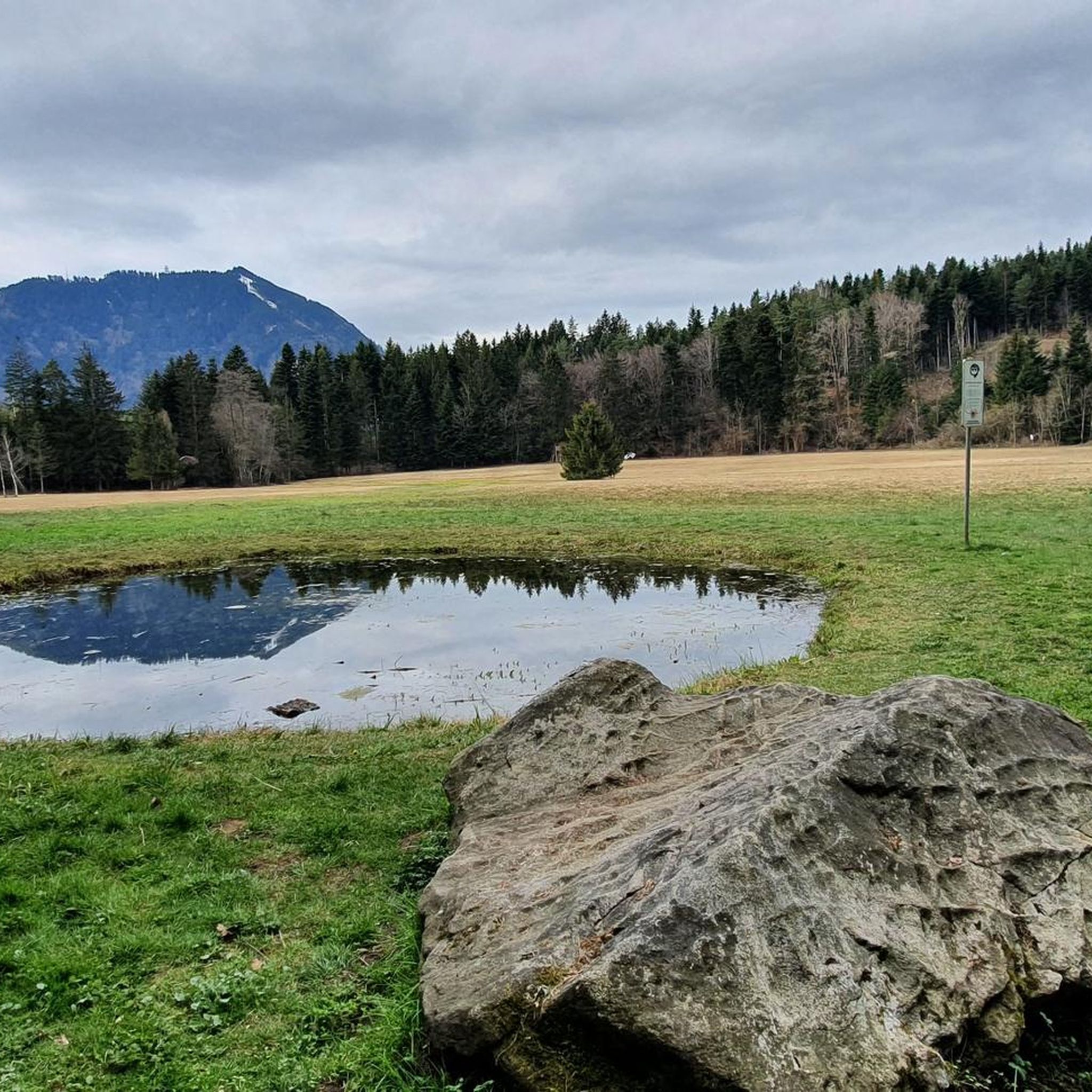
Well preserved and worth a visit, from here the rock band path is also recommended.
8
1

Frequently Asked Questions
What are the most historically significant castles to visit near Göfis?
The region around Göfis is rich in history. You can explore the ruins of Tosters Castle Ruins, built around 1260 by the Counts of Montfort, which played a role in the Appenzell War. Another significant site is Schattenburg Castle in Feldkirch, which was the ancestral seat of the Counts of Montfort and is largely preserved with its original structure.
Are there any family-friendly castle sites around Göfis?
Yes, several castle sites are suitable for families. Schattenburg Castle in Feldkirch is family-friendly, offering a museum and an inn. The Tosters Castle Ruins are also considered family-friendly, providing an interesting historical outing. Additionally, the local Ruine Sigberg in Göfis has been restored into a popular recreational area with grill spots, making it ideal for family walks.
What kind of views can I expect from the castles in this area?
Many castles offer scenic viewpoints. From the keep of Schattenburg Castle, you can enjoy panoramic views over the entire city of Feldkirch. The Welsch-Ramschwag Castle Ruins also provide beautiful views of the surrounding landscape. Untere Burg Schellenberg, located about 150 meters above the Rhine Valley, offers a journey back in time with expansive vistas.
Are there hiking trails that include castle ruins near Göfis?
Absolutely. The region is excellent for combining hiking with historical exploration. You can find numerous hiking routes around Göfis that lead to castle ruins. For example, the area around Ruine Sigberg is perfect for pleasant walks. For more options, explore the various hiking routes around Göfis.
What is the best time of year to visit the castles around Göfis?
The castles and ruins around Göfis can be visited year-round. Spring and autumn offer pleasant temperatures for hiking and exploring the outdoor sites. Summer is also great, especially for sites with recreational areas like Ruine Sigberg. Even in winter, some trails to the ruins are accessible, offering a unique, serene experience.
Can I find any preserved castles or are they all ruins?
While many are ruins, such as Tosters Castle Ruins and Welsch-Ramschwag Castle Ruins, Schattenburg Castle in Feldkirch is largely preserved with its original structure. It houses a museum and an inn, offering a more complete castle experience.
Are there any castles that are particularly easy to access for a short visit?
Ruine Sigberg in Göfis is easily accessible. You can follow signposts from the Göfis church, with much of the path on asphalted roads. While the castle itself requires stairs, the overall area is considered easy to navigate. Schattenburg Castle is also conveniently located above Feldkirch and can be reached with relative ease.
What other outdoor activities can I do near the castles?
Beyond hiking to the castles, the Göfis region offers a variety of outdoor activities. You can find numerous hiking trails, MTB trails, and cycling routes in the area. These routes often pass through scenic landscapes, offering opportunities to explore the natural beauty of Vorarlberg.
Are there any castles that offer amenities like restaurants or cafes?
Yes, Schattenburg Castle in Feldkirch houses an inn famous for its giant schnitzel, perfect for a meal after exploring. The Blatten Castle Ruins in Oberriet, Switzerland, also feature a castle restaurant that operates from April to September.
What makes Ruine Sigberg in Göfis unique?
Ruine Sigberg is significant for its historical connection to medieval conflicts and noble families, dating back to the mid-13th century. It underwent extensive renovations between 2001 and 2008, transforming it into a well-preserved and accessible recreational area. Visitors can still see traces of the keep and ring wall, making it a tangible link to the past in a beautiful, wooded setting.
Are there any castles located outside of Austria but still close to Göfis?
Yes, the region's historical landscape extends across borders. Untere Burg Schellenberg, also known as Lower Schellenberg Castle, is located in Schellenberg, Liechtenstein. Additionally, Blatten Castle Ruins are situated in Oberriet, Switzerland, both offering interesting historical excursions a short distance from Göfis.
What should I wear for hiking to the castles?
For hiking to the castles and ruins, especially those in wooded or hilly areas, it's recommended to wear comfortable, sturdy walking shoes or hiking boots. Layered clothing is advisable to adapt to changing weather conditions, and bringing water is always a good idea. Some paths might be uneven, so good footwear is key.
Most popular attractions around Göfis

Get inspired with the komoot mobile app


Explore more
Looking for the best castles somewhere else? Discover other guides around Göfis:
