The 6 Most Amazing Peaks around Detroit
Mountain peaks near Detroit are not traditional towering summits but rather elevated areas and rolling hills formed by glacial activity. The region, primarily a glacial till plain, offers recreational opportunities and scenic views within the broader Metro Detroit area. The highest natural elevation within Detroit city limits is approximately 675 to 680 feet (206 to 207 meters) above sea level. These areas provide extensive trail systems for outdoor enthusiasts.
Best mountain peaks around Detroit
- The most popular mountain peaks is…
Last updated: October 1, 2026
Gold Butte Lookout
Highlight • Viewpoint
Tip by

Sardine Mountain Summit
Highlight • Summit
Tip by

Sign up now to discover places like this
Get recommendations on the best single tracks, peaks, & plenty of other exciting outdoor places.
Battle Ax Mountain
Highlight • Summit
Tip by
Marten Buttes
Highlight • Summit
Tip by
Mount Beachie Summit
Highlight • Summit
Tip by
Sign up for free to discover even more peaks around Detroit.
Already have an account?
Tips from the Community

The lookout tower on top of Gold Butte is a popular hiking and trail running destination within Willamette National Forest. The lookout structure sits atop the 4,618-foot mountain and offers expansive views over the surrounding national forest and wilderness areas. Be courteous when approaching the lookout, since some hikers decide to spend the night up here.
0
0
The lookout tower on top of Gold Butte is a popular hiking and trail running destination within Willamette National Forest. The lookout structure sits atop the 4,618-foot mountain and offers expansive views over the surrounding national forest and wilderness areas. Be courteous when approaching the lookout since some hikers decide to spend the night up here.
0
0

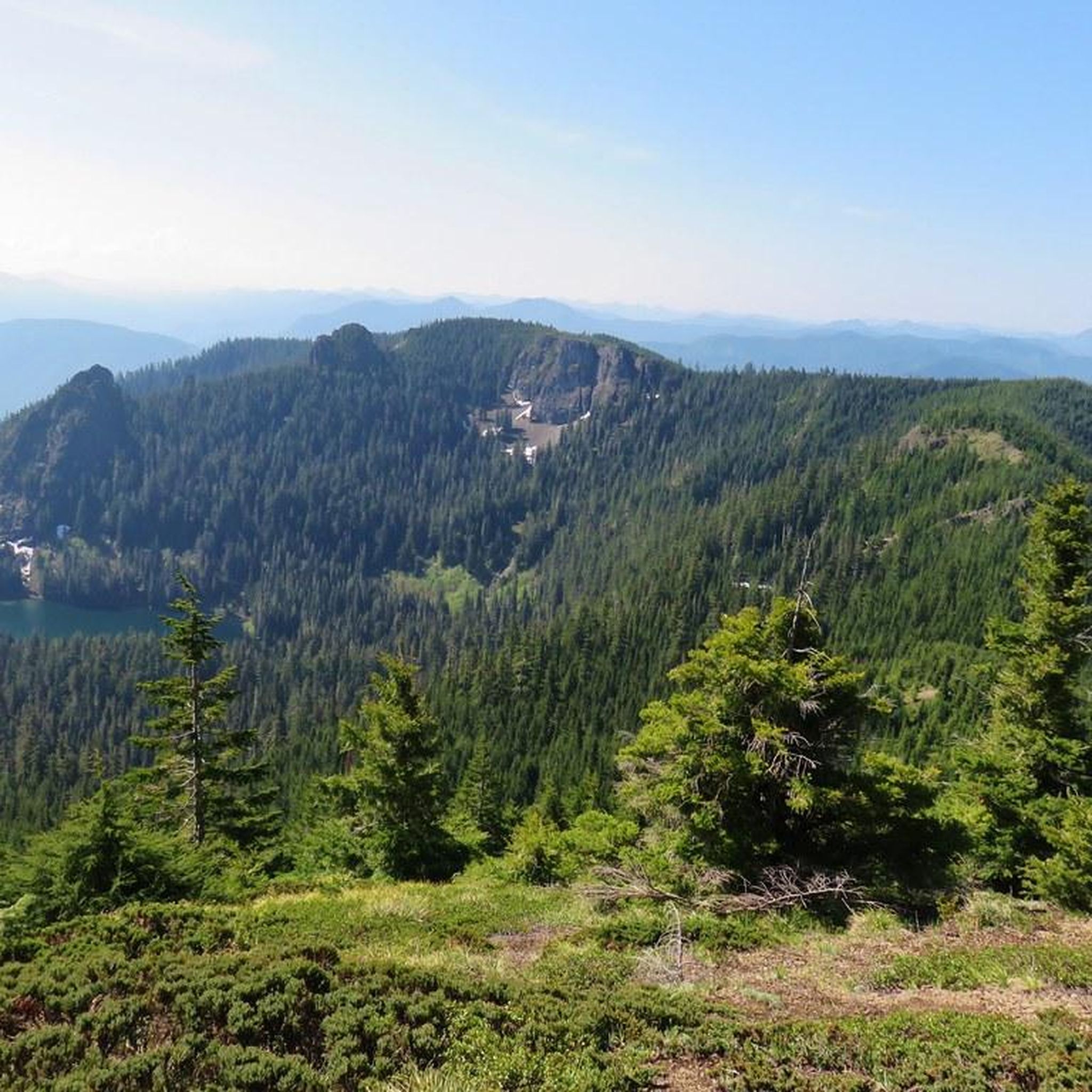
As you explore the ridge, you will discover the remnants of an old lookout. Follow a spur trail to a stunning viewpoint over Elk Lake. From Battle Ax's summit, behold a vast panorama from Mount Rainier to the Three Sisters and west to the Coast Range.
0
0
Pass beneath towering basalt cliffs, the north butte features a semi-wooded summit with a westward-pointing lava flow. Its sheer south and west faces showcase solid basalt columns, while the north reveals weathered, sculpted formations and views across Opal Creek Wilderness.
0
0
The official trail skirts Mount Beachie's summit, but a short bushwhack unveils a modest peak above Battle Ax Creek's headwaters. From here, a panoramic view unfolds, revealing peaks from Mount Adams to Diamond Peak, with Mount Hood tucked behind Battle Ax Mountain.
0
0
Nearing the summit, the world unfolds. Gaze upon Detroit Lake, and the encircling Rocky Top, Water Tower Mountain, and Mayflower summits. From the peak, the vista extends far, revealing Mount Jefferson, the Three Sisters, and even the distant silhouette of Diamond Peak on the horizon.
0
0
Frequently Asked Questions
What defines a 'mountain peak' in the Detroit area?
In Detroit, 'mountain peaks' refer to a few different types of elevated points. This includes the highest natural elevations within the city limits, which are subtle rises formed by glacial activity. The broader Metro Detroit area also features the Jackson Interlobate Range, informally known as 'The Detroit Mountains,' which are gentle glacial hills offering recreational opportunities. Additionally, Detroit's impressive skyline presents architectural 'peaks' like skyscrapers that provide panoramic city views.
Where is the highest natural elevation within Detroit city limits?
The highest natural elevation within Detroit city limits is located on the northwest side, just north of Gorham Playground and south of 8 Mile Road. This area reaches approximately 675 to 680 feet (206 to 207 meters) above sea level, offering subtle views across several blocks.
Are there any areas for hiking or outdoor recreation on elevated terrain near Detroit?
Yes, for those seeking outdoor recreation on elevated terrain, the Jackson Interlobate Range in Oakland and Washtenaw Counties is a key area. Sometimes called 'The Detroit Mountains,' this region features glacial gravel deposits forming gentle hills, providing terrain for hiking, mountain biking, and other outdoor activities. It includes numerous state parks and recreation areas.
What kind of views can I expect from Detroit's elevated points?
From the highest natural elevations within the city, you can expect subtle views across several city blocks. For expansive panoramic views of the city, the Detroit River, and even Windsor, Canada, you should visit one of Detroit's architectural 'peaks' like the Detroit Marriott at the Renaissance Center.
What is the Detroit Marriott at the Renaissance Center and what does it offer?
The Detroit Marriott at the Renaissance Center is the tallest building in Detroit and Michigan, rising 727 feet (221.5 meters) along the Detroit International Riverfront. It serves as a significant urban 'peak,' offering exceptional panoramic views from its higher floors or observation decks of the city, the Detroit River, and Windsor, Canada. You can learn more about Detroit's tallest buildings on Wikipedia.
Are there any new tall buildings in Detroit that offer elevated views?
Yes, the Hudson's Detroit development, completed in 2025, includes the city's second-tallest building at 680 feet (207 meters). Similar to the Renaissance Center, its height provides expansive views, contributing to Detroit's elevated experiences.
What is the 'Detroit Moraine' and how does it relate to the city's topography?
The Detroit Moraine is a broad clay ridge that contributes to some of the higher elevations in the older parts of Detroit. It's a geological feature resulting from glacial activity, subtly shaping the city's relatively flat topography.
What types of activities are popular in the 'Detroit Mountains' region?
The 'Detroit Mountains' region, or Jackson Interlobate Range, is popular for a variety of outdoor activities. These include mountain biking, ski runs (in winter), backpacking, and hiking. The area is home to numerous state parks and recreation areas that cater to these activities.
Are there any easy hiking trails around Detroit's elevated areas?
While specific easy trails on Detroit's highest natural points are not prominent, the broader Metro Detroit area, particularly within the Jackson Interlobate Range, offers various state parks and recreation areas with trails suitable for different skill levels. For easy hiking options, you can explore guides like Easy hikes around Detroit.
What kind of natural features can I expect to see when exploring the elevated points around Detroit?
When exploring the natural elevated points around Detroit, you'll encounter landscapes shaped by glacial activity. This includes gentle hills, glacial gravel deposits, and subtle rises in elevation. The surrounding recreation areas often feature forests, lakes, and diverse flora and fauna typical of southeast Michigan.
What is the best time of year to visit Detroit's elevated natural areas for outdoor activities?
The best time to visit Detroit's elevated natural areas for outdoor activities generally depends on the activity. Spring and fall offer pleasant temperatures for hiking and mountain biking, with vibrant foliage in autumn. Summer is also popular, though it can be warmer. Winter provides opportunities for activities like cross-country skiing or snowshoeing in the hiller regions.
Can I find any challenging hiking trails near Detroit's elevated regions?
Yes, within the broader Metro Detroit area, particularly in the Jackson Interlobate Range, there are more rugged expanses of land that offer challenging hiking trails and backpacking ridges. For more demanding routes, you can look into guides such as Hiking around Detroit.
Most popular routes around Detroit
Most popular attractions around Detroit

Get inspired with the komoot mobile app


Explore more
See even more amazing summits around Detroit with these guides:
