The best walks and hikes around Erbes-Büdesheim
4.5
(567)
2,487
hikers
33
hikes
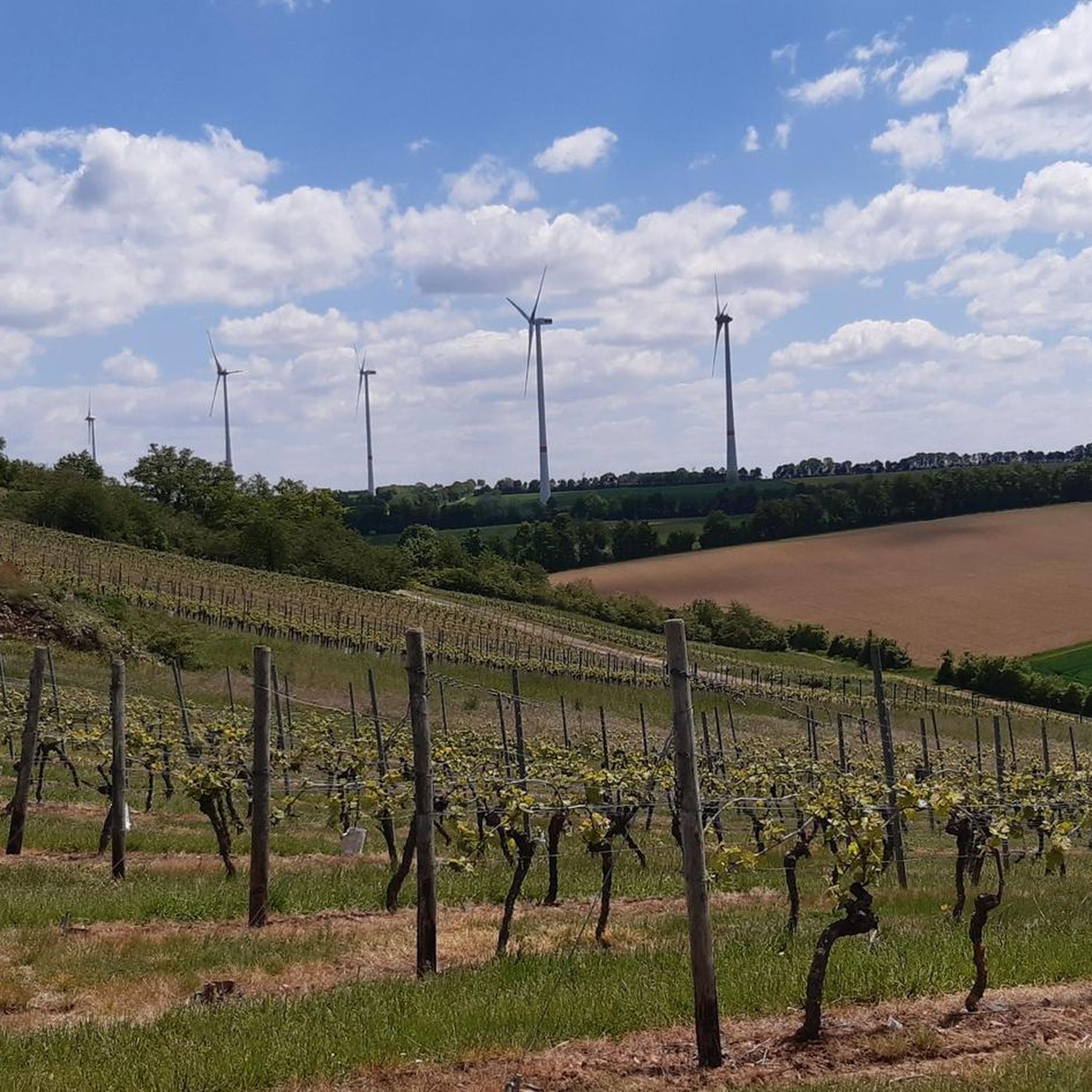
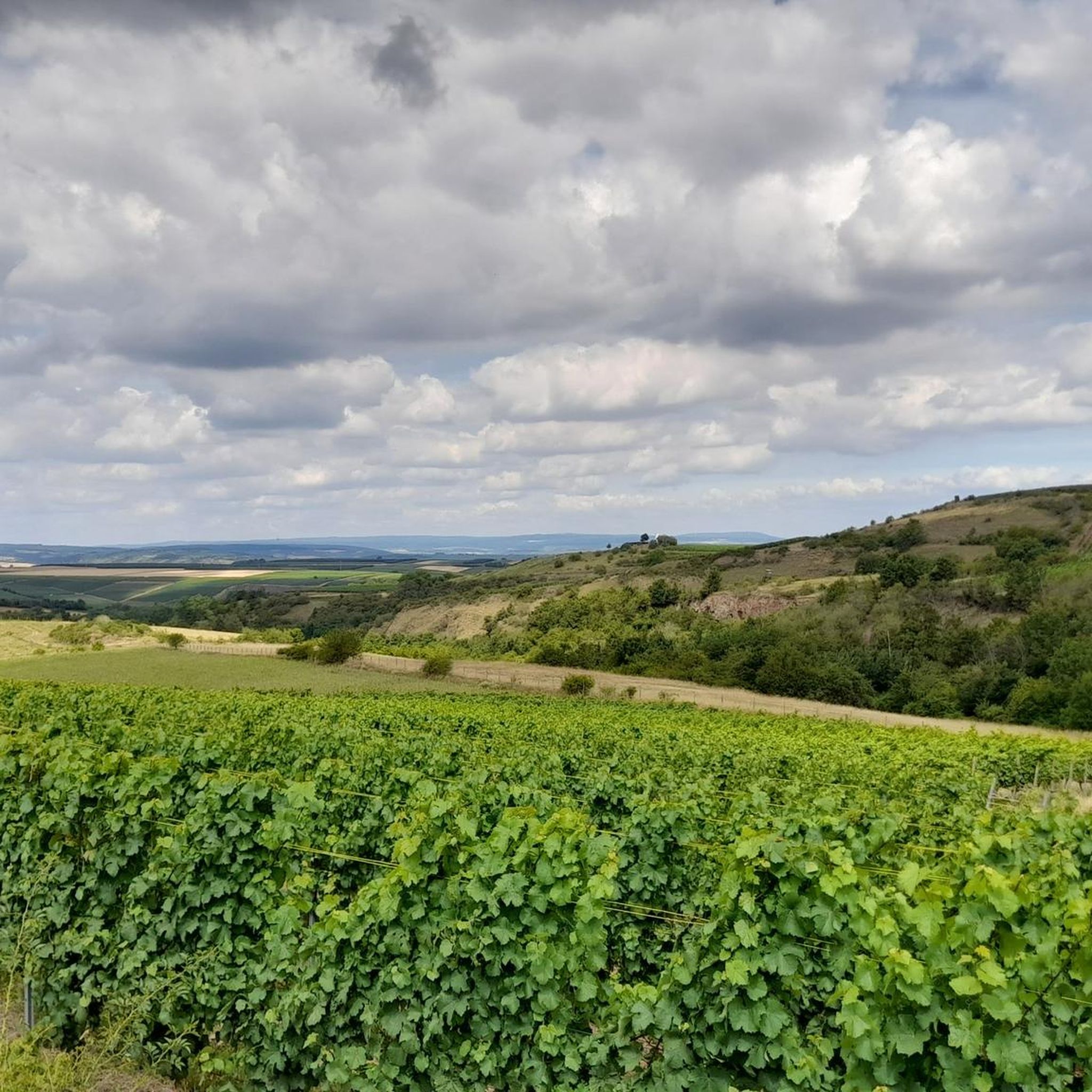
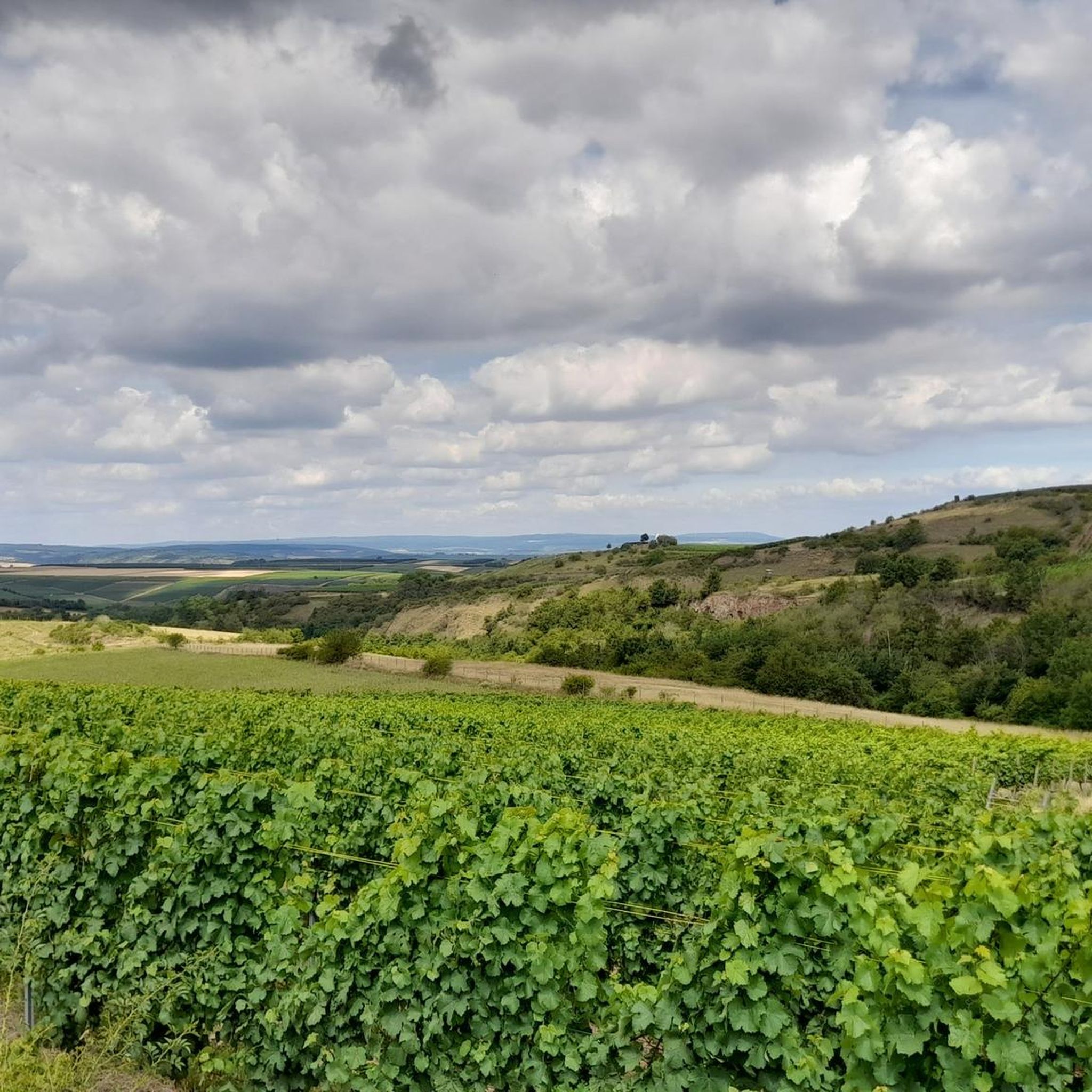
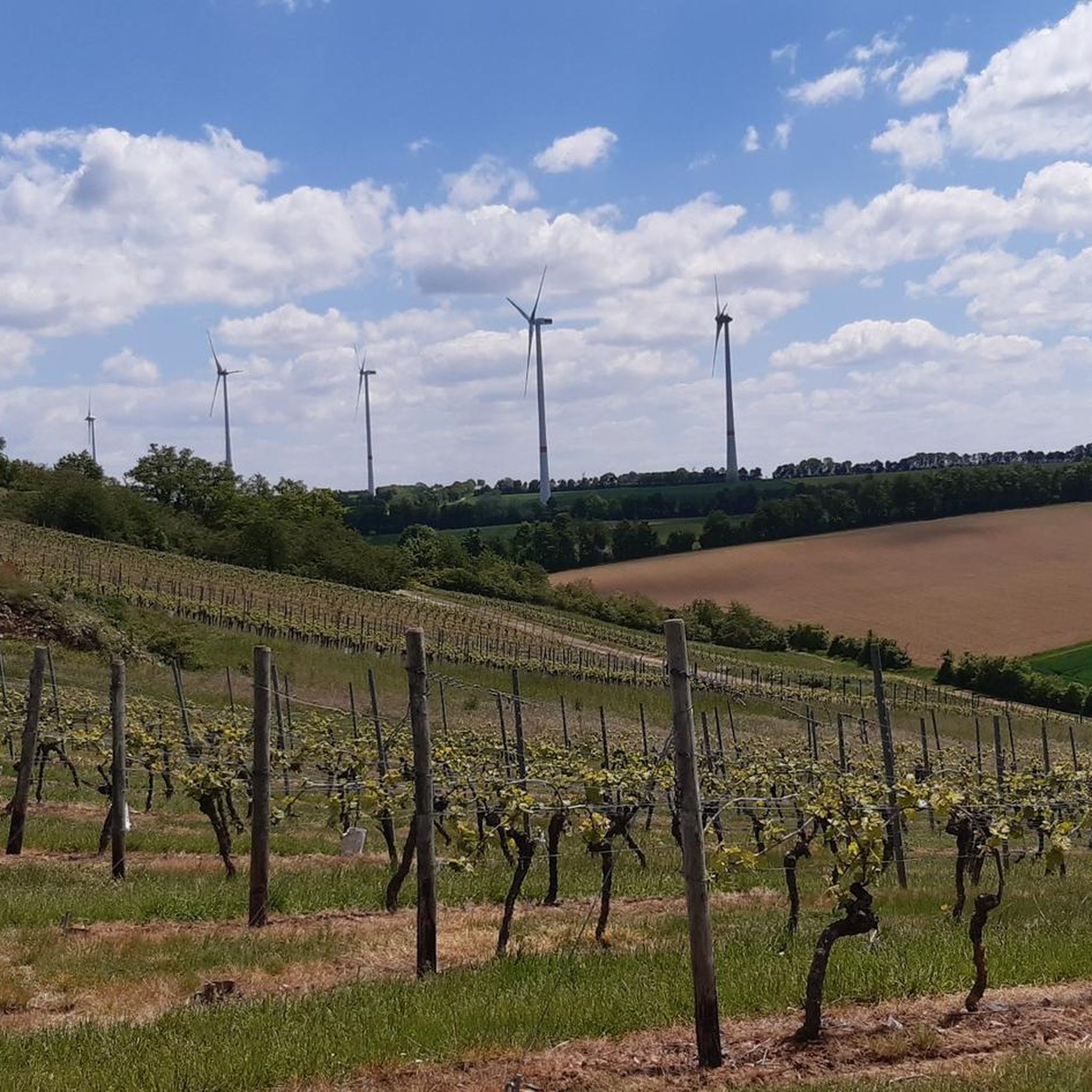
Hiking trails around Erbes-Büdesheim traverse the rolling hills of the Rheinhessen hinterland, a region characterized by extensive vineyards. The terrain includes a mix of forests, meadows, and cultivated land. Elevations are generally moderate, with paths winding through varied landscapes. This area provides a diverse environment for outdoor activities.
Best hiking trails around Erbes-Büdesheim
- The most popular hiking route is View of Nieder-Wiesen – View from the Teufelsrutsch loop from Erbes-Büdesheim, a 6.5 miles (10.5 km) trail that takes 2…
Last updated: July 1, 2026
3.7
(3)
14
hikers
Easy hike. Great for any fitness level. Easily-accessible paths. Suitable for all skill levels.
5.0
(4)
27
hikers
Easy hike. Great for any fitness level. Easily-accessible paths. Suitable for all skill levels.

Sign up for free
15
hikers
4.59km
01:12
30m
30m
Easy hike. Great for any fitness level. Easily-accessible paths. Suitable for all skill levels.
4.7
(3)
15
hikers
Moderate hike. Good fitness required. Easily-accessible paths. Suitable for all skill levels.
10
hikers
3.52km
00:55
20m
20m
Easy hike. Great for any fitness level. Easily-accessible paths. Suitable for all skill levels.
Get access to more routes and recommendations from other explorers.
Sign up for free
Already have an account?
Our route recommendations are based on thousands of hikes, rides, and runs completed by other people on komoot.
Start today with a free account
Your next adventure awaits.
Login or Signup
Tips from the Community

The first record of an (organized) Jewish community in Erbes-Büdesheim in the 18th century dates back to 1701, when there were two Jewish families with 15 members in the village. From 1722 onward, the number and names of all Jews in Erbes-Büdesheim are listed at regular intervals. These precise records were the consequence of a 1699 decree by the Short Palatinate government requiring Jews to contribute to the taxes required for reconstruction (after the War of the Palatinate Succession of 1689-1697). In a "Concession for the Rural Jewry," an annual sum of 45,000 florins was demanded from the Jewish communities. After payment, they were entitled to live in the village and conduct business without hindrance. A synagogue is mentioned for the first time in 1790. It was a prayer room on the first floor of the Strauss family's (later Levy) house at what is now Niedergasse 2. At that time, the Jewish community consisted of two or three families. Since ten adult men were required to hold an Israelite cultural service, the community often had to be reinforced by Jews from Nieder-Wiesen, who were well paid for their services. The building with the prayer room was sold by Elisabeth Levy in 1939 and is still used as a residential home today. Stumbling stones in front of the house on Niedergasse commemorate the Jewish families who fell victim to Nazi terror.
0
0
Until 1673, Erbes-Büdesheim belonged to the Duchy of Palatinate-Simmern, a branch of the Electorate of the Palatinate. Since this branch was extinguished (due to the War of the Electorate of the Palatinate Succession), it was a sub-office of the Electorate of the Palatinate-Bolanden until 1706, when it was dissolved. It then became a sub-office of the Electorate of the Palatinate-Alzey under the upper office of Alzey itself. Erbes-Büdesheim thus became the main town of a sub-office and the seat of an official cellar or cellar. The term is derived from Cellarius, a term for a non-noble official. The official cellar was responsible for collecting taxes and tithes, but was also responsible for the salaries of pastors and teachers as an ecclesiastical official of the ecclesiastical estate administration of Bolanden. The headquarters of the Unteramtskeller (Lower Administrative Cellar) was the present-day Karl Heinz Sailler property on Hauptstrasse. The farm's residential building was built in 1712; this date is inscribed on the corner beam of the half-timbered structure facing the Protestant church, along with three intertwined fish, representing the family crest of Unteramtsmann (Lower Administrative Cellar), Johann Caspar Fischer. However, the Amtskeller family did not own the farm; a floor plan from 1760 refers to "the Stengels' residential building in Erbes-Büdesheim." After the end of the Electorate of the Palatinate and the incorporation of the area on the left bank of the Rhine into French territory through the Peace of Camp Formio in 1797, the building became French national property. After the end of Napoleonic rule, the national property was auctioned off, and it thus became private property.
0
0
A beautifully designed space that's truly inviting and is also used intensively. There's also a rest area. The site is located on several Nordic walking trails.
0
0
The Rhenish-Hessian Postal Museum opened on June 15, 2002, in the former post office in the town hall of the Erbes-Büdesheim municipality. It is operated by the Rheinhessen Postal History Association (Verein für Postgeschichte Rheinhessen e.V.) and its exhibition provides information about the history of the postal service in Rheinhessen. As it is privately operated, opening days are limited to International Museum Day, the Erbes-Büdesheim "Kerb" festival, and the Open Monument Day. Guided tours are available for registered groups. When I look at the exhibits, I often think, "Wow, I remember that from when it was still in use." The keypad of the liaison office, "the lady from the office," a teleprinter with punched tape, and much more. A postal service in Rheinhessen
0
0
The "new church" was built between 1736 and 1745. The architect was Caspar Valerius from Heidelberg. He also built numerous Reformed churches, including those in Waldmichelbach, Schollbrunn, Hemsbach, Fürth im Odenwald, Schönau auf dem Dillberg, Spiesheim, and Pfaffen-Schwabenheim. His churches follow a uniform basic design: a nave with three to four axes, followed by a recessed choir. This has a semicircular apse on the inside, but polygonal (= three-sided) on the outside. The architectural style is rural Baroque. The church contains a wooden high altar from 1757 with the Pietà (the depiction of the body of Christ). It has several columns and pilasters on the right and left. Between the columns on the left stands John the Baptist, and between the columns on the right stands Bartholomew. Two wooden side altars are dedicated to the Virgin Mary and St. John of Nepomuk. Both date from the mid-18th century and contain 19th-century figures. The wooden pulpit on the west wall dates from 1745, and the baptismal font, made of light sandstone, dates from the mid-18th century. The two confessionals also date from the mid-18th century. A silent organ was installed in 1788 and 1789. The Baroque appearance of the high altar, with its central image of St. Nepomuk, was significantly altered at the end of the 19th century and the beginning of the 20th century, respectively. During a complete restoration at this time, the image from the center of the altar was removed, and the altar was rebuilt into its present state. A special feature of the church is the church tower. It is owned by the local congregation and replaced the old, dilapidated parish tower, which housed the parish bell and the church bells. This tower is completely separate from the church, although it is directly attached. Source: Karl Müller - The History of Erbes-Büdesheim
0
0

Beautiful fountain with interesting bronze figures
0
0
The Rheinhessen Postal Museum was opened on June 15, 2002 in the former post office in the town hall of the local community of Erbes-Büdesheim. It is organized by the Association for Postal History Rheinhessen e. V. and provides information with its exhibition and occasional lectures on the history of the post office in Rheinhessen. Wikipedia
0
0
The Michaelskirche in Erbes-Büdesheim was called Bartholomäuskirche in 1431. Due to the Reformation, which at the time covered large parts of today's Germany, the village became Protestant around 1559, first Lutheran, then reformed from 1598. The church, vicarage and school thus belonged to the Protestant community. Only as a result of the Thirty Years' War and during the period of the new population settlement after this war from 1648 not only Protestants, but also Catholics moved back into the village. The Roman Catholic community was only re-established in 1686 by the pastor Christoph Lautenbach. As a result of the Palatinate church division of 1706, the existing church, including the vicarage and school, became the property of the Catholic community. However, since it soon proved to be dilapidated, the new Catholic church had to be built, which was carried out from 1736 to 1745 by the well-known master builder Caspar Valerius. Source: Wikipedia
0
0
Frequently Asked Questions
What kind of terrain can I expect on hiking trails around Erbes-Büdesheim?
The hiking trails around Erbes-Büdesheim traverse the picturesque rolling hills of the Rheinhessen hinterland. You'll encounter a diverse landscape featuring extensive vineyards, charming forests, and open meadows. The terrain generally has moderate elevations, providing an engaging experience without overly strenuous climbs.
Are there any easy hiking trails suitable for a relaxed walk?
Yes, Erbes-Büdesheim offers many easy trails perfect for a relaxed stroll. For instance, the Wayside Cross with Inscription – Wayside Cross Picnic Area loop from Erbes-Büdesheim is an easy 4.6 km path that leads through vineyards and open fields, offering a tranquil experience. Another option is the Bronze Pig Fountain – Wayside Cross with Inscription loop from Erbes-Büdesheim, a 5.9 km trail through vineyard-covered hills.
What are some notable landmarks or viewpoints I can discover while hiking?
The region around Erbes-Büdesheim is rich in landmarks and offers numerous panoramic views. You can visit the unique Flonheim Trullo, an Italian vineyard cottage, or enjoy impressive vistas from the Burgundy Tower in the Kachelberg vineyard. The Panorama Bench at Siefersheimer Horn also provides expansive views of the Rheinhessen region and beyond.
Are there any family-friendly hiking options in Erbes-Büdesheim?
Yes, Erbes-Büdesheim is well-suited for family outings. Many trails are well-signposted and offer varied landscapes that keep children engaged. The village square is a popular starting point for routes suitable for all ages, including leisurely strolls through vineyards and meadows.
Can I bring my dog on the hiking trails around Erbes-Büdesheim?
Generally, the hiking trails around Erbes-Büdesheim are dog-friendly, allowing you to enjoy the scenic vineyards, forests, and open fields with your canine companion. It's always recommended to keep dogs on a leash, especially near vineyards or in areas with wildlife, and to respect local regulations.
What is the best time of year to go hiking in Erbes-Büdesheim?
Erbes-Büdesheim offers beautiful hiking experiences throughout the year. Spring brings vibrant greenery and blossoms, while autumn is particularly stunning with the rich colors of the grape harvest in the vineyards. Summer provides warm weather for longer excursions, and even winter hikes can be charming, especially after a light snowfall, offering a tranquil atmosphere.
Are there any circular hiking routes available?
Yes, many of the hiking routes around Erbes-Büdesheim are circular, making them convenient for starting and ending at the same point. For example, the View of Nieder-Wiesen – View from the Teufelsrutsch loop from Erbes-Büdesheim is a popular circular trail offering panoramic views.
What do other hikers say about the trails in Erbes-Büdesheim?
The hiking routes in Erbes-Büdesheim are highly rated by the komoot community, with an average score of 4.5 stars from over 500 reviews. Hikers often praise the diverse landscapes, the well-maintained paths, and the stunning panoramic views over the Rheinhessen region.
Are there any challenging hikes for experienced trekkers?
While Erbes-Büdesheim is known for its moderate and easy trails, some routes offer a bit more challenge with varied terrain and longer distances. For example, the View of Nieder-Wiesen – View from the Teufelsrutsch loop from Erbes-Büdesheim is a moderate 10.5 km trail with over 140 meters of elevation gain, providing a good workout and rewarding views.
Are there opportunities to see historical sites or castles nearby?
Absolutely. The region boasts several historical sites. While hiking, you can admire the historic Erbes-Büdesheim Castle. Further afield, you can explore Alzey Castle or the Neuenbaumburg Castle Ruins, which add a historical dimension to your outdoor adventure.
What kind of natural features can I expect to see?
Beyond the vineyards, the area features diverse natural landscapes. You'll find charming forests, expansive meadows, and unique geological formations, especially along routes like the Hiwweltours. The nearby Nature Reserve "Eichkopf" is also a significant natural attraction, known for its diverse flora and fauna.
How many hiking trails are available around Erbes-Büdesheim?
Based on komoot data, there are over 30 hiking routes around Erbes-Büdesheim. These include a mix of easy and moderate trails, offering diverse options for explorers.
Most popular routes around Erbes-Büdesheim
Most popular attractions around Erbes-Büdesheim

Get inspired with the komoot mobile app


Explore more
Browse the best Hikes in other regions.
