Top 14 Castles around Waldburg
Best castles around Waldburg offer a journey through medieval history and architectural heritage. The region is characterized by its elevated terrain, providing strategic locations for these historical structures. Waldburg Castle, a prominent landmark, sits atop a drumlin at 772 meters above sea level, offering expansive panoramic views across Upper Swabia. These sites combine cultural significance with natural landscapes, making them notable destinations for exploration.
Best castles around Waldburg
- The most popular castles is Waldburg Castle, a castle that features…
Last updated: July 1, 2026
Waldburg Castle
Highlight • Castle
Translated by Google •
Tip by

Mehlsack, Ravensburg
Highlight • Monument
Showing Translation
Tip by

Sign up now to discover places like this
Get recommendations on the best single tracks, peaks, & plenty of other exciting outdoor places.
Sign up for free
Wolfegg Castle and St. Catherine’s Castle Church
Highlight • Castle
Translated by Google •
Tip by

Old Amtzell Castle
Highlight • Castle
Translated by Google •
Tip by

View of Ravensburg from Veitsburg
Highlight • Viewpoint
Translated by Google •
Tip by

Sign up for free to discover even more castles around Waldburg.
Sign up for free
Already have an account?
Start today with a free account
Your next adventure awaits.
Login or Signup
Popular around Waldburg
Main-Danube-Lake Constance Trail – Along iconic waters
Hill country with alpine views – loops in the Wüttemberg Allgäu

Winter wonderland — hiking in Germany’s Baden-Württemberg
Hiking around Waldburg
Cycling around Waldburg
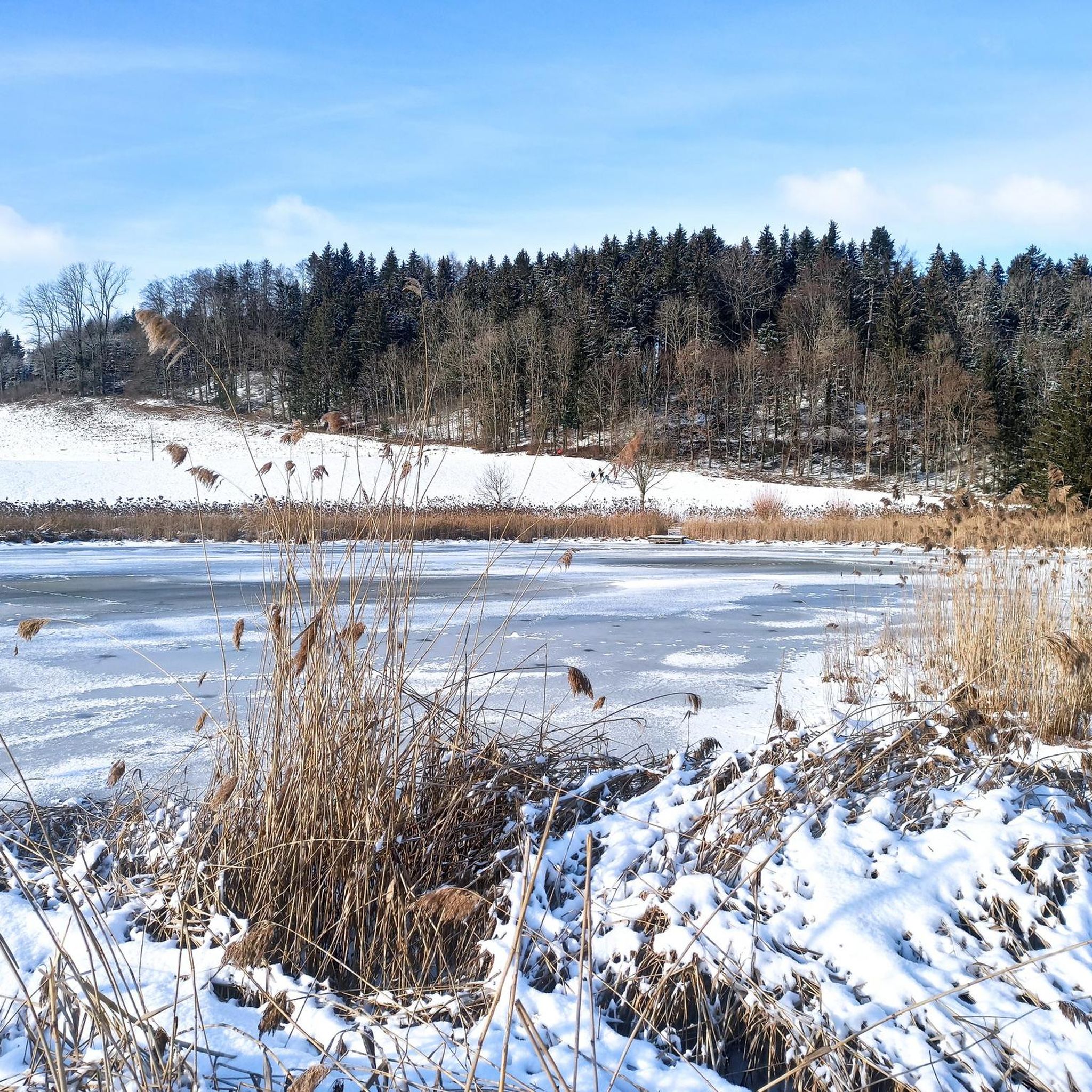
Road Cycling Routes around Waldburg
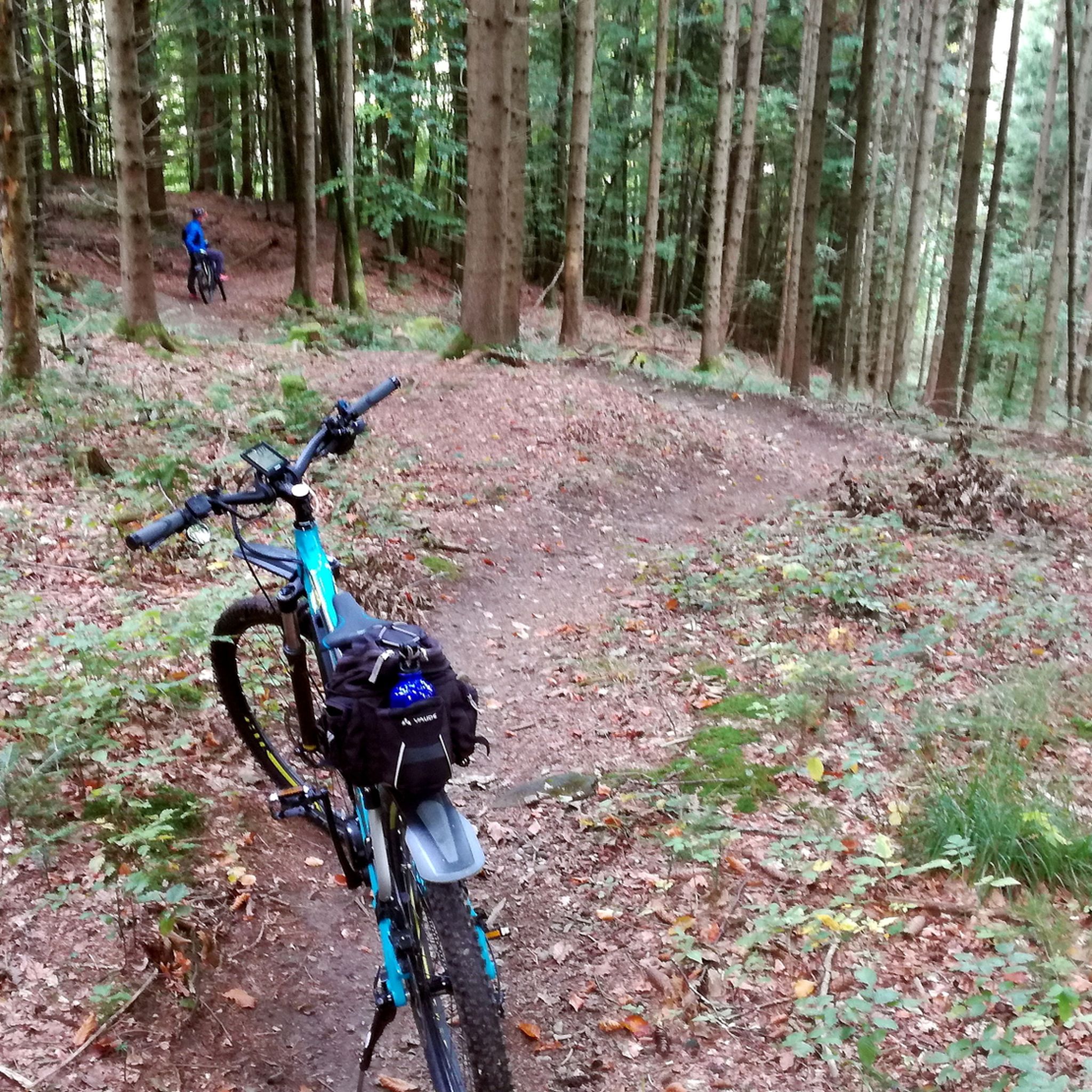
MTB Trails around Waldburg
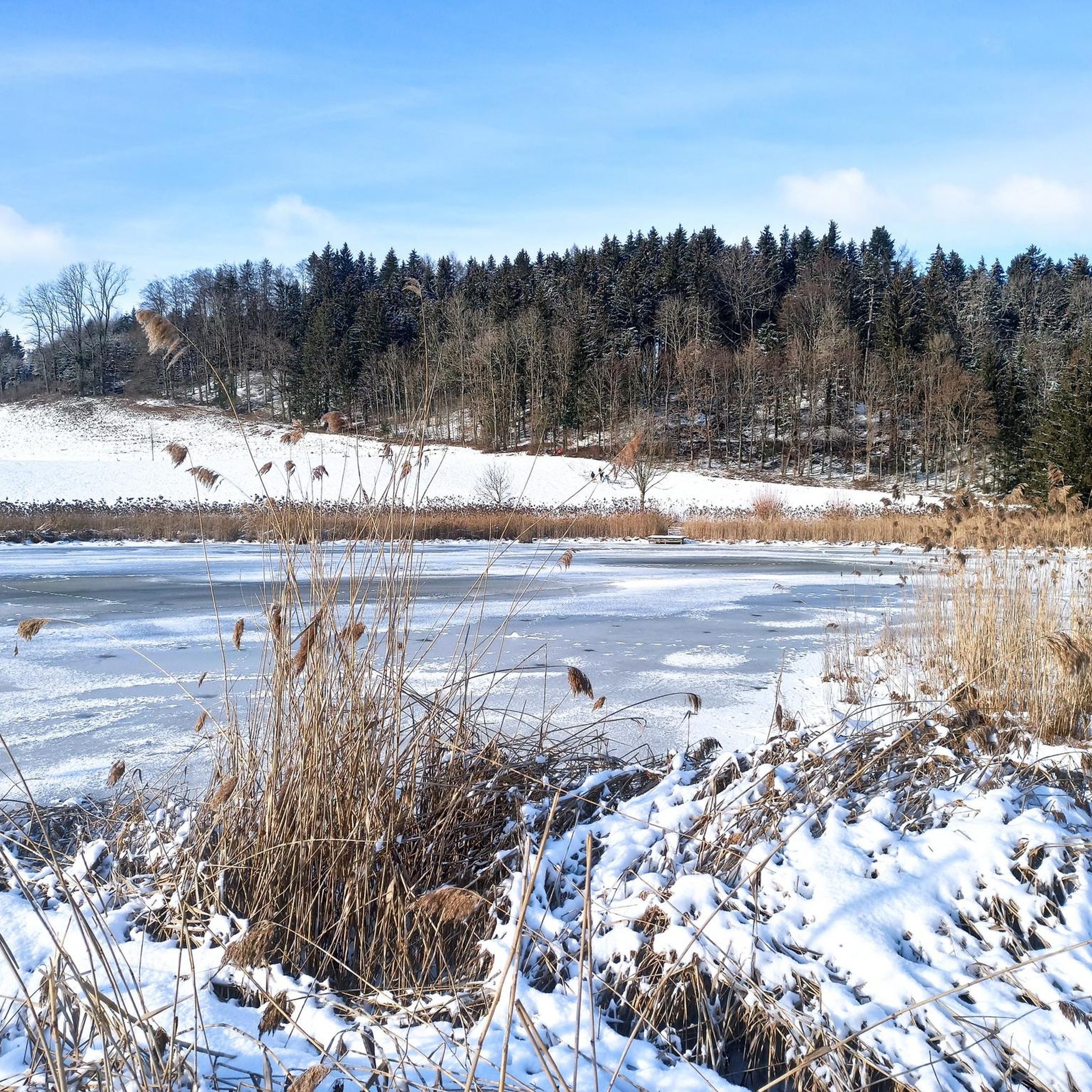
Running Trails around Waldburg

Gravel biking around Waldburg
Other adventures around Waldburg


Tips from the Community

The three-story rectangular building of the Old Castle in Amtzell dates back to the 15th century. It features a hipped roof and two towers crowned by pointed, helmet-like roofs. Under Johann Maria Carl Josef Freiherr Reichlin von Meldegg, it was rebuilt between 1752 and 1754 by Baroque master builder Joh. Georg Specht from Lindenberg to its present appearance. The castle has been owned by the municipality of Amtzell since 1839. It was extensively renovated in 1993/94. Parts of the Old Castle are leased to a restaurant operator and are used as an event and wedding venue. Source: Website of the Municipality of Amtzell
3
0
The parish church of St. Catherine, also known as the castle church, which stands in front of Wolfegg Castle, is undoubtedly one of the most magnificent baroque churches in Upper Swabia. The former collegiate church was built between 1733 and 1742 by Johann Georg Fischer, and the neo-baroque bell tower, designed by the Stuttgart architect Joseph Cades, was added in 1906. (from Wikipedia) The Catholic church is open during the day.
1
0

The landmark of Ravensburg. The best view of the Mehlsack is from the Veitsburg.
1
0

It is worth attending an event in the castle. This gives you the opportunity to see part of the castle. http://www.wolfegger-konzerte.de/veranstaltungsorte.html
1
0

Veitsburg, Ravensburg "first mentioned in 1088" Ravensburg originated at the foot of a Welfen ducal castle, the present-day Veitsburg, first mentioned in 1088. Here, the Welfen founded a market town at the intersection of important trade routes, which received town charter in the 12th century. The rank of a Free Imperial City, attained in 1276, meant its own jurisdiction and administration, coinage, market and customs rights. In the following 250 years, the city experienced the peak of its historical development. The city had to be expanded several times for the rapidly growing population. Most of the striking buildings that still characterize the cityscape of Ravensburg today also date from the 14th and 15th centuries. The Free Imperial City owed this upswing primarily to the successful activities of its merchants and craftsmen. Since the 14th century, Ravensburg has been one of the leading long-distance trading cities in the Lake Constance region. The trading company led by the Humpis gained Europe-wide importance between 1380 and 1530. The local products, especially Upper Swabian linen, were sold throughout Europe, and trade was conducted as far as Italy, Spain, France, Holland, Poland and Hungary. In addition to trade, paper production, leather processing and viticulture were economic factors. During the Reformation, the city decided in favor of confessional parity and was thus one of the four cities in the empire in which Catholics and Protestants had equal rights. As a result of the Thirty Years' War, Ravensburg moved to the edge of history and lost importance. In 1802, Ravensburg lost its imperial city independence and became Bavarian. In 1810 it came to the Kingdom of Württemberg and became the seat of a district office. The industrial age began around 1835 with a focus on textile manufacturing and mechanical engineering. The construction of the railway line to Friedrichshafen in 1847 and a little later to Ulm brought the city a new upswing: around 1900, 13,000 people lived in Ravensburg, and 22,000 before the Second World War. Since no armaments industry was located there, the city was largely spared from the bombs of the Second World War. Through the incorporation of the neighboring communities of Adelsreute, Eschach, Schmalegg and Taldorf in the years 1971 to 1974, the population has risen to 48,000 to date, and the urban area has grown to 92 square kilometers. Ravensburg became the main center for the region. Text / Source: City of Ravensburg, Marienplatz 26, 88212 Ravensburg https://www.ravensburg.de/rv/buergerservice-verwaltung/stadtportrait/stadtportrait.php
12
0
Mehlsack (Tower), Ravensburg The round tower was built from 1425 to 1429 to ward off attacks from the higher castle. The name comes from its shape, which resembles a flour sack. Landmark of the city. Height: 51 meters, 253 steps. Text / Source: Tourist Information, Lederhaus, Marienplatz 35, 88212 Ravensburg https://www.ravensburg.de/rv/tourismus / https://resc.deskline.net/documents/1/DE2/16eacb80-59af-406f-9ecc-a2ea038a7b86/RVerleben_2021_Fyler.pdf
14
0
Veitsburg, Ravensburg First mentioned in 1088, the Guelph castle "Ravensburg" passed into the possession of the Staufer in 1191 and, after their decline, came to the House of Habsburg. The name "Veitsburg" became common around 1500 and referred to the St. Veit castle chapel. The castle burned down in 1647. One of the original three keeps has been partially preserved in the buildings of the inn. To the east are the former stables with the draw-well (16th century/today youth hostel). Text / Source: Landesbildungsserver Baden-Württemberg https://www.schule-bw.de/faecher-und-schularten/gesellschaftswissenschaftliche-und-philosophische-faecher/landeskunde-landesgeschichte/
15
0
Mehlsack, Ravensburg The round tower was built from 1425 to 1429 to ward off attacks from the higher-situated castle, which was owned by the Habsburgs and pledged to the Counts of Waldburg in the 14th/15th century. The name comes from the fact that the tower in its form looks like historical, tall flour sacks. It is the landmark of the city. Height: 51 meters, 253 steps. Text / Source: Landesbildungsserver Baden-Württemberg https://www.schule-bw.de/faecher-und-schularten/gesellschaftswissenschaftliche-und-philosophische-faecher/landeskunde-landesgeschichte/
16
0
Frequently Asked Questions
What is the historical significance of Waldburg Castle?
Waldburg Castle is the ancestral home of the House of Waldburg and served as a repository for Emperor Friedrich II's imperial regalia, including the Holy Lance, Imperial Sceptre, and Imperial Orb, in the 13th century. It is considered one of the best-preserved medieval buildings in Southern Germany and a significant landmark in Upper Swabia.
Are there museums or historical exhibits in the castles around Waldburg?
Yes, Waldburg Castle houses a four-floor museum detailing its history from the Middle Ages through the 19th and 20th centuries, featuring documents, paintings, and historical artifacts. Additionally, the City Museum in the Schlössle Weingarten presents the history of the city and monastery, with notable stucco ceilings.
What unique historical artifacts can be seen at Waldburg Castle?
At Waldburg Castle, you can see replicas of the imperial regalia (Holy Lance, Imperial Sceptre, Imperial Orb, and Imperial Crown) that were once stored there. The castle also features a unique facsimile of the 1507 Waldseemüller Map, which was the first map to name the continent 'America'.
Do any castles offer panoramic views?
Yes, Waldburg Castle is perched atop a drumlin at 772 meters (2,533 ft) above sea level, offering expansive panoramic views across Upper Swabia. On clear days, you can see as far as Hohentwiel, Ulm Minster, the Alpine foothills, and the Swiss Alps and Lake Constance. There's also a dedicated View of Waldburg highlight offering excellent vistas.
Are there family-friendly castles to visit near Waldburg?
Yes, Waldburg Castle offers interactive experiences, including the opportunity to dress up in period costumes. Old Amtzell Castle is also considered family-friendly, and the City Museum in the Schlössle Weingarten provides an accessible historical experience.
What outdoor activities can I do near the castles around Waldburg?
The region around Waldburg offers various outdoor activities. You can find numerous routes for gravel biking, mountain biking, and road cycling. For example, there are gravel biking routes like the 'Wolfegger Ach Canal Path' and mountain biking trails such as the 'Süh Cross Viewpoint – Wurzelweg Trail'. You can explore these and more on the komoot guide for Gravel biking around Waldburg, MTB Trails around Waldburg, and Road Cycling Routes around Waldburg.
Are there hiking trails near these castles?
While specific hiking guides aren't listed, the elevated terrain around Waldburg Castle provides excellent opportunities for walking and exploring. Many of the cycling routes mentioned in the nearby guides can also be adapted for walking, offering scenic paths and viewpoints. The area is known for its natural features and offers various trails for different difficulty levels.
What is the best time to visit the castles around Waldburg?
Waldburg Castle is open from Pentecost to September 15th from Tuesday to Sunday, and on Sundays and public holidays from May 1st to October 3rd. Visiting during these periods ensures access to the museum and guided tours. The panoramic views are particularly stunning on clear days, which are common in late spring, summer, and early autumn.
Can I take a guided tour of Waldburg Castle?
Yes, Waldburg Castle offers public guided tours, often led by historical protagonists for an entertaining and informative experience. Video guides are also available in multiple languages. Group tours can be arranged by prior appointment year-round. You can find more information on their official website.
What kind of events are hosted at Waldburg Castle?
Waldburg Castle frequently hosts a variety of events, including concerts, movie nights, beer gardens, and medieval markets. The castle chapel and other areas are also available for weddings and celebrations.
Where can I find food and drinks near Waldburg Castle?
The Burgschenke, the castle inn located in the former imperial kitchen at Waldburg Castle, serves dishes based on original medieval recipes. Additionally, the surrounding villages offer various cafes and pubs for refreshments.
What is Wolfegg Castle known for?
Wolfegg Castle and St. Catherine’s Castle Church is a four-winged structure with four corner towers. It houses the art collection of the House of Waldburg-Wolfegg, also known as the 'Wolfegg Cabinet', and features a baroque-style knights' hall used for concerts. The Wolfegg Auto Museum is located in an adjoining building.
Most popular routes around Waldburg
Most popular attractions around Waldburg

Get inspired with the komoot mobile app


Explore more
Looking for the best castles somewhere else? Discover other guides around Waldburg:
