Top 7 Castles around Zell im Wiesental
Best castles around Zell im Wiesental are found within the Wiesental valley and the wider Lörrach district. This region is characterized by its picturesque landscapes and historical significance, offering a glimpse into its medieval past. Visitors can explore various castle ruins, often nestled in scenic surroundings. The area provides opportunities for hiking and historical discovery among these ancient sites.
Best castles around Zell im Wiesental
- The most popular castles is Sausenburg Ruins and Tower, a castle that was built in the 13th century and offers a well-preserved castle tower. The tower is climbable and provides panoramic views of the surrounding area on clear days.
- Another must-see spot is Werrach Castle Ruins, a historical site with massive walls up to 6 meters high. The site includes an information pavilion on local history and a "Sagenpfad" (path of legends), enhancing the visitor experience.
- Visitors also love Rotenburg Ruins, a historical site situated on a steep, 620.2-meter-high hill. This high-altitude castle ruin offers a rugged and authentic historical experience for those interested in medieval fortifications.
- Zell im Wiesental is known for historical castle ruins and hill castles. The region offers a variety of medieval sites to see and explore, each with unique historical features.
- The castles around Zell im Wiesental are appreciated by the komoot community, with more than 500 upvotes and over 500 photos shared by visitors.
Last updated: May 27, 2026
Sausenburg Ruins and Tower
Highlight • Castle
Translated by Google •
Tip by

Werrach Castle Ruins
Highlight • Castle
Translated by Google •
Tip by

Sign up now to discover places like this
Get recommendations on the best single tracks, peaks, & plenty of other exciting outdoor places.
Sign up for free
Ehner-Fahrnau Manor
Highlight • Castle
Quellenachweis: Wikipedia
Tip by

Rotenburg Ruins
Highlight • Historical Site
Translated by Google •
Tip by

Bärenfels Castle Ruins and Viewpoint
Highlight • Castle
Translated by Google •
Tip by

Sign up for free to discover even more castles around Zell im Wiesental.
Sign up for free
Already have an account?
Start today with a free account
Your next adventure awaits.
Login or Signup


Tips from the Community

On our hike, we made a detour to the observation tower and enjoyed the view
0
0

The Werrach castle ruins, also known as Schlössle, are located on a rocky spur at the entrance to the Hotzenwald. It is first mentioned in 1098. In the first half of the 13th century it came into the possession of the Lords of Klingen. The minstrel Walther von Klingen signed various documents at Werrach Castle. It was on the border of the sphere of influence of the bishops of Basel and the Habsburgs. In 1272 Werrach Castle was taken over by Rudolf von Habsburg and, together with the Wehratal, was integrated into the Habsburg dominion. Until the beginning of the 16th century, the Lords of Schönau sat as vassals of the Habsburgs at Werrach Castle. The building was later left to decay. Since the end of the 19th century, the castle ruins have been gradually prepared for visitors by the Black Forest Association. At Werrach Castle there is an information pavilion on the history of the town, a bronze plaque on the history of the ruins and the trail of legends at the Schlössle. From the pavilion you can enjoy an excellent view of Weir. Source: https://www.schwarzwald-tourismus.info/attractions/burgruine-werrach-schloessle-38a8c87f1e
0
0

Built in the 12th century, the massive walls up to six meters high still impress today. A beautiful, promising place for a break.
1
0

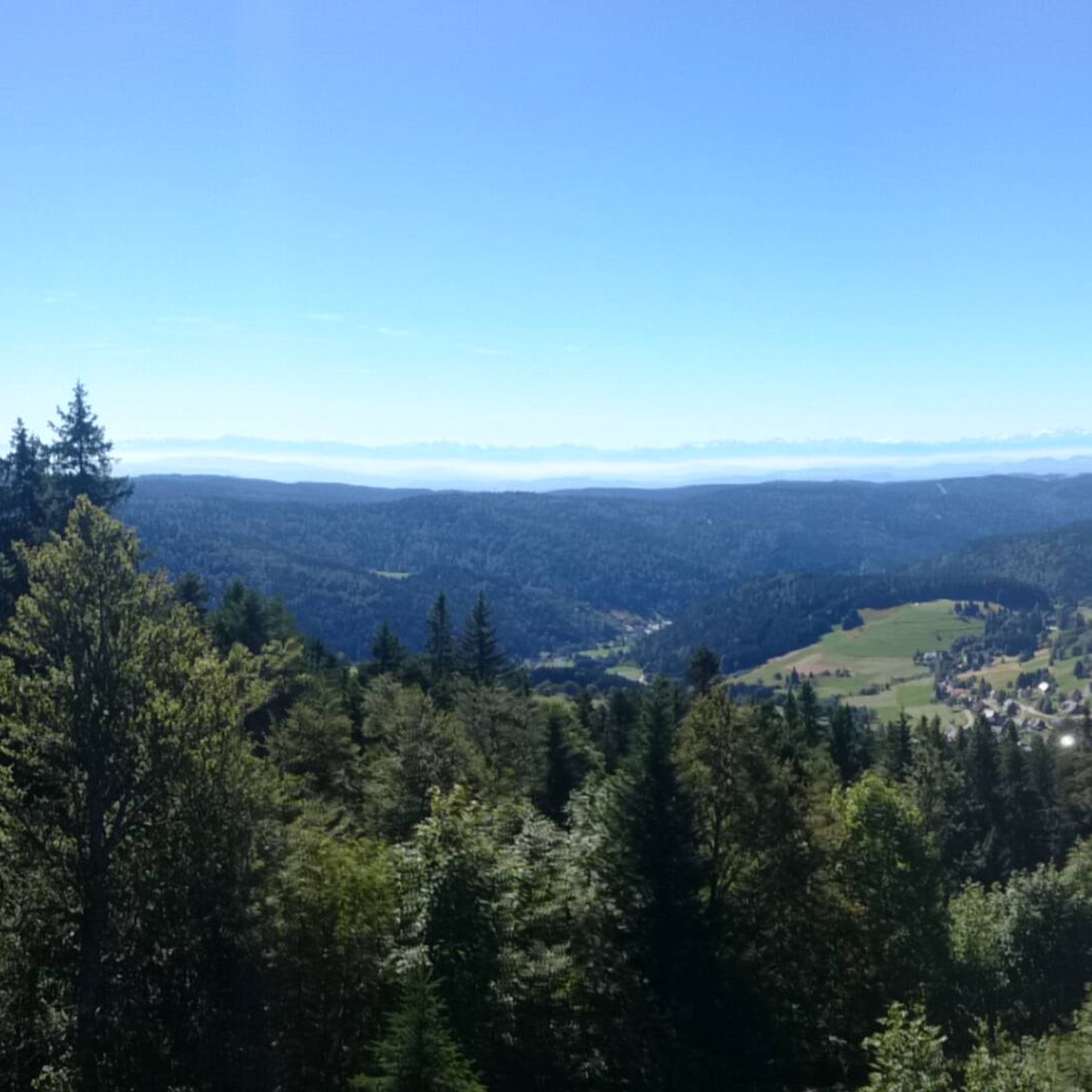
Beautiful ruin with a fantastic view of the Alps
0
0
Small castle on the ⛳ fahrnau golf course
0
0

The ruins are the Werrach castle ruins, but in Wehr they are called "Schlössle". From the pavilion you can enjoy an excellent view of Weir.
5
0

Das Gebiet von Ehner-Fahrnau gehörte wohl nachweislich seit 1394 zur Gemarkung von Schopfheim. Im 11. Jahrhundert wurde hier der Marienhof als ein Meierhof der Herrschaft Fahrnau errichtet. Von dem namentlich nicht bekannten Adelsgeschlecht, der seinerzeit diese Herrschaft gehörte, gelangte der Meierhof 1185 an das Kloster St. Blasien. Das Kloster ist noch als Eigentümer nachweisbar. Danach gelangten der Meierhof und die mit ihm verbundenen Rechte bezüglich der Pfarrei Fahrnau über die Herren von Rotenberg an die Herren von Rötteln. Die Markgrafen von Hachberg-Sausenberg und Baden-Durlach beerbten die Röttler. Nach der Reformation von 1556 wurden die Pfarreien von Schopfheim und Fahrnau vereinigt und der Meierhof führte seine Erträge zur Finanzierung der Pfarrei nach Schopfheim ab. Markgraf Friedrich VI. verkaufte 1666 den Meierhof Ennet Farnaw an Johann B. Pauli, dem ehemalige Obervogt von Schopfheim. Um das 17. Jahrhundert wurde das bisherige Gebäude durch ein polygonalen Treppenturm erweitert. Neben dem Turmfuß wurde eine beschriftete Sandsteinplatte von 1405 gefunden, die als älteste Steininschrift auf Schopfheimer Gemarkung gilt. Der Stein wird jedoch einem Vorgängerbau zugeschrieben, wobei unklar ist, ob es sich um die Kirche, den Meierhof oder das Pfarrhaus handelte, das 1405 erbaut und1741 an die verwandte Familie Grether aus Tegernau verkauft wurde. 1840 kaufte der Oberst Heinrich Adam von Roggenbach das Schlösschen und brachte am Treppenturm die Wappentafel von 1622 an. Die Tafel zeigt ein Allianzwappen mit dem Wappen des Johann Hartmann von Roggenbach und der Maria Susanna zu Rhein. Heinrich von Roggenbach ließ das Schlösschen weiter ausbauen. Sein Sohn, Franz von Roggenbach (der 1861 bis 1865 Außenminister des Großherzogtums Baden war), gab 1892 den Auftrag für den Anbau einer Bibliothek und eines Speisesaales mit Küche. Außerdem wurde ein klassizistisches Portal errichtet. Das Schlösschen wurde 1941 an Josef Müller verkauft, der dort eine Quelle zur Produktion von Sprudel nutzte. Das Schlösschen befindet sich weiterhin in Privatbesitz und kann nicht besichtigt werden. Quellenachweis: Wikipedia
2
0

A great place even in winter!
3
0
Frequently Asked Questions
Which castles offer the best panoramic views around Zell im Wiesental?
For breathtaking panoramic views, the Sausenburg Ruins and Tower is highly recommended. Its climbable tower provides magnificent vistas of the surrounding Markgräflerland, and on clear days, you can even see the Swiss Jura. The Rotenburg Ruins, situated on a steep hill, also offer rewarding views for those who make the ascent.
Are there family-friendly castle ruins to visit near Zell im Wiesental?
Yes, the Sausenburg Ruins and Tower is considered family-friendly, offering an engaging historical experience with its climbable tower. Additionally, the Werrach Castle Ruins feature a 'Sagenpfad' (path of legends) and an information pavilion, which can make the visit more interactive and enjoyable for families.
What kind of historical insights can I gain from visiting these castle ruins?
The castle ruins around Zell im Wiesental offer a deep dive into the region's medieval past. The Sausenburg Ruins connect you to the powerful Margraves of Hachberg-Sausenburg and the Franco-Dutch War. At Werrach Castle Ruins, an information pavilion and 'Sagenpfad' provide context on local history and folklore. The Rotenburg Ruins highlight the strategic importance of high-altitude fortifications from the 11th and 13th centuries.
Are there hiking opportunities around the castle ruins?
Absolutely. Many of the castle ruins are nestled in picturesque landscapes, making them ideal destinations for hikers. For instance, the Sausenburg Ruins are part of a great hiking area, offering demanding trails for bikers and hikers alike. The Rotenburg Ruins also provide a rugged experience for those interested in exploring medieval fortifications on foot.
What other outdoor activities can I do near the castles around Zell im Wiesental?
Beyond exploring the castles, the region offers diverse outdoor activities. You can find numerous cycling routes, including challenging tours like the 'Tiergrüble Hut – St. Amantini hut loop' or moderate ones like the 'Todtnauerli Tunnel – Todtnauerli Railway Trail loop'. For runners, there are trails such as the 'Hausen Soccer Field loop' or the 'Brunnenstubenquelle Waterfall – Maria Frieden Mountain Chapel loop'. You can explore more options on the Cycling around Zell im Wiesental, Running Trails around Zell im Wiesental, and Road Cycling Routes around Zell im Wiesental guide pages.
What is the best time of year to visit the castle ruins?
The castle ruins are generally accessible year-round, but spring and autumn offer pleasant temperatures for hiking and exploring. During these seasons, the surrounding nature is particularly beautiful, with blooming landscapes or vibrant fall foliage. Summer is also suitable, though it can be warmer, while winter visits might offer a unique, serene experience, especially if there's snow, but some paths could be slippery.
Are there any lesser-known or 'hidden gem' castle ruins worth exploring?
While not listed in the main highlights, the Turmhoelzle Castle Ruin near Schopfheim-Raitbach is considered one of the best-preserved castle ruins in the district of Lörrach. It features visible remains of a curtain wall and a keep, and an active support group is dedicated to its research and conservation, offering a glimpse into early medieval architecture.
Can I bring my dog to the castle ruins and surrounding trails?
Most outdoor areas and hiking trails around castle ruins in this region are generally dog-friendly, provided dogs are kept on a leash. It's always a good idea to check local signage at each specific ruin for any restrictions, especially in preserved areas or near sensitive wildlife habitats. Always ensure you clean up after your pet.
How long should I allocate for visiting a castle ruin?
The time needed can vary. For a site like Sausenburg Ruins and Tower, which involves a climb and offers panoramic views, you might want to allocate 1-2 hours, especially if you plan to enjoy the scenery. Simpler ruins like Rotenburg Ruins might take less time for exploration, perhaps 30-60 minutes, not including the hike to get there. Consider additional time if you combine your visit with a longer hike.
What are the main features of the Werrach Castle Ruins?
The Werrach Castle Ruins are notable for their massive walls, some up to six meters high, which still impress visitors today. The site includes an information pavilion that provides insights into local history and the castle's past. There's also a 'Sagenpfad' (path of legends) that enhances the visitor experience by weaving in local folklore. The ruins are actively being preserved and restored by the Schwarzwaldverein.
What kind of terrain can I expect on hikes to the castle ruins?
The castle ruins are often situated on hills, meaning you can expect varied terrain, including ascents and descents. Trails can range from well-maintained paths to more rugged, natural surfaces, especially around sites like the Rotenburg Ruins. Many routes are categorized as intermediate difficulty, suggesting some elevation changes and potentially uneven ground. Appropriate footwear is recommended.
Most popular routes around Zell im Wiesental
Most popular attractions around Zell im Wiesental

Get inspired with the komoot mobile app


Explore more
Looking for the best castles somewhere else? Discover other guides around Zell im Wiesental:
