Top 4 Castles around Stadtkyll
Best castles around Stadtkyll are found in the surrounding Eifel region, a landscape characterized by hills and valleys. While Stadtkyll itself once featured a castle and city wall in the 13th century, these structures have since disappeared. The nearby Eifel region offers several notable castle ruins that provide insight into medieval history. These sites are often integrated into the natural topography, offering historical exploration within a scenic environment.
Best castles around Stadtkyll
- The most popular castles is Schmidtheim Castle,…
Last updated: October 4, 2026
Schmidtheim Castle
Highlight • Castle
Translated by Google •
Tip by

Glaadt Castle Ruins
Highlight • Castle
In the Middle Ages Glaadt was even more important than Jünkerath, because at that time there was only one settlement of huts. That is why the …
Translated by Google •
Tip by

Sign up now to discover places like this
Get recommendations on the best single tracks, peaks, & plenty of other exciting outdoor places.
Historic centre of Kronenburg
Highlight • Historical Site
Showing Translation
Tip by

Start today with a free account
Your next adventure awaits.
Other adventures around Stadtkyll

Tips from the Community

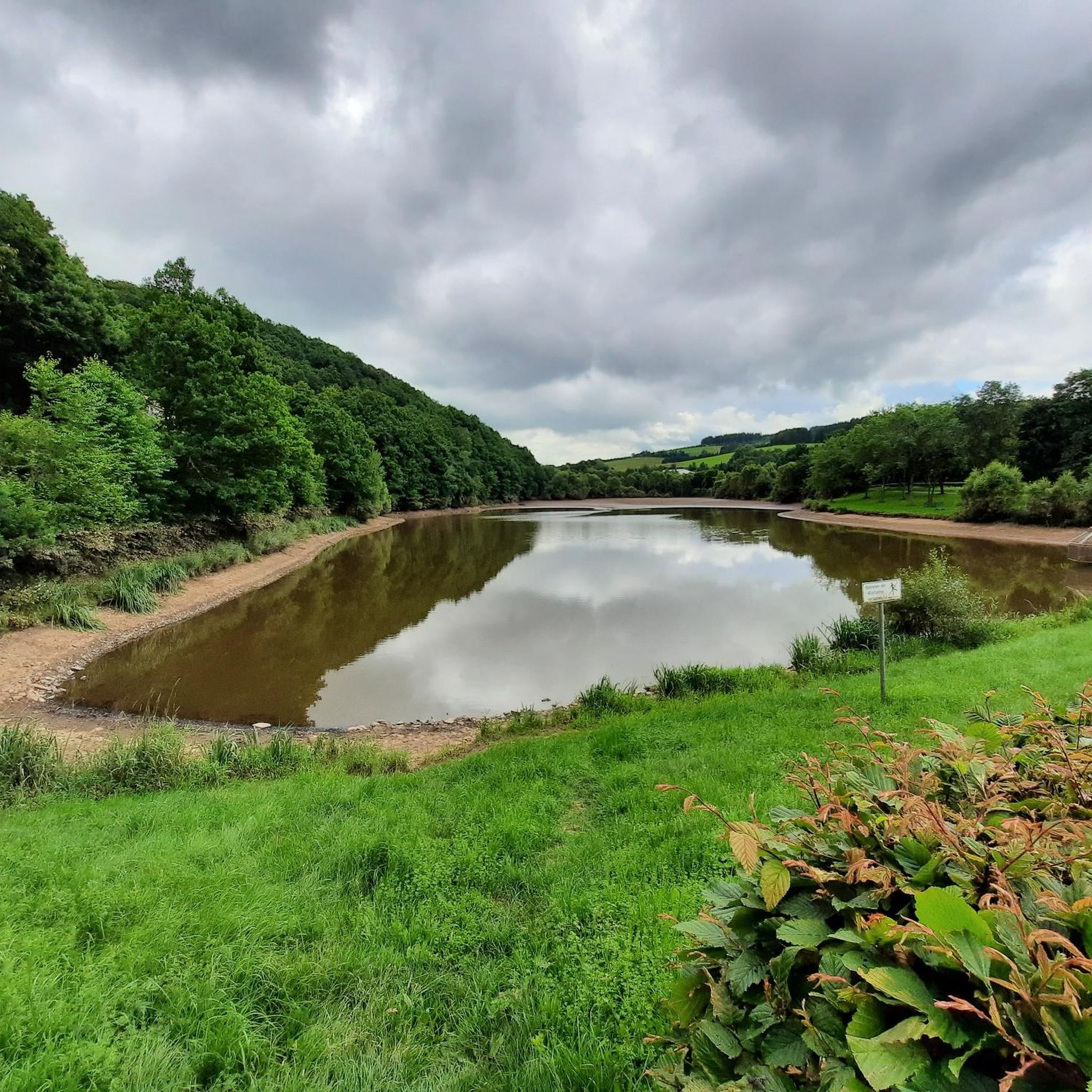
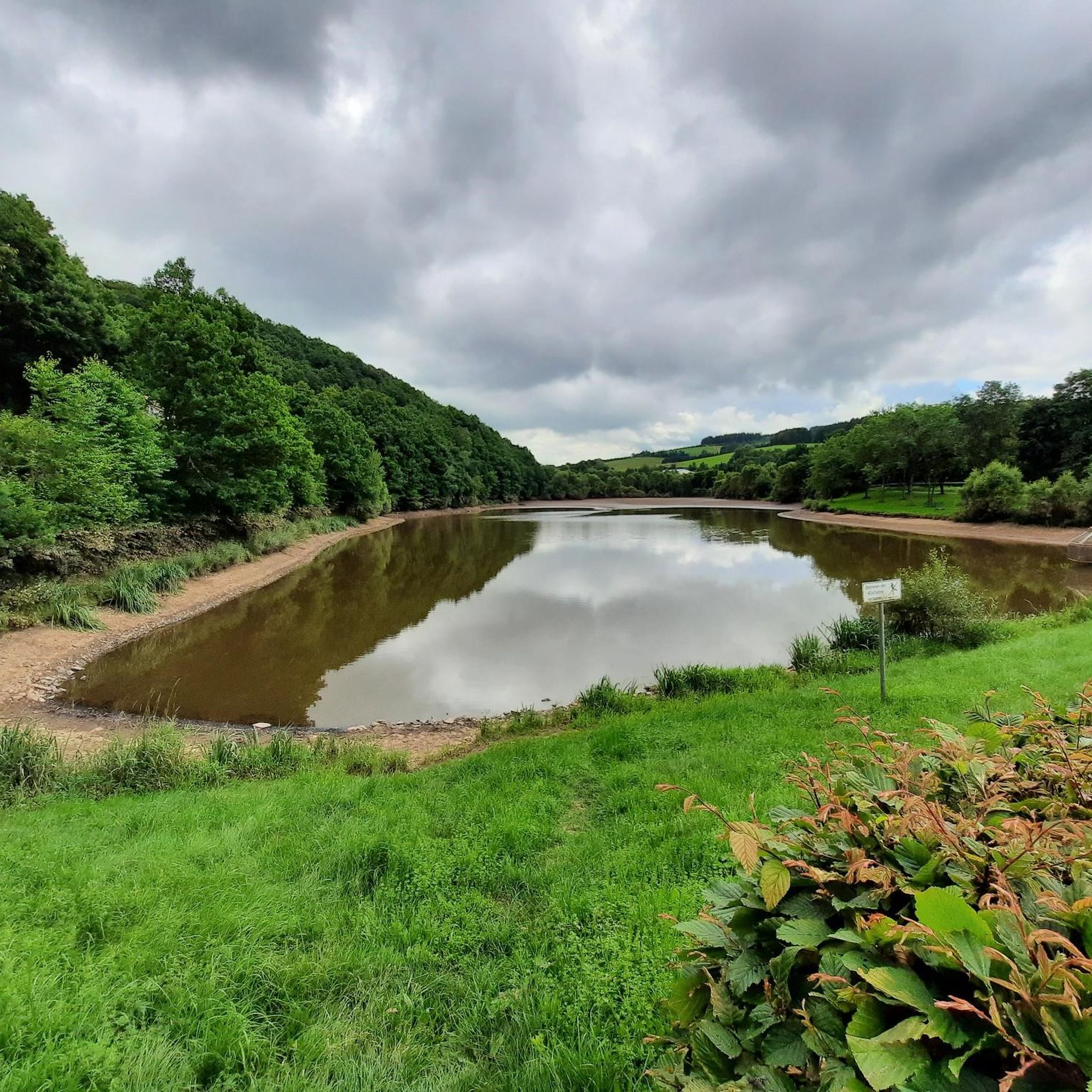
The historic center of Kronenburg is absolutely worth seeing. It lies above the Kronenburger See, directly around the destroyed castle ruins.
8
0

rtseite Schloss Schmidtheim Schloss Schmidtheim Dahlem The castle is picturesquely situated amidst green spaces and is surrounded by a moat. Today, the castle is not only an important landmark of the region but also a cultural venue. The architecture of the castle combines elements of the Renaissance and Baroque, making it a fascinating example of the region's architectural history.
0
0

For information on the castle ruins, see, for example, https://www.juenkerath.de/freizeit-und-tourismus/burgruine. An interesting detail about a special "stone" that was once found at the castle's gate and is now incorporated into a house wall can be found at https://www.heimatjahrbuch-vulkaneifel.de/VT/hjb1993/hjb1993.58.htm
0
0

The palace complex was built between the 16th and 18th centuries. The distinctive residential tower was built first. The complex was then expanded to include an outer bailey with a farmyard, two side wings, and a four-part fountain basin in the courtyard. The moats of the former two-part moated palace have now been filled in. The palace is still privately owned by the Count Beissel von Gymnich family. On the southeast wing, a coat of arms for Friedrich Wilhelm Beyssel von Gymnich (born 1638, died 1710) and Maria Magdalena von Metzenhausen (died 1716) is affixed to the exterior. In the outer bailey, a coat of arms is placed above the gateway for Georg Anton Dominikus Beyssel von Gymnich (born 1683, died 1754), Privy Councilor and Chamberlain of the Electorate of Trier, Chief Bailiff of Prüm, Schönecken, and Schönberg, and his second wife, Maria Anna Franziska Ludovika Baroness Raitz von Frentz zu Kendenich. Today, guests can stay overnight in the castle's holiday home and vacation apartment, and they can also have a civil wedding in the Blue Salon. It is also suitable for celebrations and conferences.
1
0

The castle complex was built between the 16th and 18th centuries. The particularly striking residential tower was built first. The complex was then expanded to include a bailey with a farm yard, two side wings and a four-part fountain basin in the courtyard. The ditches of the former two-part moated castle are now filled in. The castle is still privately owned by the Count Beissel von Gymnich family. Source: Wikipedia
4
0

Very beautiful castle, you can also rent holiday apartments here. For 4 - 14 people
3
0
Jünkerath Castle – Glaadt Castle In the Middle Ages, Glaadt was even more important than Jünkerath, which at the time was just a smelting settlement. Therefore, a castle was built on this spot by Count Dieterich von Schleiden in the 14th century. The castle was besieged and conquered several times, mainly by the Archbishops of Trier. In 1488 the Counts of Manderscheid-Blankenheim inherited the area through the division of Manderscheid. Due to dilapidation, the late medieval complex was demolished and rebuilt by Count Arnold as a moated castle between 1605 and 1610. The entrance with a drawbridge was in the western part. From 1694 - 1705 Count Salentin Ernst spent the last years of his life in the castle, where he also died. 1726 - 1735 Count Franz Georg had a major renovation carried out and the castle converted into a palace complex. The castle has a square floor plan and consisted of two floors, high arched windows adorned the west wing. In the courtyard there is a fountain and paving made of quartz stones with ornaments. Next to the castle there was a mill, a bakery and a brewery, as well as a riding arena and gardens with a baroque ambience. In the area around the ruins, the former moat and the approximate extent of the complex, indicated by the remains of the wall, are also clearly visible. Two years after completion, the castle burned down and has remained a ruin ever since. According to a legend, the fire was caused by a lightning bolt, as a punishment from God, since one is said to have blasphemed God at the inauguration ceremony. In the 1970s - 1980s, the ruins were uncovered and restored with the participation of many volunteers and associations.
2
0
The ruins of Glaadt Castle are the ruins of the former palace complex in Jünkerath and were built in the 13th century. 1726 - 1735 Count Franz Georg had a major renovation carried out and the castle converted into a palace complex. Two years after completion, the castle burned down and has remained a ruin ever since. According to a legend, the fire was caused by a lightning bolt, as a punishment from God, since one is said to have blasphemed God at the inauguration ceremony. Next to the castle there was a mill, a bakery and a brewery, as well as a riding arena and gardens with a baroque ambience. In the area around the ruins, the former moat and the approximate extent of the complex, indicated by the remains of the wall, are also clearly visible. Source: https://www.gerolsteiner-land.de/a-burgruine-glaadt
3
0
Frequently Asked Questions
What are the most historically significant castle ruins near Stadtkyll?
The Eifel region near Stadtkyll is rich in history. Two prominent examples are the Ruins of Kronenburg Castle, first documented in 1277, and the Glaadt Castle Ruins, which date back to the 14th century. Both offer a tangible connection to medieval times and showcase the region's past.
Are there family-friendly castles or activities around Stadtkyll?
Yes, the Ruins of Kronenburg Castle and its surrounding village are very family-friendly. You can stroll through narrow lanes, explore medieval houses, and enjoy panoramic views from the castle ruins. The village also features art galleries and craft shops. The Kronenburg Castle Loop is also a nice flat path suitable for families.
Can I visit these castles with my dog?
Many of the outdoor areas around the castle ruins, such as the Ruins of Kronenburg Castle, are dog-friendly. Always keep your dog on a leash and be mindful of other visitors and local regulations.
What kind of natural features or viewpoints can I expect to see near the castles?
The Ruins of Kronenburg Castle offer beautiful panoramic views over the Kyll valley and Lake Kronenburg. The castle ruins are situated on a ridge, providing excellent vantage points. The Glaadt Castle Ruins also allow you to see the former moat, indicating its historical integration with the natural landscape.
What outdoor activities can I do near these castles?
The region around Stadtkyll offers various outdoor activities. You can find numerous cycling routes, including those around Kronenburger Lake, and road cycling tours that pass by historical sites like the Jünkerath Castle Ruins. For more details on routes, check out the cycling guides for Cycling around Stadtkyll, Road Cycling Routes around Stadtkyll, and Gravel biking around Stadtkyll.
Are there hiking trails that lead to or around the castles?
Yes, there are several hiking opportunities. The Ruins of Kronenburg Castle are accessible via hiking trails, and the Kronenburg Castle Loop is a popular circular route. Many routes in the area combine natural beauty with historical exploration. You can find more hiking options in the cycling guides mentioned above, as many paths are multi-use.
What is the best time of year to visit the castles around Stadtkyll?
The castles and their surroundings are beautiful year-round. Spring and autumn offer pleasant temperatures for hiking and exploring, with vibrant foliage or blooming nature. Summer is also great for outdoor activities. Even in winter, the ruins can have a unique, atmospheric charm, though some paths might be slippery.
How accessible are the castle ruins by public transport or car, and is parking available?
For Kronenburg Castle, there are free parking spaces available below the castle ruins, making it easily accessible by car. The walk to the ruins from there is short and easy. Public transport options to the smaller villages in the Eifel region might be less frequent, so checking local bus schedules in advance is recommended.
What makes the Kronenburg Castle Ruins a particularly charming destination?
Kronenburg offers a romantic setting with its picturesque castle village. The village has retained much of its medieval character, with houses up to 400 years old enclosed by the castle's ring wall. The self-contained impression of the castle ruin and its surrounding fortified village, combined with beautiful panoramic views over the Kyll valley, makes it a truly charming and worthwhile destination. You can learn more about Kronenburg's charm at Nordeifel Tourismus.
What is the history behind the Glaadt Castle Ruins?
The Glaadt Castle Ruins are the remains of a former palace complex built in the 14th century. It was rebuilt as a moated castle between 1605 and 1610, featuring a square ground plan and baroque gardens. Tragically, it burned down only two years after completion, with local legend attributing the fire to a lightning bolt. The ruins were uncovered and restored in the 1970s and 80s, and visitors can still discern the former moat and the complex's extent.
Are there any privately owned castles in the area that can be seen?
Yes, Schmidtheim Castle is a privately owned castle complex. While not always open for interior visits, its impressive structure can be observed from the outside. It was once the highest moated castle in the Rhineland, offering a glimpse into the region's noble history.
What amenities like cafes or accommodation are available near the castles?
The village of Kronenburg, surrounding the Ruins of Kronenburg Castle, has amenities like art galleries and craft shops. For a wider range of cafes, pubs, and accommodation, Stadtkyll itself offers various options for visitors and hikers. It's always a good idea to check local listings for current availability.
Most popular routes around Stadtkyll
Most popular attractions around Stadtkyll

Get inspired with the komoot mobile app


Explore more
Looking for the best castles somewhere else? Discover other guides around Stadtkyll:
