Top 20 Natural Monuments around Ebermannstadt
Best natural monuments around Ebermannstadt are primarily characterized by impressive caves and unique rock formations within the picturesque Franconian Switzerland. These sites offer opportunities to explore geological wonders and scenic landscapes. The region features a diverse array of natural monuments, including karst caves, rock labyrinths, and distinctive rock plateaus. These locations provide varied outdoor experiences for nature enthusiasts.
Best natural monuments around Ebermannstadt
- The most popular natural monuments is Oswald Cave, a cave that is a karst passage cave…
Last updated: September 2, 2026
Oswald Cave
Highlight • Cave
Translated by Google •
Tip by

Quackenschloss
Highlight • Cave
Translated by Google •
Tip by

Sign up now to discover places like this
Get recommendations on the best single tracks, peaks, & plenty of other exciting outdoor places.
Sign up for free
Ruins of Neideck Castle
Highlight • Castle
Translated by Google •
Tip by

St. Walburga's Chapel and Statue, Walberla Plateau
Highlight • Religious Site
Translated by Google •
Tip by

Riesenburg Collapse Cave
Highlight • Cave
Translated by Google •
Tip by
Sign up for free to discover even more natural monuments around Ebermannstadt.
Sign up for free
Already have an account?
Start today with a free account
Your next adventure awaits.
Login or Signup
Popular around Ebermannstadt
Ultratrail Fränkische Schweiz – 2 Days Burgen, Wälder, Trails
From the view to the Seidla – Nature and BeerEnjoyment in the Franconian Switzerland
Castles, mountains, beer & trails – bikepacking in Franconian Switzerland
Looking for a small adventure? Your summer in the VGN
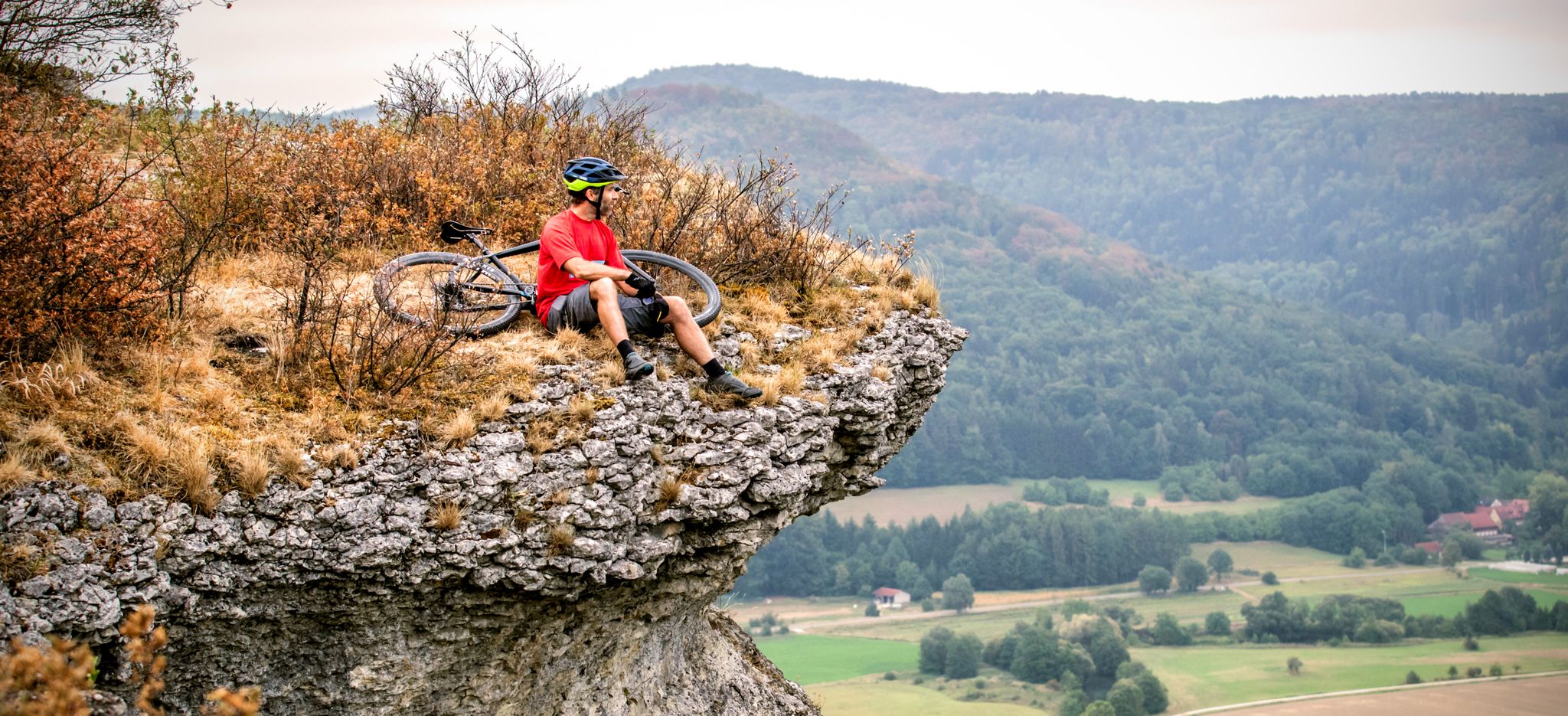
The 10 most beautiful mountain bike Tours in Franconian Switzerland
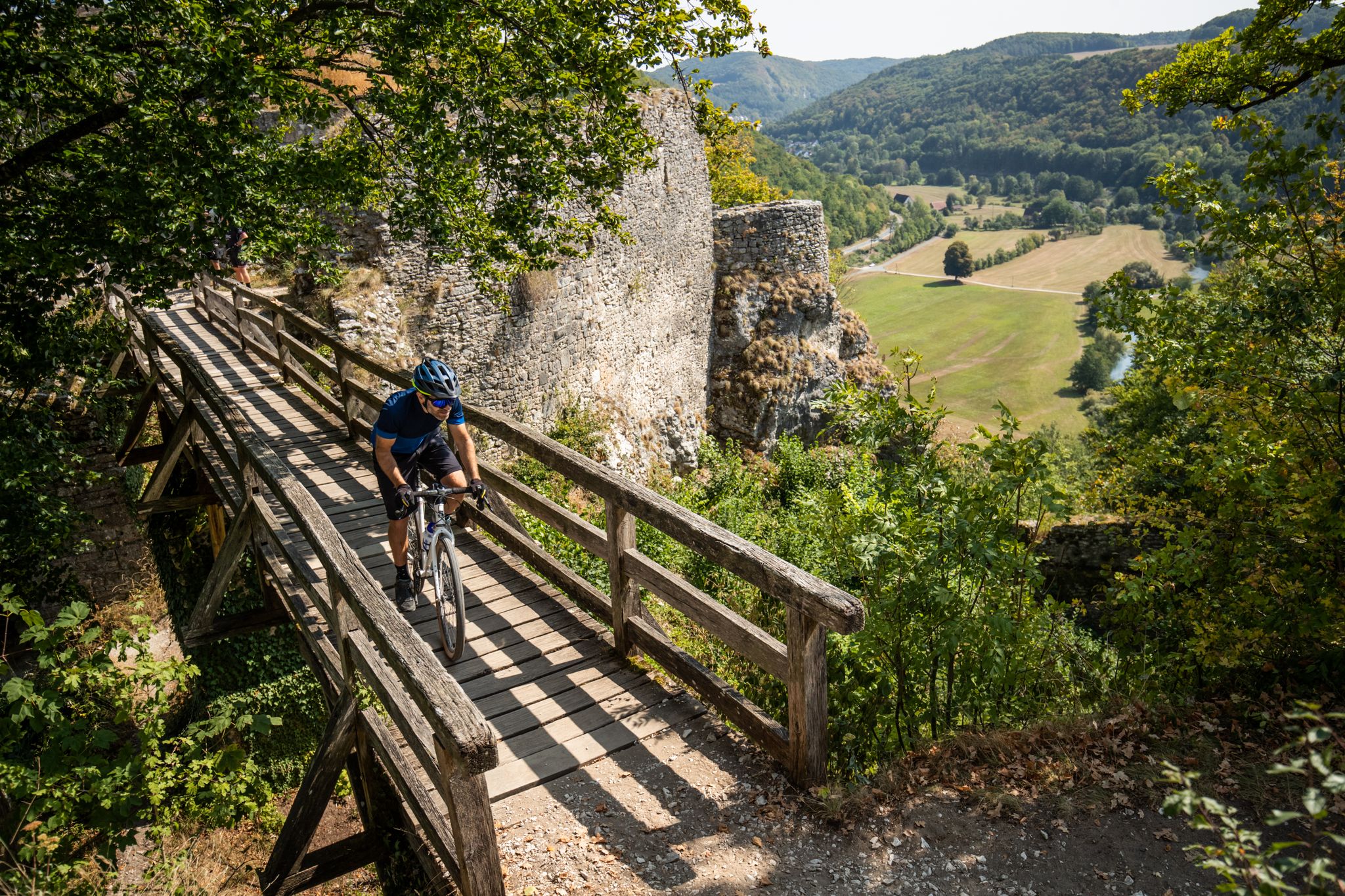
Castles, bikes and beer — a mountain biking paradise in Franconian Switzerland
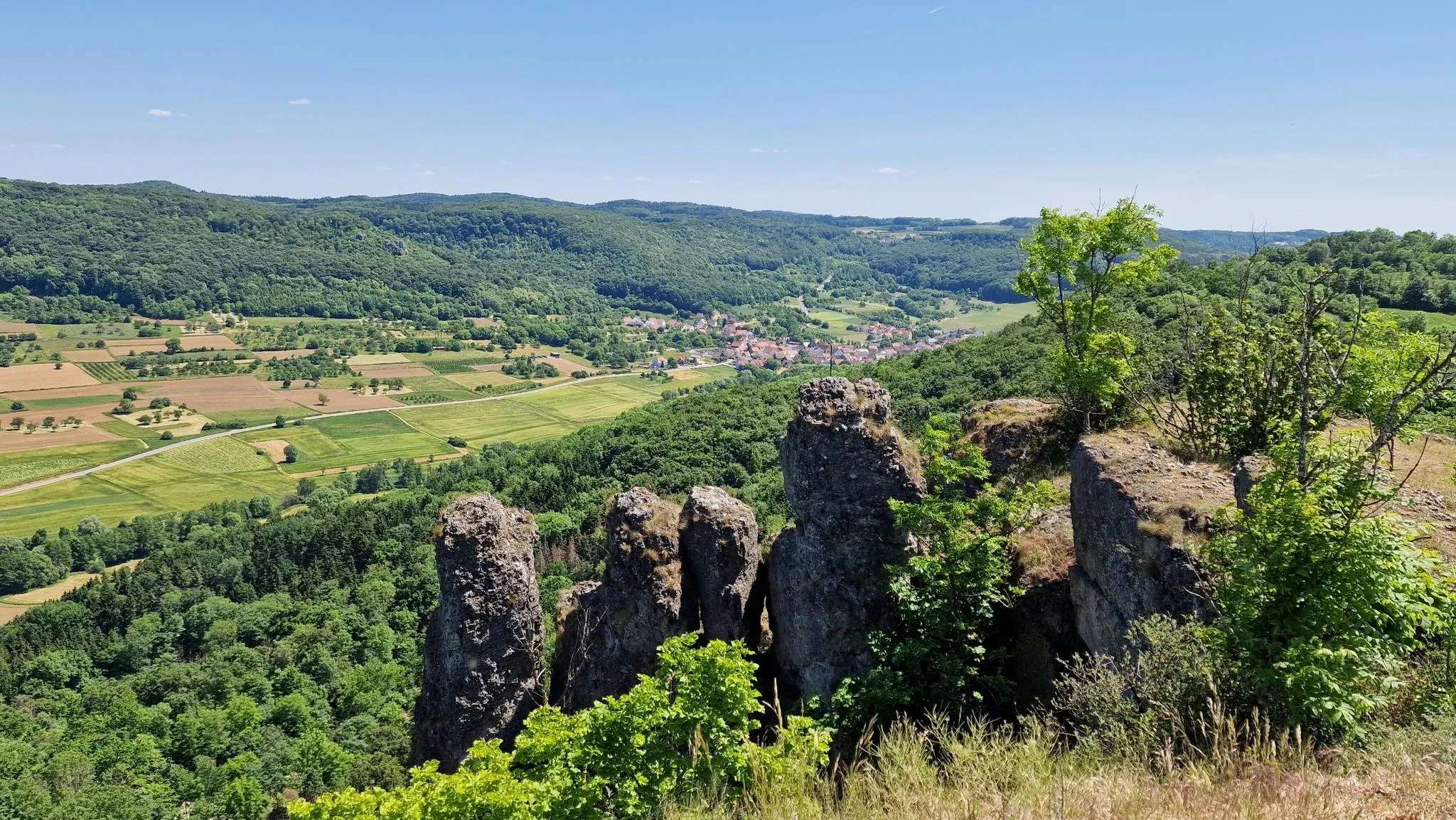
Delightful hiking in Franconian Switzerland
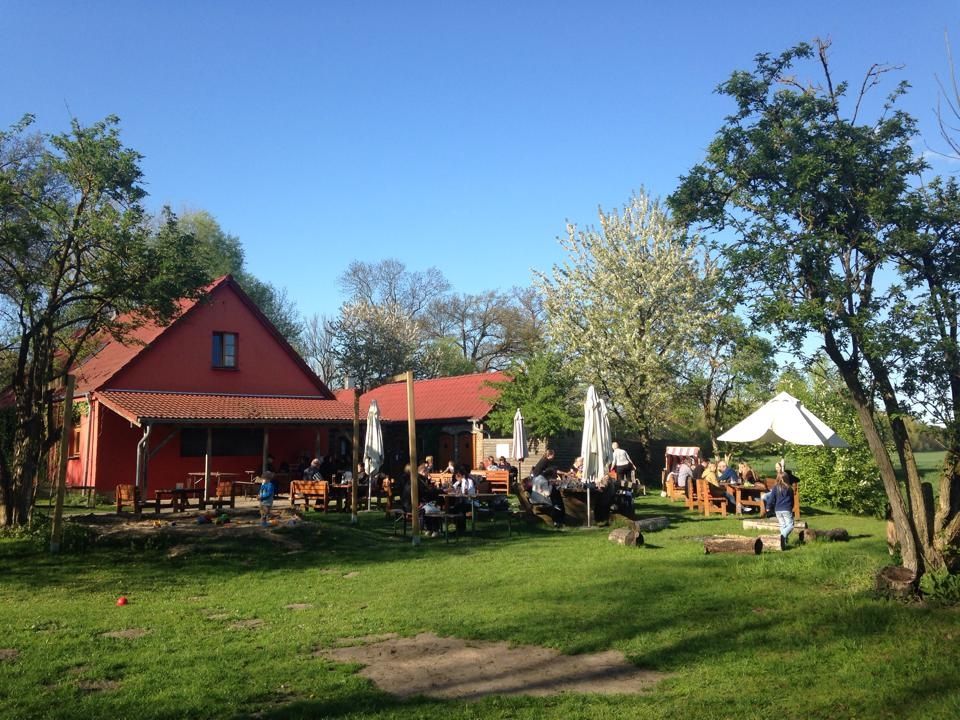
Farmer's shops — escape to the country
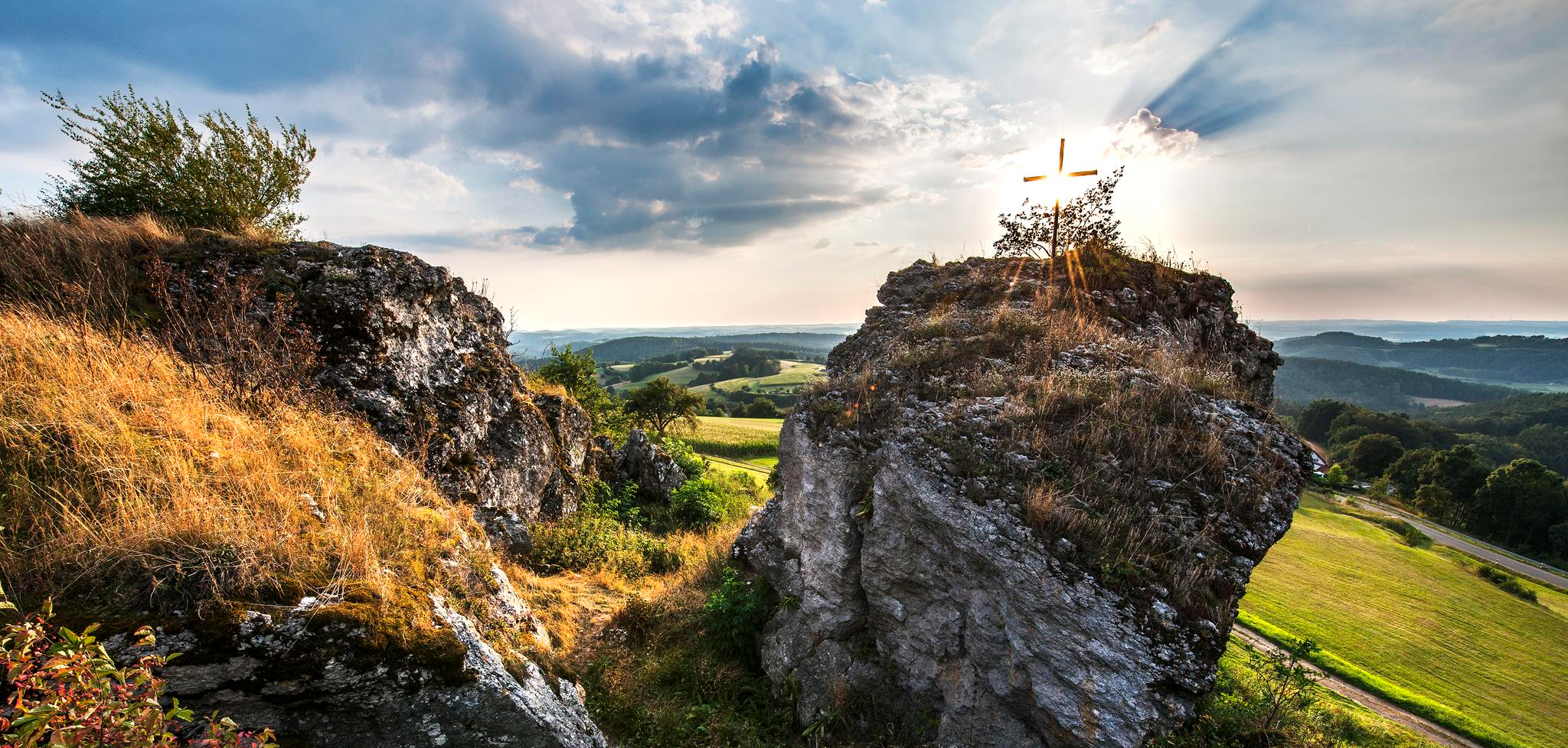
Lieblingswanderungen in der Fränkischen Schweiz
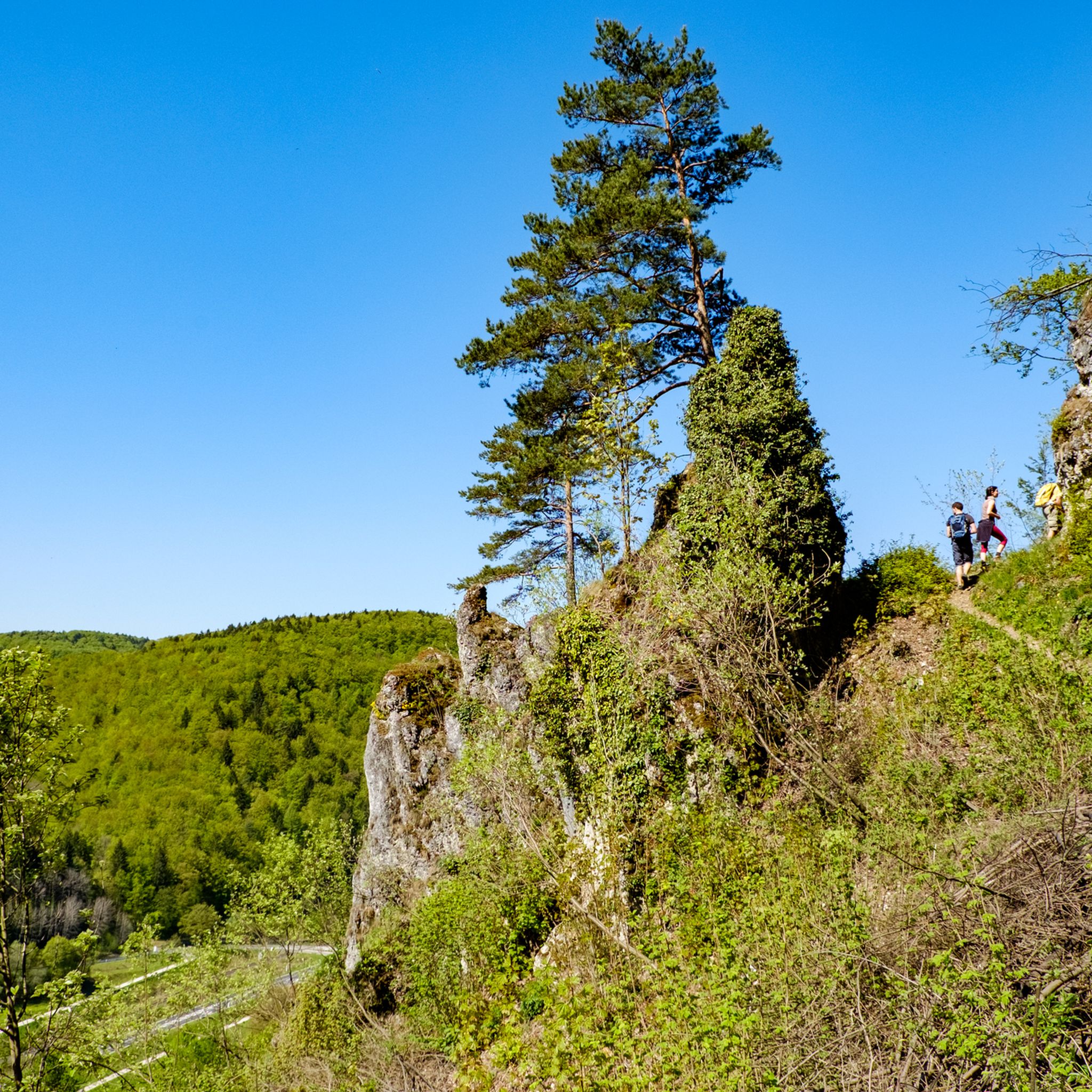
Hiking around Ebermannstadt
Other adventures around Ebermannstadt


Tips from the Community

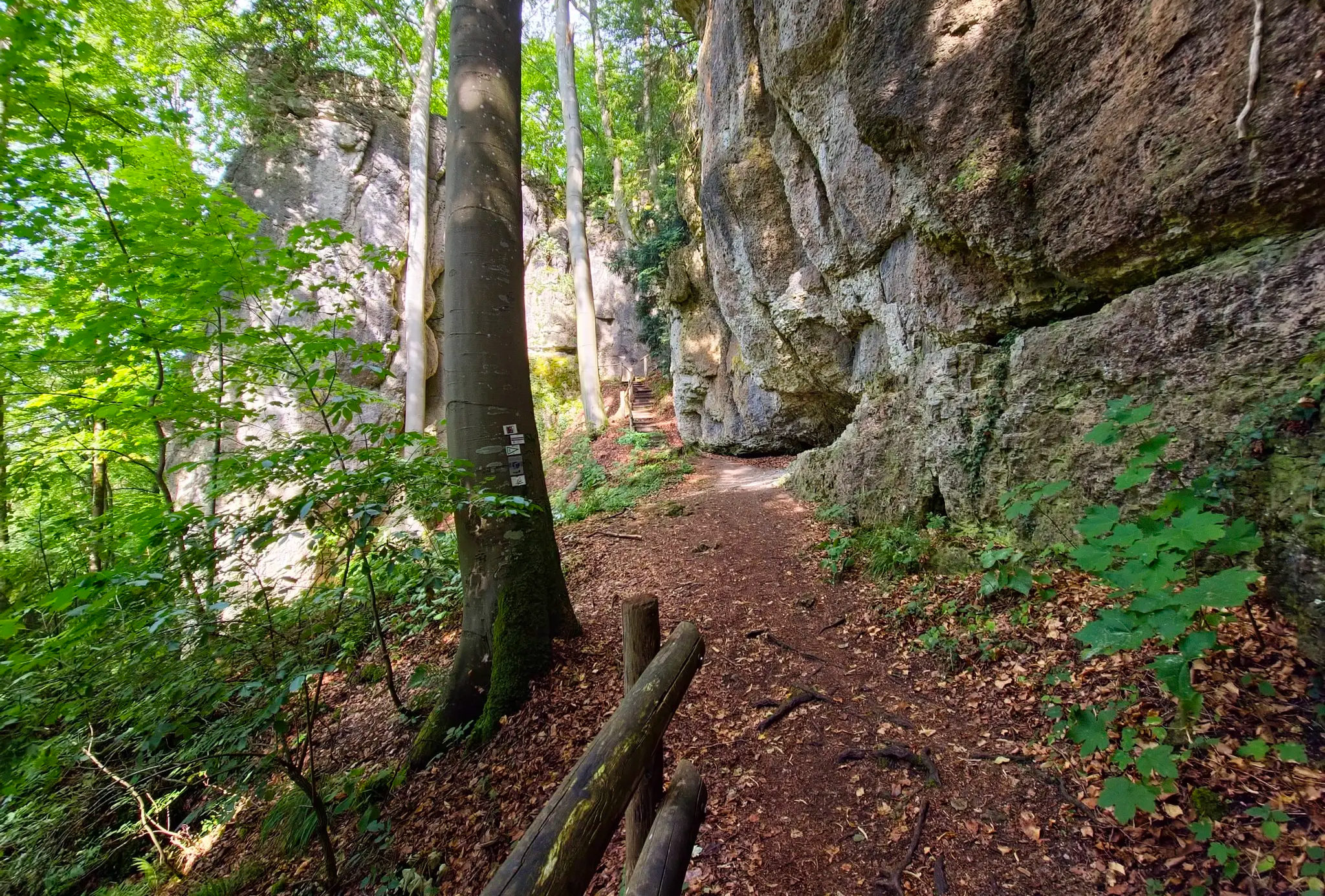
The Quackenschloss is a passage cave about 18 meters long. It is the remains of a very old and high-lying cave system. The rock wall has a patchy appearance due to the weathering of individual shells. The cave probably gets its name from this rock composition. The type of stone with holes in it (smokewacke) is called quacke here. The oblique oval shape of the cave is determined by two longitudinal fissures and two diagonally sloping bank joints. Two larger fissures cross the passage. One portal is about 7 meters wide and 2.5 meters high, the other, divided by a rock pillar, is about 9 meters wide and 5 meters high. The cave is registered as C 4 in the Franconian Alb Cave Register (HFA). It has been designated by the Bavarian State Office for the Environment as an important geotope (474R060)[1] and as a natural monument (ND-04580). The cave, which is easily accessible via hiking trails, is one of the most frequently visited destinations in the Franconian Jura, also because of its scenic location. There is a sport climbing area next to the cave. Source: Wikipedia
19
0

The Quackenschloss is a cave ruin, the remains of which belong to a very high (505 meters) and therefore very old cave system. The rock grotto, which is about three meters high and six meters wide, is open on two sides and can be safely entered from the east side. In the gallery cave, which takes its name from the enclosed fossils, the so-called Quacken, the remains of a 17-meter-long cave system can be explored.
17
0

A small steep path leads to the roof of the Quakenschloss. Great view from above.
14
0
The Oswald cave is a passage cave that can be crossed effortlessly.
19
0

The Oswald cave is a beautiful passage cave, you should take a flashlight with you because of the height, it is accessible all year round.
21
1

Statue of St. Walburga, Walberla High Plateau in the Ehrenbuerg Nature Reserve, Kirchehrenbach, Franconian Switzerland, Franconia
12
1
The Sankt-Walburgis-Chapel is the namesake of the "Walberla-Berg". The chapel was already built in the 17th century. It is dedicated to Saint Walburga. The chapel, which was probably first mentioned in 1350, was originally made of wood. The current chapel was built in 1697 by the Lords of Wiesenthau. The bronze statue of Saint Walburga, which stands in front of the chapel and was inaugurated in 2000, is very striking.
13
0

In front of the chapel there is a sculpture of St. Walburga by the sculptor Ernst Steinacker with the inscription "God in your heart".
12
1
Frequently Asked Questions
What types of natural monuments can I explore around Ebermannstadt?
The region around Ebermannstadt, nestled in Franconian Switzerland, is renowned for its diverse natural monuments, primarily featuring impressive caves and unique rock formations. You'll find karst passage caves, extensive collapse caves, rock labyrinths, and distinctive rock plateaus.
Are there any family-friendly natural monuments in the area?
Yes, several natural monuments are suitable for families. For instance, Quackenschloss is easily accessible via hiking trails and offers a scenic location. The Ruins of Neideck Castle are also considered family-friendly, where you can climb the main tower for panoramic views.
Which natural monuments are most popular with visitors?
Among the most popular natural monuments are Oswald Cave, a traversable karst passage cave, and Quackenschloss, a scenic karst cave ruin. The Ruins of Neideck Castle, a landmark offering panoramic views, is also a favorite.
What should I know before visiting Oswald Cave?
The Oswald Cave is a karst passage cave located about 800 meters east of Muggendorf. It's easily traversable and accessible all year round. However, it's recommended to bring a flashlight as the passage is about 15 meters long and can be dark, with some sections as low as 1.5 meters.
Can I explore historical sites alongside natural monuments?
Absolutely. The Ruins of Neideck Castle is a prominent historical landmark that is also recognized as a natural monument. You can climb its main tower for great views and learn about its history from information boards. The Riesenburg Collapse Cave also has historical significance, with paths and stairs made accessible for King Ludwig I in the 19th century.
Are there any unique geological formations to see?
Yes, the region is rich in unique geological formations. The Riesenburg Collapse Cave is a must-see, recognized as one of Bavaria's 100 most beautiful geotopes, formed by the collapse of a cave ceiling. The Quackenschloss is a karst cave ruin known for its 'Quacken' (enclosed fossils) and distinctive rock composition.
What outdoor activities can I do near these natural monuments?
The area around Ebermannstadt offers various outdoor activities. You can find numerous hiking trails, including easy options like the 'View of Ebermannstadt – Zuckerhut loop'. For runners, there are routes such as the 'View of Neideck Castle Ruins – Wiesent River loop'. Cyclists can explore road cycling routes like the 'Leinleiter Cycle Path – View of Rabeneck Castle loop'. You can find more details on these activities in the Running Trails around Ebermannstadt, Road Cycling Routes around Ebermannstadt, and Easy hikes around Ebermannstadt guides.
Is there a natural monument with a mystical or spiritual ambiance?
Yes, the Druidenhain, also known as the 'Franconian Stonehenge,' is a rock labyrinth near Wohlmannsgesees. It's considered a 'power place' with mystical rock formations and a captivating, mysterious ambiance, despite historical investigations not definitively proving it as a prehistoric Celtic cult site.
Are there any natural monuments that offer prominent views?
Yes, the Hummerstein is a distinctive rock plateau visibly high above Gasseldorf, at the junction of the Wiesent and Leinteit valleys. It offers prominent views and serves as a landmark in the area. Additionally, the Ruins of Neideck Castle provides panoramic views of the Wiesenttal from its main tower.
What do visitors enjoy most about the natural monuments around Ebermannstadt?
Visitors particularly appreciate the diverse outdoor experiences, from exploring geological wonders like the Oswald Cave and Riesenburg Collapse Cave, to enjoying scenic views from spots like the Ruins of Neideck Castle. The combination of natural beauty, historical context, and accessible hiking trails makes these sites highly appealing for nature enthusiasts and hikers.
Is there a natural monument that is also a religious site?
Yes, the St. Walburga's Chapel and Statue on the Walberla Plateau is a significant site. While primarily a religious building, the Walberla Plateau itself is a prominent natural landmark and witness mountain in the Franconian Alb, offering expansive views.
Most popular routes around Ebermannstadt
Most popular attractions around Ebermannstadt

Get inspired with the komoot mobile app


Explore more
Extend your search for the best caves by checking out these guides of the top ones around Ebermannstadt:
