Top 20 Caves around Forchheim
Best caves around Forchheim are found within Franconian Switzerland, a region characterized by its impressive karst landscape. This area is home to numerous underground formations, offering insights into geological processes. Forchheim serves as a central point for exploring these natural features. The caves provide diverse geological artistry and historical significance.
Best caves around Forchheim
- The most popular caves is Oswald Cave, a karst cave that can be crossed effortlessly. It is a passage cave located on the Hollow Mountain,…
Last updated: October 9, 2026
Oswald Cave
Highlight • Cave
Translated by Google •
Tip by

Quackenschloss
Highlight • Cave
Translated by Google •
Tip by

Sign up now to discover places like this
Get recommendations on the best single tracks, peaks, & plenty of other exciting outdoor places.
Riesenburg Collapse Cave
Highlight • Cave
Translated by Google •
Tip by

Gößweinstein Rock Trail
Highlight • Trail
Translated by Google •
Tip by

Esper Cave
Highlight • Cave
Translated by Google •
Tip by

Rosenmüller Cave
Highlight • Cave
Translated by Google •
Tip by

Schwingbogen (Swing Arch)
Highlight • Natural Monument
Translated by Google •
Tip by

Hohle Kirche Cave
Highlight • Cave
Translated by Google •
Tip by

Doctor's Cave
Highlight • Cave
But please do not cancel anything.
Translated by Google •
Tip by

Witzen Cave
Highlight • Cave
Translated by Google •
Tip by

Sign up for free to discover even more caves around Forchheim.
Already have an account?
Start today with a free account
Your next adventure awaits.
Popular around Forchheim
Ultratrail Fränkische Schweiz – 2 Days Burgen, Wälder, Trails
Nuremberg to Erfurt – Discover the German countryside by bike
Forests, rocks and castles – 5-day circular through Franconian Switzerland
The National Natural Landscapes in Bavaria
From the metropolis to enjoyment – city hiking on the VGN
Fun hiking and wonderful views in Franconian Switzerland
Ten fantastic hikes throughout Germany
Catch the bus and train into nature – VGN Leisure Tips 2023
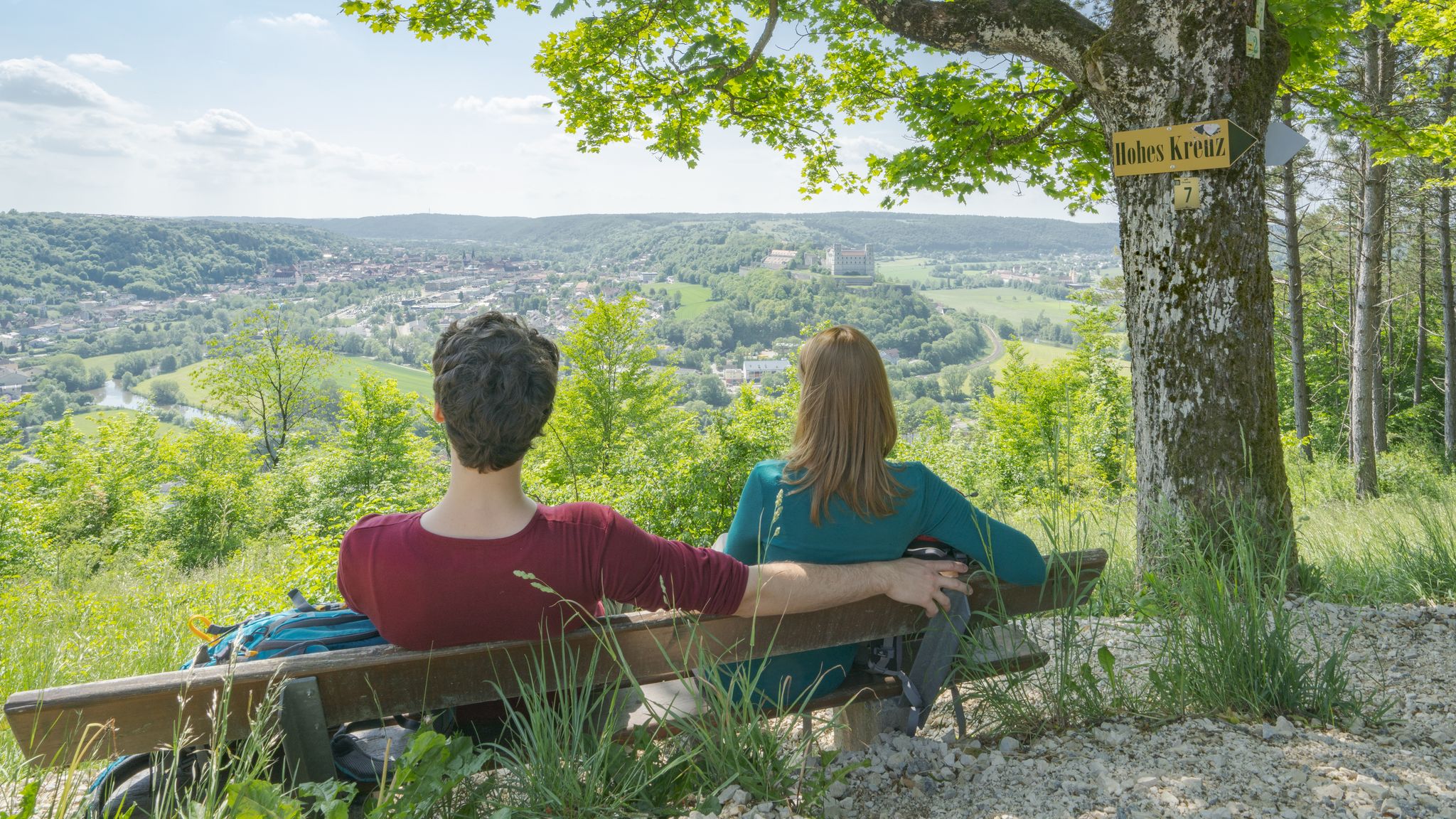
Pleasure, nature and culture – hiking around the Franconian towns
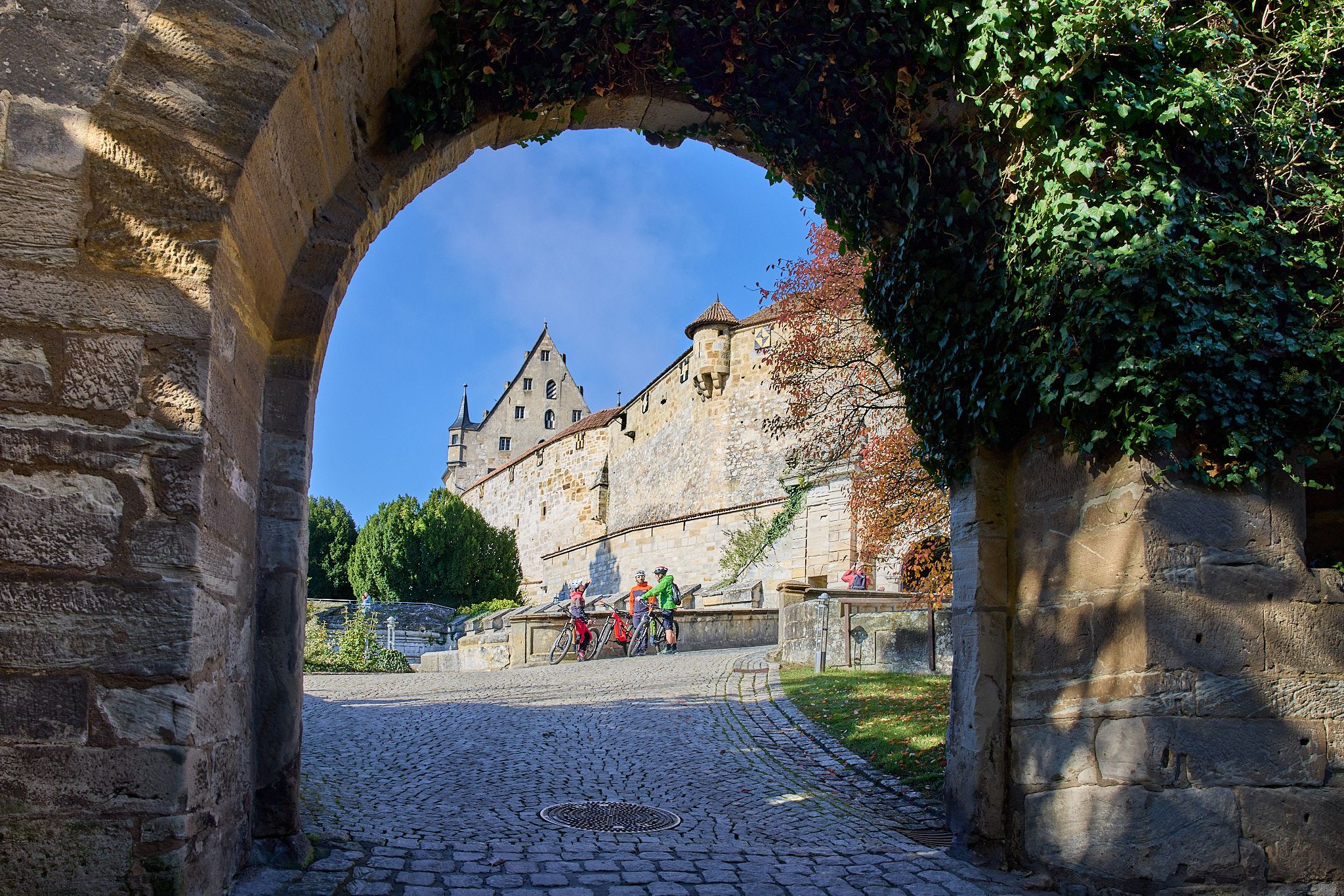
Fun, nature, and culture – cycling around the Franconian cities
Other adventures around Forchheim


Tips from the Community

Great cave... as I later discovered on a sign, as big as a beer mat, away from the cave... reserved for bats in the winter months... the sign could be better positioned
10
0

A great cave that is a lot of fun to explore. Please remember to wear sturdy shoes and bring your flashlight
2
0

It's quite a climb, but the effort is worth it! The Hollow Church, an impressive dolomite rock formation with a passage and viewpoint, is definitely a highlight of the area!
4
0

The cave was named after the Muggendorf doctor Dr. Adolf Schauwienold, who discovered it in 1905.
7
0

At the far end is a small crawlspace that probably doesn't lead any further, if the cave guide who has just instructed his group is to be believed. Please note the bat protection period from October to May! During this time, entry is prohibited.
7
0

The Gößweinsteiner Felsentor fascinates visitors with its impressive size. A few steps lead up to the passage. There is a small cave in the gate to the right.
10
2
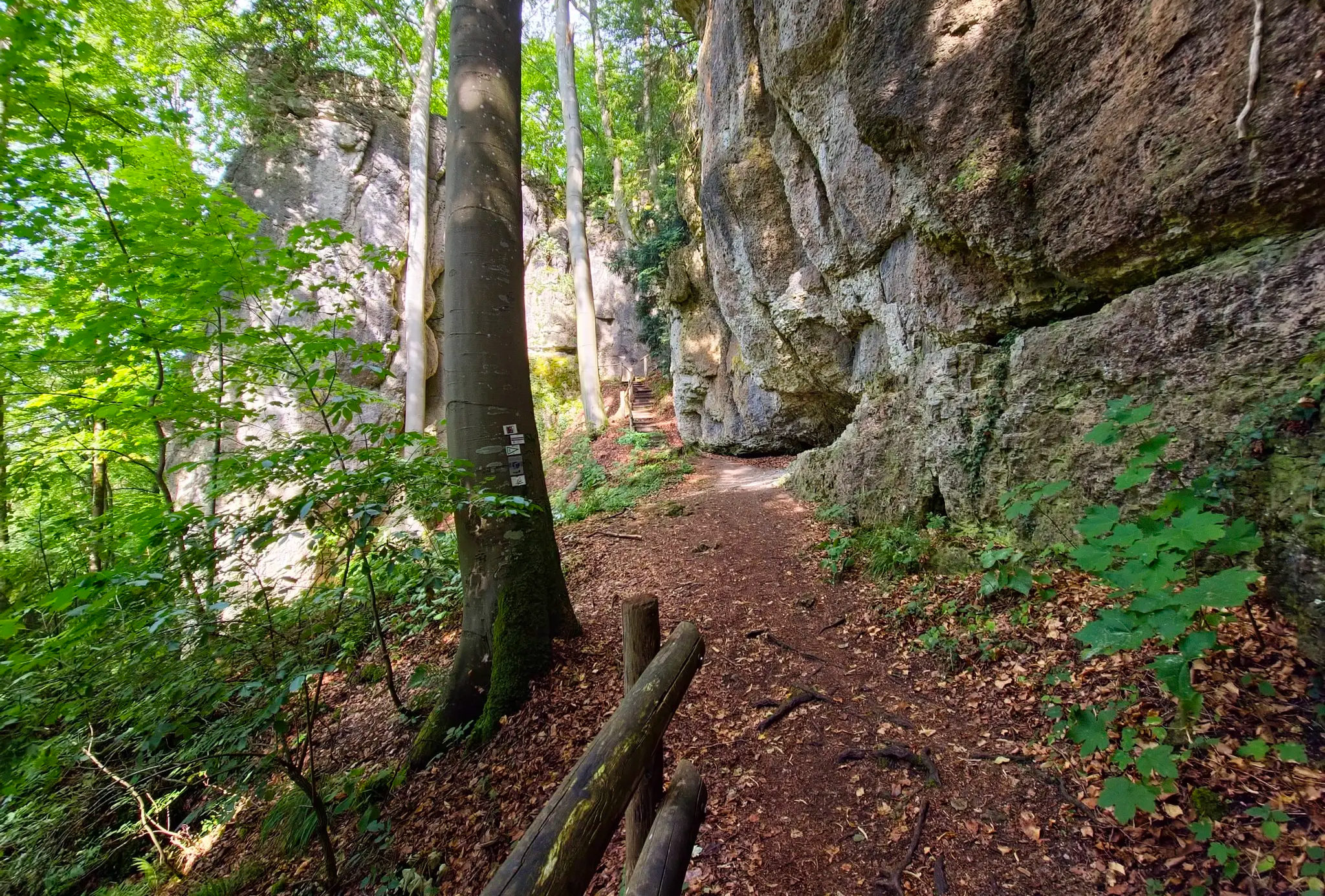
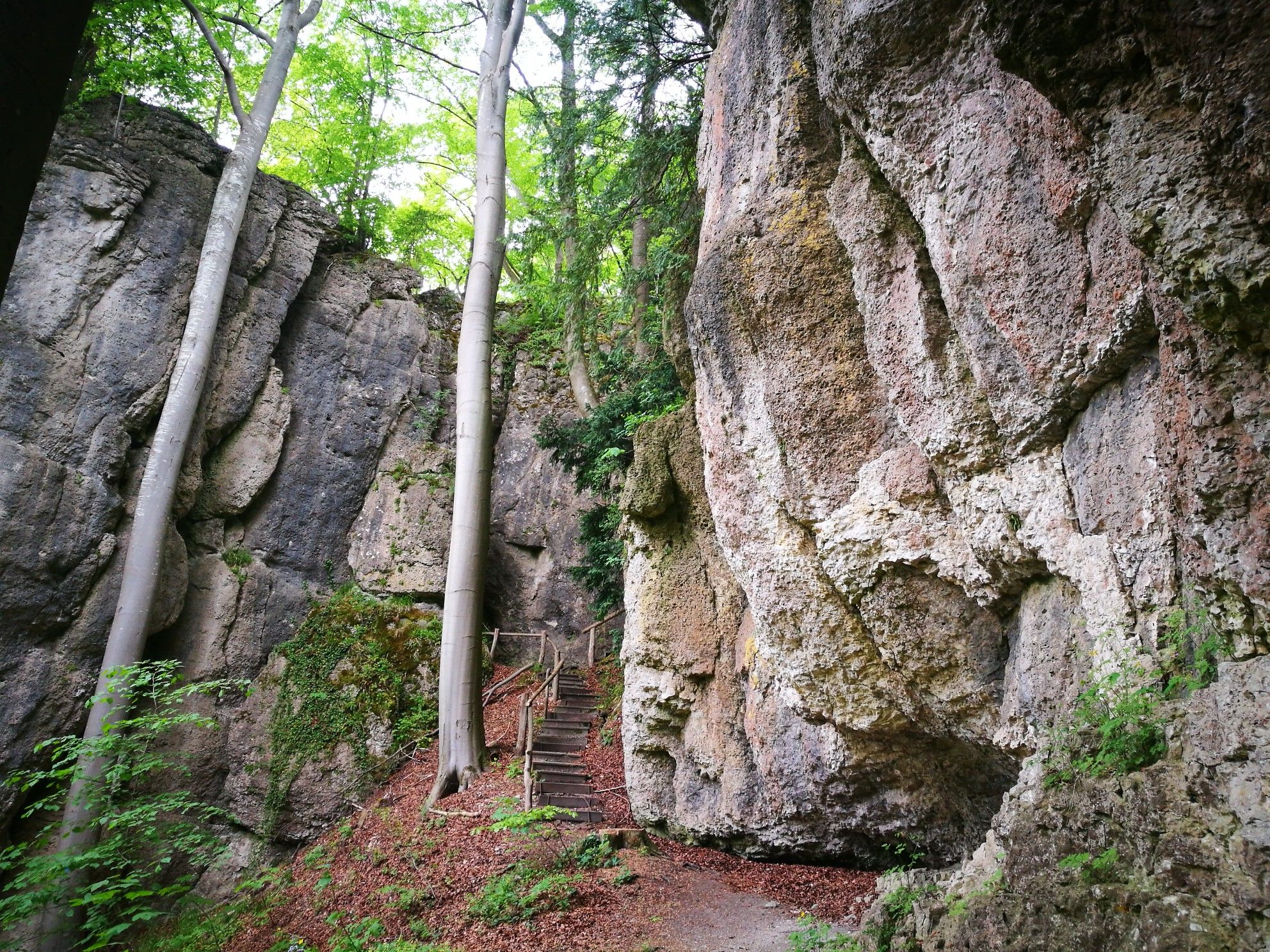
The Felsensteig is a short but spectacular path that is built into a deep, particularly impressive rocky gorge. The path can be walked without any safety measures, but you should wear good hiking boots and be sure-footed. There are several steps to climb, and in some places there are railings. This is usually not a problem for dogs either.
17
2

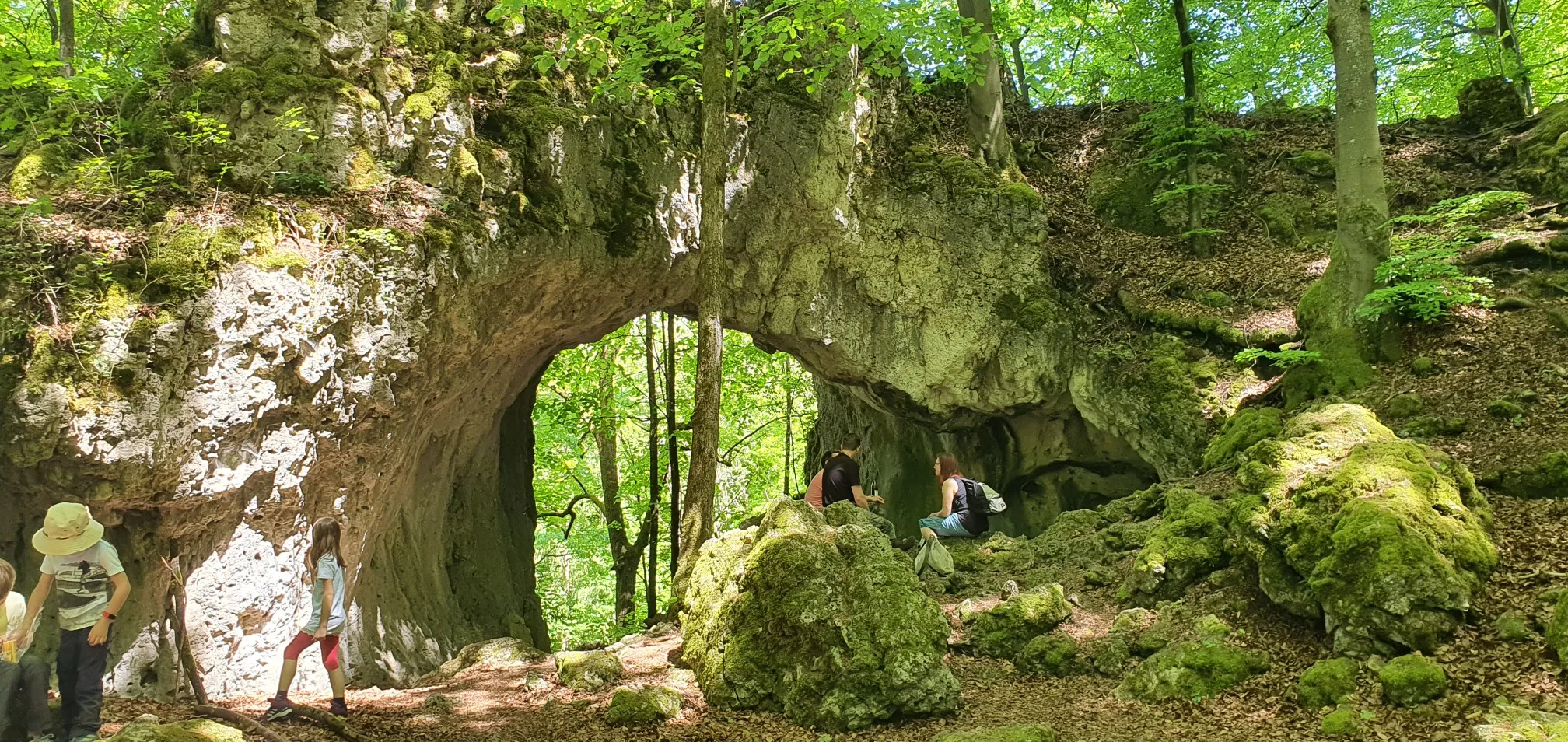
The Quackenschloss is a passage cave about 18 meters long. It is the remains of a very old and high-lying cave system. The rock wall has a patchy appearance due to the weathering of individual shells. The cave probably gets its name from this rock composition. The type of stone with holes in it (smokewacke) is called quacke here. The oblique oval shape of the cave is determined by two longitudinal fissures and two diagonally sloping bank joints. Two larger fissures cross the passage. One portal is about 7 meters wide and 2.5 meters high, the other, divided by a rock pillar, is about 9 meters wide and 5 meters high. The cave is registered as C 4 in the Franconian Alb Cave Register (HFA). It has been designated by the Bavarian State Office for the Environment as an important geotope (474R060)[1] and as a natural monument (ND-04580). The cave, which is easily accessible via hiking trails, is one of the most frequently visited destinations in the Franconian Jura, also because of its scenic location. There is a sport climbing area next to the cave. Source: Wikipedia
19
0
Frequently Asked Questions
Which caves around Forchheim offer unique geological formations?
The region is rich in diverse geological formations. The Quackenschloss is a notable karst cave near Engelhardsberg, recognized as an important geotope. Further afield, the Binghöhle near Streitberg features translucent sinter plumes, water-filled sinter pools, and unique 'eccentriques'. The Teufelshöhle, while in the Bayreuth district, is celebrated for its impressive stalactites, including the 'Tree' and 'Giant Goliath', and the grand Barbarossa Dome.
Are there any family-friendly caves to visit near Forchheim?
Yes, several caves are suitable for families. The Esper Cave is considered family-friendly and offers information boards about its history and exploration. The Doctor's Cave is another option listed as family-friendly. The Oswald Cave is a passage cave that can be crossed effortlessly, making it an exciting adventure for children, especially with a flashlight.
What historical significance do the caves around Forchheim hold?
Many caves in the region have historical importance. The Esper Cave, for instance, was first explored in the 18th century and is now classified as a 'Bodendenkmal' (archaeological monument), where human bones and artifacts from the Late Hallstatt and Early La Tène periods were found. The Rosenmüller Cave and Riesenburg Collapse Cave are also recognized as historical sites.
What kind of outdoor activities can I do near the caves?
The area around Forchheim offers a variety of outdoor activities. You can find numerous hiking trails, including easy hikes like the 'View of Thuisbrunn' loop or more challenging mountain hikes such as the 'Hohes Kreuz Observation Tower – Riesenburg Collapse Cave loop'. There are also options for gravel biking, with routes like the 'Franconian Castles and Breweries Loop'. For more details, explore the easy hikes, mountain hikes, and gravel biking routes guides.
Are there any caves that are easy to access or cross?
The Oswald Cave is a passage cave that can be crossed effortlessly. It's about 15 meters long and requires a flashlight due to some lower sections. The Quackenschloss is also easily accessible via hiking trails and is a passage cave about 18 meters long.
What should I wear when exploring caves in the Forchheim area?
Even in summer, caves can be significantly cooler than the outside temperature. It's advisable to wear layers, including a jacket or sweater. Sturdy, closed-toe shoes with good grip are essential for navigating uneven and potentially damp surfaces. For some passage caves like the Oswald Cave, a flashlight is highly recommended.
Can I visit caves in the Forchheim region during winter?
Some caves, like the Esper Cave, are generally walkable in the summer months, with cooler air flowing from the entrance. Information regarding winter accessibility can vary for each cave. It's best to check specific opening times and conditions for individual caves, as some might be closed or have restricted access during colder months due to ice or for bat hibernation.
Are there any impressive rock formations or natural monuments besides caves?
Yes, the region features other striking natural monuments. The Schwingbogen (Swing Arch) offers impressive rock passages and boulders, providing great photo opportunities. The Gößweinstein Rock Trail, also known as Teufelsstieg, is a beautiful climb with stairs, ladders, and switchbacks, offering views and leading past rock formations.
What do visitors enjoy most about the caves around Forchheim?
Visitors frequently appreciate the unique geological artistry and the sense of adventure. The Oswald Cave is noted for being an exciting 'G`schicht' for children. The Esper Cave is described as 'very impressive' with 'impressive arches'. The overall experience of exploring these underground wonders and their scenic locations is highly valued by the komoot community, as evidenced by over 3600 upvotes and 2100 photos.
Are there any caves that are less known or 'hidden' in the Forchheim area?
While many caves are well-documented, the region has numerous smaller karst formations. The Hohle Kirche Cave and Witzen Cave are examples of other caves in the area that might offer a more secluded experience compared to the larger, more frequently visited show caves. Exploring local hiking trails can often lead to discovering these less prominent natural features.
What types of caves are most common in the Forchheim region?
The Forchheim region, situated in Franconian Switzerland, is primarily known for its karst landscape. This results in a prevalence of karst caves, passage caves, and collapse caves. Examples include the Oswald Cave and Quackenschloss as passage caves, and the Riesenburg Collapse Cave, which is a spectacular example of a collapsed cave system.
Most popular routes around Forchheim
Most popular attractions around Forchheim

Get inspired with the komoot mobile app


Didn’t find what you were looking for?
Discover more caves around Forchheim region by region:
Explore more
Extend your search for the best caves by checking out these guides of the top ones around Forchheim:
