Top 13 Castles around Bitburg
Castles around Bitburg are situated in a region known for its Roman history and brewing heritage, offering a blend of ancient and medieval fortifications. The area features diverse landscapes, including the Kyll river valley and the Eifel district. Bitburg itself began as the Roman road station of Vicus Beda, later fortified with substantial stone walls. The surrounding countryside provides a setting for exploring historical structures.
Best castles around Bitburg
- The most popular castles is Prümerburg Ruins, a castle that was first mentioned in 1337 and features a pentagonal tower. The tower and a cellar are accessible, offering views over the Prüm valley.
- Another must-see spot is Hamm Castle, a medieval fortification first mentioned in 1052. Its present appearance is shaped by enclosing walls and a Gothic-era residential complex, illustrating the evolution of fortifications.
- Visitors also love Rittersdorf Castle, an approximately 700-year-old moated castle located three km north of Bitburg. It provides insight into late medieval and Renaissance living culture, housing a local history museum and a restaurant.
- Bitburg is known for its moated castles, medieval fortifications, and baroque palaces. Visitors can explore a variety of historical periods, from Roman fortifications to well-preserved medieval and Renaissance structures.
- The castles around Bitburg are appreciated by the komoot community, with more than 400 upvotes and over 700 photos shared.
Last updated: September 27, 2026
Prümerburg Ruins
Highlight • Castle
Translated by Google •
Tip by

Rittersdorf Castle
Highlight • Castle
Medieval banquets are held in the castle hall at regular intervals. After the welcome by the lord of the castle and his servants, squires and maids in medieval costumes serve food and drink. Banquet singers, jugglers and the authentically set knights' table contribute to the medieval atmosphere. Of course you can enjoy a fine country kitchen and a first-class wine in the stylishly furnished rooms of the restaurant.
Translated by Google •
Tip by

Sign up now to discover places like this
Get recommendations on the best single tracks, peaks, & plenty of other exciting outdoor places.
Nims River and Rittersdorf Castle
Highlight • Castle
Translated by Google •
Tip by

Hamm Castle
Highlight • Castle
Today you can celebrate at the castle or spend your vacation in a holiday apartment.
Translated by Google •
Tip by
Malberg Castle
Highlight • Castle
The complex owes its current appearance to Cologne's auxiliary bishop and vicar general Johann Werner von Veyder, who at the beginning of the 18th century had a simple Renaissance building redesigned and supplemented with various buildings in the Baroque style. Through the marriage of the heir's daughter Ernestine von Veyder, the castle came into civil possession. From 1989, the Kyllburg Association was the owner. Together with the Förderverein Schloss Malberg e.V., founded in 1996, she had the facility secured, repaired and restored piece by piece and with the help of funding in the millions. Today's owner is the Verbandsgemeinde Bitburger Land, into which the Verbandsgemeinde Kyllburg was merged in mid-2014.
Translated by Google •
Tip by

Sign up for free to discover even more castles around Bitburg.
Already have an account?
Start today with a free account
Your next adventure awaits.
Tips from the Community

The House As early as 1052, a medieval defensive structure in Hamm was mentioned, which was repeatedly adapted to contemporary needs over the centuries through alterations and new constructions. It stands on the site of a much older, early medieval refuge castle, where the inhabitants of the surrounding manors could retreat in times of danger during the Migration Period. The present appearance is significantly shaped by the surrounding and defensive walls as well as a residential complex from the Gothic period. The complex has dimensions of 40 x 80 m. The oldest building, still preserved in its basic structure, can be traced back to the Romanesque period and includes, among other things, the chapel, which was converted in the Baroque style in 1700. Two round towers frame a palace from the 14th century, also dating back to the late Gothic period, which was replaced by a Renaissance building in 1586. After a long period of vacancy around the mid-19th century, a fundamental renovation with some structural changes took place from 1885-1896. The Renaissance palace, like parts of the adjacent Gothic building, fell victim to arson by German troops in 1945, who did not want to let any German cultural heritage fall into the hands of the Allies. The post-war reconstruction secured the courtyard facade of the Renaissance palace, but removed the garden side, which was heavily destroyed by the building fabric, and added a small half-timbered structure in its place. The Family The original owners of Hamm were the Counts of Hamm, who served as vogts of the Abbey of Prüm. It was a fief of the Counts of Vianden, with whom they had close family ties. For a long time, the Bidgau was also administered from here. In 1371, the property was passed on through the marriage of the last of their line, Maria von Hamm, to the von Malberg - Milburg family. The last of her name, Anna von Malberg, married Gerhard von der Horst around 1580, the builder of the Renaissance palace. About 100 years later, the property passed through the marriage of the last von der Horst to the Counts Lannoy, who, after a hall collapse in connection with a fire in 1835, in a part of the building no longer preserved today, retreated entirely to their homeland of Clerf (Clervaux/Luxemburg). After the castle stood empty and the estate fell into disrepair, a descendant of theirs, Baroness Sidonie v. Tornaco, finally received the inheritance. She married Count Friedrich v. Renesse and, with him, carried out the aforementioned fundamental renovation. Their daughter Elisabeth married Egon Graf von und zu Westerholt und Gysenberg in 1909. Their son Otto managed and lived in Hamm with his family. After his death in 1980, his son Ferdinand took over the property and the house. Since 1998, Schloss Hamm has been partially accessible to the public through tours, weddings, registry office branch, festivals and cultural events, and much more.
0
0

🏰 Rittersdorf Castle Rittersdorf Castle is one of the most valuable and best-preserved medieval sites in the region: a moated castle located in the municipality of Rittersdorf, just about three kilometers north of Bitburg, directly on the Nims River. The almost square structure is surrounded by a moat. Surrounded by the tranquil Nims river landscape, Rittersdorf Castle is a popular destination for history buffs, gourmets, and cyclists in the Eifel region.
1
0
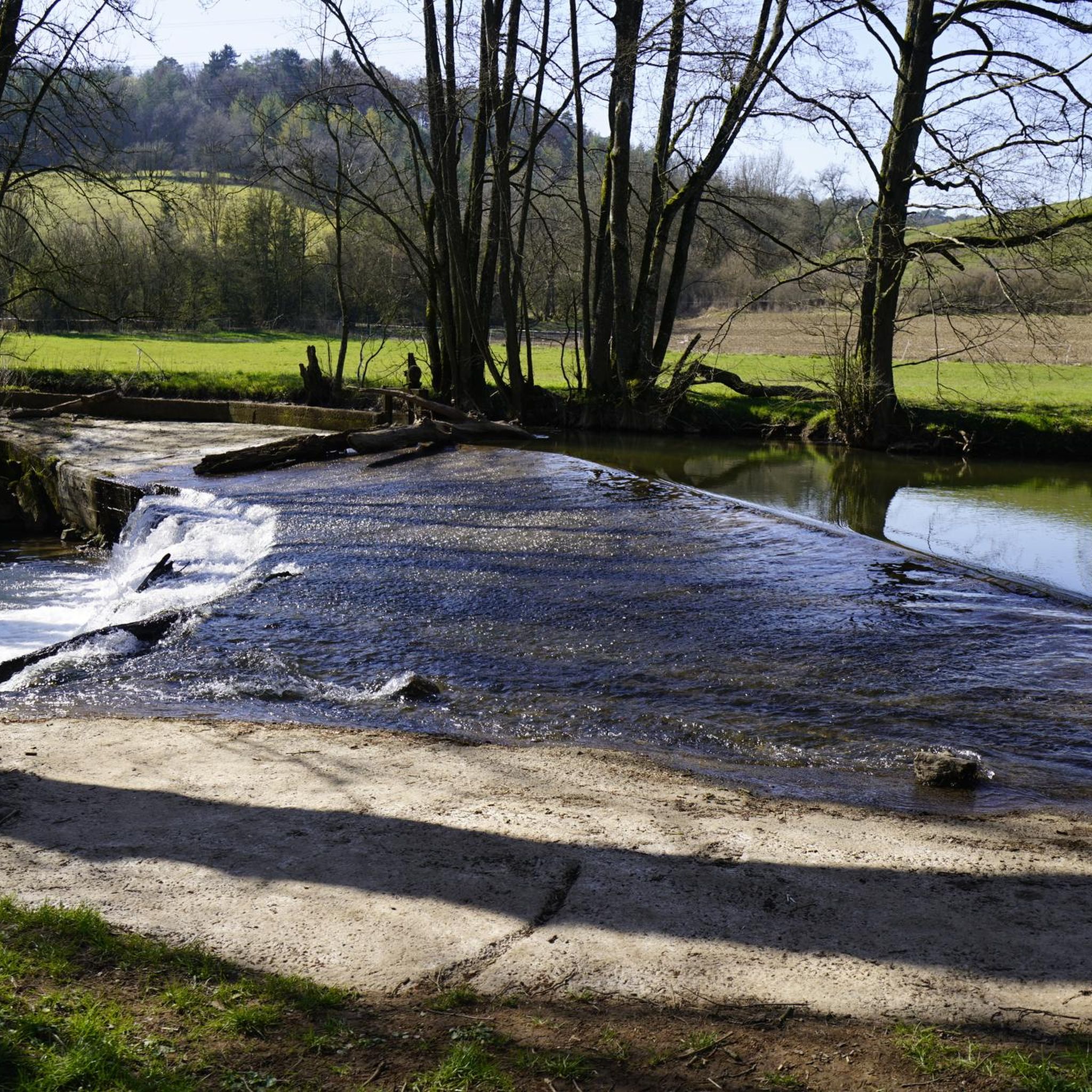
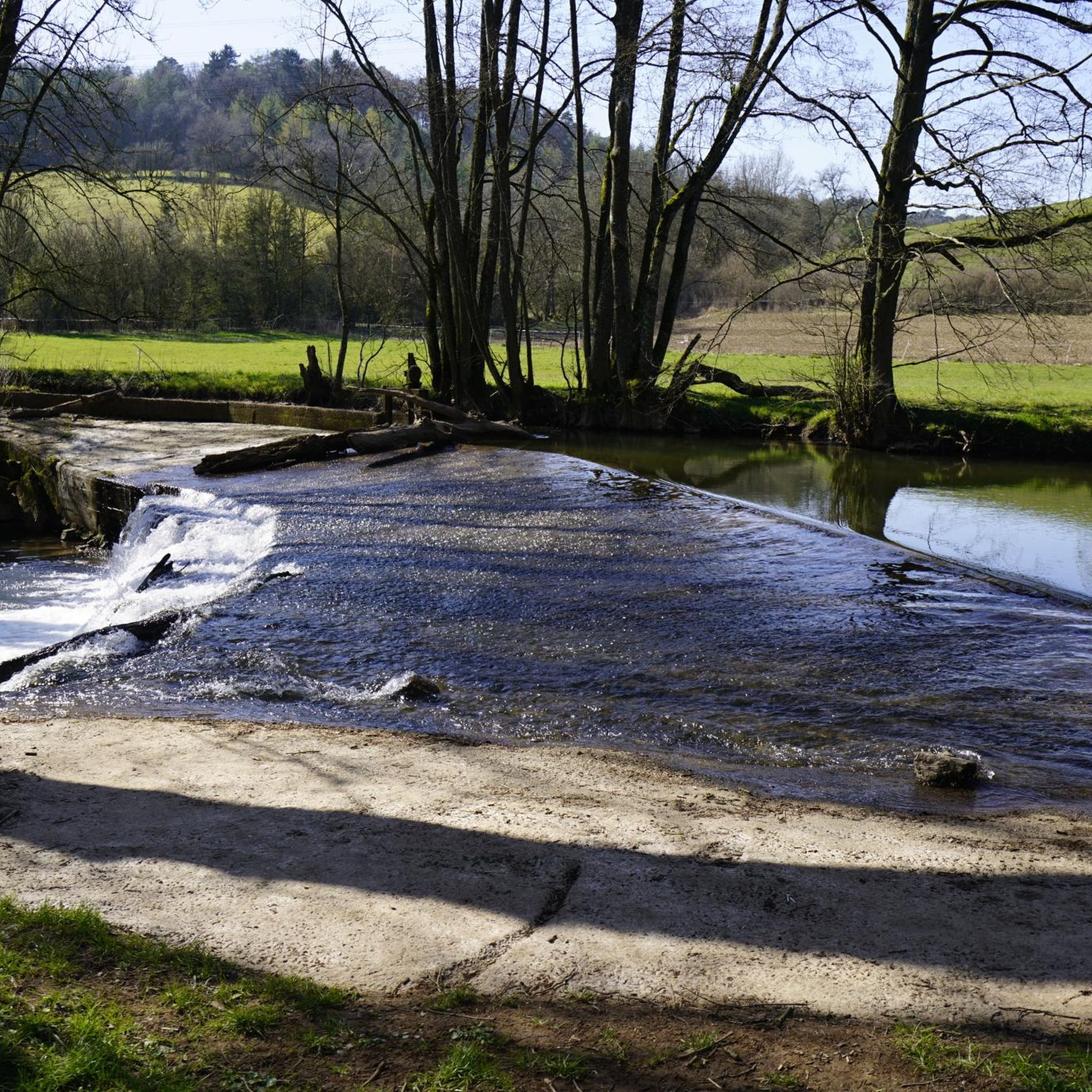
🌊 The Nims River The Nims is an idyllic river that flows through the Bitburg-Prüm district in the Eifel region: The Nims is an approximately 61 km long left tributary of the Prüm. It rises near Weinsheim and flows south, past towns such as Schönecken and Bitburg, before joining the Prüm below Irrel.
1
0

Beautiful romantic ensemble of the Nims river with its weirs and fortifications and the mighty castle complex in the style of a moated castle.
2
0
Unfortunately, it was closed during my visit, but it is a very beautiful and imposing fortification in the style of a moated castle.
4
0
A very beautiful complex in the style of a moated castle, with the river Nims flowing directly past it.
5
0

Take a break and try the good cuisine
1
0

Rittersdorf Castle, a charming moated castle dating back to the 13th century, was first documented in 1263. Originally built as a fortified house for the Abbey of St. Maximin in Trier, it served to secure the trade routes between Trier, Bitburg, and Cologne. The imposing 26-meter-high keep, whose construction was approved by King Rudolf of Habsburg in 1290, still dominates the castle's appearance today. In the 16th century, the complex was expanded to include residential buildings with round towers. Today, the castle houses a restaurant, a small museum, and even a registry office, located in the historic Knights' Hall.
4
0
Frequently Asked Questions
What historical periods do the castles around Bitburg represent?
The region around Bitburg offers a journey through various historical periods. You can explore ancient Roman fortifications in Bitburg itself, dating back to the 4th century AD. Medieval castles like Hamm Castle and Prümerburg Ruins showcase military architecture from the 11th to 14th centuries. Additionally, Rittersdorf Castle provides insight into late medieval and Renaissance living, while Malberg Castle is a significant example of Baroque architecture.
Are there family-friendly castles to visit near Bitburg?
Yes, several castles are suitable for families. Rittersdorf Castle is noted as family-friendly and offers a local history museum and medieval banquets that can be engaging for all ages. Hamm Castle is also categorized as family-friendly, offering a glimpse into medieval fortifications.
What makes Rittersdorf Castle a notable visit?
Rittersdorf Castle is a well-preserved, approximately 700-year-old moated castle located just three kilometers north of Bitburg. It offers an impressive insight into late medieval and modern Renaissance living culture, largely unadulterated since its construction. The castle houses a small local history museum, a branch of the registry office in its Gothic Knights' Hall, and a private restaurant that hosts medieval banquets with costumed servants and entertainers.
Can I explore ancient Roman fortifications in Bitburg?
While not a traditional medieval castle, Bitburg itself has significant Roman fortifications. The city began as the Roman road station of Vicus Beda, fortified in the 4th century AD with substantial stone walls and towers. You can explore remnants of these massive stone walls, and an archaeological trail in the inner city provides information boards and augmented reality to visualize the ancient structures.
What kind of views can I expect from the castles around Bitburg?
Many castles offer scenic views of the surrounding landscape. From Prümerburg Ruins, you can enjoy a fantastic view over the Prüm valley from the top of its pentagonal tower. Malberg Castle, situated prominently above its village on a headland, provides scenic views of the Kyllburger Waldeifel landscape and the Kyll river bend.
Are there hiking trails near the castles around Bitburg?
Yes, the region offers various hiking opportunities. For easy walks, you can explore routes like the 'Mariengrotte Albach Waterfall – View of Bitburg loop' or the 'Bridge Over the Nims River – Tranquil Stream in the Eifel loop'. You can find more details and routes in the Easy hikes around Bitburg guide.
What is special about Malberg Castle's architecture?
Malberg Castle is a significant example of Baroque architecture in the region. Its most distinctive feature, visible from afar, is a Baroque Palladian reception area, unique in Rhineland-Palatinate, which was modeled after the Villa Valmarana in Italy. This blend of German and Italian design influences makes its architecture particularly noteworthy.
Can I go gravel biking near the castles?
Absolutely! The Bitburg region is great for gravel biking. You can find routes like the 'View over Utscheid – Fischbach Chapel loop' or the 'Bitburg Bike Path – Bitburg Airfield Cycle Path loop'. Explore more options in the Gravel biking around Bitburg guide.
What is the oldest fortification near Bitburg?
While Hamm Castle is a medieval fortification first mentioned in 1052, it stands on the site of an even older, early medieval refuge castle. Additionally, the Celtic Fortress Wachenbach, dating back to around 500 BC to 500 AD, represents an even more ancient form of fortification in the area, predating the Roman and medieval structures.
Are there dining options available at any of the castles?
Yes, Rittersdorf Castle houses a private restaurant serving fine country cuisine. They also regularly host medieval banquets, offering a unique dining experience within the historic setting.
What do visitors enjoy most about the castles around Bitburg?
Visitors appreciate the diverse historical insights, from Roman fortifications to well-preserved medieval and Renaissance structures. The castles are valued for their impressive architecture, scenic views, and the opportunity to experience history firsthand. The komoot community has shared over 700 photos and given more than 400 upvotes, highlighting the region's appeal.
What is the best time of year to visit the castles around Bitburg?
The castles around Bitburg can be visited year-round, but spring and autumn offer particularly pleasant weather for exploring the outdoor grounds and nearby hiking trails. The lush greenery of spring and the vibrant colors of autumn enhance the scenic beauty of the castle surroundings. Summer is also popular, though it can be warmer, while winter visits offer a unique, often quieter, experience.
Most popular routes around Bitburg
Most popular attractions around Bitburg

Get inspired with the komoot mobile app


Explore more
Looking for the best castles somewhere else? Discover other guides around Bitburg:
