The best walks and hikes around Ebermannsdorf
4.7
(62)
334
hikers
46
hikes
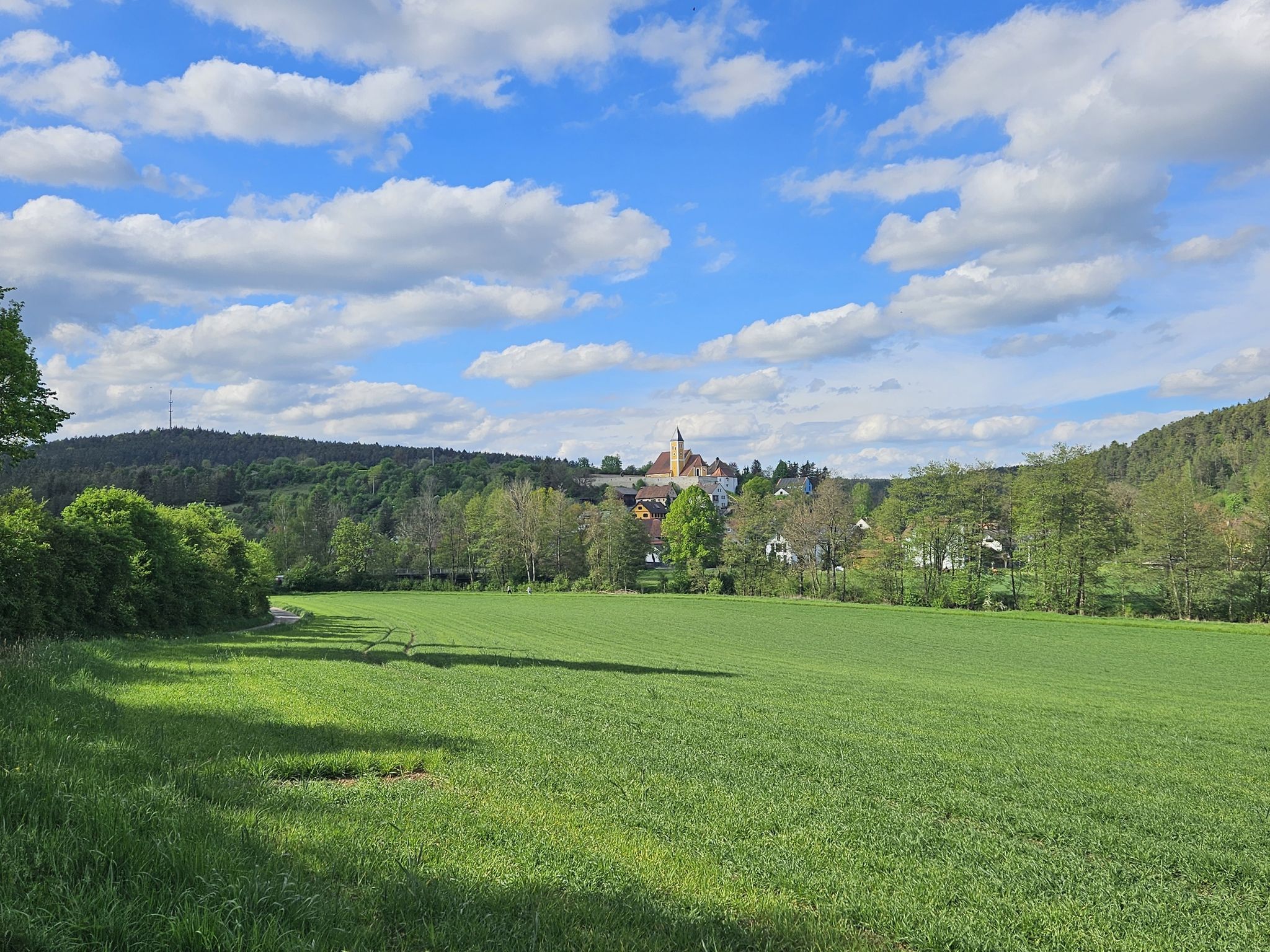
Hiking trails around Ebermannsdorf are situated in the Upper Palatinate Jura, characterized by rolling hills and extensive green forests. The region is traversed by the Vils River, with paths winding through its valley. Diverse landscapes include impressive rock formations and romantic Jura valleys, offering varied terrain for outdoor activities.
Best hiking trails around Ebermannsdorf
- The most popular hiking route is Mariahilfberg View – Elsenbach Valley loop from Ebermannsdorf, a 6.0 miles (9.6 km) trail that takes 2 hours 38…
Last updated: October 8, 2026
4.6
(10)
33
hikers
9.62km
02:38
150m
150m
Moderate hike. Good fitness required. Easily-accessible paths. Suitable for all skill levels.
4.6
(10)
34
hikers
Easy hike. Great for any fitness level. Easily-accessible paths. Suitable for all skill levels.

5.0
(5)
18
hikers
Easy hike. Great for any fitness level. Easily-accessible paths. Suitable for all skill levels.
5.0
(1)
12
hikers
11.2km
02:59
120m
120m
Moderate hike. Good fitness required. Easily-accessible paths. Suitable for all skill levels.
5.0
(7)
14
hikers
7.59km
02:02
90m
90m
Moderate hike. Good fitness required. Easily-accessible paths. Suitable for all skill levels.
Get access to more routes and recommendations from other explorers.
Already have an account?
Our route recommendations are based on thousands of hikes, rides, and runs completed by other people on komoot.
Start today with a free account
Your next adventure awaits.

Other adventures around Ebermannsdorf

Tips from the Community

Located in the middle of the forest, this shrine has been created around a lovely spot with benches and flowers, perfect for relaxing.
1
0
Isolated location, right on the roadside, surrounded by beautiful nature.
1
0
Magnificent views dominate the landscape here.
0
0

Eberburg Castle Ruins Ebermannsdorf originally belonged to the territory of the Margraves of Ammerthal. After their extinction, it was donated by Emperor Henry II to the Bishopric of Bamberg. Eppo von Ebermannsdorf is mentioned for the first time in 1079, and he operates as a noble knight. In 1108, Meribot von Ebermannsdorf - presumably a son - sold a nearby estate to the Bishop of Regensburg. Meribot and his brothers remained close to the Bishops of Bamberg and are mentioned on many of their documents. They can also be found in the entourage of other great noble families: the Wittelsbachs, the Margraves of Cham and the Margraves of Hohenburg. From 1200 onwards, however, little is heard of them. In 1309, Albrecht, the last knight to call himself "von Ebermannsdorf", died. In 1338, the castle appears to be divided between various minor noble lines, as Ulrich the Imsteter sold his third of the property to Count Palatine Rupert. Other owners: Dietrich Tanlacher in 1377, Heinrich von Kummersbrück (died 1390), Conrad Kemnater (1410). From 1501, the Fuchssteiners were in charge of the Ebernburg. Johann Fuchssteiner zu Ebermannsdorf was even chancellor of Count Palatine Friedrich, but was imprisoned in the Amberg "Fuchssteinerturm" in 1522 after breaking his oath. He is said to have taken bribes when the offices of Lauf and Hersbruck were sold. Released in 1525, he was imprisoned in Regensburg shortly afterwards, where he died in 1536. The Ebernburg fell into disrepair and was abandoned in favor of a new castle in the village, which was built in the 17th century. It is now inhabited by the von Eyb family, who bought the castle around 1880 and also own the castle ruins. The main thing worth noting is the keep, which dominates the centre of the Eberburg castle, slightly offset to the right. The octagonal, 16-metre-high tower's masonry technique dates back to the Salian period around 1100: the Ebermannsdorf tower is therefore one of the oldest preserved keeps in the Upper Palatinate. The tower was accessed via a round-arched high entrance. Two beam holes mark the starting points of a detachable wooden staircase. The interior is narrow and dark due to the walls being over 2 metres thick - it is only lit by a narrow slit of light - and has surprisingly comfortable furnishings: a fireplace and a toilet shaft running through the wall, which is clearly visible at the foot of the keep. Source: Extracts from www.burgenseite.de
3
0
Filial Church of St. John the Baptist The church as we see it today is the result of the new building based on a castle chapel from around 1250, some of whose substance has been preserved or reused. Today's St. John's Church was built on behalf of the Electoral Court Chamberlain, Johann Joseph von Dyer, by Ignaz Anton Gunezrhainer and his stepfather Johann Mayr, both master masons in Munich. 300 years ago, from May 1721, Munich craftsmen were on site here. The castle was also built by the Gunezrhainer workshop, which is why all the buildings form a self-contained ensemble. The interior shows a rare conical narrowing from the nave to the end of the choir, which is due to the previous building. In the Apis, the high altar is impressive: the large painting by Johann Adam Müller depicts the baptism of Jesus by John. It is elaborately framed with a wide architectural and picture frame and additionally surrounded by a floor-to-ceiling blue curtain with gold fringes in stucco work. Two powerful putti hold up this curtain and thus open up the view of the Theatrum Sacrum. Cuddled up to the tabernacle, four seraphim stand and praise the divine glory, present in the Eucharist, while the life-size sculptures of Abraham and Moses represent God's eternal covenant with his people. The church was extensively renovated in 1911. The recently completed renovation (between 2016 and 2020) restored the 1911 colors to the altar tables and pulpit. For the room shell, i.e. the wall design with stucco, pilasters and wood paneling, the color scheme from the period of construction from the restoration-supervised findings was decisive. The restoration of the stone steps and the floor also followed the period of construction findings. The figural decorations were cleaned. The necessary new pieces were designed by the Munich architect Franz Steinberger Source: www.pfarrei-theuern-eb-pi.de
5
0
Ebermannsdorf Castle The local noble family of Ebersdorf has been documented here since the early 12th century. They lived in the Eberburg. In 1480, Jakob Kemnather zu Ebermannsdorf is mentioned with the "lower seat" as a fief of his sister Agnes, widow of Jakob Kemnather zu Ebermannsdorf. A new seat had therefore already been built next to the old castle at that time. The current castle is, as the year "1723" shows, a baroque building from the early 18th century. It was built under the manor owner Johann Josef von Dyrr using the old walls according to plans by Ignaz Anton Gunetzrhainer. It is an elongated two-storey solid building with a hipped roof, a central projection with a mansard roof. A transverse building with a mansard roof and a stair tower with a hipped roof is aligned towards the castle church. The castle building has a plaster structure. The complex is closed off by a castle wall, also with plasterwork, basket-arch gates and a niche figure. The castle was renovated in 1977/78. Since 1963, the castle has been owned by a branch of the Barons von Eyb family. The complex also includes the former castle church, now the branch church of St. John the Baptist, which was also built in 1721-23 according to plans by Ignaz Anton Gunetzrhainer. It is a hall building with a mansard hip roof and a recessed tower covered by a tower cap. It also has a segmental gable portal and a plasterwork structure. The church was renovated inside and out in 2018-2020. A special feature is the historic organ from the 19th century, which is attributed to Friedrich Specht. Source: Excerpts from www.wikipedia.de
5
0

In 1972, the Amberg-Sulzbach district founded the supra-regional Mining and Industry Museum in Theuern. Its primary mission is to research, document, and present the mining and industrial history of the entire eastern Bavarian region. The Mining and Industry Museum is housed in the Hammerherrenschloss (Hammer Lord's Castle), built in 1781. In addition, regionally typical industrial monuments were relocated to Theuern: an ironworks, a glass grinding and polishing works (which has also housed the Eastern Bavarian Electricity Museum since 1996), and a winding tower with an engine house.
10
0
These two old mine railways are a reminder of the era of ore mining and steel production in the region. The Ore Trail runs past them.
8
0
Frequently Asked Questions
How many hiking trails are there around Ebermannsdorf?
There are over 45 hiking trails around Ebermannsdorf, offering a diverse range of experiences. You'll find options for all skill levels, from easy strolls to more challenging routes through the Upper Palatinate Jura.
What is the best time of year to go hiking in Ebermannsdorf?
The best seasons for hiking in Ebermannsdorf are spring, when nature blossoms and the Vils river valley comes alive, and autumn, with its vibrant colorful leaves and mild temperatures. The varied terrain of rolling hills and forests is enjoyable in both seasons.
Are there any easy, family-friendly hiking routes in Ebermannsdorf?
Yes, Ebermannsdorf offers several easy and family-friendly routes. A great option is the Bruder-Konrad Church – Eberburg Castle Ruins loop from Ebermannsdorf, an easy 5.8 km path that passes historical sites. The Vils River Valley also features well-marked trails suitable for families due to their relatively flat terrain.
Are there any circular hiking routes available?
Many of the trails around Ebermannsdorf are circular, allowing you to start and end at the same point. For example, the Mariahilfberg View – Elsenbach Valley loop from Ebermannsdorf is a moderate 9.6 km circular trail offering scenic views.
What kind of natural features can I expect to see on the trails?
Ebermannsdorf is situated in the Upper Palatinate Jura, so you'll encounter diverse landscapes including dense forests, impressive rock formations, and romantic Jura valleys. The Vils River Valley is another significant feature, with trails winding alongside the river. The region is also known for its natural springs.
Are there any historical sites or castles to explore while hiking?
Absolutely. The region is rich in history. You can explore the Eberburg Castle Ruins on an easy loop trail. Another recommended destination is Theuern Castle, a historic building accessible via a scenic path. The long-distance Erzweg trail, which passes nearby, also connects sites of former iron ore processing and hammer castles.
What do other hikers say about the trails in Ebermannsdorf?
The trails in Ebermannsdorf are highly rated by the komoot community, with an average score of 4.7 stars from over 50 reviews. Hikers often praise the well-maintained and varied paths, the beautiful natural scenery, and the options available for different ability levels.
Are there any trails that feature unique artistic elements?
Yes, the Wood Sculpture Trail loop from Ebermannsdorf is a moderate 11.2 km route that leads through forests and features various artistic elements, offering a unique blend of nature and creativity.
Are there any specific points of interest or viewpoints along the trails?
Many trails offer scenic viewpoints over the landscape, such as the Mariahilfberg View. You can also find several summits nearby, including the Hirmerberg Summit Memorial Cross and Steinköppl Summit, which provide expansive views of the Upper Palatinate Jura.
Can I find trails that lead to lakes or water features?
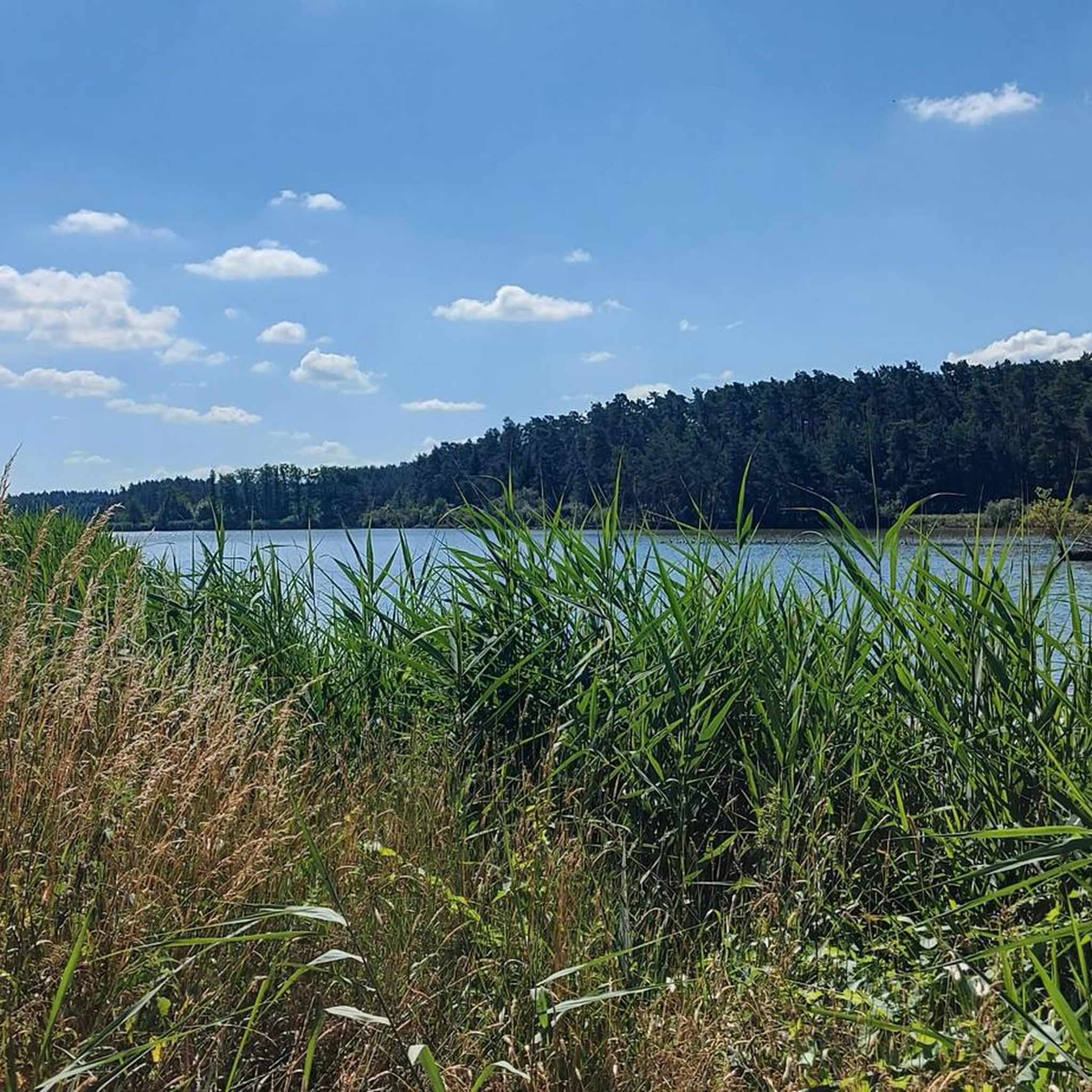
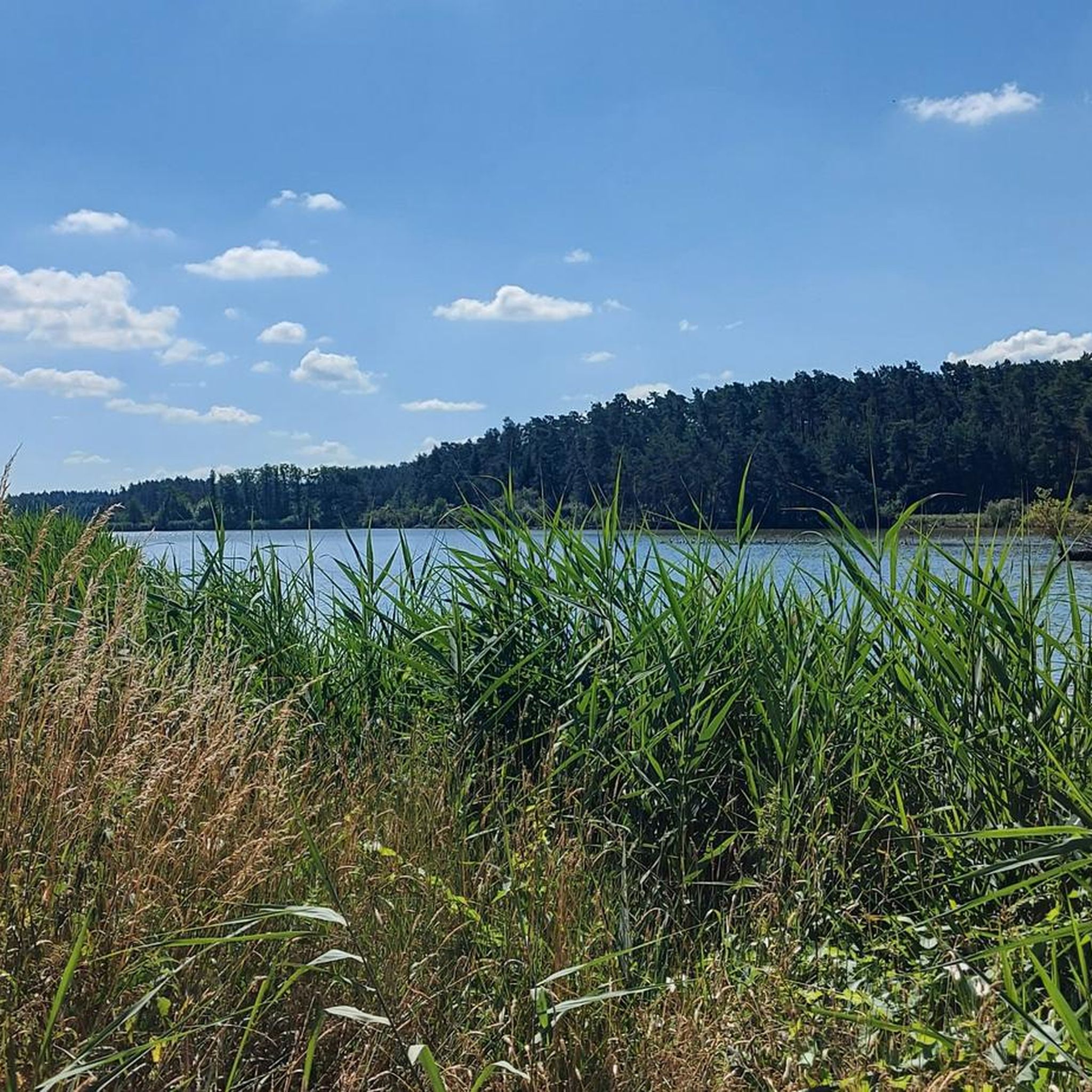
Yes, the region around Ebermannsdorf features several lakes and water bodies. You can find highlights like Klausensee, Haidweiher Water Ski Club, and Teufelsweiher, which can be incorporated into your hiking plans for a refreshing experience by the water.
Are there any trails that pass by cultural or industrial heritage sites?
The Theuern Cultural Palace – Old Quarry loop from Ebermannsdorf is a moderate 7.6 km route that takes you past the Theuern Cultural Palace and an old quarry, connecting you with the area's industrial and cultural past. The broader Erzweg also highlights the region's mining history.
Most popular routes around Ebermannsdorf
Most popular attractions around Ebermannsdorf

Get inspired with the komoot mobile app


Explore more
Browse the best Hikes in other regions.
