The best walks and hikes around Las Popioły
4.7
(65)
3,289
hikers
187
hikes
Hiking around Las Popioły offers varied terrain within a 65-hectare forest complex in southern Łódź, Poland. The area features elevations with both gentle and steep sections, providing options for different fitness levels. A prominent natural feature is the abundance of over 100-year-old common pines, creating a dense canopy. Hikers can choose between paved and unpaved forest paths.
Best hiking trails around Las Popioły
- The most popular hiking route is Stawy Stefańskiego loop from Chojny, a 5.7 miles (9.2 km) trail that takes 2 hours 25 minutes to complete. This moderate route explores the forest's edge near the recreational Stefański Ponds.
- Another top favourite among local hikers is Stawy Jana loop from Chojny, an easy 3.2 miles (5.2 km) path. This route offers a gentle walk around Stawy Jana, suitable for a shorter outing.
- Local hikers also love the OFF Piotrkowska – Poznański Palace loop from Łódź Pabianicka, a 9.2 miles (14.8 km) trail leading through varied urban and green spaces, often completed in about 3 hours 50 minutes.
- Hiking around Las Popioły is defined by diverse terrain, mature pine forest, and historic villas. The network offers options for different ability levels, from easy walks to more demanding routes.
- The routes in Las Popioły are highly rated by the komoot community with an average score of 4.8 stars from over 40 reviews. More than 2,300 hikers have used komoot to explore Las Popioły's varied terrain.
Last updated: June 24, 2026
5.0
(1)
14
hikers
9.21km
02:23
50m
50m
Moderate hike. Good fitness required. Easily-accessible paths. Suitable for all skill levels.
5.0
(1)
14
hikers
5.35km
01:22
20m
20m
Easy hike. Great for any fitness level. Easily-accessible paths. Suitable for all skill levels.

Sign up for free
3.8
(5)
137
hikers
2.52km
00:38
10m
10m
Easy hike. Great for any fitness level. Easily-accessible paths. Suitable for all skill levels.
3
hikers
3.76km
00:58
10m
10m
Easy hike. Great for any fitness level. Easily-accessible paths. Suitable for all skill levels.
15
hikers
Moderate hike. Good fitness required. Easily-accessible paths. Suitable for all skill levels.
Get access to more routes and recommendations from other explorers.
Sign up for free
Already have an account?
Our route recommendations are based on thousands of hikes, rides, and runs completed by other people on komoot.
Start today with a free account
Your next adventure awaits.
Login or Signup
Tips from the Community

The building was constructed between 1896 and 1902 according to the design by Feliks Nowicki. The designer of the steel structures was engineer Walenty Dubeltowicz (1844–1913), the first director of the horse-drawn tram company in Warsaw (in the years 1881–1883), known primarily as the most experienced builder of steel bridges in the Kingdom of Poland. Besides this investment, he also collaborated on the construction of the municipal slaughterhouse in Warsaw. Originally, the building was the headquarters of the management of the Joint-Stock Company of Municipal Slaughterhouses in Russia. After 1918, the slaughterhouse came under private management.
0
0
The park was created between 1904-1910 according to the design of Teodor Chrząński and Walerian Kornenberg, in 1910 on the initiative of the city authorities, on the grounds of former city forests, which extended much further north than the current park (they included, among others, the grounds of the current hospital, church, and film studio). It is one of the largest and most beautiful parks in Łódź. The former name was "Garden on Pańska Street". Since 1917, the park has been named after Prince Poniatowski. The area of the park has decreased over the years. First, a military hospital was built at the corner of the former Anna Street (now Mickiewicza Street) and Pańska Street (Żeromskiego Street), and in 1925, the construction of the Church of Our Lady of Victory began at the intersection of Łąkowa and Anna Streets. In the 1970s, the park was cut by a wide strip of the current Mickiewicza Avenue and currently has a shape close to a rectangle.
0
0
A small cemetery with several dozen graves of Soviet and Polish soldiers who fell, among others, on January 19, 1945, during the assault on Łódź. Between 1945 and 1992, the Monument of Gratitude to the Red Army stood next to it. During the dismantling of the monument, further remains of Soviet officers were found underneath, which were buried in the neighboring cemetery.
0
0

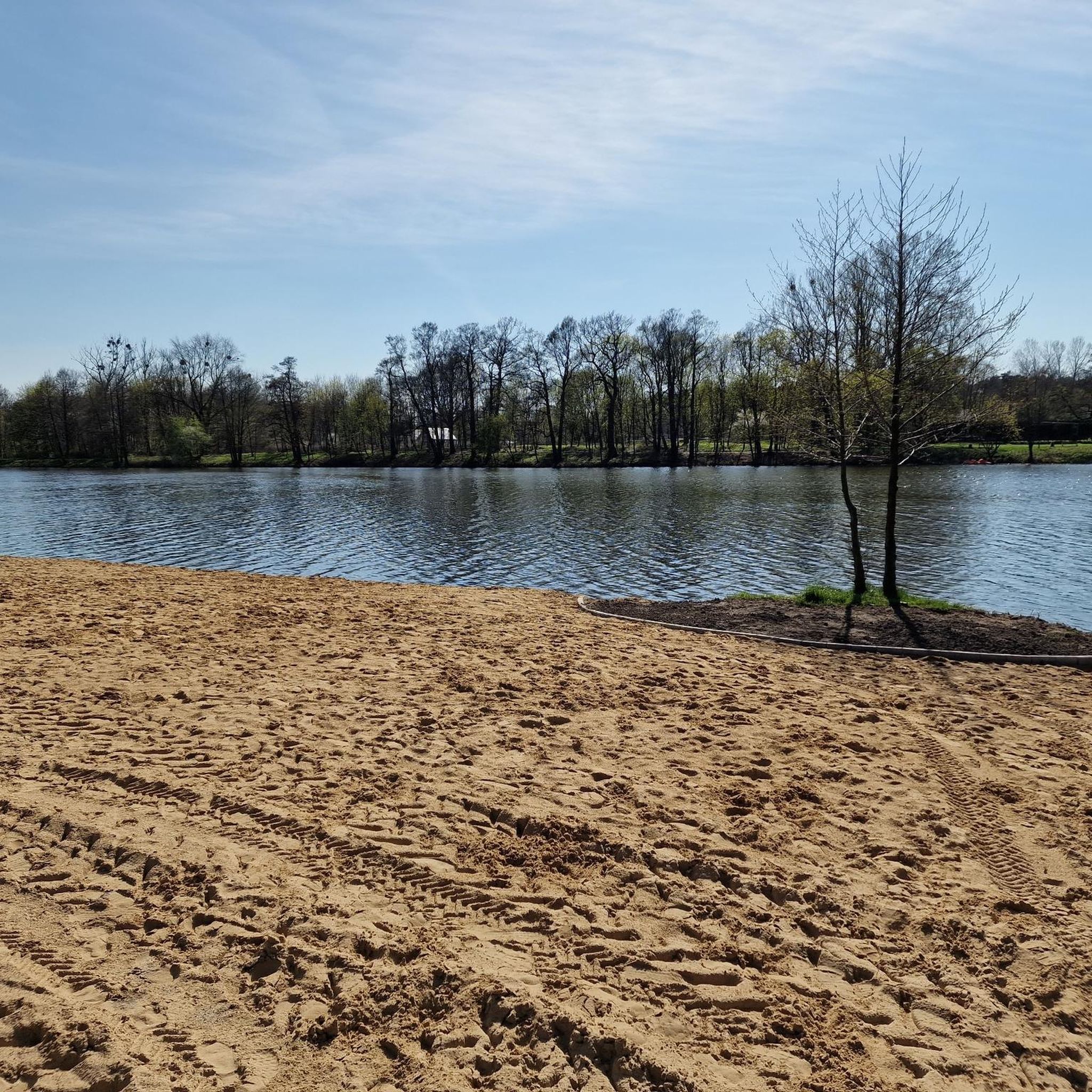
A park with a small body of water, a bit of a break from the city.
0
0
The park is located in Łódź, in the Łódź Górna district, between Rzgowska, Paradna and Kosynierów Gdyńskich streets. The park, cut by an irregular system of paths, is unevenly wooded and has extensive lawns. Among the trees, five are particularly valuable. These are a common ash and four small-leaved lime trees aged 160–180 years. In the northern part of the park there is a historic manor house, facing south. An alley of trees leads to it from Rzgowska Street. The manor house was built in the late 18th century by Benedykt Górski. It is a small, single-storey building erected from larch logs with a log construction, plastered. It is covered with a shingled, broken, Polish roof.
0
0
The park is located in Łódź, in the Łódź Górna district, between Rzgowska, Paradna and Kosynierów Gdyńskich streets. The park, cut by an irregular system of paths, is unevenly wooded and has extensive lawns. Among the trees, five are particularly valuable. These are a common ash and four small-leaved lime trees aged 160–180 years. In the northern part of the park there is a historic manor house, facing south. An alley of trees leads to it from Rzgowska Street. The manor house was built in the late 18th century by Benedykt Górski. It is a small, single-storey building erected from larch logs with a log construction, plastered. It is covered with a shingled, broken, Polish roof.
1
0

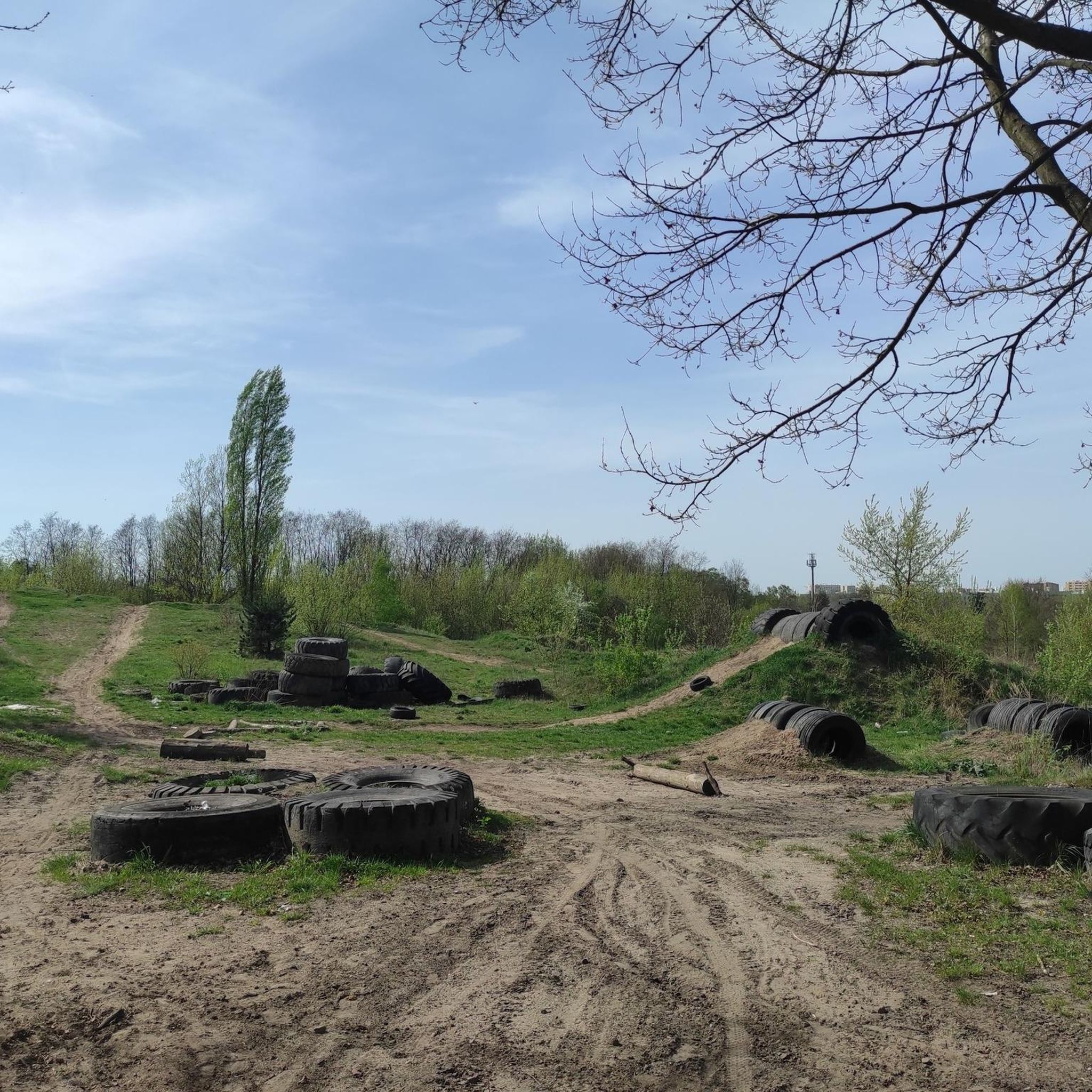
Quite a nice atmosphere. Probably even more 'interesting' on a gloomy and foggy autumn afternoon.
1
0

It's worth watching before it collapses. Few buildings of this type still exist.
3
0
Frequently Asked Questions
How many hiking trails are available in Las Popioły?
Las Popioły offers a wide selection of hiking routes, with over 150 trails to choose from. This includes a diverse range of options, from easy walks to more challenging paths, ensuring there's something for every hiker.
What kind of terrain can I expect when hiking in Las Popioły?
The forest features varied terrain, including both gentle and steeper sections, making it suitable for different fitness levels. You'll find a mix of paved and unpaved forest paths, winding through a dense canopy of over 100-year-old common pines.
Are there easy hiking options suitable for beginners or families?
Yes, Las Popioły is very family-friendly, with over 119 easy routes. A great option for a gentle outing is the Stawy Jana loop from Chojny, which is 3.2 miles (5.2 km) long and offers a pleasant walk around Stawy Jana.
Are dogs allowed on the hiking trails in Las Popioły?
Yes, Las Popioły is a popular spot for dog walking. The varied paths and natural environment provide an excellent setting for you and your canine companion to enjoy. Please ensure your dog is kept under control, especially around other hikers and wildlife.
What are some notable natural features or attractions to see along the trails?
Beyond the mature pine forest, you can explore historic summer villas dating back to the late 19th and early 20th centuries, such as Villa Klara. The nearby Stawy Stefańskiego (Stefański Ponds) also offer a pleasant area for relaxation, which you can explore on routes like the Stawy Stefańskiego loop from Chojny.
Are there any circular hiking routes in Las Popioły?
Many of the trails in Las Popioły are designed as loops, offering convenient circular routes. For example, the Stawy Jana loop from Piastów-Kurak is a moderate 5.3 miles (8.6 km) circular path that allows you to start and end at the same point.
How can I get to Las Popioły using public transport?
Las Popioły is located in the southern part of Łódź, Poland, and is accessible via public transport. Specific bus or tram lines will depend on your starting point within Łódź. We recommend checking local public transport schedules for the most current routes to the forest's vicinity.
Where can I park my car when visiting Las Popioły?
There are various parking areas available around the perimeter of Las Popioły, particularly near popular access points and recreational zones. These are typically well-marked, offering convenient starting points for your hike.
What do other hikers enjoy most about hiking in Las Popioły?
The area is highly rated by the komoot community, with an average score of 4.8 stars from over 40 reviews. Hikers often praise the tranquil escape from urban life, the varied terrain, and the charming atmosphere provided by the dense pine forest and historic elements.
Are there any longer, more challenging hikes available?
While many routes are easy to moderate, there are options for longer outings. For instance, the Lublinek Forest Glade Pond – Bielice Ponds loop from Piastów-Kurak is a moderate 6.7 miles (10.9 km) trail that takes around 2 hours 45 minutes, offering a more extended exploration of the area.
Are there cafes or places to eat near the hiking trails?
While Las Popioły itself is a natural forest complex, its proximity to Łódź means there are cafes, pubs, and restaurants in the surrounding neighborhoods. The nearby Stawy Stefańskiego area also often has seasonal food vendors or small eateries.
Most popular routes around Las Popioły

Get inspired with the komoot mobile app


Explore more
Browse the best Hikes in other regions.
