The best walks and hikes around Pekelný kopec
3.7
(5)
63
hikers
8
hikes
Hiking around Pekelný kopec, located in the okres Třebíč, offers a variety of trails through forested areas and past cultural landmarks. The region is characterized by its gentle hills and the presence of the beautiful forest mentioned in the guide. Routes often incorporate historical sites and natural water features, providing diverse scenery for hikers.
Best hiking trails around Pekelný kopec
- The most popular hiking route is Třebíč Castle and Basilica – Jewish Quarter of Třebíč loop from Třebíč, a…
Last updated: September 25, 2026
4.5
(2)
16
hikers
5.12km
01:23
60m
60m
Easy hike. Great for any fitness level. Easily-accessible paths. Suitable for all skill levels.
14
hikers
10.6km
02:52
140m
140m
Moderate hike. Good fitness required. Easily-accessible paths. Suitable for all skill levels.

3.5
(2)
6
hikers
6.51km
01:48
120m
120m
Easy hike. Great for any fitness level. Easily-accessible paths. Suitable for all skill levels.
6
hikers
7.42km
02:00
100m
100m
Moderate hike. Good fitness required. Easily-accessible paths. Suitable for all skill levels.
3
hikers
6.63km
01:48
90m
90m
Easy hike. Great for any fitness level. Easily-accessible paths. Suitable for all skill levels.
Get access to more routes and recommendations from other explorers.
Already have an account?
Our route recommendations are based on thousands of hikes, rides, and runs completed by other people on komoot.
Start today with a free account
Your next adventure awaits.
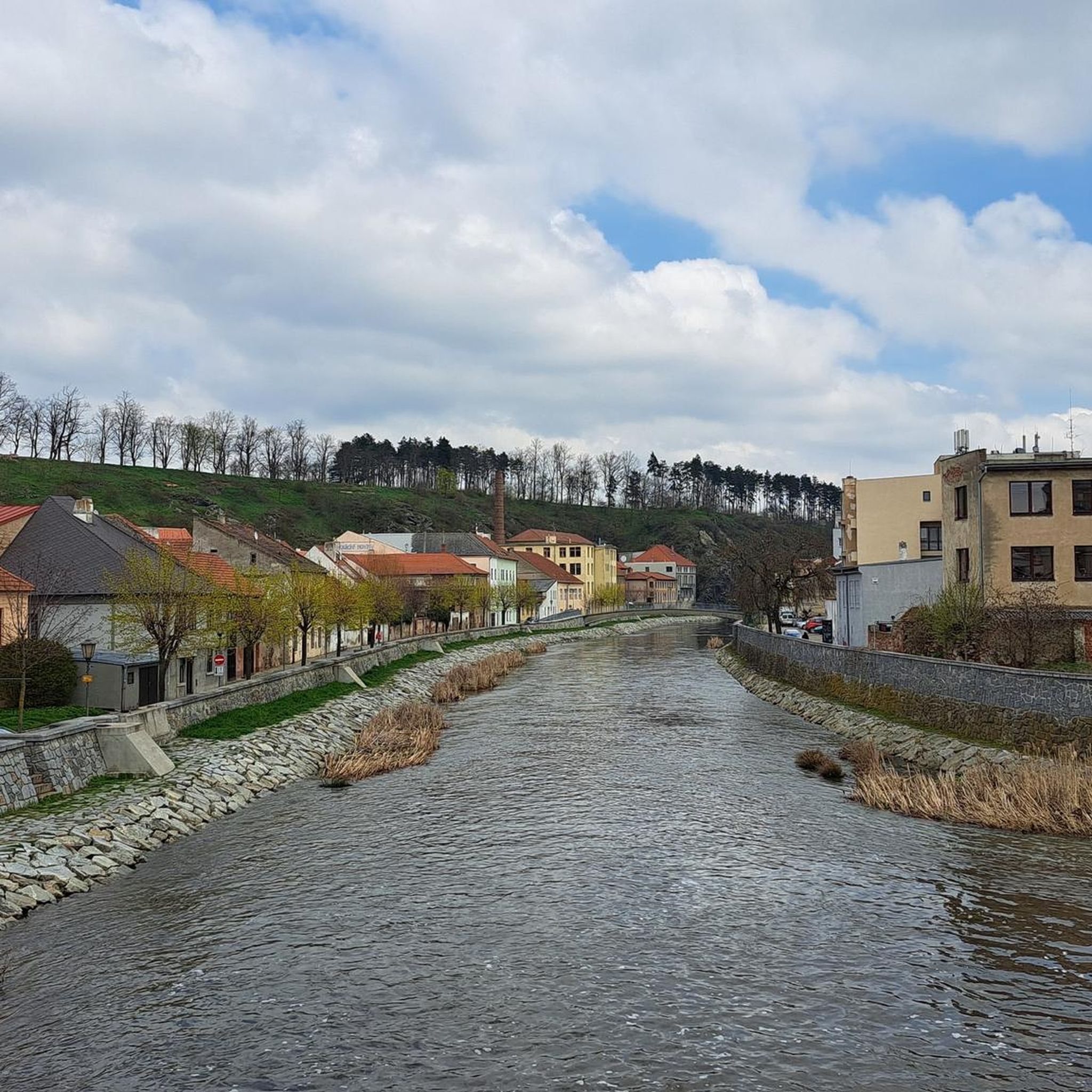
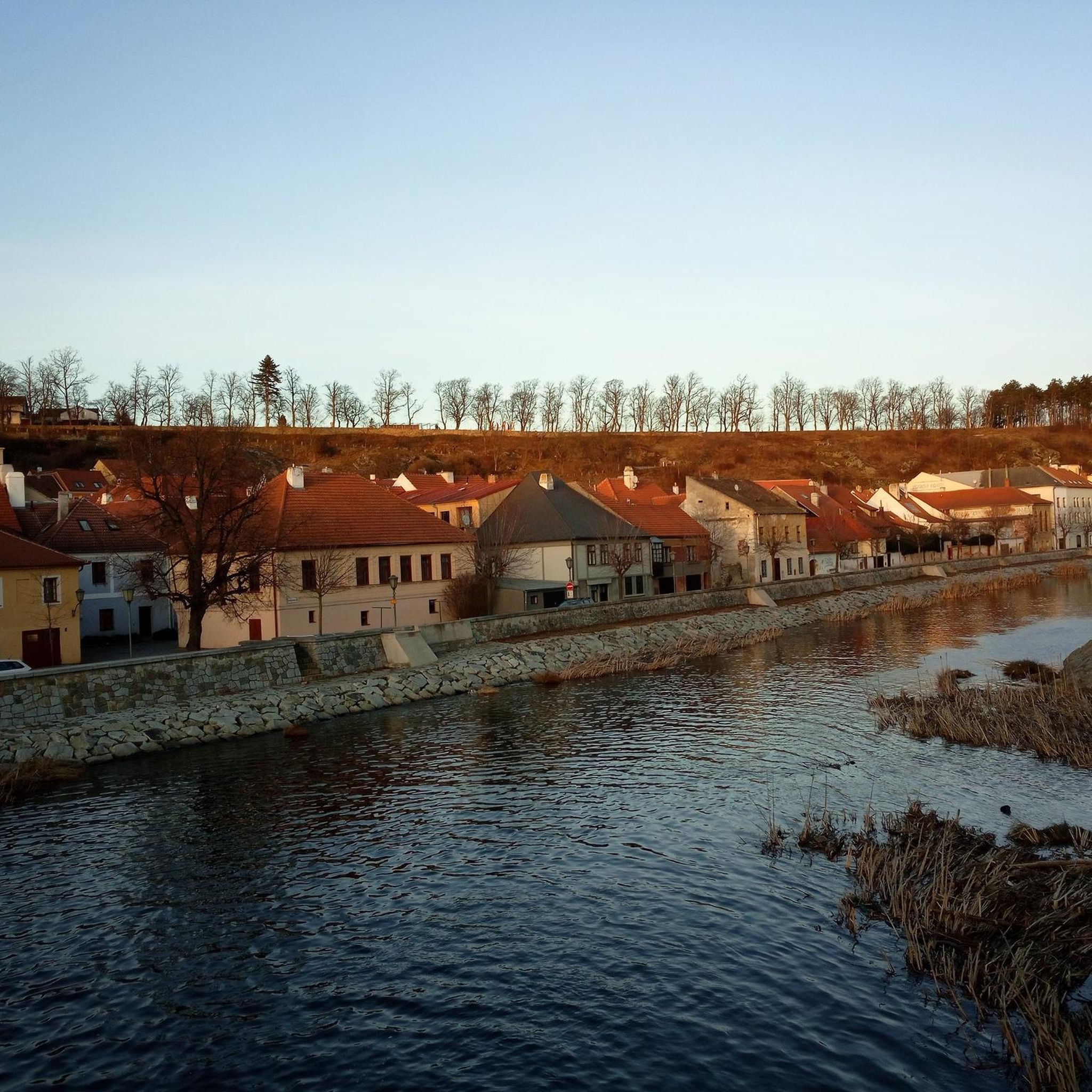
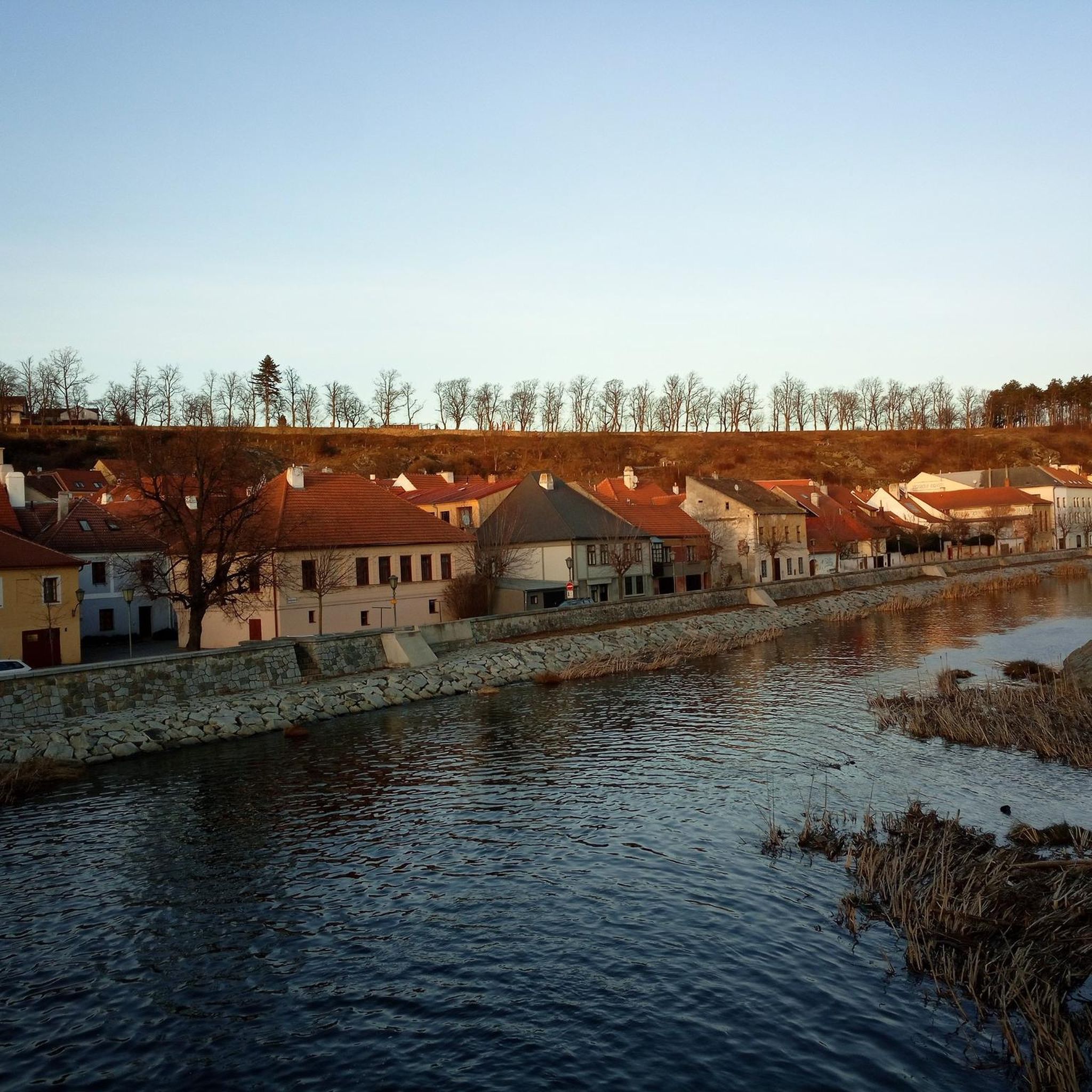
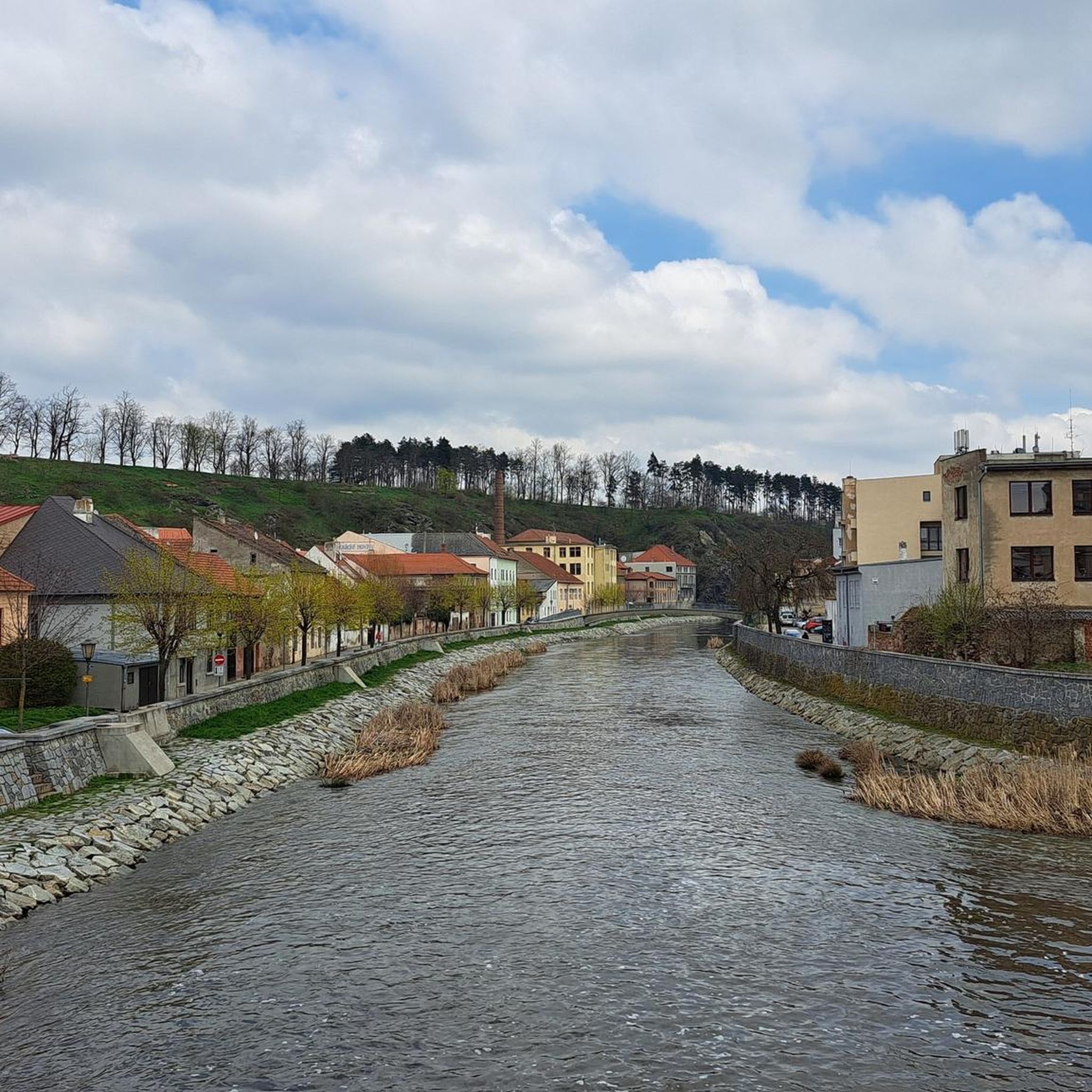
Tips from the Community

The sgraffito houses on Karlovo náměstí are among the most striking historical buildings in Třebíč. Particularly well-known are the Painted House and the Black House, whose richly decorated facades characterize the central square. In sgraffito, several layers of plaster are applied and then parts of the upper layer are scraped off, so that underlying layers become visible and create decorative patterns. The Painted House is particularly eye-catching with its artistic facade design featuring figurative and ornamental representations. The Black House is also adorned with a characteristic sgraffito facade. The two buildings demonstrate the wealth and importance of the historical burgher houses in Třebíč. Today, the sgraffito houses are among the most important sights on Karlovo náměstí. They lend the large town square a special historical character and are a beautiful example of the architecture and facade art of past centuries.
4
0
The Vordere Synagogue, in Czech Přední synagoga, is located in the historic Jewish quarter of Třebíč. It was built in the 17th century and is one of the most important testimonies of the city's Jewish history. The synagogue stands amidst the narrow historic alleys and is an important part of Třebíč's UNESCO World Heritage site. The Vordere Synagogue was formerly used as a prayer house for the Jewish community. After the Second World War, it lost its original religious function and was later used for other purposes. Today, it is an important historical building and a reminder of the Jewish community that lived in Třebíč for many centuries. Particularly interesting is the synagogue's location within the well-preserved Jewish quarter. Together with the historic residential houses, the Rear Synagogue, and the Jewish cemetery, it provides an impression of the former life of the Jewish population. A visit to the Vordere Synagogue can therefore be easily combined with a tour of the entire Jewish quarter.
4
0
The Jewish Cemetery of Třebíč is one of the city's most important historical sights and is part of the UNESCO World Heritage. It is located on a wooded hill above the Jewish Quarter and offers an impressive view of the city. The cemetery consists of an older and a younger part and comprises around 4,000 gravestones. The oldest preserved gravestones date from the 17th century, while the Jewish burial site is already mentioned in the 15th century. The gravestones are adorned with Hebrew inscriptions and various symbolic representations. They commemorate the Jewish families who lived in Třebíč for many centuries. Particularly impressive are the densely packed old gravestones, which lend the cemetery a special historical atmosphere. During the Second World War, the Jewish community of Třebíč was almost completely destroyed. Many Jewish inhabitants were deported to concentration and extermination camps and murdered. However, the cemetery was preserved and is today an important testament to the centuries-long history of the Jewish population in Třebíč. Together with the Jewish Quarter and the Basilica of St. Procopius, the Jewish Cemetery was added to the UNESCO World Heritage List in 2003. Today, it is not only a historical site but also a memorial that commemorates the life and fate of the Jewish community of Třebíč.
4
0
Karlovo náměstí, also called Karlsplatz, is the central and largest square in Třebíč. For centuries, it has formed the economic and social center of the city. Numerous historic townhouses, shops, cafes, and important buildings, testifying to Třebíč's long history, are located around the spacious square. Particularly striking are the historic houses with their richly decorated facades. A well-known building is the so-called Painted House, which catches the eye with its colorful and artistic facade design. The Black House is also among the interesting historic buildings on the square. Karlovo náměstí was named after Charles IV, the Bohemian king and later emperor. Today, the square is a popular meeting place for locals and visitors. From here, you can explore the old town and continue to many of Třebíč's sights. Due to its central location, Karlsplatz is particularly well-suited as a starting point for a tour of the historic city.
4
0
Třebíč Castle and St. Procopius Basilica together form one of the most important historical sites in the city. The castle was built from a former Benedictine monastery founded in the 12th century. After the dissolution of the monastery in the 16th century, the complex was converted into a castle. Today, the castle houses various exhibitions dedicated to the history of the region, the lives of the people, and nature. A special part of the complex is St. Procopius Basilica. It was built in the 13th century and combines Romanesque and Gothic elements. Particularly impressive are the monumental west portal, the crypt with its mighty columns, and the artistic vaulting. The basilica is one of the most important medieval structures in Třebíč. The castle, the basilica, the Jewish quarter, and the Jewish cemetery are closely linked to the city's history. The basilica and the former monastery represent Třebíč's Christian history, while the nearby Jewish quarter and cemetery commemorate the centuries-long history of the Jewish community. Together, these sites form an exceptional cultural ensemble that was added to the UNESCO World Heritage List in 2003.
4
0
St. Procopius Basilica in Třebíč is an impressive Romanesque-Gothic church and one of the city's most significant structures. It was built in the 13th century on the site of a Benedictine monastery that had already been founded in the 12th century. The basilica combines Romanesque and Gothic elements and is particularly known for its powerful architecture, the large west portal, and the artfully designed crypt. Inside, there are valuable historical building components and artworks. The crypt with its massive columns and vaults is particularly impressive. The basilica demonstrates the importance of the medieval monastery for the development of Třebíč and is an important testament to European architectural history. Together with the Jewish Quarter and the Jewish Cemetery, St. Procopius Basilica was added to the UNESCO World Heritage List in 2003. It is particularly exceptional that the Christian and Jewish monuments are located so close to each other in Třebíč. This reminds the city of the centuries-long shared history of different religious and cultural communities. Today, St. Procopius Basilica is one of Třebíč's most important sights and a popular destination for visitors interested in history, architecture, and culture.
4
0
The Jewish Quarter of Třebíč is one of the best-preserved Jewish quarters in Europe. It originated on the left bank of the Jihlava River and developed over several centuries into an important center of the Jewish community. The first written references to Jewish inhabitants in Třebíč date back to 1338. In 1723, the Jewish Quarter officially became a closed ghetto, where the Jewish population was spatially separated from the Christian inhabitants. This restriction ended in 1848 when Jews gained more rights and were allowed to settle outside the quarter as well. (visittrebic.eu) Today, more than a hundred historical buildings are preserved in the Jewish Quarter. These include two synagogues, the former Jewish Town Hall, the Rabbi's House, a school, an almshouse, and other residential and commercial buildings. Particularly characteristic are the narrow alleys, passages, balconies, and verandas that give the quarter its special historical character. (VisitCzechia) One of the most important sights is the Rear Synagogue, the so-called Zadní synagoga. There you can see historical wall paintings and an exhibition about the life and history of the Jewish community. Also worth seeing is the Jewish Cemetery, located outside the quarter, which has about 4,000 gravestones. The older part of the cemetery dates back to the 15th century. (UNESCO World Heritage Centre) However, the history of the Jewish Quarter is also marked by tragic fates. During World War II, a large part of Třebíč's Jewish population was deported to concentration camps and murdered. As a result, the town's centuries-old Jewish community almost completely disappeared. Today, the preserved quarter, the synagogues, and the cemetery serve as a reminder of this history. In 2003, the Jewish Quarter, together with the Jewish Cemetery and the Basilica of St. Procopius, was inscribed on the UNESCO World Heritage List. The ensemble is particularly significant because it documents the centuries-long history and coexistence of Jewish and Christian cultures in Třebíč.
4
0
The old town of Třebíč in the Czech Republic is a particularly worthwhile historical site. The town is famous above all for its exceptionally well-preserved Jewish Quarter, St. Procopius Basilica, and the old Jewish cemetery. These important historical buildings and the Jewish Quarter have been a UNESCO World Heritage site since 2003. The Jewish Quarter of Třebíč is one of the best-preserved Jewish Quarters in Europe. The narrow alleys, historic houses, and small passageways give a good impression of what life was like for the Jewish population in the past. Particularly worth seeing is the Rear Synagogue, which can be visited today. Also interesting is the old Jewish cemetery with several thousand gravestones, the oldest part of which dates back to the 15th century. Not far from the Jewish Quarter is the impressive St. Procopius Basilica. It was built in the 13th century and combines Romanesque and Gothic elements. Another landmark of the town is the Town Tower on Martinské náměstí, from which you can enjoy a beautiful view over Třebíč. The so-called Painted House on Karlovo náměstí also stands out with its richly decorated facade. For a tour of the old town, you should allow about two to three hours. It is particularly nice to first stroll through the Jewish Quarter, then visit the Jewish cemetery, and afterwards proceed to St. Procopius Basilica. The special feature of Třebíč is the immediate proximity of Jewish and Christian historical testimonies, which together show the unique history and cultural diversity of the town.
4
0
Frequently Asked Questions
How many hiking trails are available around Pekelný kopec?
There are 8 distinct hiking routes around Pekelný kopec, offering a variety of experiences. These include 4 easy trails and 4 moderate trails, ensuring options for different fitness levels.
What kind of terrain can I expect on hikes near Pekelný kopec?
The hiking trails around Pekelný kopec are characterized by gentle hills and extensive forested areas. Many routes also incorporate cultural landmarks and natural water features, providing diverse scenery without overly strenuous climbs.
Are there easy hiking options suitable for beginners or casual walkers?
Yes, there are several easy hiking options. For instance, the Třebíč Castle and Basilica – Jewish Quarter of Třebíč loop from Třebíč is an easy 5.2 km (3.2 miles) route that explores historical and cultural sites. Another gentle option is the Baba Pond – Jewish Quarter of Třebíč loop from Třebíč, which is 6.5 km (4.0 miles) long.
Can I find circular hiking routes in the Pekelný kopec area?
Yes, all the listed hiking routes around Pekelný kopec are circular loops. This means you'll start and end at the same point, making logistics simpler. Examples include the Hiking loop from Třebíč and the Jewish Cemetery – Třebíč Castle and Basilica loop from Třebíč.
What are the typical lengths and durations of hikes around Pekelný kopec?
Hikes in this area vary in length and duration. Easy routes, like the Třebíč Castle and Basilica – Jewish Quarter of Třebíč loop, are around 5 km (3 miles) and take about 1.5 hours. Moderate trails, such as the Hiking loop from Třebíč, can be up to 10.7 km (6.6 miles) and take closer to 3 hours to complete.
Are the hiking trails around Pekelný kopec family-friendly?
Many trails are suitable for families, especially the easy routes that feature cultural landmarks and gentle terrain. The Baba Pond – Třebíč Castle and Basilica loop from Týn, for example, offers a pleasant 6.7 km (4.2 miles) walk through natural areas and past historical sites, which can be engaging for children.
Is Pekelný kopec a good place for dog-friendly hiking?
Generally, the forested and open trails around Pekelný kopec are suitable for hiking with dogs. It's always recommended to keep your dog on a leash, especially near cultural sites or if livestock are present, and to carry water for both yourself and your pet.
What is the best time of year to hike around Pekelný kopec?
The gentle hills and forested paths make Pekelný kopec enjoyable for hiking throughout much of the year. Spring and autumn offer pleasant temperatures and beautiful foliage, while summer provides lush greenery. Winter hiking is also possible, though conditions may vary, and some paths might be icy or muddy.
Are there any challenging hikes in the Pekelný kopec region?
While there are no 'difficult' graded trails, the area does offer moderate hikes that provide a good workout. Routes like the Hiking loop from Třebíč, with its 10.7 km (6.6 miles) distance and over 140 meters (460 feet) of elevation gain, offer varied terrain and a more extended experience for those seeking a moderate challenge.
What cultural landmarks can I see while hiking near Pekelný kopec?
Many routes integrate significant cultural landmarks. You can explore the historic Jewish Quarter of Třebíč, visit the Třebíč Castle and Basilica, or pass by the Jewish Cemetery. The Jewish Cemetery – Třebíč Castle and Basilica loop from Třebíč is a great option to see several of these sites.
Where can I park when hiking around Pekelný kopec?
Most of the listed routes start from Třebíč or Týn. You can typically find parking facilities within these towns, especially near the starting points of the trails. It's advisable to check local parking regulations upon arrival.
Can I reach the hiking trails around Pekelný kopec using public transport?
Given that many routes originate from Třebíč, a larger town, it is generally well-served by public transport. You can likely reach Třebíč by bus or train, and then access the trailheads within or on the outskirts of the town.
Most popular routes around Pekelný kopec

Get inspired with the komoot mobile app


Explore more
Browse the best Hikes in other regions.
