The best running trails around Forest Hoia
3.9
(89)
3,838
runners
150
runs
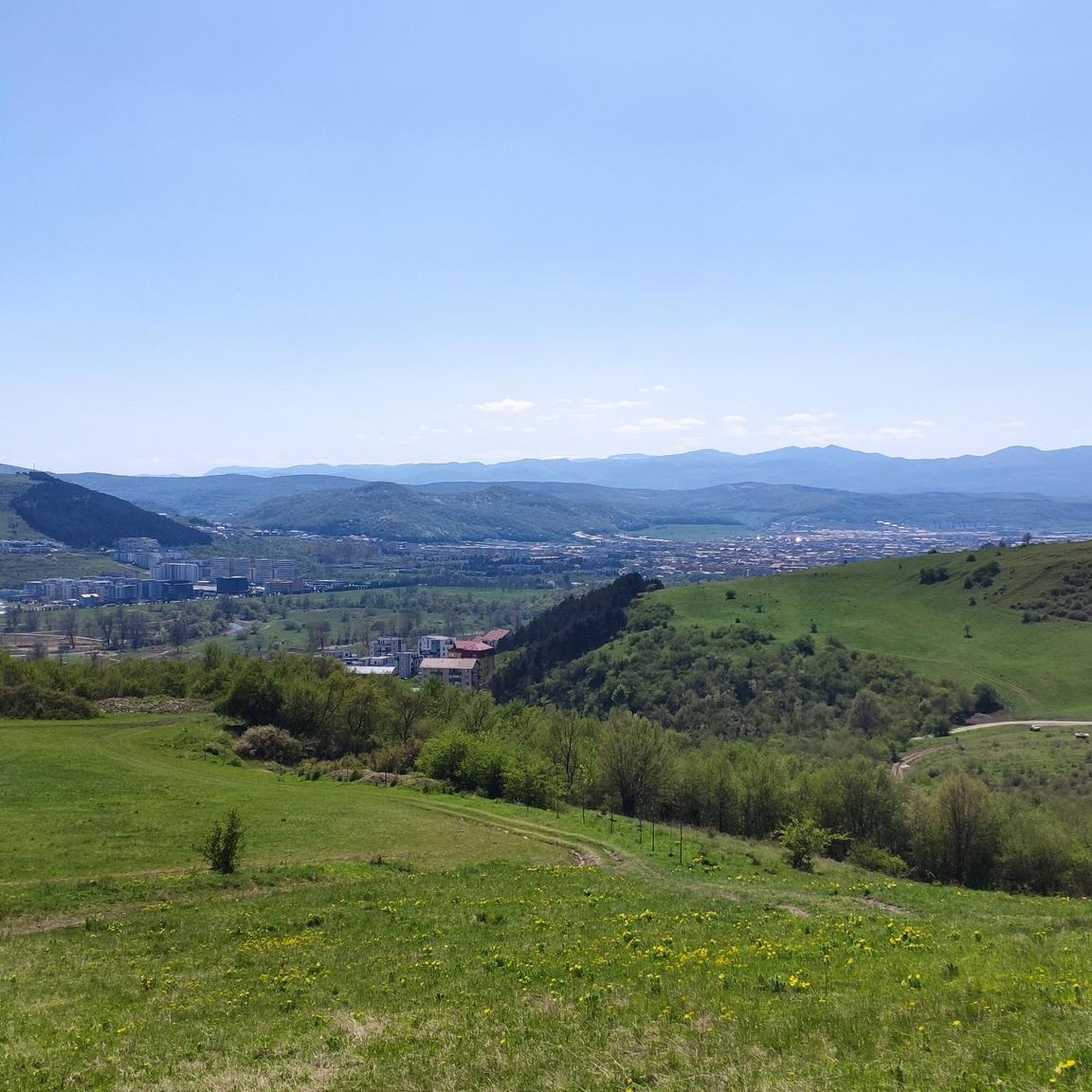
Jogging routes around Forest Hoia offer a unique blend of natural beauty and diverse terrain near Cluj-Napoca. The forest covers an area of about 250 to 295 hectares, featuring varied topography with a ridge on its southern border and smoother slopes near the Nadăș River to the north. Runners can explore valleys like Valea Lungă and Bongar valley, alongside a small natural lake and several springs. The network of trails provides options for various fitness levels, from easy paths to more challenging routes.
Best jogging routes around Forest Hoia
- The most popular jogging route is Running loop from Grigorescu, a 3.3 miles (5.4 km) trail that takes 33 minutes to complete. This moderate route offers a refreshing escape into the forest's natural environment.
- Another top favourite among local runners is BTArena loop from Cluj-Napoca, a moderate 3.2 miles (5.2 km) path. This route provides accessible running close to the city, featuring gentle elevation changes.
- Local runners also love the Dealul Hoia – Dealul Melcului loop from Cluj-Napoca, a 12.9 miles (20.8 km) trail leading through varied forest terrain, often completed in about 2 hours 32 minutes.
- Jogging around Forest Hoia is defined by diverse trails, unique twisted trees, and varied topography including ridges and valleys. The extensive network offers options for different ability levels, from easy jogs to difficult long-distance runs.
- The routes in Forest Hoia are highly rated by the komoot community with an average score of 4.0 stars from over 80 reviews. More than 3,600 runners have used komoot to explore Forest Hoia's varied terrain.
Last updated: May 14, 2026
5
runners
5.48km
00:34
30m
40m
Moderate run. Good fitness required. Mostly paved surfaces. Suitable for all skill levels.
73
runners
5.20km
00:32
20m
20m
Moderate run. Good fitness required. Mostly paved surfaces. Suitable for all skill levels.

Sign up for free
5.0
(1)
22
runners
20.8km
02:32
320m
320m
Hard run. Very good fitness required. Mostly paved surfaces. Suitable for all skill levels.
19
runners
Moderate run. Good fitness required. Mostly paved surfaces. Suitable for all skill levels.
11
runners
11.8km
01:14
50m
50m
Moderate run. Good fitness required. Mostly paved surfaces. Suitable for all skill levels.
Get access to more routes and recommendations from other explorers.
Sign up for free
Already have an account?
Our route recommendations are based on thousands of hikes, rides, and runs completed by other people on komoot.
Start today with a free account
Your next adventure awaits.
Login or Signup
Tips from the Community

The Roman Catholic Piarist Church, originally the Jesuit Church in Cluj, is the first Catholic church built in Transylvania after the Protestant Reformation. It is also the first Baroque church building in the province. The Jesuits built it between 1718 and 1724, modeled on Austrian churches. The church formed an architectural ensemble with the Jesuit academic college, on whose site today stands the central building of the Babeș-Bolyai University. After the dissolution of the Jesuit order, the church was transferred to the Piarists. On Sundays, liturgies are held in Romanian, Hungarian, and Italian. Cultural events are also held here; classical music concerts, in particular, benefit from a special atmosphere and distinctive sound.
10
0

Universitatea Cluj football stadium and Untold Festival in this stadium. The park is excellent and the location is excellent for biking. Highly recommend for bikers in Cluj.
0
0
Unity Square (Piața Unirii) is the heart of Cluj-Napoca. At 220 by 160 metres, it is one of the largest urban squares in the country. It is dominated by a number of historic buildings such as St. Michael's Church or Banffy Palace, as well as the Matthias Corvinus Monument in its centre. There are paid parking spaces and public toilets here. The remains of Roman buildings (Vestigii romane) can be seen under a glass cover.
13
0
The Matthias Corvinus Monument (Monumentul Matia Corvin) is a bronze equestrian statue created by the Hungarian sculptor János Fadrusz and erected in 1902. It shows the Hungarian King Matthias Corvinus ("the Raven"), who was born on February 23, 1443 in Cluj-Napoca. Corvinus ruled over Hungary and Croatia from 1458 until his death on April 6, 1490 in Vienna and was also (counter-)king of Bohemia from 1469 to 1490. He conquered large parts of the Habsburg hereditary lands and ruled these areas from Vienna from 1485 onwards. The monument and the inscription on the base have often caused a stir in the past; this culminated in civil war-like unrest between Hungarians and Romanians before the turn of the millennium. The diplomatic result is the current inscription in Latin: "Rex Mathias"
16
0
The landmark of Cluj-Napoca is St. Michael's Church (Biserica Sfântul Mihail) in the city center. It is considered the most important example of a three-aisled Gothic hall church in Transylvania. Its construction probably began around 1350 on the site of a former St. James's Chapel. The choir was built in the first phase. The building was originally intended to have two towers, but one remained unfinished. The completed tower on the north side, built between 1834 and 1863 in the neo-Gothic style, is 80 meters high including the cross, making it the highest church tower in Romania. Because of the nearby Cluj airport, a red light flashes at the top. The church is now used by the Roman Catholic community of Cluj. From 1566 until the Counter-Reformation in 1716, St. Michael's Church was the parish church of the Unitarian community. The reformer Franz David held his first anti-Trinitarian sermon here in 1566. At the end of the 18th century, the Unitarian community built its own church, the Unitarian Church. After it was returned to the Catholics, the church was expanded with baroque elements, such as the pulpit, which is crowned by the patron saint, Saint Michael, slaying the dragon.
17
0
The Bishop of the Diocese of Alba Iulia, Áron Márton, was President of the Romanian Bishops' Conference from 1970 until his death in 1980. Because of his opposition to the planned deportation of Romanian and Hungarian Jews during the Second World War, Márton was awarded the Israeli honorary title "Righteous Among the Nations" on December 27, 1999.
14
0
The monument to the signatories of the Memorandum for the Transylvanian Romanians was erected in 1994 on the centenary of the trial initiated against the Memorandists in 1894. The "Transylvanian Memorandum" was a petition addressed to the Austro-Hungarian Emperor Franz Josef on 28 May 1892 by the leaders of the Romanians in Transylvania, demanding that the population have the same ethnic rights as the Hungarian population. In 1894, the signatories of the Memorandum were tried in Cluj. Most of the defendants were sentenced to prison terms, but after a few months they were pardoned by the monarch as a sign of reconciliation.
14
0

Frequently Asked Questions
How many running trails are available in Forest Hoia?
Forest Hoia offers a wide selection of over 150 running trails, catering to various preferences and fitness levels. These include 12 easy routes, over 100 moderate options, and 34 challenging trails for experienced runners.
What do other runners appreciate most about the trails in Forest Hoia?
The running routes in Forest Hoia are highly rated by the komoot community, with an average score of 4.0 stars from over 80 reviews. Runners frequently praise the diverse terrain, the unique atmosphere created by the twisted trees, and the peaceful escape from urban life.
Are there many circular running routes in Hoia-Baciu Forest?
Yes, many of the running routes in Hoia-Baciu Forest are circular, allowing you to start and finish at the same point. For example, the popular Running loop from Grigorescu is a moderate 3.3-mile (5.4 km) circular path.
Are there any easy jogging routes suitable for beginners in Forest Hoia?
Absolutely. Forest Hoia has 12 designated easy routes perfect for beginners or those looking for a relaxed jog. These trails typically feature gentler elevation changes and well-maintained paths, offering a pleasant introduction to the forest's natural beauty.
What kind of unique natural features can I expect to see while jogging in Hoia-Baciu Forest?
Hoia-Baciu Forest is known for its distinctive natural features. You'll encounter trees with unusually twisted trunks and branches, creating an otherworldly atmosphere. The forest also features diverse topography, including valleys like Valea Lungă and Bongar valley, a small natural lake, and several springs.
Are there any challenging running trails for experienced runners?
Yes, for experienced runners seeking a challenge, Forest Hoia offers 34 difficult routes. One notable challenging option is the Dealul Hoia – Dealul Melcului loop from Cluj-Napoca, a 12.9-mile (20.8 km) trail with significant elevation changes, often completed in about 2 hours 32 minutes.
Is Hoia-Baciu Forest suitable for family-friendly jogging?
Yes, the forest offers several easy and moderate trails that are suitable for families. The diverse paths and peaceful atmosphere make it a great place for a family outing, allowing everyone to enjoy nature while getting some exercise. Always check the specific route details for suitability with younger children.
What is the best time of year to go jogging in Forest Hoia?
The spring and summer months are particularly beautiful for jogging in Forest Hoia, with lush greenery and a refreshing atmosphere. However, the forest's unique character, including its twisted trees, can be enjoyed year-round. Be mindful of uneven paths, especially after rain, and wear appropriate footwear.
Are there any running routes close to Cluj-Napoca?
Yes, several routes are easily accessible from Cluj-Napoca. A popular choice is the BTArena loop from Cluj-Napoca, a moderate 3.2-mile (5.2 km) path that provides accessible running close to the city with gentle elevation changes.
Can I bring my dog on the running trails in Hoia-Baciu Forest?
Generally, dogs are welcome on the trails in Hoia-Baciu Forest, making it a great spot for running with your canine companion. However, it's always recommended to keep your dog on a leash and ensure you clean up after them to maintain the natural environment for all visitors.
Are there any viewpoints or specific landmarks to look out for on the trails?
While jogging, you can look out for the famous Circular Clearing (Poiana Rotunda), a unique natural landmark at the heart of the forest. The varied topography also offers occasional views of the surrounding Transylvanian landscape, especially from higher points along the ridge on the southern border.
Is there parking available near the Hoia-Baciu Forest running routes?
Yes, there are parking areas available near the entrances to Hoia-Baciu Forest, making it convenient for runners arriving by car. The main trail leading to the famous clearing is well-marked and takes about 20-30 minutes from the nearest parking area.
How can I reach Hoia-Baciu Forest using public transport for a run?
Hoia-Baciu Forest is accessible from Cluj-Napoca via public transport. Local buses can take you to stops near the forest's edge, from where you can easily access various trailheads. It's advisable to check local bus schedules for the most current information on routes and timings.

Get inspired with the komoot mobile app


