The best cycling routes around Rotenberg
4.6
(6339)
25,434
riders
1,125
rides
Touring cycling around Rotenberg features routes through a landscape characterized by lakes, streams, and gentle rolling hills. The region offers varied terrain suitable for touring cyclists, with paths often following waterways and passing through rural areas. Elevations are generally modest, providing accessible cycling experiences.
Best touring cycling routes around Rotenberg
- The most popular touring cycling route is Lake Seeburg – Circular Trail around Seeburg Lake loop from Gieboldehausen, a 14.1 miles (22.7 km) trail that takes 1 hour 23…
Last updated: May 14, 2026
4.5
(45)
165
riders
22.4km
01:23
100m
100m
Easy bike ride. Great for any fitness level. Mostly paved surfaces. Suitable for all skill levels.
4.7
(52)
121
riders
23.1km
01:26
140m
140m
Easy bike ride. Great for any fitness level. Mostly paved surfaces. Suitable for all skill levels.

Sign up for free
5.0
(3)
54
riders
Easy bike ride. Great for any fitness level. Mostly paved surfaces. Suitable for all skill levels.
4.7
(3)
54
riders
Easy bike ride. Great for any fitness level. Mostly paved surfaces. Suitable for all skill levels.
4.1
(11)
51
riders
11.2km
00:46
20m
20m
Easy bike ride. Great for any fitness level. Mostly paved surfaces. Suitable for all skill levels.
Get access to more routes and recommendations from other explorers.
Sign up for free
Already have an account?
Our route recommendations are based on thousands of hikes, rides, and runs completed by other people on komoot.
Start today with a free account
Your next adventure awaits.
Login or Signup
Tips from the Community

Perhaps in summer, after a long dry spell, you can get through the ford well. In any case, it wasn't possible at the end of February.
1
0
The route was not destined for a long life: 100 years ago, on November 1, 1911, the Herzberg - Bischofferode section was put into operation. The continuation of the line to Bleicherode Ost had already been opened between 1908 and 1910. After the Second World War, the zonal border divided the route at Zwinge station. On the west side of the route, passenger traffic ended as early as 1961, and freight traffic was discontinued in 1982. On the east side of the route, the part maintained by Deutsche Reichsbahn, passenger traffic between Zwinge and Bischofferode ended in 1972 and, after the closure of the local potash mines in 1993, freight transport also ceased. The year 1998 meant the definitive end of the route with the discontinuation of the section to Bleicherode Ost. Source: https://www.karstwanderweg.de/publika/harz_kur/201011/index.htm
1
0
The Bleicherode–Herzberg railway line was a 41 km long, single-track, non-electrified branch line that served the eastern Eichsfeld and the Ohm Mountains. It connected the Halle–Hann. Münden railway line near Bleicherode with the South Harz line in Herzberg am Harz. It was mainly used for freight transport from several former potash mines, most recently in Bischofferode, and to a former lignite power plant in Rhumspringe. On the Lower Saxony side, the line has been almost completely converted into a cycle path. However, a section is missing in Rhumspringe, as two bridges were demolished beforehand, and the section between the Hilkerode halt and Zwinge station was also not converted due to a parallel field path. Source: https://de.wikipedia.org/wiki/Bahnstrecke_Bleicherode%E2%80%93Herzberg
1
0
In the first half of the 16th century, the Reformation was introduced in the Principality of Grubenhagen, to which Herzberg then belonged, by Philip I. As a result, the population of Herzberg became Evangelical Lutheran. In the 19th century, a Catholic parish was formed again in Herzberg. In 1857 a house property was purchased, and since 1858 Catholic church records have been kept in Herzberg. From 1893 to 1895, the church was built on the house property. On August 4 or 15, 1895, its consecration took place. On June 2, 1898, the parish of Herzberg am Harz was established. Source: https://de.wikipedia.org/wiki/St._Josef_(Herzberg_am_Harz)
1
0

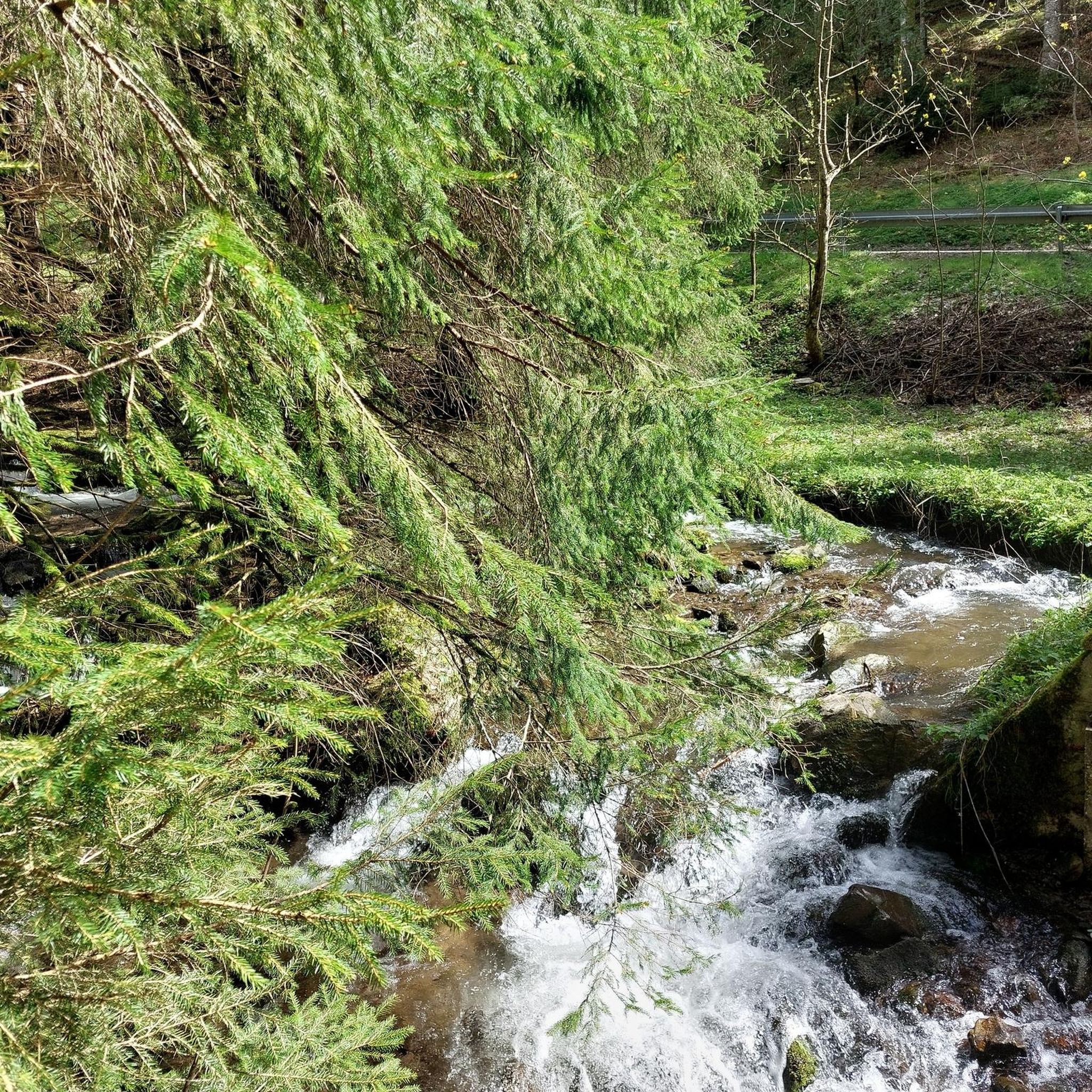
From Pöhlde, past the Pöhlde Mill, below the Rotenberg hill, through the meadows to the Oderklause weir. Continue past the oak trees, to the ford (leading to the glider airfield) and on to Hattorf. I cycle this route almost daily; it's a beautiful one.
0
0

The new level crossing can be crossed without having to go around the barrier.
0
0

The bridge was part of the Leinefelde–Wulften railway line, also known as the Lower Eichsfeld Railway. The Wulften–Duderstadt section was opened on November 1, 1889.
0
0
Nickname "Bimmelbrücke": The bridge got its popular name because the train constantly rang its bell ("bimmelte") when crossing the iron Oder bridge to warn of the many unguarded level crossings.
0
0
Frequently Asked Questions
What kind of landscape can I expect when touring cycling around Rotenberg?
Touring cycling around Rotenberg features routes through a landscape characterized by lakes, streams, and gentle rolling hills. The terrain is varied, with paths often following waterways and passing through rural areas, offering accessible cycling experiences with generally modest elevations.
How many touring cycling routes are available in Rotenberg?
There are over 1,100 touring cycling routes available in Rotenberg, catering to various skill levels. You'll find a wide selection, including over 380 easy routes, 450 moderate routes, and nearly 300 more challenging options.
Are there any circular touring cycling routes in Rotenberg?
Yes, Rotenberg offers several excellent circular touring cycling routes. A popular choice is the Lake Seeburg – Circular Trail around Seeburg Lake loop from Gieboldehausen, which is 14.1 miles (22.7 km) long and offers scenic views. Another option is the Beber (Pöhlder Bach) loop from Finnenbruch, Großes Butterloch und Schwimmende Insel, an easy 9.3-mile (15.0 km) path following the Beber stream.
What are some interesting natural features or landmarks to see along the touring cycling routes?
Along the touring cycling routes in Rotenberg, you can discover several interesting natural features and landmarks. Highlights include the beautiful Rhume Spring, the serene Pollarded hornbeam wood near Gieboldehausen, and the historic König Heinrichs Vogelherd Castle Ruins and Grill Area. Many routes also pass by historical water features, such as those found on the Herzberger Water Wheel – Oder Bridge Near Pöhlde loop.
What do other touring cyclists say about the routes in Rotenberg?
The touring cycling routes in Rotenberg are highly rated by the komoot community, with an average score of 4.6 stars from over 6,100 reviews. Reviewers often praise the scenic views around lakes and streams, as well as the well-maintained paths that make for enjoyable rides.
Are there any easy touring cycling routes suitable for beginners or families?
Yes, Rotenberg offers many easy touring cycling routes perfect for beginners or families. For instance, the Beber (Pöhlder Bach) loop from Finnenbruch, Großes Butterloch und Schwimmende Insel is an easy 9.3-mile (15.0 km) path that follows the Beber stream. Another gentle option is the Bike loop from Samtgemeinde Hattorf am Harz, which is 11.2 km long with minimal elevation gain.
Where can I find places to rest or have a picnic along the routes?
You'll find several huts and shelters along the touring cycling routes in Rotenberg, perfect for a rest or a picnic. Notable spots include the Thomas Hut Shelter, the Grill Hut Pöhlde, and the Forest hut on the Fastweg. Many of these offer scenic spots to take a break.
Are there any routes that follow old railway lines?
Yes, for a unique cycling experience, you can explore the Old Railway Embankment Cycle Path (Herzberg–Ruhmspringe). These paths often provide flat and well-maintained surfaces, making for a smooth and enjoyable ride through the landscape.
What is the best time of year for touring cycling in Rotenberg?
The region around Rotenberg, with its lakes, streams, and gentle hills, is generally pleasant for touring cycling from spring through autumn. These seasons offer mild weather and vibrant natural scenery, making for ideal conditions to explore the varied terrain.
Are there any longer, more challenging touring cycling routes in the area?
While Rotenberg is known for its gentle hills and accessible routes, there are also more challenging options for experienced touring cyclists. For example, the Duderstadt Town Hall – Duderstadt Old Town loop from Rhumspringe is a moderate 39.5 km route with over 300 meters of elevation gain, offering a longer excursion with varied terrain.
Can I find routes that pass through historical areas or towns?
Yes, several routes in the broader region connect to historical areas. While Rotenberg itself features natural beauty, routes like the Duderstadt Town Hall – Duderstadt Old Town loop from Rhumspringe can lead you to charming towns with historical significance, allowing you to combine cycling with cultural exploration.
Most popular routes around Rotenberg
Most popular attractions around Rotenberg

Get inspired with the komoot mobile app


Explore more
Browse the best Cycling routes in other regions.
