The best walks and hikes around Wilmington Island
4.9
(25)
305
hikers
23
hikes
Hiking around Wilmington Island, Georgia, features predominantly flat coastal paths, maritime forests, and expansive salt marshes. The terrain is characterized by its low elevation and well-maintained trail systems, offering accessible routes for various fitness levels. Hikers can explore diverse ecosystems, including tidal creeks and unique coastal woodlands. The natural environment provides opportunities to observe local wildlife within these varied landscapes.
Best hiking trails around Wilmington Island
- The most popular hiking route is Priests Landing Trail, a 7.0 miles (11.3…
Last updated: June 29, 2026
5.0
(3)
33
hikers
4.35km
01:06
10m
10m
Easy hike. Great for any fitness level. Easily-accessible paths. Suitable for all skill levels.
5.0
(1)
1
hikers
11.3km
02:51
10m
10m
Moderate hike. Good fitness required. Easily-accessible paths. Suitable for all skill levels.

Sign up for free
1.11km
00:17
0m
0m
Easy hike. Great for any fitness level. Easily-accessible paths. Suitable for all skill levels.
1.58km
00:24
0m
0m
Easy hike. Great for any fitness level. Easily-accessible paths. Suitable for all skill levels.
5.0
(1)
13
hikers
3.18km
00:48
0m
0m
Easy hike. Great for any fitness level. Easily-accessible paths. Suitable for all skill levels.
Get access to more routes and recommendations from other explorers.
Sign up for free
Already have an account?
Our route recommendations are based on thousands of hikes, rides, and runs completed by other people on komoot.
Start today with a free account
Your next adventure awaits.
Login or Signup
Popular around Wilmington Island

Tips from the Community

interesting preserved fortification
1
0

Fort Pulaski is a National Monument and a significant part of American history. It was built in the 1800s to defend Savannah from attack, and it played a key role in the Civil War. Visitors can learn about the fort's history through guided tours, exhibits, and ranger programs. The Fort is a beautiful example of 19th-century architecture. The fort's walls are made of brick and are over 10 feet thick. Visitors can explore the fort's interior and learn about its construction and design. Fort Pulaski is located on Cockspur Island, which is a beautiful natural area. Visitors can enjoy the island's beaches, marshes, and forests. There are also hiking trails and a campground on the island.
0
0
This is not your typical day hiking adventure, but the island has over 2 miles of nature trails. Oatland Wildlife Center is located on 175 acres of beautiful natural land. Visitors can enjoy hiking trails, a petting zoo, and a farm. The wildlife center is home to over 150 animals from all over the world. Visitors can see animals like wolves, bobcats, bison, alligators, and birds of prey. The entrance fee at the time of writing is 5$ for adults and 3$ for children, seniors, and military. Children three and under are free.
2
0
Battery Hambright is a historic military installation that was built in the late 19th century to defend the entrance to the Savannah River. It played a role in the Spanish-American War and is a reminder of the importance of coastal defense during that era. Battery Hambright is a well-preserved example of concrete gun battery architecture. It is one of the few remaining examples of its type in the United States.
2
0
Fort Pulaski is a National Monument and a significant part of American history. It was built in the 1800s to defend Savannah from attack, and it played a key role in the Civil War. Visitors can learn about the fort's history through guided tours, exhibits, and ranger programs. The Fort is a beautiful example of 19th-century architecture. The fort's walls are made of brick and are over 10 feet thick. Visitors can explore the fort's interior and learn about its construction and design. Fort Pulaski is located on Cockspur Island, which is a beautiful natural area. Visitors can enjoy the island's beaches, marshes, and forests. There are also hiking trails and a campground on the island.
2
0
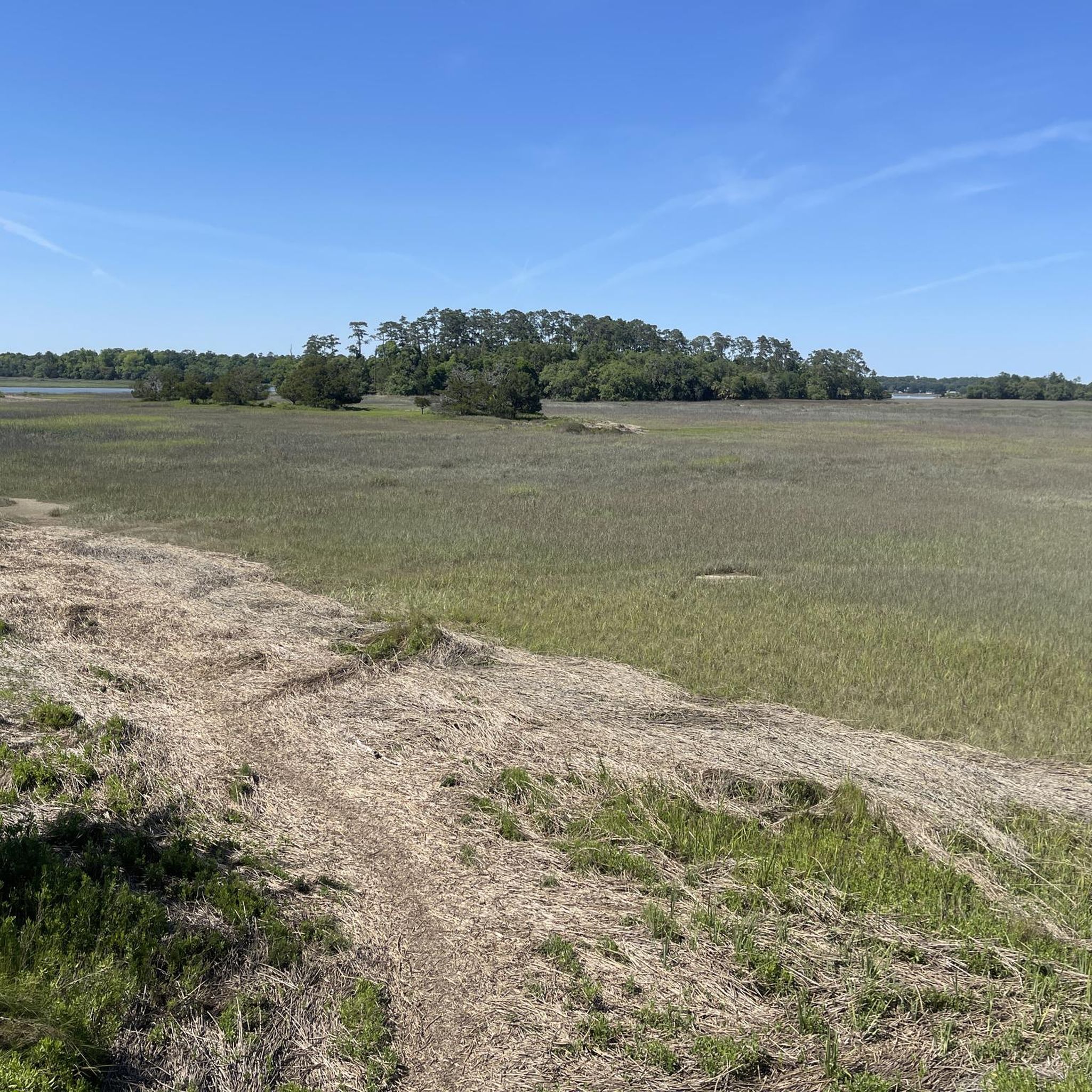
On the far end of the Skidaway Island State Park trails you'll find the tip of the Big Ferry Loop. It ends in a little lasso loop with beautiful views across the marshes. There is also a great variety of big old trees in this area. Some of them create a natural canopy providing you with cooler temperatures on a hot summer day.
3
0

The story of Fort Pulaski is told relatively quickly, but it is impressive nonetheless, or perhaps because of it. The fort was built after the English-American War of 1812-15 to secure the city of Savannah from Cockspur Island off the coast. After its completion in 1847, it was not really used, but after the outbreak of the Civil War, Confederate troops quickly occupied it with a force of about 385 men and fortified it additionally. However, they "forgot" to secure Tybee Island, which was even farther out and which the Union troops gratefully used as a beachhead. From here, the siege of the fort took place in April 1862, although the term "siege" is not really an accurate description of this short military operation. The Union's used a new type of rifled guns, which had much greater range, accuracy, and penetrating power than the old smoothbore guns. Moreover, the commander of the siege, Quincy Gilmore, knew of the fort's weak points from his time as a civil engineer in the army. Thus, on April 11 and 12, 1862, more than 5,000 rounds were fired at the fort from a range of 1.5 to 3.5 kilometers, causing considerable damage to the brick walls. The Confederate commander rightly feared an explosion of his gunpowder stores and, after 30 hours of shelling, ordered the white flag to be waved. Brick fortifications had thus finally had their day, and Quincy Gilmore was promoted to brigadier general. In the further course of the Civil War, Fort Pulaski still served as a prison for the so-called "600 Immortals". There were a little less than 600 Confederate officers who had to hold out here the winter of 1864/65 as prisoners of war. Due to malnutrition and poor prison conditions, 13 of them died. After the Civil War, the fort was militarily abandoned and eventually became a National Monument for memorial purposes in the 1920s. Today's visitors are treated to an up-close look at the fort's history. Similar to Fort Sumter near Charleston, numerous details are provided. One gets a glimpse of the officers' and enlisted men's quarters, the infirmary, the chapel, the guardroom, the ammunition dumps, the prison and, of course, the casemates and gun emplacements. The park rangers are extremely friendly, helpful and forthcoming. A walk around the outer walls is particularly impressive, because here you can see "first hand" the damage done by the Union cannons. Information at https://www.nps.gov/fopu/index.htm
6
0
Frequently Asked Questions
Are there many hiking trails on Wilmington Island itself?
While Wilmington Island is a beautiful coastal area, it has limited dedicated hiking trails. The main appeal for hikers is its close proximity to excellent parks and preserves on adjacent islands, such as Skidaway Island and Whitemarsh Island, which are just a short drive away.
What are the trails like in the Wilmington Island area?
The hiking is characterized by flat, easy-to-navigate paths. You'll mostly find trails winding through maritime forests of live oak and pine, alongside expansive salt marshes, or on paved paths built over former railroad lines. The terrain is very accessible, with nearly all routes in the area rated as easy.
Are there any good, easy hikes for families with children?
Yes, the area is great for family outings. A perfect option is the Oatland Wildlife Center Loop. It's a short, easy walk that combines a nature trail with the chance to see various animals, making it very engaging for kids.
Can I bring my dog on the hiking trails?
Many trails in the Savannah area are dog-friendly, but policies can vary by park. For example, trails at Fort Pulaski National Monument are known to welcome dogs on leashes. However, dogs are generally not permitted on the trails at Skidaway Island State Park to protect local wildlife. Always check the specific park's regulations before you go.
Which trails offer the best views of the salt marshes?
For an immersive salt marsh experience, the McQueen's Island Trail is unparalleled. This long, straight path runs for miles with constant, open views of the marsh and tidal creeks. Another excellent choice is the Skidaway Island State Park Loop, which features boardwalks and viewing towers overlooking the Skidaway River and its vast salt flats.
Are there any trails that are good for both hiking and biking?
Yes, several trails are suitable for both activities. The McQueen's Island Trail is a popular multi-use path for walkers, runners, and cyclists. Additionally, Whitemarsh Preserve offers a mix of paved and unpaved paths that can accommodate both hiking and casual biking.
What should I pack for a hike in coastal Georgia?
For a coastal hike, it's essential to bring plenty of water, especially in the hot and humid summer months. Insect repellent is a must-have to protect against mosquitoes and gnats. Also, wear comfortable walking shoes, a hat, and sunscreen, as many trails have sections with limited shade.
Are there any free places to hike near Wilmington Island?
Yes, you can find several free-to-access trails. Whitemarsh Preserve offers a great network of trails through maritime forest and is free for the public to enjoy. The McQueen's Island Trail is another excellent option that does not require an entrance fee.
What do other hikers think of the trails around Wilmington Island?
The area is highly rated by the komoot community, with an average score of 4.9 stars. Hikers often praise the beautiful coastal scenery, the abundance of wildlife, and the well-maintained, flat paths that make for relaxing walks.
Can I see any historical sites while hiking?
Absolutely. The Fort Pulaski & Cockspur Lighthouse Loop combines nature with history, allowing you to explore the grounds of a Civil War-era fort while enjoying scenic water views.
Should I be concerned about alligators on the trails?
Alligators are native to the coastal Georgia habitat, and it is possible to see them in or near the water, especially in the freshwater wetlands of places like the Savannah & Ogeechee Canal. It's important to be aware of your surroundings, keep a safe distance if you see one, and never feed wildlife. Keep pets on a short leash and away from the water's edge.
Most popular routes around Wilmington Island
Most popular attractions around Wilmington Island

Get inspired with the komoot mobile app


Explore more
Browse the best Hikes in other regions.
