Attractions and Places To See in Bighorn National Forest - Top 8
Best attractions and places to see in Bighorn National Forest encompass a diverse array of cultural sites, natural features, and points of interest. Located in north-central Wyoming, this region is situated between Mount Rushmore and Yellowstone National Park. The forest features a landscape shaped by millions of years of erosion and glaciation, offering canyons, alpine meadows, and high peaks. Its history spans at least 10,000 years, with evidence of Indigenous cultures and early American uses.
Best attractions and places to…
Last updated: September 28, 2026
Medicine Wheel National Historic Landmark
Highlight • Historical Site
Tip by

Granite Pass Climb
Highlight (Segment) • Climb
Tip by

Sign up now to discover places like this
Get recommendations on the best single tracks, peaks, & plenty of other exciting outdoor places.
Powder River Pass Climb West
Highlight (Segment) • Climb
Tip by
James T. Saban Lookout
Highlight • Viewpoint
Tip by

Misty Moon Trail
Highlight (Segment) • Trail
Tip by
Sign up for free to discover even more attractions in Bighorn National Forest.
Already have an account?
Start today with a free account
Your next adventure awaits.
Popular around Bighorn National Forest
Tips from the Community

Climbing Powder River Pass westwards from near Ten Sleep is an exceptionally long, high-altitude journey across Wyoming's Bighorn Mountains. Prepare for approximately 25 miles of sustained climbing, gaining over 5000ft to the lofty 9666ft summit. Along the way you'll enjoy spectacular scenery transitioning from the dramatic cliffs of Ten Sleep Canyon (featuring steady ramps around 6-8%) to vast alpine plateaus, averaging around 4-5% overall. Services are virtually non-existent between Ten Sleep and the summit and don't forget to check WYDOT for current road status before attempting this cimb, which is seasonally closed due to snow in late April/early May, typically opening late May or June.
0
0
Climbing Granite Pass eastwards from near Shell is an epic, high-altitude journey through the Bighorn Mountains, defined by its length and dramatic scenery. Prepare for a very long 18-22 mile ascent, gaining nearly 5000ft to the 9033ft summit. You'll have to deal with moderate gradients averaging around 5%, but prepare for sustained steeper ramps of 7-9% through the breathtaking Shell Canyon. Services are extremely limited between Shell and the summit area. Also, be sure to check WYDOT for current road status before attempting this climb, as US-14 over Granite Pass is almost certainly seasonally closed, typically reopening late May or June.
0
0

James T. Saban Lookout in the Bighorn National Forest, formerly knows as High Park Lookout, is one of the old Fire Lookouts in the area. Back in the 1920s and 1930s, those towers were used to detect fires as early as possible. Today that job is done by modern technology and the Fire Lookouts are used only when there is a very high fire danger level.
0
0
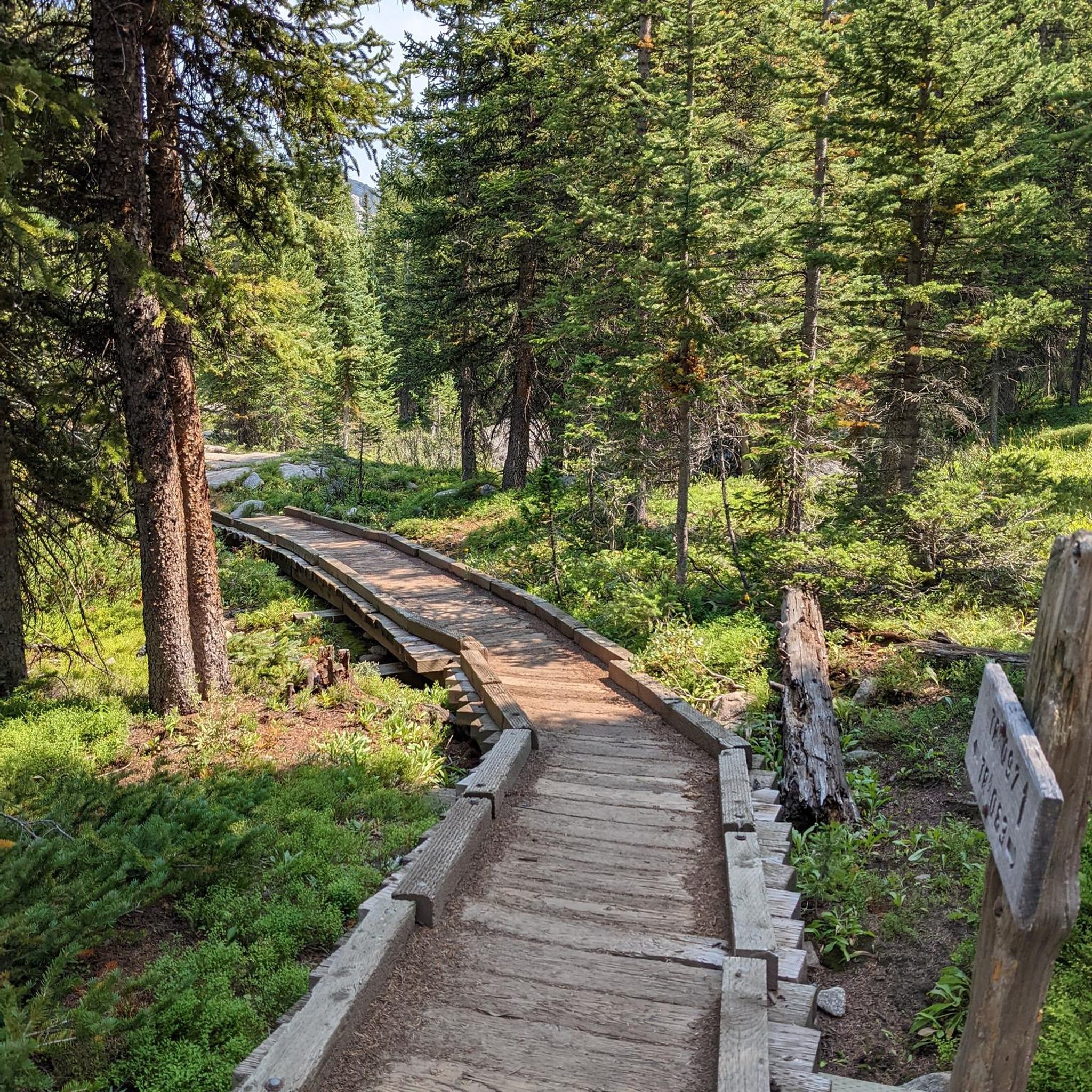
Misty Moon Trail starts at West Tensleep Lake and goes all the way up to the north until it reaches Mistymoon Lake. The trail leads through forests, over rocks and crosses beautiful creeks. And watch out: if you're lucky, you will be able to even spot a moose.
0
0

The Medicine Wheel is a sacred site created by Indigenous peoples long before contact with Euro-Americans. The wheel is comprised of concentric circles of stones laid in the ground and is still used in ceremonies by tribes today. The site is a National Historic Landmark and represents part of the cultural heritage of the Bighorn Mountains. Please be respectful when visiting the Medicine Wheel.
0
0
Frequently Asked Questions
What historical and cultural sites can I explore in Bighorn National Forest?
The Bighorn National Forest is rich in history. A significant site is the Medicine Wheel National Historic Landmark, an ancient, sacred stone circle used by Indigenous peoples for ceremonies and astronomical observations for thousands of years. You can also visit the James T. Saban Lookout, a historic fire lookout originally used in the 1920s and 1930s. Beyond these, the forest contains evidence of past uses by mountain men, tie hack flumes, mining districts, and historic ranger stations.
What natural features and scenic viewpoints should I look for in Bighorn National Forest?
The Bighorn National Forest offers stunning natural beauty. You'll find dramatic canyons like Crazy Woman Canyon, Shell Canyon (home to Shell Falls), Tensleep Canyon, and Tongue River Canyon. The Granite Pass Climb and Powder River Pass Climb West offer spectacular high-altitude views. Don't miss Shell Falls, a dramatic 120-foot waterfall, and the expansive Cloud Peak Wilderness with its alpine scenery and glacial lakes.
Are there good hiking trails in Bighorn National Forest?
Yes, the Bighorn National Forest boasts 1,500 miles of trails. A popular option is the Misty Moon Trail, which starts at West Tensleep Lake and leads to Mistymoon Lake, offering chances to spot moose. Other notable trails include those in Tongue River Canyon, Porcupine Falls Trail, and Steamboat Point Trail. For more extensive hiking, the Cloud Peak Wilderness offers over 100 miles of trails.
Are there easy hiking trails suitable for all skill levels in Bighorn National Forest?
Yes, there are several easy hiking trails. You can explore routes like the Medicine Wheel Trail, Sherd Lake Trail, and Meadowlark Lake. The James T. Saban Lookout Trail is also an easy option. For more ideas, you can explore the Easy hikes in Bighorn National Forest guide.
When is the best time to visit Bighorn National Forest?
The best time to visit Bighorn National Forest is generally during the late spring, summer, and early fall months (typically late May/June through September). During this period, the scenic byways are usually open, and the weather is favorable for hiking, camping, and other outdoor activities. Some high-altitude passes, like Granite Pass and Powder River Pass, are seasonally closed due to snow, typically reopening in late May or June.
Are there scenic drives to experience the Bighorn National Forest?
Absolutely! Three scenic byways traverse the Bighorn National Forest, offering breathtaking views. These include the Bighorn Scenic Byway (US Highway 14), the Medicine Wheel Passage (US Highway 14A), which provides easy access to the Medicine Wheel National Historic Landmark, and the Cloud Peak Skyway (US Highway 16), which takes you over Powder River Pass.
What kind of wildlife can I expect to see in Bighorn National Forest?
The open landscapes and diverse habitats of Bighorn National Forest provide excellent opportunities for wildlife viewing. You might spot moose, especially along trails like the Misty Moon Trail, and mule deer. The forest is also home to various bird species and other smaller mammals.
Are there opportunities for camping in Bighorn National Forest?
Yes, Bighorn National Forest offers numerous improved campgrounds for visitors. Additionally, free camping spots can be found along Old Highway 16, providing more rustic options for those looking to immerse themselves in nature.
What other outdoor activities are popular in Bighorn National Forest besides hiking?
Beyond hiking, the Bighorn National Forest is a hub for various outdoor activities. You can enjoy excellent blue-ribbon fishing in alpine streams and lakes, with opportunities to catch various trout species and grayling. ORV riding is popular, with hundreds of miles of trails and forest roads available for UTVs, ATVs, dirt bikes, and 4-wheel drive vehicles. Rock climbing is also an option, particularly in areas like Old Highway 16.
What do visitors enjoy most about the attractions in Bighorn National Forest?
Visitors frequently appreciate the blend of natural beauty and rich history. The ancient significance of the Medicine Wheel National Historic Landmark and the scenic views from historic sites like the James T. Saban Lookout are highly valued. The diverse hiking trails, from easy strolls to challenging climbs like Granite Pass, and the chance to spot wildlife like moose on trails such as Misty Moon Trail, also contribute to a memorable experience.
Are there any challenging mountain passes for experienced adventurers?
Yes, the Bighorn National Forest features challenging mountain passes that offer rewarding experiences for experienced adventurers. The Granite Pass Climb, especially when ascending from Shell, is an epic, high-altitude journey through dramatic scenery. Similarly, the Powder River Pass Climb West from Ten Sleep involves a sustained, high-altitude ascent with spectacular views transitioning from canyon cliffs to vast alpine plateaus.
Most popular routes in Bighorn National Forest

Get inspired with the komoot mobile app


