Attractions and Places To See around Yukon - Top 20
Best attractions and places to see around Yukon include vast wilderness areas, significant cultural sites, and historical landmarks. The region is characterized by dramatic natural features like canyons and rivers, alongside a rich Gold Rush history. Visitors can explore diverse landscapes and experience the heritage of its First Nations. Yukon offers a variety of outdoor and historical experiences.
Best attractions and places to see around Yukon
- The most popular attractions is Miles Canyon Suspension Bridge, a bridge that spans…
Last updated: August 16, 2026
Miles Canyon Suspension Bridge
Highlight • Bridge
Tip by

Five Finger Rapids
Highlight • River
Translated by Google •
Tip by

Sign up now to discover places like this
Get recommendations on the best single tracks, peaks, & plenty of other exciting outdoor places.
Sign up for free
S.S. Klondike National Historic Site
Highlight • Historical Site
Translated by Google •
Tip by

Miles Canyon
Highlight (Segment) • Canyon
Translated by Google •
Tip by

Whitehorse Waterfront Wharf
Highlight • Monument
Translated by Google •
Tip by

Sign up for free to discover even more attractions around Yukon.
Sign up for free
Already have an account?
Start today with a free account
Your next adventure awaits.
Login or Signup
Popular around Yukon
Around the World in 80 Days
Canada's Dempster Highway — make gravel great again
The Yukon, larger than life – hiking in the Canadian Great North
Canada by train – scenic hikes from Western stations
The longest footpath in the world – Trans Canada Trail
Adventure Yukon – stunning hikes on your road trip
Hiking around Yukon
Running Trails around Yukon
Cycling around Yukon
MTB Trails around Yukon
Other adventures around Yukon


Tips from the Community

Before the Whitehorse Dam was built, the canyon was home to rapids. Today, its calm waters are an extension of Lake Schwatka. The setting they form with the basalt walls of the gorge is perfect for peaceful hiking.
1
0

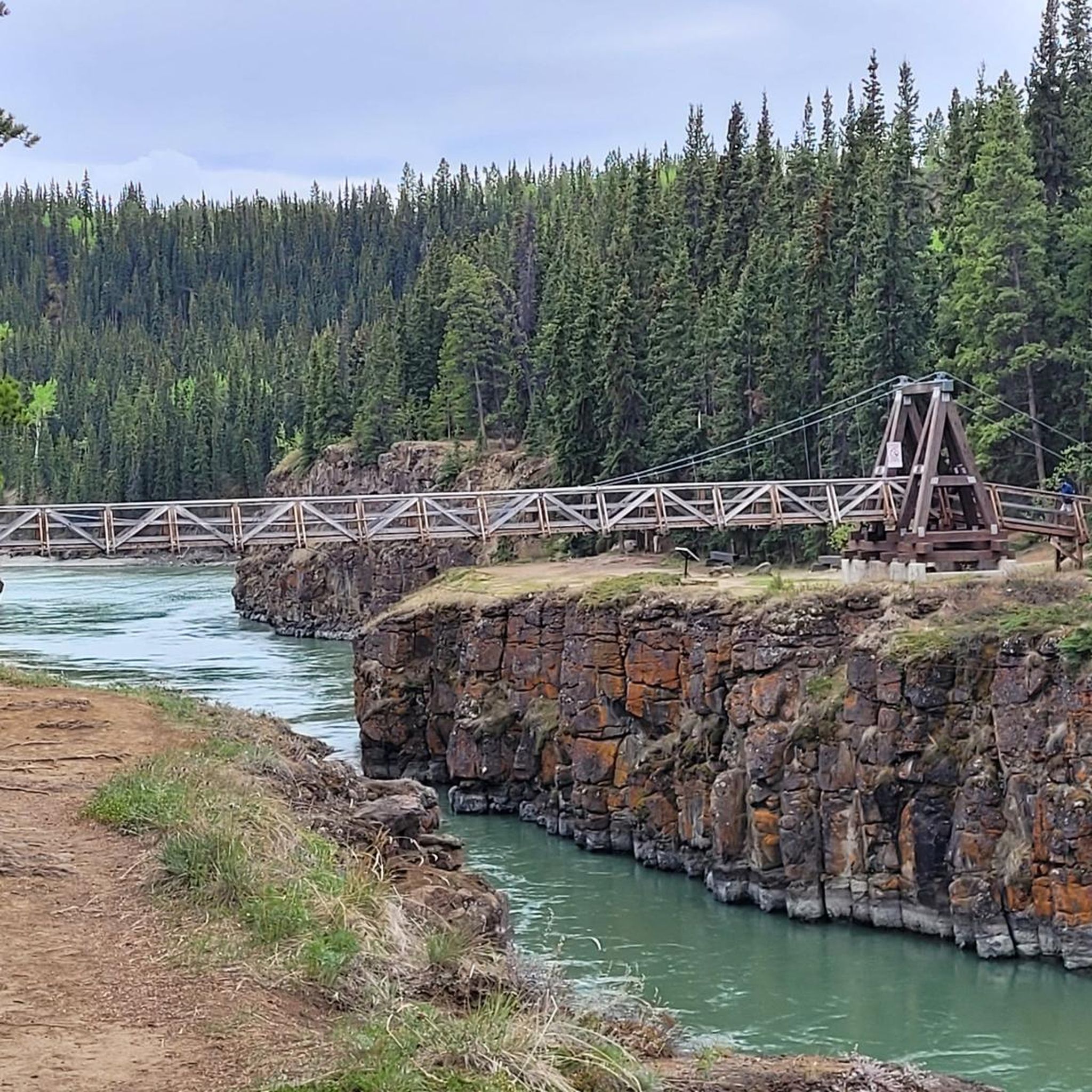
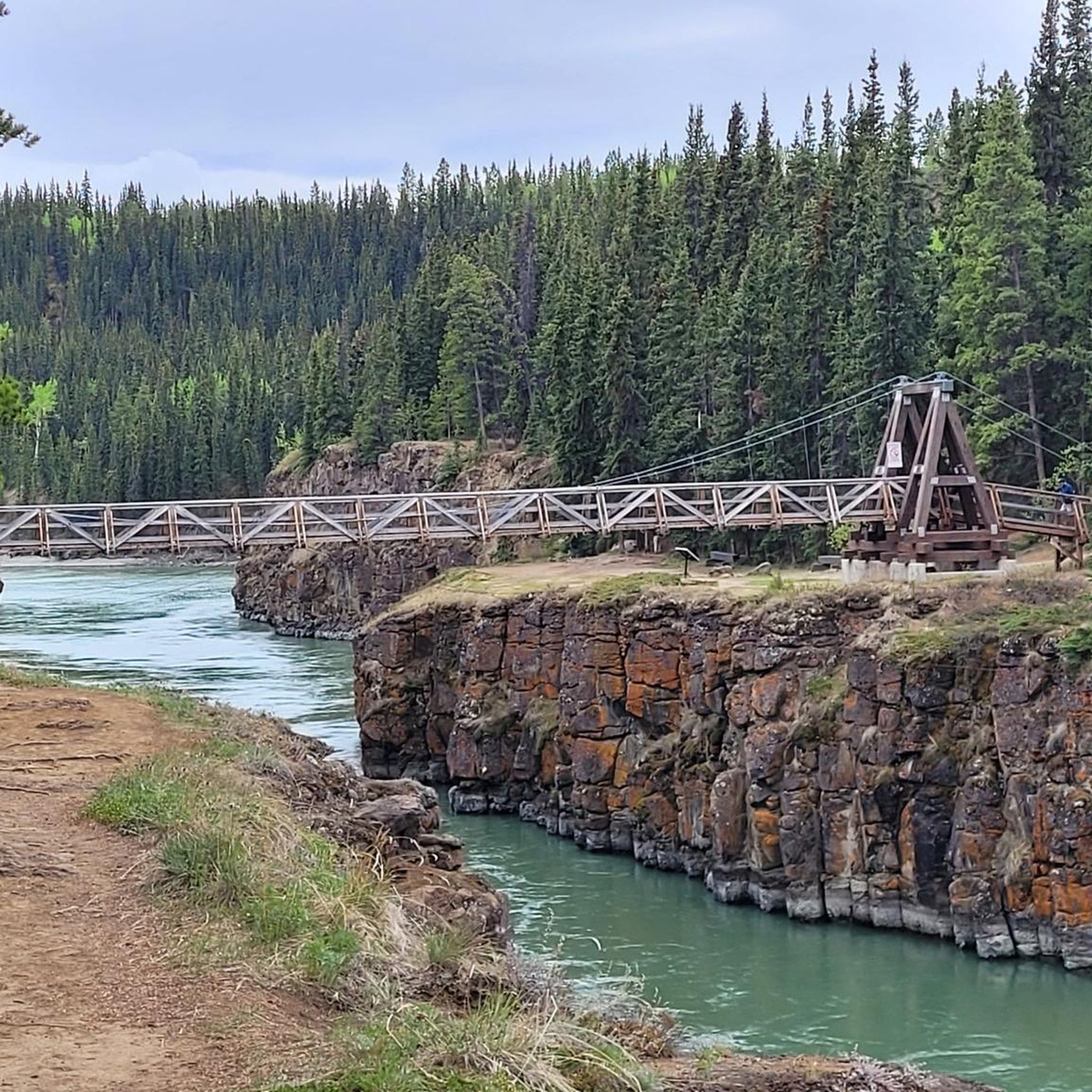
The Miles Canyon Suspension Bridge spans the emerald-green waters of the Yukon River where it flows through the volcanic rock walls of Miles Canyon. The bridge was built in 1922 to help cross the Yukon River before there were any nearby roads. Today's modern suspension bridge was built in the same spot and is a pedestrian-only bridge that gently sways.
2
0
The bridge offers the opportunity to get to the other side of the canyon and thus to the trails very close to the river.
0
0


Very beautiful suspension bridge over the Yukon River and Canyon!
1
0

Small path to the cliff over the Yukon
0
0

The rocks in Miles Canyon are basalts, formed by lava flows millions of years ago. The canyon was later carved by the flowing waters of the Yukon River. During the Klondike Gold Rush at the end of the 19th century, the White Horse Rapids in the narrow canyon were a dreaded obstacle that gold seekers had to navigate by boat on their way to the goldfields further north. There are conflicting accounts of the number of casualties and property damage during the journey through the rapids. The North West Mounted Police intervened and prohibited passage; only qualified captains were permitted to attempt the voyage. Those on the boats had to bypass the canyon on a footpath located above. At the end of 1897, businessman Norman Macaulay and a team built a streetcar on the east bank of the Yukon River in just three weeks. Rails made of pine and spruce piles were laid on wooden sleepers on a gravel bed. Horses were used to pull streetcars loaded with goods along the wooden rails. Boats could also be transported on the Macaulay Tramway to bypass the rapids. South of the (present-day) suspension bridge, at the point where the tramway began, Canyon City, a small settlement, grew up with a hotel, saloon, restaurant, stables, the mounted police, as well as cabins and tents. https://www.yukon-news.com/letters-opinions/old-tramway-is-now-part-of-whitehorse-history/ With the construction and completion of the White Pass & Yukon Route Railway from Skagway to Whitehorse in 1900, both the tramway and Canyon City lost their purpose. The rapids of Miles Canyon disappeared with the construction of the hydroelectric power station and the creation of Schwatka Lake in 1959. Today, Miles Canyon and the suspension bridge over the Yukon River are popular destinations near Whitehorse. https://yukoninfo.com/whitehorse-info-miles-canyon/
1
1
The 'Robert Lowe Bridge', a suspension bridge over 'Miles Canyon' - also known as the 'Miles Canyon Suspension Bridge' - was built and dedicated in 1922. Robert Lowe was a mining entrepreneur in the Whitehorse Copper Belt and a longtime politician in the region.
5
0
Frequently Asked Questions
What are some of the most notable natural features to visit in Yukon?
Yukon is rich in dramatic natural features. You can explore the Miles Canyon Suspension Bridge, which spans the emerald-green waters of the Yukon River through volcanic rock walls. Another significant natural landmark is Five Finger Rapids, where basalt rock pillars divide the Yukon River into five distinct rapids. Beyond these, the region boasts Kluane National Park and Reserve, home to Mount Logan and vast icefields, the vibrant Emerald Lake, and the rugged peaks of Tombstone Territorial Park.
Are there any historical sites related to the Gold Rush era in Yukon?
Yes, Yukon offers several significant historical sites from the Gold Rush. The S.S. Klondike National Historic Site in Whitehorse preserves a sternwheeler that was vital for transportation during the Gold Rush. Dawson City is another key historical town, offering a glimpse into the era with its historical complex and the Dawson City Museum.
What kind of outdoor activities can I do near Yukon's attractions?
The Yukon offers a wide range of outdoor activities. You can find numerous hiking opportunities, from easy strolls to more challenging trails. For example, there are many easy hikes and general hiking trails around Yukon, including the Auriol Trail near Haines Junction. The Yukon River is also popular for canoeing, and areas like Kluane National Park offer flightseeing, hiking, and wildlife viewing.
Are there family-friendly attractions in Yukon?
Many attractions in Yukon are suitable for families. The Miles Canyon Suspension Bridge is a great spot for a family walk, and the S.S. Klondike National Historic Site offers an engaging historical experience for all ages. The Yukon Wildlife Preserve is another excellent family option to see Arctic and boreal animals.
Where can I learn about the First Nations culture and heritage in Yukon?
Yukon has several important cultural centers dedicated to First Nations heritage. The Dänojà Zho Cultural Centre in Dawson City highlights Tr'ondëk Hwëch'in heritage, while the Kwanlin Dün Cultural Centre in Whitehorse preserves and presents the culture of the Kwanlin Dün First Nation. Carcross also has the Haa Shagóon Hídi (Our Ancestors House), a cultural center celebrating First Nations culture.
What are some unique viewpoints or scenic spots in Yukon?
For breathtaking views, the Miles Canyon Suspension Bridge offers incredible vistas of the Yukon River. The Whitehorse Waterfront Wharf provides a historical viewpoint along the river. Midnight Dome in Dawson City offers panoramic views of the city and river confluence, and Emerald Lake is famous for its vibrant green waters, making it a highly photographed scenic stop.
What is the best time of year to visit Yukon for attractions and outdoor activities?
The best time to visit Yukon largely depends on your interests. Summer (June to August) is ideal for hiking, canoeing, and exploring natural attractions under the midnight sun. Fall offers spectacular autumn colors, especially in Tombstone Territorial Park. Winter is prime for viewing the Northern Lights and enjoying snow-based activities.
Are there any accessible attractions for visitors with mobility considerations?
The Whitehorse Waterfront Wharf is noted as wheelchair accessible, offering a chance to experience the historical waterfront. While many natural trails may have varying accessibility, it's always recommended to check specific attraction websites for detailed accessibility information.
What are some driving routes that offer scenic views in Yukon?
The Dempster Highway is a renowned scenic driving route, being Canada's only all-season road to cross the Arctic Circle, offering a unique journey through northern wilderness. The South Klondike Highway also features picturesque stops like Emerald Lake.
Where can I see wildlife in Yukon?
Kluane National Park and Reserve is an excellent place for wildlife viewing, with opportunities to spot Dall sheep, caribou, wolves, and grizzlies. Tombstone Territorial Park also offers chances to see caribou, moose, sheep, bears, and wolves. The Yukon Wildlife Preserve provides a controlled environment to observe various Arctic and boreal animals in their natural habitats.
What do visitors enjoy most about the attractions in Yukon?
Visitors frequently appreciate the stunning natural beauty, the rich historical insights, and the sense of adventure that Yukon offers. Many highlight the unique experience of places like the Miles Canyon Suspension Bridge and the historical significance of the S.S. Klondike National Historic Site. The blend of wilderness and history creates a memorable experience.
Most popular attractions around Yukon

Get inspired with the komoot mobile app


Explore more
Still not found the Highlight you’re looking for? See guides of the top attractions in other regions:
