The best MTB trails around Laguna de Manjavacas
4.8
(5)
54
riders
28
rides
Mountain bike trails around Laguna de Manjavacas are characterized by a flat, steppe-like environment and extensive cereal fields. The region features unpaved roads and paths around the seasonal saline lagoons, which are part of a significant wetland complex. This area is known for its accessible and scenic cycling, offering a tranquil experience through a unique natural reserve. The terrain is generally flat, making it suitable for less technical mountain biking.
Best mountain bike trails around Laguna de Manjavacas
- The most…
Last updated: October 14, 2026
4.7
(3)
6
riders
Moderate mountain bike ride. Good fitness required. Advanced riding skills necessary.
5
riders
43.3km
03:25
250m
250m
Moderate mountain bike ride. Good fitness required. Advanced riding skills necessary.

3
riders
Moderate mountain bike ride. Good fitness required. Advanced riding skills necessary.
4
riders
51.1km
03:56
300m
300m
Moderate mountain bike ride. Good fitness required. Advanced riding skills necessary.
3
riders
53.9km
04:14
270m
270m
Moderate mountain bike ride. Good fitness required. Advanced riding skills necessary.
Get access to more routes and recommendations from other explorers.
Already have an account?
Our route recommendations are based on thousands of hikes, rides, and runs completed by other people on komoot.
Start today with a free account
Your next adventure awaits.
Popular around Laguna de Manjavacas


Tips from the Community

The ruins of the Ermita de Santa Ana in El Toboso (Toledo) are the remains of a 16th-century Renaissance temple. It is located outside the village, on a deserted hill.
2
0

Return to the town of Campo de Criptana
0
0

The statue of Don Quixote and Dulcinea in El Toboso is one of the town's most emblematic monuments, deeply linked to the Cervantes universe. It stands in the main square of El Toboso, dedicated to Juan Carlos I, in the heart of the town. The sculptures are made of sheet iron, not cast iron, giving them a handcrafted and robust appearance.
4
0
The municipality is in the region of La Mancha, bordering Cuenca and Toledo, and is known for the Pedro Muñoz-Mota del Cuervo lagoon complex. The old houses made of masonry and mud bricks stand out, such as the Casa de La Paca. Church of San Pedro: Built between the 17th and 18th centuries, with a Latin cross plan and a barrel vault.
8
0

Views in the distance of the ruins of the Hermitage of Santa Ana, of whose past unfortunately only a few remains remain.
3
0
Public fountain on the road very close to the sanctuary of Nuestra Sra de Criptana
4
0

Unfortunately, nowadays they are often only monuments to a long tradition of craftsmanship: the heavy millstones were moved using the power of the wind alone to grind grains into flour (grain mills) or press oil from olives (oil mills). Sometimes - although rarely - the windmills also had the function of a pumping station and transported water to a higher level. But Miguel de CERVANTES (1547 to 1616) also created a literary monument to the technical monument of the mills: the most famous figure of the author, who is considered Spain's national poet and whose work can certainly be valued as world literature: "Don QUIXOTE", also known as the "Knight of the Sorrowful Countenance" and always accompanied by his loyal squire Sancho Panza, fights a - of course hopeless - battle against windmills in one of the fictional stories, in which he believes he recognizes four-armed giants.
1
0
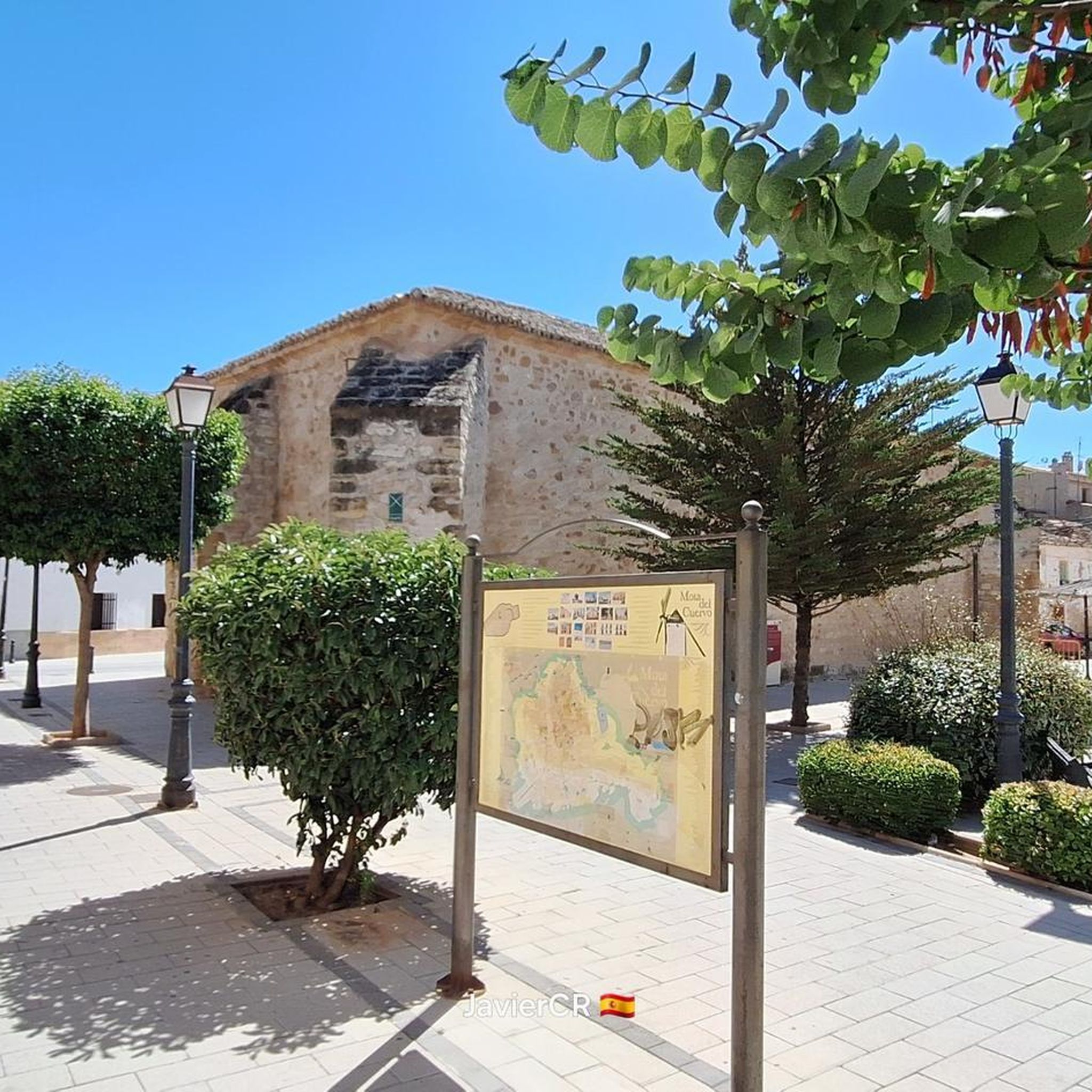
This mountain where the Mota del Cuervo mills are located is known by the name "Balcón de La Mancha", as it has fabulous views wherever you look.
0
0
Frequently Asked Questions
What kind of mountain bike trails can I expect around Laguna de Manjavacas?
The mountain bike trails around Laguna de Manjavacas are generally characterized by flat terrain, unpaved roads, and paths that traverse a steppe-like environment and extensive cereal fields. The area is known for its accessible and scenic cycling, offering a tranquil experience through a unique natural reserve. You'll find a mix of easy to moderate routes, with 2 easy, 17 moderate, and 1 difficult trail available.
Are there any family-friendly mountain bike routes in the area?
Yes, the flat terrain and well-defined paths around Laguna de Manjavacas make it ideal for family-friendly cycling. The circular interpretive route directly around the lagoon, approximately 8.2 to 9 kilometers long, is described as an unpaved road with low difficulty, suitable for all skill levels. While specific family-designated routes aren't listed, many of the easier trails, like those contributing to the 2 easy routes in the area, would be suitable for families.
Can I bring my dog on the mountain bike trails?
While the region is a Natural Reserve and a Biosphere Reserve, specific regulations regarding dogs on trails can vary. It's generally advisable to keep dogs on a leash to protect the sensitive birdlife and natural environment, especially around the lagoons. Always check local signage for any restrictions on pets within the reserve areas.
What is the best time of year to go mountain biking around Laguna de Manjavacas?
The best time to visit for mountain biking and birdwatching is typically during spring and autumn. These seasons offer milder temperatures, which are more comfortable for cycling, and coincide with the peak migratory periods for many bird species, including flamingos, making for excellent wildlife observation opportunities. Summer can be very hot, and winter can be chilly, though the flat terrain generally remains accessible.
Are there any circular mountain bike routes around Laguna de Manjavacas?
Yes, there is a well-defined circular interpretive route directly around the Laguna de Manjavacas, which is approximately 8.2 to 9 kilometers long. Additionally, many of the longer routes in the region are loops, such as El Toboso Town Center – Views of Ermita de Santa Ana loop from Pedro Muñoz, which is 19.8 miles (31.9 km) and offers scenic views.
Where can I park my car when visiting the mountain bike trails?
While specific parking areas for mountain bikers are not detailed, visitors typically find parking in the nearby town of Mota del Cuervo or at designated access points around the Laguna de Manjavacas. Given the area's focus on nature observation, there are usually small parking areas near bird observatories or trailheads. Always look for official parking signs.
Is it possible to reach the mountain bike trails by public transport?
Public transport options directly to the Laguna de Manjavacas are limited. The nearest town, Mota del Cuervo, may have bus connections from larger cities, but reaching the specific trailheads around the lagoon would likely require a taxi or a longer walk/ride. It's generally more convenient to arrive by car, especially with mountain bikes.
Do I need any special permits to mountain bike in the Laguna de Manjavacas Natural Reserve?
Laguna de Manjavacas is a Natural Reserve and a Biosphere Reserve. Generally, no special permits are required for recreational activities like mountain biking on established trails. However, it is crucial to stay on marked paths to protect the sensitive ecosystem and birdlife. Always respect local regulations and signage within the protected area.
What interesting sights or landmarks can I see while mountain biking in the region?
The primary attraction is the Laguna de Manjavacas itself, part of a complex of seasonal saline lagoons, which is a crucial stopping point for migratory birds. You can observe diverse bird species, including flamingos, from designated observatories. The surrounding landscape features a unique steppe-like environment and extensive cereal fields. Culturally, the Views of Ermita de Santa Ana – Pedro Muñoz loop from Pedro Muñoz passes by the significant hermitage of Nuestra Señora de Manjavacas, and routes like Windmills of Campo de Criptana – Campo de Criptana Windmills loop from Pedro Muñoz lead through landscapes featuring iconic windmills.
What do other mountain bikers enjoy most about the trails around Laguna de Manjavacas?
The area is highly rated by the komoot community, with an average score of 4.7 stars from 3 reviews. Mountain bikers often praise the tranquil and picturesque cycling experience, the flat terrain suitable for relaxed rides, and the unique opportunity for birdwatching. The expansive views of the La Mancha region and the distinct saline landscape are also frequently highlighted as enjoyable aspects.
How long are the mountain bike trails near Laguna de Manjavacas?
The trails vary in length, offering options for different preferences. For instance, the circular interpretive route directly around the lagoon is approximately 8.2 to 9 kilometers (5-5.6 miles). Longer routes include El Toboso Town Center – Windmills loop from Pedro Muñoz, which is 31.7 miles (51.0 km) and can take nearly 4 hours to complete, providing a more extensive exploration of the region.
Are there any cafes or restaurants near the mountain bike trails?
While the immediate vicinity of the lagoons is a natural reserve, the nearby town of Mota del Cuervo offers various amenities, including cafes, pubs, and restaurants. It's a good idea to plan your ride to start or end in Mota del Cuervo if you wish to enjoy refreshments or a meal after your ride.

Get inspired with the komoot mobile app


Explore more
Browse the best MTB trails in other regions.
