Attractions and Places To See around Bury St. Edmunds - Top 20
Best attractions and places to see around Bury St. Edmunds, a historic market town in Suffolk, England, offer a rich tapestry of experiences. The area is known for its significant landmarks, cultural sites, and natural features. Visitors can explore historical depth and charming ambiance, providing a variety of engaging experiences.
Best attractions and places to see around Bury St. Edmunds
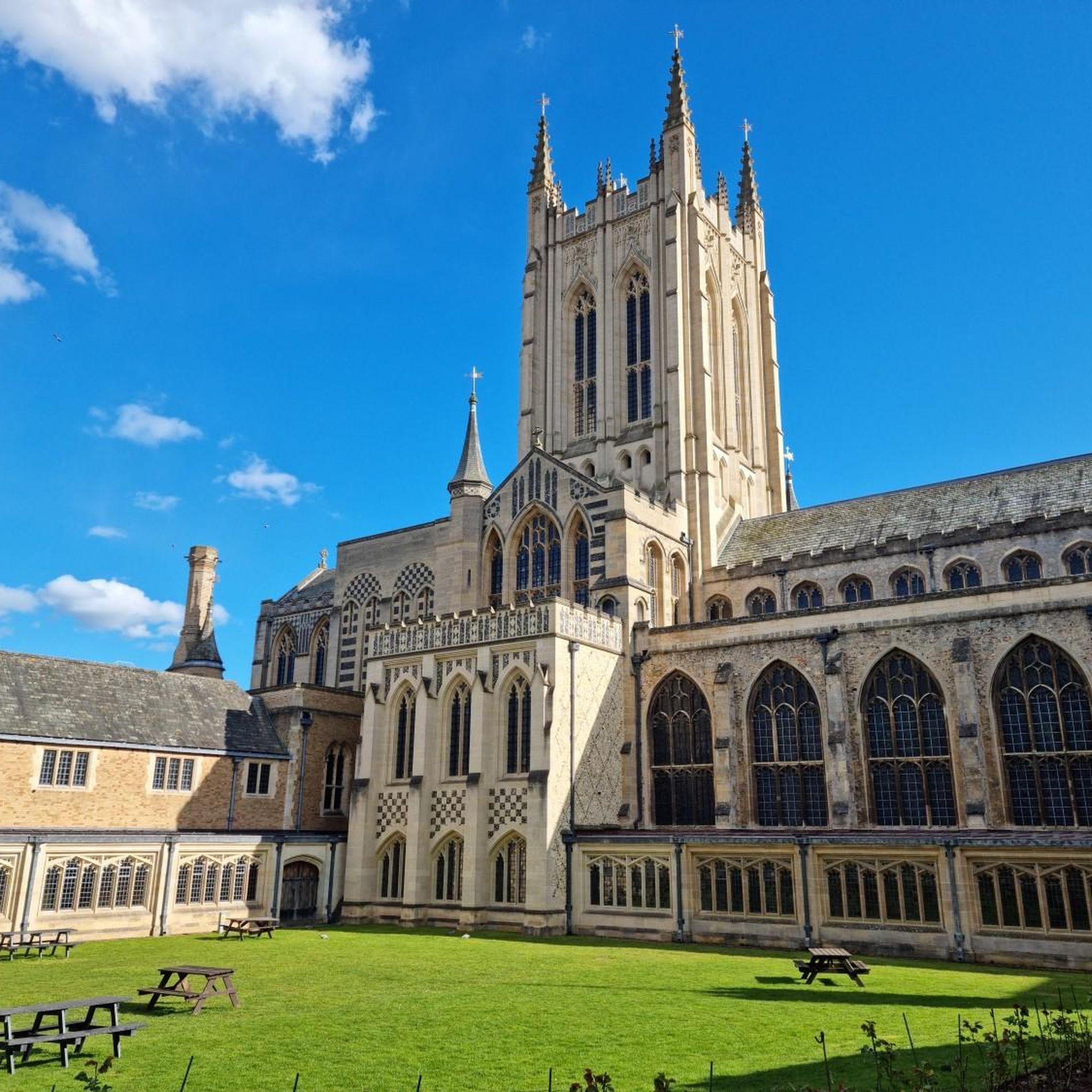
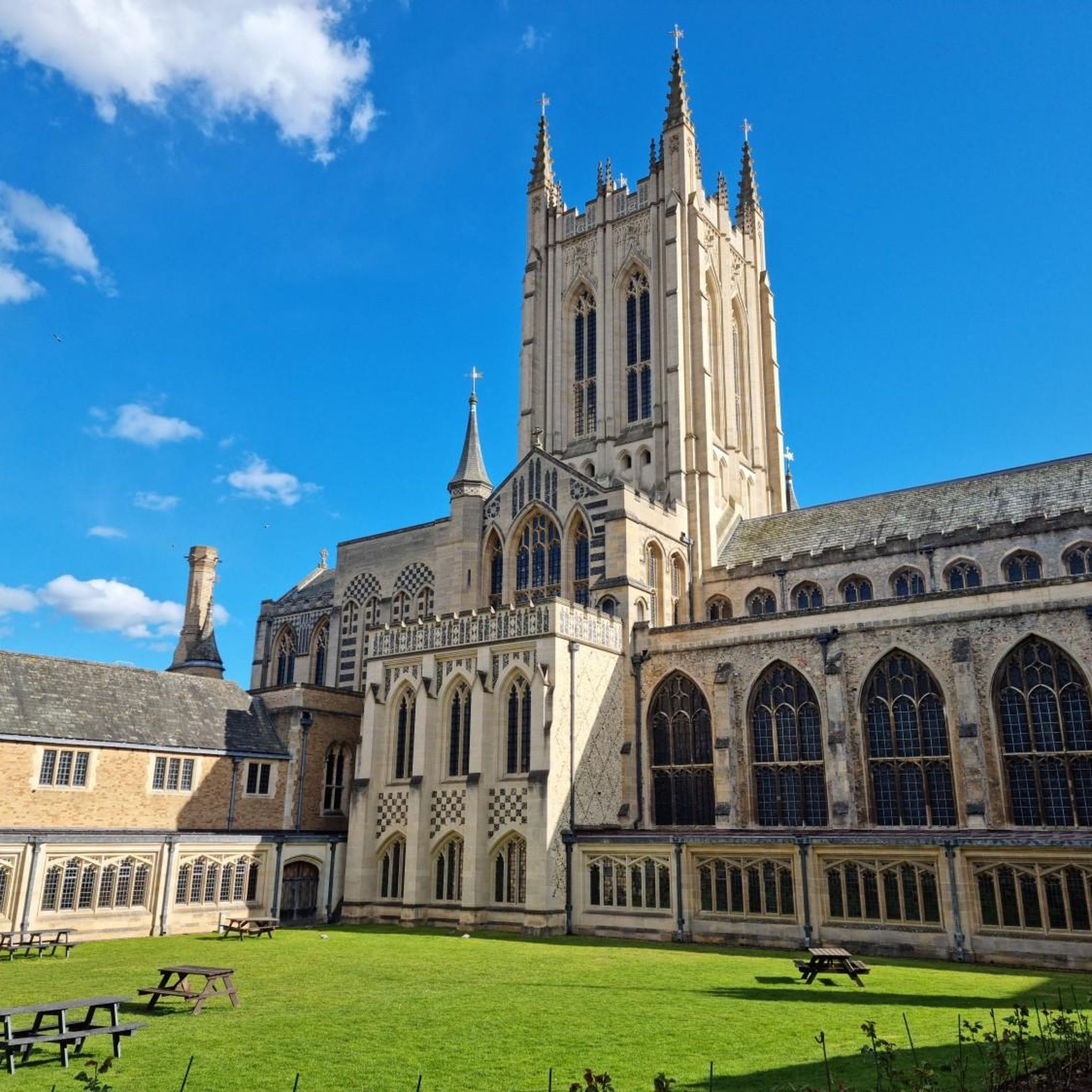
- The most popular attractions is St Edmundsbury Cathedral, a religious building that originated in the 11th century and became a cathedral in 1914. It features a spectacular vaulted ceiling and offers tower tours for panoramic views of the town.
- Another must-see spot is West Stow Anglo-Saxon Village, a reconstructed settlement. This site allows visitors to experience an Anglo-Saxon village with historically-accurate buildings situated on an archaeological site, surrounded by 125 acres of countryside.
- Visitors also love Seven Tree Road, Deadman's Grave, an intermediate trail. This 127.3-hectare biological Site of Special Scientific Interest features species-rich calcareous grassland and is home to nationally rare plants and birds.
- Bury St. Edmunds is known for its historical sites, religious buildings, and natural trails. The region offers a diverse range of attractions to see and explore, from ancient abbeys to expansive country parks.
- The attractions around Bury St. Edmunds are appreciated by the komoot community. With more than 90 upvotes and 40 photos, these places offer diverse experiences for exploration.
Last updated: August 25, 2026
St Edmundsbury Cathedral
Highlight • Religious Site
Tip by

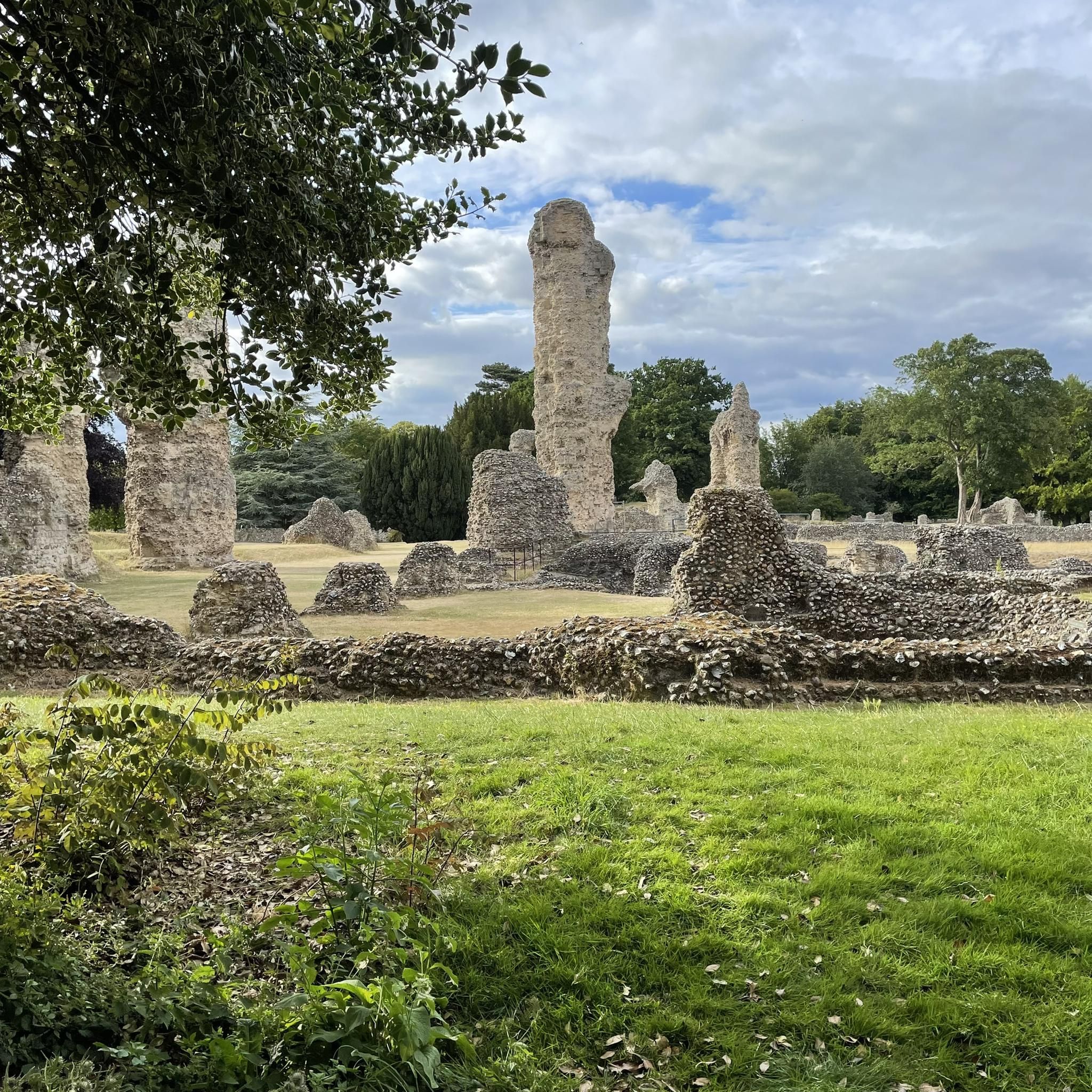
Abbey Gate, Bury St Edmunds
Highlight • Historical Site
(en.wikipedia.org/wiki/Bury_St_Edmunds)
Tip by
Sign up now to discover places like this
Get recommendations on the best single tracks, peaks, & plenty of other exciting outdoor places.
Sign up for free
St Mary's Church, Woolpit
Highlight • Historical Site
The church of The Blessed Virgin Mary in Woolpit is one of the great medieval churches of Suffolk, a county blessed with some of the finest country churches in England. Like so many other Suffolk villages Woolpit owes its superb church to the wealth of the medieval wool trade, but there was a church on this spot centuries before Suffolk wool merchants gained their wealth.
The earliest record of a church at Woolpit comes from AD 1005 when the Earl of the East Angles gave the church and manor here to the Shrine of St Edmund at Beodricsworth (Bury St Edmunds). The church remained the property of the Abbey until the Dissolution of the Monasteries. The Woolpit church originally sent 10 marks worth of tithes to support the monks of Bury, but at some point in the medieval period this sum claimed by the crown.
The monks of St Edmundsbury Abbey were furious, and determined to seek reparation. Two monks disguised themselves as Scottish pilgrims and without permission left the abbey and made the long journey to Rome, where they sought and obtained a Papal charter affirming their right to the money.
They were attacked and robbed on their return journey, but one of the monks hid the charter in his mug, and so preserved it. The pair's belongings had been stolen, so they had no choice but to beg their way back to the abbey. The Papal charter did the trick, however, and Woolpit's tithe once more went to help maintain sick monks.
Shortly before 1087, a new church was built at the behest of Abbot Baldwin. The only remaining feature of this Norman building is the priest's door in the south wall of the chancel.
The double-hammerbeam angel roof
OUR LADY OF WOOLPIT
Woolpit became a destination for pilgrims during the medieval period, when it held a richly decorated statue of Our Lady in its own chapel. No trace of this chapel now survives but it was probably on the north side of the chancel, where the vestry now stands.
Alternatively, it may have stood at the east end of the south aisle. Pilgrims began arriving at least as early as 1211 when the Bishop of Norwich ordered that their offerings be given to St Edmundsbury Abbey.
The Shrine of Our Lady of Woolpit became extremely popular during the 15th and 16th centuries. Henry VI visited twice, and Queen Elizabeth of York, wife of Henry VII, ordered that a pilgrimage be made on her behalf in 1501. In 1538 Henry VIII ordered that Catholic images be destroyed, and it seems likely that the statue was pulled down at that time. in 1551 the Court of Augmentation ordered that the chapel itself be pulled down and the material sold.
A curious scene took place at Woolpit during the tumult of the English Civil War. The incumbent rector was John Watson, and when he was ordered to accept the new Puritan style of worship he refused. He was removed from his living, and the Earl of Manchester sent armed men to enforce the order. The village split into two factions, and a furious melee broke out in the church. The rector was removed, and retired to Norfolk where he died shortly after.
St Mary's is worth visiting for its superb double-hammerbeam roof, decorated with carved figures of angels. Iconoclast William Dowsing did his best to destroy the angels in 1644. His deputy found 80 'superstitious Pictures' some of which he destroyed and others he ordered to be taken down. Many of the angel's heads were defaced but these were sensitively restored in the 19th century.
Other highlights include beautifully carved medieval bench ends decorated with a wide variety of carved figures. These figures probably survived because the Puritans considered them heraldic symbols rather than religious. Eye-catching figures include griffins and a very mournful looking dog.
Another highlight is a finely crafted south porch dating to 1430-1455. Over the porch arch is a parvise, a small chamber possibly used for storing important documents. The porch roof is vaulted with exceptionally detailed lierne vaulting and decorated bosses.
The eagle lectern is a rare early Tudor relic, made around 1520 and one of just 20 surviving examples made to accept a chained Bible. A local tradition suggests that Elizabeth I gave the lectern to the church, though there is no proof of this. The queen did visit nearby Haughley Park in 1600 and sent one of her knights to visit Woolpit on her behalf. It is certainly possible that he gave the parishioners money that was used to buy the lectern.
The screen is 15th century, though the gates are Jacobean. The screen is painted and gilded and retains the medieval beam made to hold the rood, or crucifix. The base of the screen is painted with figures of saints including St Withburga, St Edmund, St Etheldreda, and St Felix. The face of St Felix is actually a portrait of Henry Page, the serving rector at the time of the Victorian restoration. Over the arch is a beautifully vaulted painted dedication board, decorated with figures of angels.
The large east window is a beautiful example of Decorated Gothic style, with reassembled fragments of medieval glass in the upper lights.
Each end of the chancel choir stalls has a bench end with an intricate figure of a Green Man. Set against the wall is a fascinating carving of a woodwose, a wild man of the woods figure found throughout East Anglia.
Most of the building is Perpendicular Gothic, dating from the mid-15th century but the chancel and south aisle are 14th century. The tower and spire were added in the 1850s by architect Richard Phipson after the medieval originals were damaged by lightning. This is actually the third tower; the first was damaged in a thunderstorm in 1602 and the second was blown down in a hurricane in 1703.
Tip by

The Fox Inn, Ousden
Highlight • Pub
Tip by

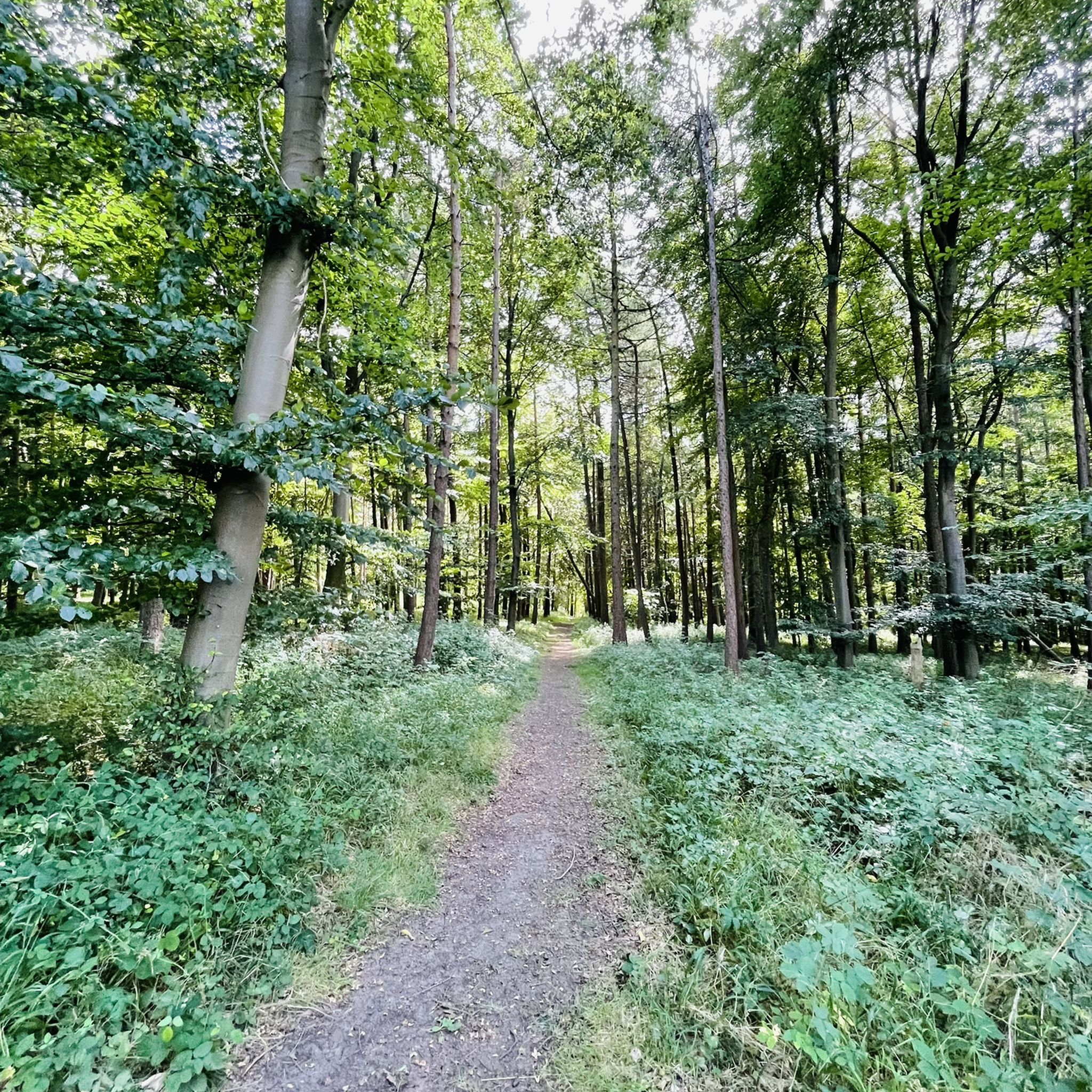
Seven Tree Road, Deadman's Grave
Highlight • Trail
Deadman's Grave, Icklingham is a 127.3-hectare (315-acre) biological Site of Special Scientific Interest north-east of Icklingham in Suffolk. It is a Nature Conservation Review site, Grade I, and part of Breckland Special Area of Conservation and Breckland Special Protection Area under the European Union Directive on the Conservation of Wild Birds.
According to Natural England, this site "is largely covered by short, sheep-grazed, species-rich calcareous grassland of the very highest value." It has four nationally rare plants, Spanish catchfly, Boehmer's cat's-tail, Breckland Wild Thyme and spring speedwell. Nationally rare stone curlews breed there.
A track called Seven Tree Road runs through the site.
Tip by

Sign up for free to discover even more attractions around Bury St. Edmunds.
Sign up for free
Already have an account?
Start today with a free account
Your next adventure awaits.
Login or Signup

Tips from the Community

The present building is a cathedral. The abbey that preceded it was shut down after the reformation and only its ruins remain.
0
0


This beautiful cathedral was originally built as a church in the early 13th century and became a cathedral for the newly established Diocese of St Edmundsbury and Ipswich in 1914. It has some beautiful characteristics including a large rose window, detailed stone carvings, fantastic gardens and the notable Abbey Gate.
1
0

The top element of Seven Tree Road is less pleasant when prolonged amounts of rain. Rutted from 4 x 4's. But with care, always ridable.
0
1
From Wikipedia, Deadman's Grave, Icklingham Deadman's Grave, Icklingham is a 127.3-hectare (315-acre) biological Site of Special Scientific Interest north-east of Icklingham in Suffolk. It is a Nature Conservation Review site, Grade I, and part of Breckland Special Area of Conservation and Breckland Special Protection Area under the European Union Directive on the Conservation of Wild Birds. According to Natural England, this site "is largely covered by short, sheep-grazed, species-rich calcareous grassland of the very highest value." It has four nationally rare plants, Spanish catchfly, Boehmer's cat's-tail, Breckland Wild Thyme and spring speedwell. Nationally rare stone curlews breed there. A track called Seven Tree Road runs through the site.
0
1
Note: the highest *pint* not the highest *point*. To find the missing “o” go to www.komoot.com/highlight/1530035
0
0
Occupies the site of the old abbey with a very scenic set-paved road taking you past the front.
0
0
Frequently Asked Questions
What historical sites can I explore in Bury St. Edmunds?
Bury St. Edmunds is rich in history. You can visit the impressive St Edmundsbury Cathedral, which originated in the 11th century and features a spectacular vaulted ceiling. Explore the extensive remains of the Abbey of St Edmund within the Abbey Gardens, including the 14th-century Great Gate and the Norman Tower. Don't miss St Mary's Church, the burial place of Mary Tudor, Queen of France, or the West Stow Anglo-Saxon Village, a reconstructed settlement offering a unique historical immersion.
Are there any notable natural attractions or parks to visit?
Yes, the area offers several beautiful natural spaces. The Abbey Gardens themselves are a popular free attraction with formal gardens and historical elements. Nowton Park covers almost 200 acres with diverse features like a Lime Avenue, a bird feeding area, and a children's play area. Further afield, you can explore West Stow Country Park, Ickworth Estate with its extensive parkland, or the ancient woodlands of Bradfield Woods National Nature Reserve and Bull's Wood Nature Reserve, known for its spring wildflowers.
Are there family-friendly attractions in and around Bury St. Edmunds?
Absolutely. Many attractions cater to families. The Abbey Gardens offer open space for children to play, and Nowton Park has a children's play area and a maze. West Stow Anglo-Saxon Village is particularly engaging for all ages, allowing visitors to step back in time. The Guildhall also offers interactive displays, and the Theatre Royal presents a varied program suitable for different audiences.
What outdoor activities, like hiking or cycling, can I do near Bury St. Edmunds' attractions?
The area around Bury St. Edmunds is excellent for outdoor activities. You can find numerous routes for road cycling, easy hikes, and running. For example, there are road cycling routes like the 'Bury St Edmunds to Thetford loop via King's Forest' and easy hikes such as the 'Grounds Café, Nowton Park loop'. You can explore more options and detailed routes in the Road Cycling Routes around Bury St. Edmunds, Easy hikes around Bury St. Edmunds, and Running Trails around Bury St. Edmunds guides.
Where can I learn about Anglo-Saxon history near Bury St. Edmunds?
The best place to delve into Anglo-Saxon history is the West Stow Anglo-Saxon Village. This reconstructed settlement is built on the site of an early Anglo-Saxon village and offers a unique opportunity to experience life from that period with historically-accurate buildings and indoor displays of artifacts found in the area.
What unique cultural experiences does Bury St. Edmunds offer?
Beyond its historical landmarks, Bury St. Edmunds boasts unique cultural spots. You can visit the Theatre Royal, the only complete Regency theatre to survive in England, for drama, music, and comedy. The Guildhall, dating back to 1279, is Britain's oldest continuously used civic building and houses a World War Two Royal Observer Corps Control Centre. For a local taste, tour the Greene King Brewery or find the cozy, reputedly smallest pub in England, The Nutshell.
What is the best time of year to visit Bury St. Edmunds?
Bury St. Edmunds is charming year-round. Spring (March-May) is beautiful with daffodils in Nowton Park and wildflowers in Bull's Wood. Summer (June-August) offers pleasant weather for exploring gardens and outdoor sites, with various festivals. Autumn (September-November) brings colorful foliage to the parks and estates. Winter (December-February) can be quieter, but historical sites and indoor attractions remain open, and the town often has festive events.
Are there options for public transport to attractions outside the town center?
While many central attractions are walkable, public transport options exist for sites further out. Local bus services connect Bury St. Edmunds with surrounding villages and attractions like West Stow Anglo-Saxon Village and Ickworth Estate. It's advisable to check local bus schedules for specific routes and timings when planning your visit to these outlying areas.
Are there dog-friendly walking routes in the area?
Yes, many of the natural parks and woodlands around Bury St. Edmunds are dog-friendly. Nowton Park offers open spaces for walks, and the extensive grounds of Ickworth Estate are also suitable for dogs on leads. Always check specific park rules regarding dog access and ensure you clean up after your pet.
What can I do in Bury St. Edmunds on a rainy day?
On a rainy day, you can explore several indoor attractions. Visit St Edmundsbury Cathedral to admire its architecture and history. Moyse's Hall Museum offers diverse exhibits on the town's past, including local history and intriguing insights into superstition. Catch a performance at the Theatre Royal or enjoy the acoustics at The Apex, an award-winning music and entertainment venue. A tour of the Greene King Brewery is also a great indoor option.
Are there any wheelchair-accessible attractions in Bury St. Edmunds?
Many of Bury St. Edmunds' attractions strive for accessibility. St Edmundsbury Cathedral generally offers good access, though specific areas like tower tours may have limitations. The Abbey Gardens have accessible paths. It's recommended to check the individual websites of attractions like Moyse's Hall Museum or the Theatre Royal for their most up-to-date accessibility information before your visit.
Where can I find unique local pubs or eateries?
Bury St. Edmunds has a vibrant food and drink scene. For a truly unique experience, seek out The Nutshell, reputed to be England's smallest pub. You can also visit the Greene King Brewery for a tour and tasting. The town center and surrounding villages offer a variety of pubs and cafes, such as The Fox Inn, Ousden, known for its friendly atmosphere and being the highest point in Suffolk where you can buy a pint.
Most popular routes around Bury St. Edmunds
Most popular attractions around Bury St. Edmunds

Get inspired with the komoot mobile app


Explore more
Still not found the Highlight you’re looking for? See guides of the top attractions in other regions:
