Attractions and Places To See around Cherhill - Top 20
Best attractions and places to see around Cherhill include a blend of historical landmarks and natural beauty, primarily centered around its distinctive downs. The area features iconic hill figures, ancient monuments, and significant archaeological sites. Visitors can explore a variety of landscapes, from chalk hillsides to canal systems, offering diverse points of interest.
Best attractions and places to see around Cherhill
- The most popular attractions is Avebury Stone Circle, a man-made monument that is an extraordinary Neolithic site large…
Last updated: June 22, 2026
Avebury Stone Circle
Highlight • Monument
Tip by

Caen Hill Locks
Highlight • Viewpoint
Tip by

Sign up now to discover places like this
Get recommendations on the best single tracks, peaks, & plenty of other exciting outdoor places.
Sign up for free
Avebury Stone Circle
Highlight • Natural Monument
Tip by
Silbury Hill
Highlight • Monument
Tip by

Avebury to Ridgeway Track
Highlight • Cycleway
Tip by

Sign up for free to discover even more attractions around Cherhill.
Sign up for free
Already have an account?
Start today with a free account
Your next adventure awaits.
Login or Signup
Popular around Cherhill


Tips from the Community

Avebury is one of the largest prehistoric stone circles in the world. Unlike many other stone monuments, here you can walk among the massive stones and experience the special atmosphere up close. The site was created about 4,500 years ago and is part of the UNESCO World Heritage.
1
0


Sidbury Hill, or Sidbury Camp, is the site of an Iron Age bivallate hillfort on the eastern edge of Salisbury Plain in Wiltshire, England. The site is sub-triangular in shape, approximately 17 acres in area, and is constructed on the site of a Neolithic settlement. The hill offers excellent defensive slopes on all sides, which have been supplemented by the double ditch and rampart earthworks. The settlement and hillfort were partially excavated in the 19th century and the 1950s; there were finds of pottery and other artefacts. A Neolithic settlement site was discovered during the excavation in the 1950s, being of a section of the south-east rampart of the hillfort. A number of flint flakes and tools were recovered. The site is a scheduled national monument. Trees planted in the 1960s were removed from 2002 and the area was allowed to revert to the natural chalk downland. Access to the site is difficult as it is on, or near, Ministry of Defence land, and there are many tank tracks and occasional artillery firing in the area. There are also numerous ditches, barrows, trackways, field systems, and tumuli in the area. Due to erosion issues climbing on the barrow is now forbidden. Such a shame, but understandable.
0
0

The top section is great coming down after Fyfield Common, but the descent down into Avebury is tricky even on a mtb. Once you reach the farm it's been absolutely destroyed by 4x4s and tractors. So good luck. This type of track is my least favourite part of "official" cycling trails. They just whack the signage up and don't do any restoration or introduction of bylaws to prevent offroad vehicles from using them, restricting enjoyment for other users. It's not like there aren't miles and miles of offroad byways around here which could be legislated for multi-use and non-motorised use.
0
0

Decent Food in the Avebury Community Shop
0
0

I agree with other comments this is a very slippery path when wet. I lost control a few times but was going slow enough to avoid serious damage.
0
0
The Caen Hill Locks are one of the highlights of Route 4 on the Avon K Canal. Physically this is interesting. The water flows down the mountain, but the ship floats up the mountain lock by lock due to its own buoyancy.
0
0

Even in dry weather, the track is quite rutted between Avebury and Wroughton, so you don't cover the mileage so fast. That isn't a problem, except had accommodation deadlines at the other end. I took country lanes between the Ridgeway, dropping down to Wroughton then skirting Swindon before riding nice country lanes ( including Bishopstone )on the way to Uffington, it's pubs and it's White Horse. I cycles parallel to the King Alfred Trail, but 3/4 mile north , so fairly level with the contours with good views, but able to get to my accommodation in time !
0
0
Frequently Asked Questions
What historical sites can I explore around Cherhill?
Cherhill and its surroundings are rich in history. You can visit the iconic Avebury Stone Circle, an extraordinary Neolithic site where you can touch the ancient stones. Nearby, explore West Kennet Long Barrow, a Neolithic burial chamber older than Stonehenge, or marvel at Silbury Hill, Europe's largest artificial mound. Within Cherhill itself, the Cherhill White Horse, Lansdowne Monument, and Oldbury Castle hillfort offer further historical insights.
Are there family-friendly attractions near Cherhill?
Yes, several attractions are suitable for families. The Avebury Stone Circle is free to visit and offers open spaces for exploration. Caen Hill Locks provides an interesting walk along the canal, where children can watch boats navigate the impressive flight of locks and enjoy the surrounding nature. The Cherhill White Horse and Lansdowne Monument area is also great for family walks and picnics.
What natural features can I see around Cherhill?
Cherhill is set amidst beautiful natural landscapes, primarily the Cherhill Down and Calstone and Cherhill Downs. These areas are known for breathtaking views, chalk grassland flowers, and diverse wildlife, including rare butterflies. The downs are part of the North Wessex Downs National Landscape. You can also enjoy the natural beauty and wildlife along the Kennet and Avon Canal near Caen Hill Locks.
What kind of walking trails are available near Cherhill?
Cherhill offers a variety of walking trails. The Cherhill Down area is popular for ramblers and dog walkers, with footpaths leading to the Cherhill White Horse, Lansdowne Monument, and Oldbury Castle. The White Horse Trail, a long-distance route connecting Wiltshire's white horses, passes through the area. For specific routes, you can explore easy hikes like the 'Lansdowne Monument – Cherhill White Horse loop' on komoot's guide to Easy hikes around Cherhill.
Can I go cycling or mountain biking near Cherhill's attractions?
Yes, the area around Cherhill is excellent for cycling and mountain biking. You can find routes that take you past various attractions. For cycling, consider routes like the 'Devizes Millennium White Horse – Caen Hill Locks loop'. Mountain bikers can explore trails such as the 'Ridgeway & St Alfred's Way loop'. More details and routes are available in komoot's guides for Cycling around Cherhill and MTB Trails around Cherhill.
What is special about the Cherhill White Horse?
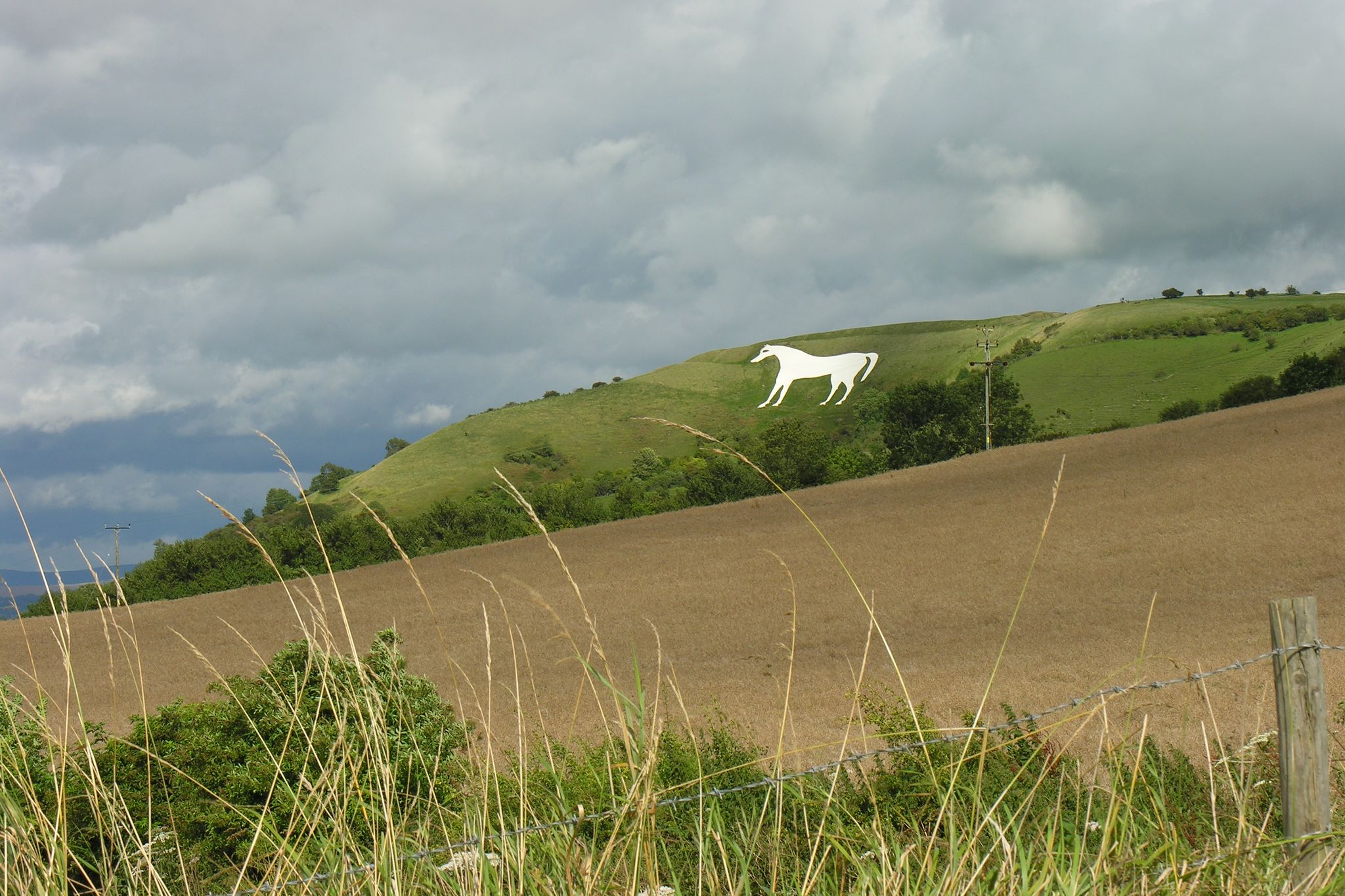
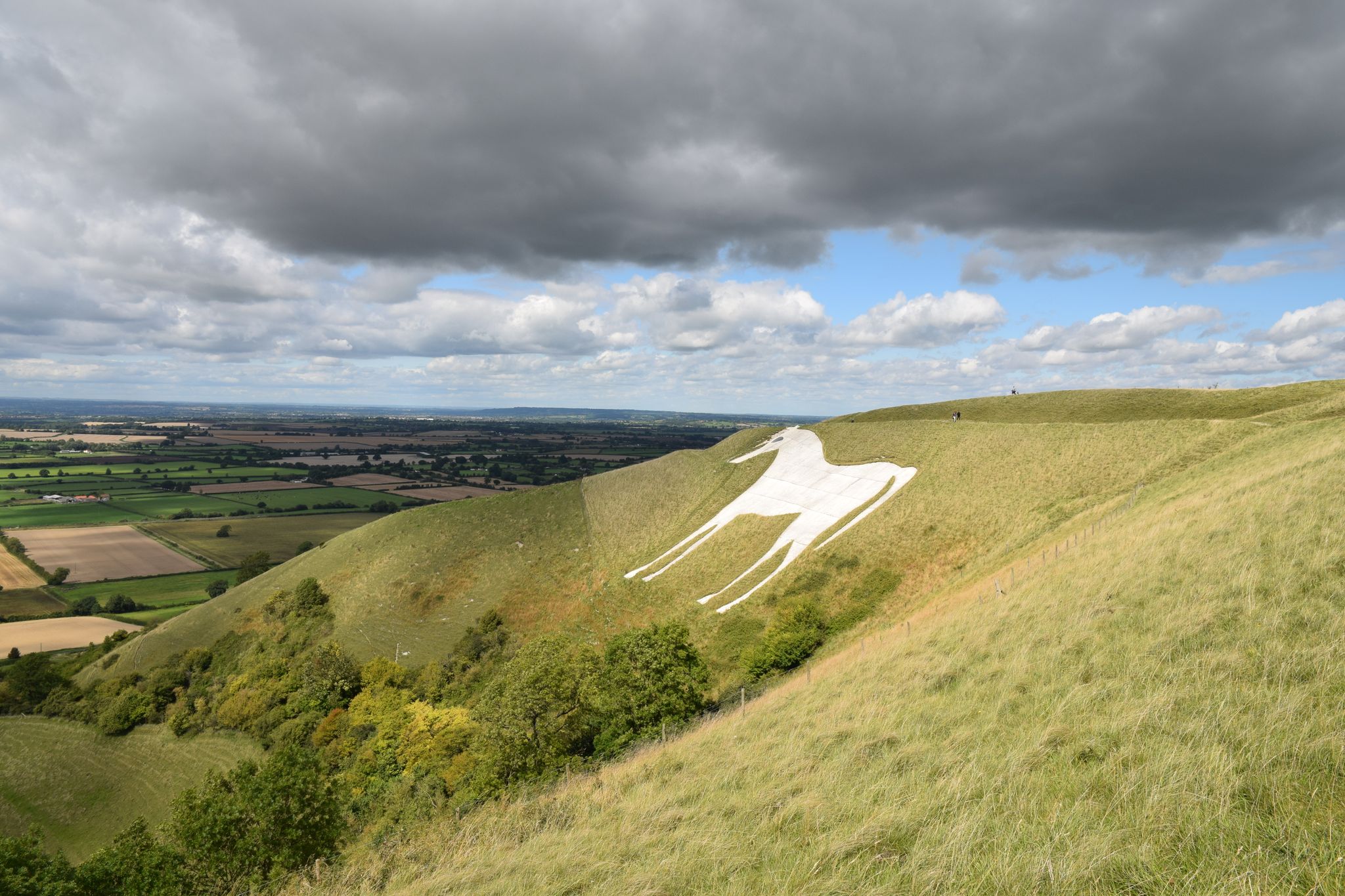
The Cherhill White Horse is an iconic hill figure, cut into the chalk hillside in 1780, making it the second oldest of Wiltshire's white horses. It's a prominent landmark visible for miles and is owned by the National Trust. The area around it is popular for walks and offers splendid views of the Wiltshire countryside.
What is the Lansdowne Monument?
The Lansdowne Monument, also known as the Cherhill Monument, is a 38-meter (125-foot) stone obelisk located near the Cherhill White Horse. Erected in 1845, it honors Sir William Petty, an ancestor of the 3rd Marquis of Lansdowne, and was designed by Sir Charles Barry. It is a Grade II* listed building and offers a striking visual landmark on the downs.
Are there any ancient hillforts to visit?
Yes, Oldbury Castle, an Iron Age hillfort, is situated on Cherhill Down. It originated as a Bronze Age enclosure and was later expanded, covering an area of 22 acres. It provides a sense of being on top of the county, with archaeological finds suggesting a past community presence.
What do visitors enjoy most about Avebury Stone Circle?
Visitors particularly enjoy that Avebury Stone Circle is an impressive Neolithic site where you can get up close and actually touch the stones, unlike some other ancient monuments. It's also appreciated that it's free to enter, making it a great place for a stroll around the full site.
What should I know before visiting West Kennet Long Barrow?
West Kennet Long Barrow is a Neolithic burial chamber older than Stonehenge. You can go inside a number of the chambers, but it can be dark, so packing a torch is recommended to see the surrounding rocks. The site is managed by the National Trust on behalf of English Heritage and is free to enter during reasonable daylight hours.
Is there a local pub or cafe in Cherhill?
The village of Cherhill has a local pub called The Black Horse, which serves as a community gathering spot. While there isn't a specific cafe mentioned directly in Cherhill, the area around Caen Hill Locks has cafes, and nearby towns like Calne offer more dining options.
What is the best time to visit Cherhill for walks?
The Cherhill Downs are beautiful year-round. Spring is lovely for seeing chalk grassland flowers, while autumn offers vibrant colors. Even in winter, the walks can be invigorating, though paths might be muddy. Always check local weather conditions before heading out.
Most popular routes around Cherhill
Most popular attractions around Cherhill

Get inspired with the komoot mobile app


Explore more
Still not found the Highlight you’re looking for? See guides of the top attractions in other regions:
