The best walks and hikes around Cranborne
4.6
(610)
4,068
hikers
14
hikes
Hikes around Cranborne explore the landscape of the Cranborne Chase, a designated Area of Outstanding Natural Beauty. The region is characterized by rolling chalk downlands, ancient woodlands, and chalk river valleys. Trails navigate a mix of grassy footpaths, quiet lanes, and bridleways over undulating terrain, offering a variety of circular walks Cranborne routes.
Best hiking trails around Cranborne
- The most popular hiking route is Hiking loop from Cranborne, a 4.9 mile (7.9 km) trail that takes about 2 hours 10 minutes to complete. This moderate route follows a combination of paths and quiet lanes over undulating ground.
- Another top favourite among local hiking enthusiasts is Gussage Hill and Pentridge Hill loop from Cranbourne — Cranbourne Chase & West Wiltshire Downs, a difficult 14.8 mile (23.8 km) path. This is a longer, more challenging hike with significant distance across the downlands.
- Local hiking enthusiasts also love the Little Common – Boulsbury Wood loop from Cranborne, a 8.1 mile (13.1 km) trail leading through Boulsbury Wood, often completed in about 3 hours 30 minutes.
- Hiking around Cranborne is defined by rolling chalk downlands, ancient woodlands, and historic drovers' ways. The network of trails provides options for both shorter, moderate hikes and more demanding long-distance routes.
- The routes in Cranborne are highly rated by the komoot community with an average score of 4.6 stars from more than 400 reviews. More than 2,900 hikers have used komoot to explore Cranborne's varied terrain.
Last updated: August 25, 2026
3
hikers
Hard hike. Very good fitness required. Mostly accessible paths. Sure-footedness required.
4.7
(15)
76
hikers
7.95km
02:09
100m
100m
Moderate hike. Good fitness required. Easily-accessible paths. Suitable for all skill levels.

Sign up for free
4.5
(2)
10
hikers
23.2km
06:10
240m
240m
Hard hike. Very good fitness required. Easily-accessible paths. Suitable for all skill levels.
4.4
(5)
9
hikers
13.3km
03:34
170m
170m
Moderate hike. Good fitness required. Easily-accessible paths. Suitable for all skill levels.
8
hikers
6.37km
01:43
80m
80m
Easy hike. Great for any fitness level. Easily-accessible paths. Suitable for all skill levels.
Get access to more routes and recommendations from other explorers.
Sign up for free
Already have an account?
Our route recommendations are based on thousands of hikes, rides, and runs completed by other people on komoot.
Start today with a free account
Your next adventure awaits.
Login or Signup

Other adventures around Cranborne

Tips from the Community

Bokerley Dyke is a substantial linear earthwork, approximately 5.75 kilometers (3.6 miles) long, located on Cranborne Chase. It runs along part of the border between Dorset and Hampshire, specifically between Woodyates and Martin. It is part of a larger Scheduled Monument that also includes Grim's Ditch and other earthworks. The dyke has a multi-period history. It is believed to have originated in the Bronze Age or Early Iron Age as an important political and cultural boundary. In the 1st century, it was cut through by a Roman road, Ackling Dyke, which ran between Old Sarum and Badbury Rings. In the 4th century, the dyke was remodeled and brought back into use. During this period, the Roman road was blocked. A coin of Valens found during excavations dates this activity to shortly after 364 AD, with some sources suggesting it was built between 367-368 AD. This remodeling may have been a defensive measure against attacks on Britain by Picts, Scots, and Saxons. The Roman road was eventually reopened, but the dyke may have continued to be used as a boundary after the Roman administration ended. Today, it still forms part of the border between the counties of Dorset and Hampshire.
0
0

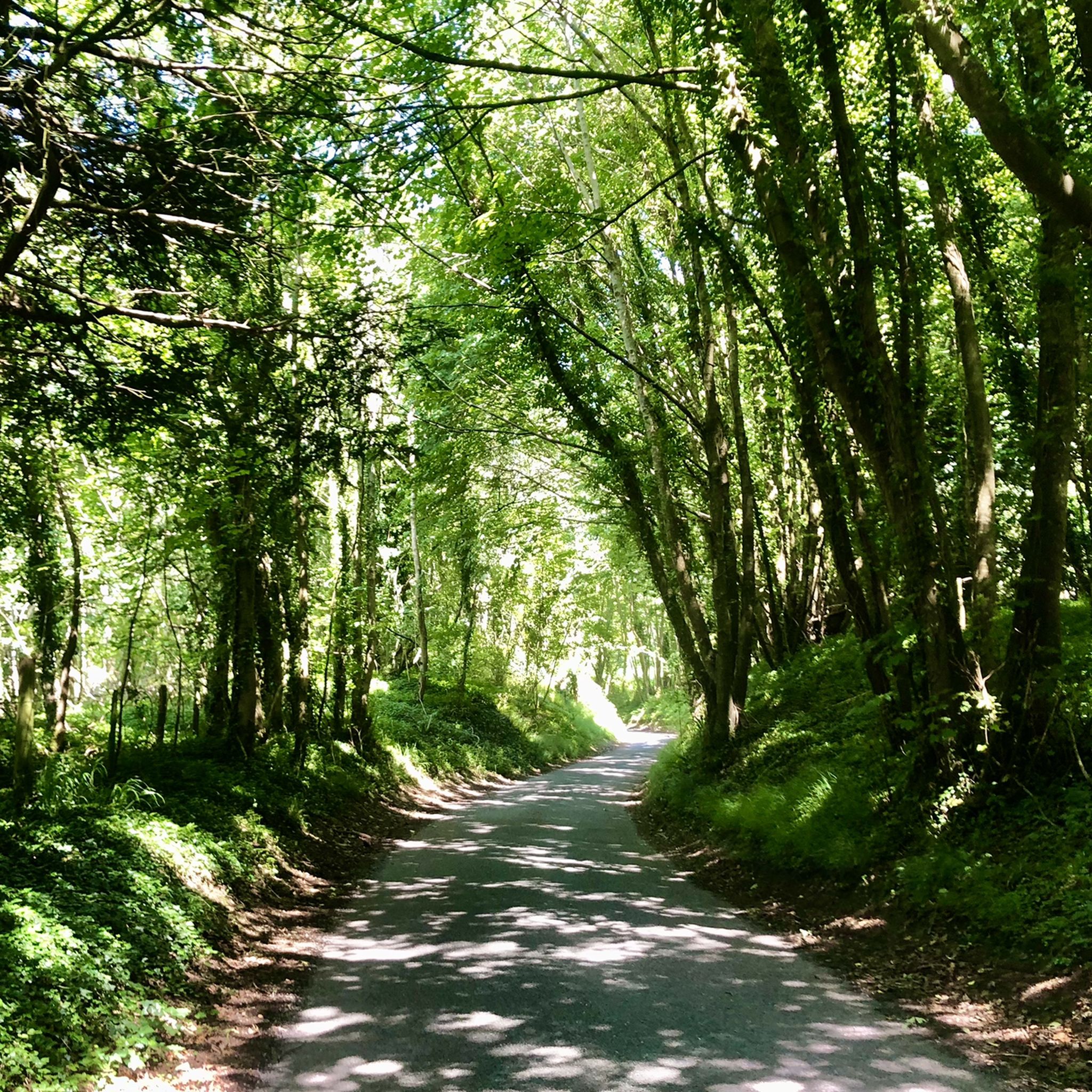
An ‘off the beaten track’ tranquil footpath through mixed woodland. Good path surface throughout.
1
0


The fun tap room of the Sixpenny Handley Brewery. Try the ales but also open for soft drinks, coffee and snacks. Lots of room to leave bikes in view and brilliant on a warm day with nice outdoor seating. Open every day from 12:00 closes at 20:00 on Mon to Thurs. Closes at 21:00 on Fri and Sat. Closes at 18:00 on Sun.
0
0
Bokerley Dyke may have originated in the Bronze Age or Early Iron Age and formed a political and cultural boundary. It was cut through by a Roman Road (Ackling Dyke running between Old Sarum and Badbury Rings) in the 1st century.
0
0
Open everyday from 12:00 closes at 20:00 on Mon to Thurs. Closes at 21:00 on Fri and Sat. Closes at 18:00 on Sun.
0
0

Sixpenny Taproom with soft drinks, coffee, cider, wine, local gin and snacks, plus, naturally, a range of ales to drink in or take away. There is also plenty of parking on site, and a lovely sun-trap of a courtyard with outdoor seating. Well behaved children are welcome, and dogs are allowed, but should be on leads. https://sixpennybrewery.co.uk/sixpenny-tap
0
0
Frequently Asked Questions
Are there many circular walks starting from Cranborne?
Yes, Cranborne is an excellent starting point for circular hikes. The area offers a variety of loops that take you through the surrounding chalk downlands and ancient woodlands. A great example of a longer route is the Hiking loop from Cranborne, which covers about 9 miles (14.5 km) and explores the undulating terrain and quiet lanes typical of the region.
Can I bring my dog on hikes in Cranborne Chase?
Many trails in Cranborne Chase are suitable for walking with dogs, but it's important to be mindful of the landscape. As the area includes farmland with livestock and sensitive wildlife habitats, you should keep your dog on a lead, especially in designated nature reserves or near grazing animals. Always follow local signage regarding dogs.
Are there any family-friendly walks in the area?
The region offers several options for family outings. While many trails involve some hills, you can find shorter, less strenuous paths. For a gentle walk through beautiful woodland, consider visiting RSPB Garston Wood, which is known for its well-maintained paths and abundant wildlife, making it an engaging experience for younger walkers.
What are some good long-distance hikes in Cranborne Chase?
For those seeking a full-day challenge, the area has several demanding long-distance trails. One such route is the Gussage Hill Trig Point loop from Cranborne. This difficult hike is over 14 miles (22 km) long and rewards determined walkers with expansive views from the trig point across the rolling downlands.
Where can I find a good pub for a meal after a walk?
After exploring the trails, you can find refreshments in Cranborne village. The Cranborne Garden Centre has a popular cafe that is well-regarded for its food and cake, making it a convenient and pleasant spot to relax after a hike.
What is the terrain like on the trails around Cranborne?
The hiking trails around Cranborne feature a mix of surfaces over undulating terrain. You can expect to walk on grassy footpaths across open downland, shaded tracks through ancient woodlands, and quiet country lanes. The chalk-based ground can become slippery when wet, so sturdy footwear is recommended.
Are there any historical sites to see on a walk?
The landscape is rich with history. Many walks pass by or near ancient sites, including Bronze Age burial mounds and the Bokerley Dyke, a significant Romano-British defensive earthwork. A walk to the imposing Iron Age hill fort of Badbury Rings also offers a fascinating glimpse into the area's ancient past along with panoramic views.
Where can I find good viewpoints in Cranborne Chase?
The high points of the chalk downland offer spectacular panoramic views. For some of the best scenery, head towards the National Trust's Fontmell and Melbury Downs. The area around Spread Eagle Hill and the summit of Win Green (277m), the highest point in the Chase, provide breathtaking vistas across the surrounding countryside.
How do other hikers rate the trails around Cranborne?
The hiking routes around Cranborne are highly rated by the komoot community, with an average score of 4.6 stars from over 400 reviews. Hikers often praise the unspoilt panoramic views, the mix of open downland and ancient woodland, and the sense of peace and history throughout the landscape.
Is it easy to find parking for walks in the area?
While Cranborne village has some parking, it can be limited. For specific trails, it's best to check the recommended starting point. Some popular locations, like the National Trust car park at Fontmell and Melbury Downs or the small car park at RSPB Garston Wood, provide dedicated spaces for walkers, though they can fill up on busy days.
How can I get to Cranborne using public transport?
Public transport options to Cranborne and the surrounding Chase are limited, as it is a rural area. Most trailheads are best accessed by car. If you plan to travel by bus, you should check local service schedules in advance as routes and timings can be infrequent.
Most popular attractions around Cranborne

Get inspired with the komoot mobile app


Explore more
Browse the best Hikes in other regions.
