The best cycling routes around Zalew Borki
4.7
(431)
2,387
riders
335
rides
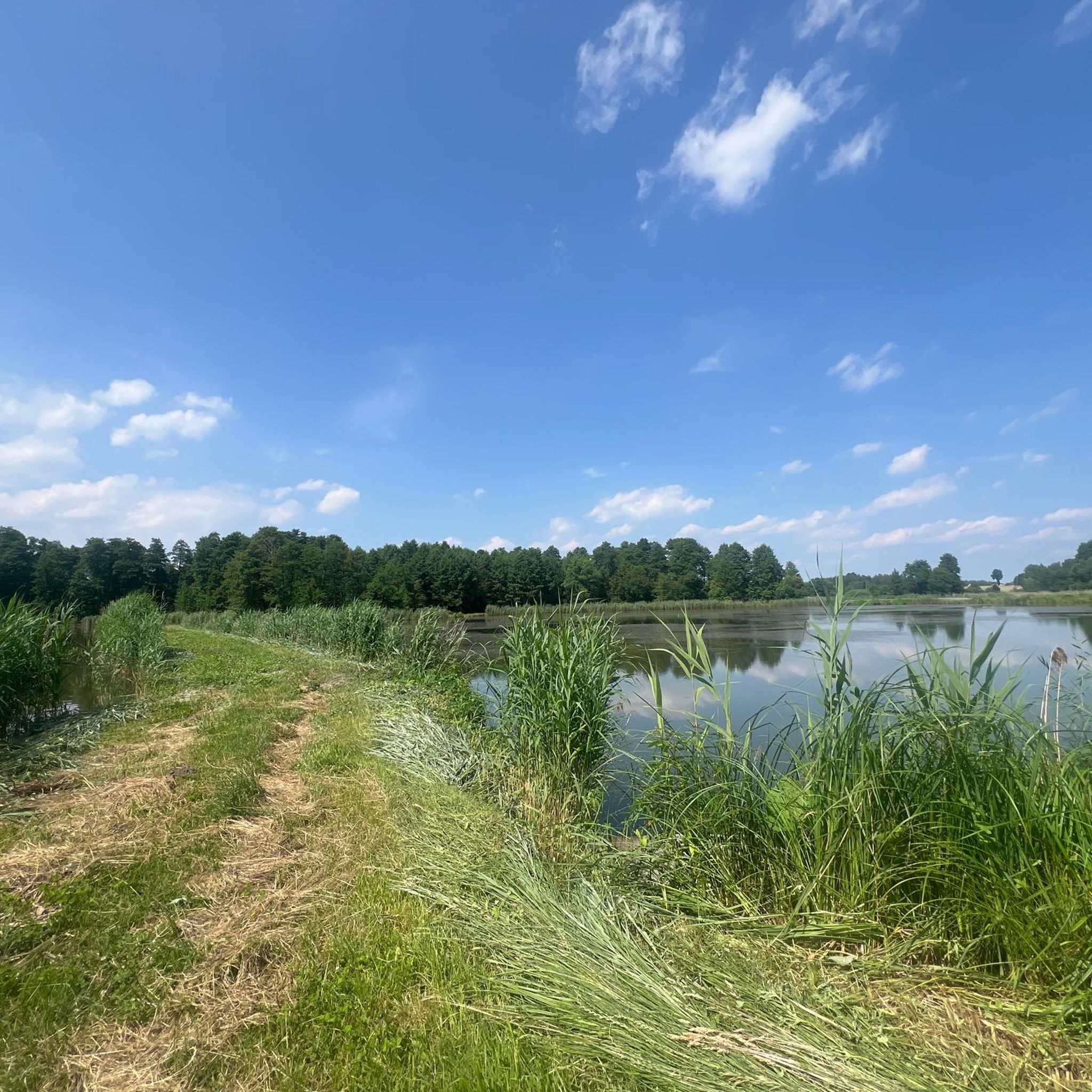
Touring cycling routes around Zalew Borki are centered on the largest water reservoir in Radom, offering a network of paths through green spaces and along the Mleczna River. The area features a picturesque setting with natural vegetation along the shoreline and connections to urban parks. The terrain is generally flat, making it suitable for various cycling abilities.
Best touring cycling routes around Zalew Borki
- The most popular touring cycling route is Path Around the Lake loop from Halinów, a…
Last updated: July 4, 2026
4.4
(5)
17
riders
14.7km
00:53
80m
80m
Easy bike ride. Great for any fitness level. Mostly paved surfaces. Suitable for all skill levels.
5.0
(3)
28
riders
7.88km
00:28
30m
30m
Easy bike ride. Great for any fitness level. Mostly paved surfaces. Suitable for all skill levels.

Sign up for free
4.0
(2)
26
riders
Easy bike ride. Great for any fitness level. Mostly paved surfaces. Suitable for all skill levels.
10
riders
12.3km
00:44
60m
60m
Easy bike ride. Great for any fitness level. Mostly paved surfaces. Suitable for all skill levels.
4.7
(18)
96
riders
25.3km
01:30
140m
140m
Easy bike ride. Great for any fitness level. Mostly paved surfaces. Suitable for all skill levels.
Get access to more routes and recommendations from other explorers.
Sign up for free
Already have an account?
Our route recommendations are based on thousands of hikes, rides, and runs completed by other people on komoot.
Start today with a free account
Your next adventure awaits.
Login or Signup

Tips from the Community


The layout of Radom's Market Square is associated with the reign of Casimir the Great. Following the destruction of Old Radom, likely during one of the Lithuanian invasions, this ruler granted the town of New Radom its Magdeburg rights in 1350 or 1351. The new town was given a regular layout reflecting the plan of a medieval town, with a centrally located Market Square.
0
0

Memorial stone dedicated to Father Roman Kotlarz. Roman Kotlarz (born October 17, 1928 in Koniemłoty, died August 18, 1976 in Radom) – Polish priest of the Sandomierz diocese, preacher, opposition activist in the Polish People's Republic, participant in the 1976 workers' protest of the so-called Radom events, persecuted and then beaten by the Security Service, victim of communist repressions and Servant of God of the Catholic Church.
0
0


I do not recommend it on weekends due to the large number of cyclists, roller skaters, etc
2
0
Object name: Orthodox cemetery Facility address: ul. Warszawska 15 Time of creation: 1839 Object designer: unknown Principal of the facility: Antoni Rafalski, Orthodox Bishop of Warsaw, Orthodox Parish in Radom Description of the object: The present cemetery has an irregular, oblong shape, on the north-south axis and consists of two parts: burial and military quarters. It is partly fenced with a brick wall, partially plastered. From the side of ul. Warszawska there is a gate complex consisting of a gate and two side buildings: a gatehouse and a mortuary. The gate is screened, arcaded, three-axis and three-part. The finial is triangular, with flows on the sides. Bells are placed centrally. The gable is decorated with a stepped frieze, the cornices are decorated with a trefoil motif. The cemetery buildings are characterized by simple architecture and are covered with gable roofs. On the axis of the gate there is a modern Orthodox Church of St. st. Santa. It is a dominant feature within the necropolis. It is characterized by a simple but coherent architecture with a characteristic central, octagonal dome. In 2005, the church received a mosaic above the main entrance, depicting the image of St. Nicholas the Wonderworker. Inside the building, a rich movable equipment is exhibited. A significant part of it comes from earlier Orthodox churches in Radom, which were stored in the cellars of the OO monastery during World War II. Bernardines and the former cathedral at Plac Konstytucji 3 Maja. About 100 historic tombstones of a high artistic level have been preserved in the cemetery. They were entered into the register of monuments in two sets under number B-233 of December 16, 2009 and number B-322 of January 25, 2012. The tombstones were usually made by the best stonemasonry and art workshops in Radom (Staniszewski, Hebdzyński, Piotrowski) . Numerous inscriptions in Russian and Church Slavonic have been preserved. In many cases, the content of the inscription contains a lot of information about the deceased people and their status. Teachers, soldiers, officials and doctors are commemorated. The tombstones are characterized by a variety of forms and stylistic solutions used at that time in Radom. Most of the objects were made of sandstone. The cemetery was entered into the register of monuments under no. 362/A/87 of November 27, 1987. History of the object: As a result of the efforts of Teofil Nowicki, protojerei (superior, superior) in 1832, the Government Commission for Internal and Clergy Affairs agreed to move the Orthodox church from Opatów to Radom. The church was arranged in the former Benedictine monastery church. At that time, over 700 military personnel and 20 Orthodox civilians lived in Radom. The Orthodox cemetery was established only in 1839 outside the then city limits. Previously, the dead Evangelicals were buried in the Roman Catholic cemetery. The area of the cemetery was extended and fenced several times (in 1851 and 1859). In the fourth quarter of the 19th century, the cemetery acquired its present appearance. At that time, the main gate, the gatehouse and the pre-burial house were built. During the First World War, a war quarter was arranged here for the fallen soldiers of the Orthodox faith. In 1948, against the Orthodox community, the state authorities separated part of the cemetery from the south, where exhumed Soviet soldiers killed in Radom and Soviet prisoners of war murdered by the Germans were buried in mass graves. As a result of these activities, many historical tombstones were removed and destroyed. In 1990, a monument to the soldiers of the Red Army was erected here (until now standing on the edge of Kościuszko Park), and in 2004 a monument of gratitude to the red army (until 1993 standing at Plac Zwycięstwa, currently Jagielloński). In 1992, an Orthodox Church of St. st. Nicholas, which was skilfully integrated into the space of the historic cemetery.
0
0

The city is located in the southern part of the Mazowieckie Voivodeship, on the Radom Plain, which is part of the South Mazowieckie Hills Skaryszew is located in historical Lesser Poland, it was part of the Sandomierz region, and then the Radom region]. The private spiritual town of Skaryszew was located in the second half of the 16th century in the Radom district of the Sandomierz Voivodship. In the years 1975–1998, the city administratively belonged to the Radom Province. Among the objects of cultural heritage in Skaryszew is the church of St. Jacob. Originally wooden (from the second half of the 12th century), now made of brick, it has a rich interior: sculptures and paintings from the 17th - 18th centuries, stalls, a copy of van Dyck's painting "Naigranie".
0
0
Frequently Asked Questions
How many touring cycling routes are available around Zalew Borki?
There are over 300 touring cycling routes available around Zalew Borki on komoot. These routes cater to various skill levels, with a significant number being easy or moderate.
What kind of terrain can I expect on touring cycling routes in Zalew Borki?
The terrain around Zalew Borki is generally flat, making it suitable for cyclists of varying skill levels, including beginners. Routes often wind through lush green areas, along the Mleczna River, and around the reservoir itself, offering a picturesque and accessible touring experience.
Are there easy touring cycling routes suitable for beginners or families?
Yes, Zalew Borki is well-suited for easy rides. Over 180 of the available routes are classified as easy. A popular option is the Path Around the Lake loop from Halinów, which is 12.4 km and takes about 47 minutes to complete, offering a relaxed ride around the scenic reservoir.
Can I find circular touring cycling routes around Zalew Borki?
Yes, many routes around Zalew Borki are designed as loops. The most popular is the 12.4 km Path Around the Lake loop from Halinów. Another local favorite is the Cerekwianka Floodplain Polder loop from Kozia Góra, which is 16.4 km and traverses green areas.
Are there touring cycling routes that connect Zalew Borki with Radom city center?
Yes, you can easily combine nature with urban exploration. The Path Around the Lake – Radom Market Square loop from Halinów is an 11.7 km route that connects the natural surroundings of Zalew Borki with Radom's city center, utilizing riverside boulevards. This allows you to experience both tranquil natural settings and the historical attractions of Radom.
What are some scenic viewpoints or natural features to look out for on the routes?
The primary scenic feature is the Zalew Borki reservoir itself, with routes winding through lush green areas and along the Mleczna River. The natural vegetation lining the shoreline provides a picturesque environment. You'll also encounter the Cerekwianka Flood Polder, offering more green spaces, and views of Radom's historical market square if you venture into the city.
What do other touring cyclists enjoy the most about touring cycling in Zalew Borki?
The area is highly rated by the komoot community, with an average score of 4.7 stars from over 500 reviews. Touring cyclists often praise the generally flat and accessible terrain, the scenic routes around the reservoir and along the river, and the variety of options for different skill levels, from easy loops to longer excursions.
Is there a moderate touring cycling route for those looking for a bit more challenge?
For those seeking a slightly longer and more challenging ride, the Horse Stud – Fairy Tale Avenue loop from Wacyn is a moderate 33.2 km route. This trail offers a longer excursion with more varied terrain compared to the easy loops directly around the lake.
What is the best time of year for touring cycling around Zalew Borki?
The generally flat topography and scenic greenery make Zalew Borki enjoyable for touring cycling throughout the warmer months, typically from spring through early autumn. These seasons offer pleasant temperatures and vibrant natural surroundings for your ride.
Are there any recreational facilities near the cycling routes?
Beyond cycling, Zalew Borki offers other outdoor activities that can complement a cycling trip. These include a water playground and a zip-line over the reservoir, providing additional recreational opportunities for visitors to the area.
How long do touring cycling routes around Zalew Borki typically take?
Route durations vary depending on distance and your pace. For example, the popular Path Around the Lake loop from Halinów (12.4 km) typically takes about 47 minutes. Longer routes, like the Horse Stud – Fairy Tale Avenue loop from Wacyn (33.2 km), can take over 2 hours.
Most popular routes around Zalew Borki

Get inspired with the komoot mobile app


Explore more
Browse the best Cycling routes in other regions.
