The best walks and hikes around Lake Biale
5.0
(13)
125
hikers
17
hikes
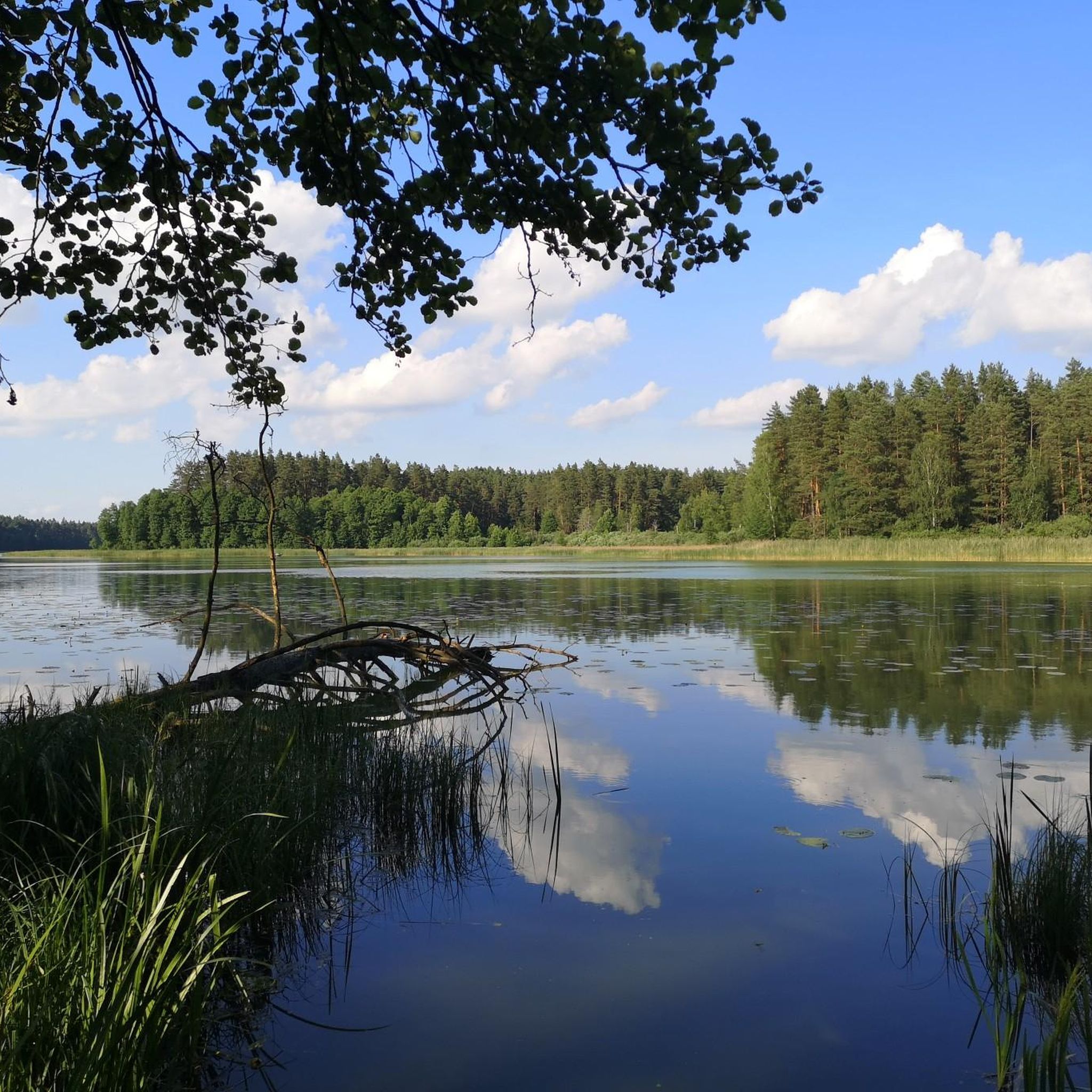
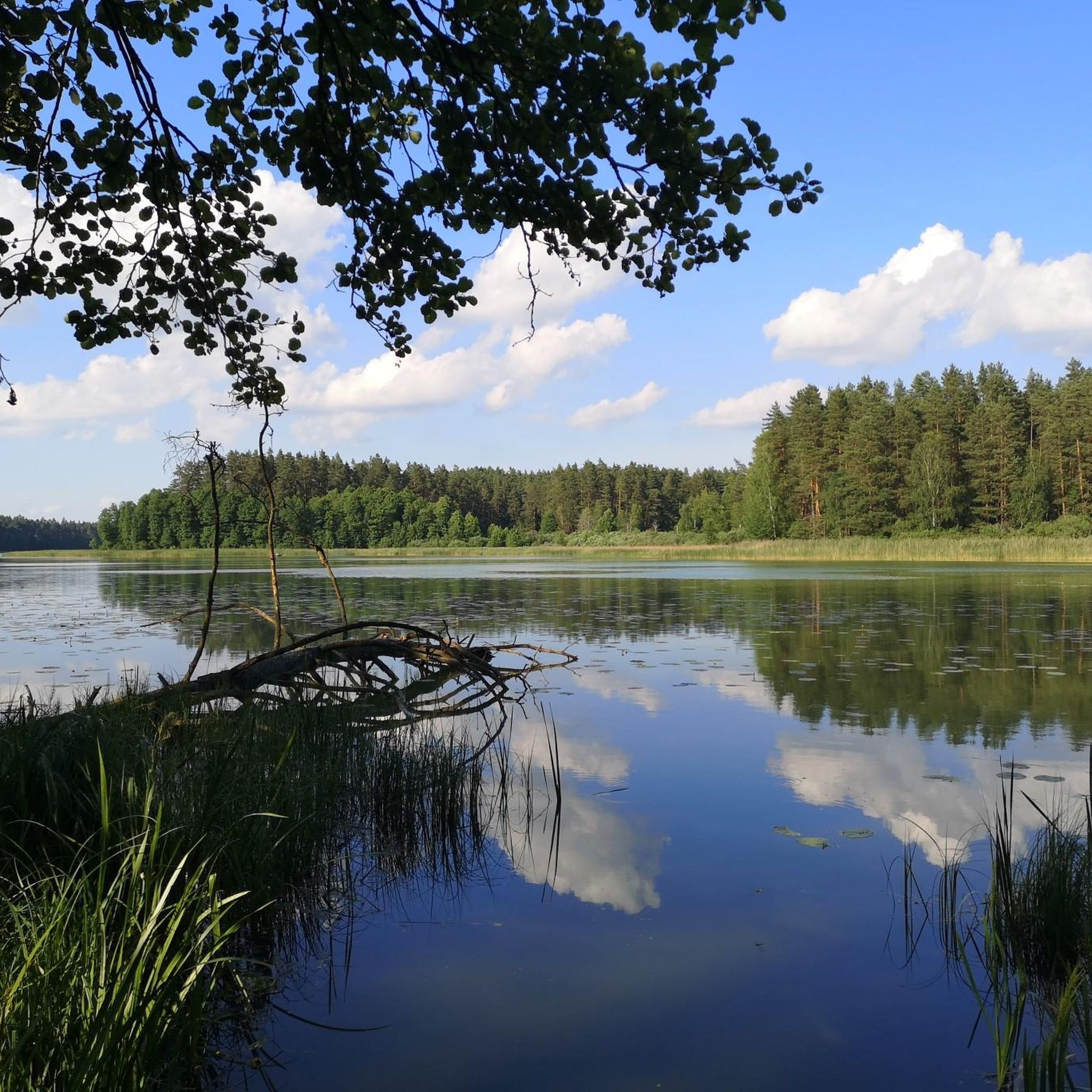
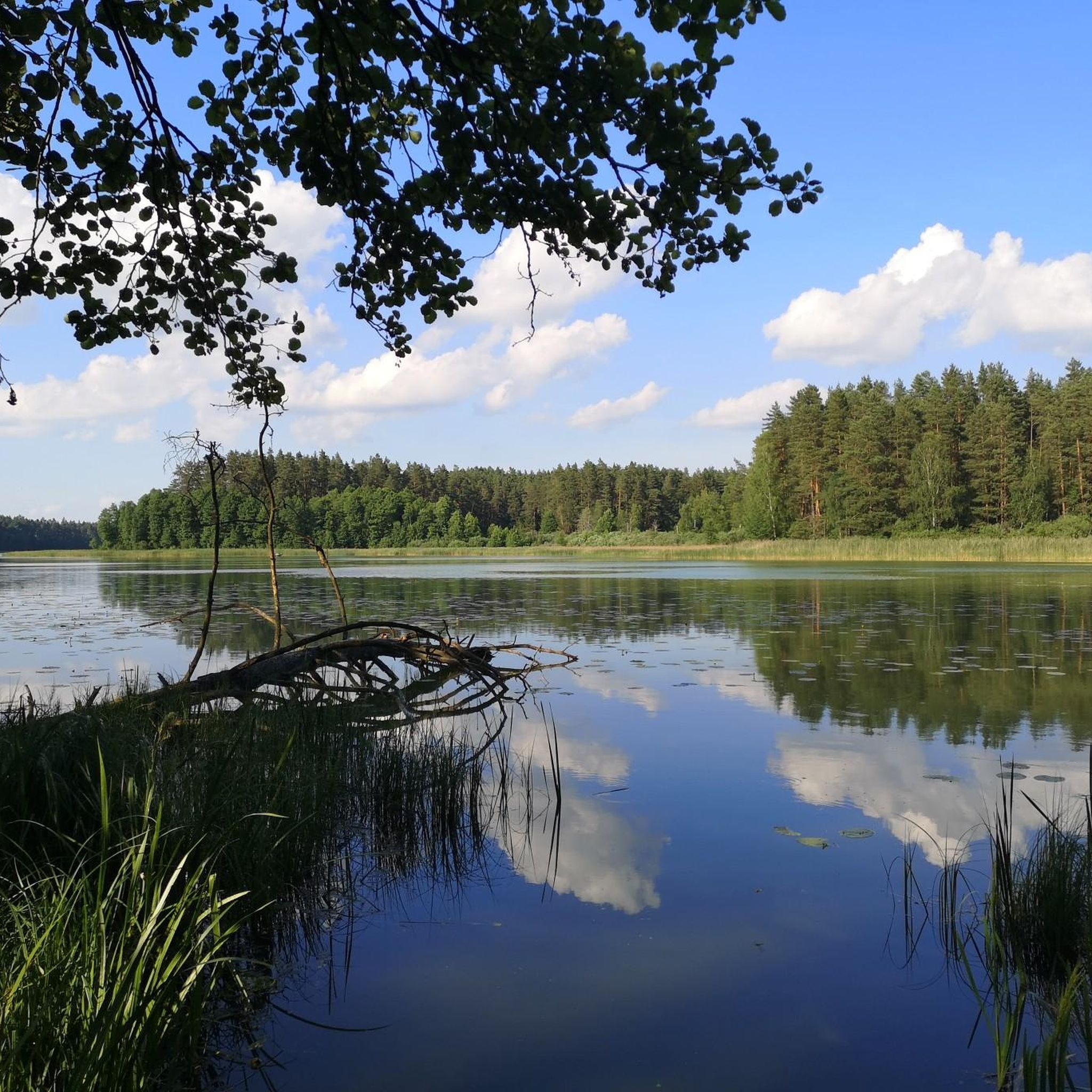
Hiking trails around Lake Biale are characterized by a landscape of ribbon lakes, well-developed coastlines, and numerous bays and peninsulas. The shores are typically high and dry, often adorned with pine trees, and feature sandy bottoms. This region offers a variety of routes that explore the natural beauty of the lake and its surrounding woodlands. The terrain generally includes gentle elevation changes, making it accessible for various fitness levels.
Best hiking trails around Lake Biale
- The most popular hiking route…
Last updated: June 25, 2026
3
hikers
11.2km
02:55
80m
80m
Moderate hike. Good fitness required. Easily-accessible paths. Suitable for all skill levels.
5.0
(1)
5
hikers
10.1km
02:38
60m
60m
Moderate hike. Good fitness required. Easily-accessible paths. Suitable for all skill levels.

Sign up for free
5.0
(2)
6
hikers
7.05km
01:52
70m
70m
Easy hike. Great for any fitness level. Easily-accessible paths. Suitable for all skill levels.
5.0
(1)
1
hikers
16.9km
04:24
110m
110m
Moderate hike. Good fitness required. Easily-accessible paths. Suitable for all skill levels.
4
hikers
7.66km
01:59
50m
50m
Easy hike. Great for any fitness level. Easily-accessible paths. Suitable for all skill levels.
Get access to more routes and recommendations from other explorers.
Sign up for free
Already have an account?
Our route recommendations are based on thousands of hikes, rides, and runs completed by other people on komoot.
Start today with a free account
Your next adventure awaits.
Login or Signup
Tips from the Community

The first mention of the church in Sorkwity dates back to 1470. Initially, it was a half-timbered building with a thatched roof.[1] The church was patronized by the owners of the existing knightly estates, which included the von Schlieben family.[2] The church was demolished at the turn of the 16th and 17th centuries, and a new church was built in its place in the Baroque style, while partially retaining the Gothic architectural character. The initiative for the construction of the current church building is associated with Dietrich von Schlieben, and work was carried out in four stages. The eastern part of the nave, along with the sacristy, was built between 1593 and 1607. The expansion was completed in 1698-1699 at the initiative of Sigismund von Egloffstein, the next owner of the Sorkwity estate. The tower was added between 1701 and 1712, and the final construction phase spanned 1750–1777, when the appearance of the windows in the nave was standardized. This Evangelical church is located on Lake Gielądzkie in the village of Sorkwity, in the Warmian-Masurian Voivodeship.
1
0

Nowy Zyzdrój, formerly Neusixdroi, Neu Sysdroy. A rural cemetery located on the eastern side of the road on a low slope. Most of the gravestones are damaged and densely overgrown. Monument https://zabytek.pl/pl/obiekty/cmentarz-lepszycki-684651
0
0

At the northern end of Lake Lampackie stands a castle built in 1788 for the then lord of the manor, Johann Sigismund von Oppeln-Bronikowski. This unfinished brick building was once the center of the Sorquitten estate. Between 1850 and 1856, under the lord of the manor, Julius von Mirbach, it was rebuilt in the neo-Gothic castle style of an English manor house. The castle walls have since been crowned with battlements. Next to the main building stands the so-called carriage house, a separate building. The castle includes an English-style landscape park, whose form dates back to the 19th century. It is characterized by ancient oaks and several other protected tree species. During the First World War, on August 26, 1914, the first day of the Battle of Tannenberg between the invading Samsonov Army and the German defenders, Russian soldiers spent the night in the castle. The castle caught fire and burned down on the night of August 27-28, 1914, along with all its valuable furnishings. In 1922/1923, it was rebuilt by the last German lord of the manor under the supervision of the Berlin architect Otto Rüger. The building survived the Second World War largely unscathed; only the interior furnishings were lost through looting in 1945. After 1945, the castle was used as an administrative building and warehouse for the now Polish estate administration. In 1957, it became a convalescent home for the Warsaw Ursus machine factory. Today, the castle and park are once again privately owned; the castle houses the two-star Hotel Pałac Sorkwity. In June 2012, the castle appeared unoccupied, and there was no evidence of a hotel operation. Source: wikipedia.org
1
0
A church in Sorkwity was first mentioned in 1470. It was a thatched, half-timbered church. It was demolished in 1600 and replaced by a fieldstone church: a choirless, plastered building, the eastern part of which was built between 1593 and 1607, and the western part in 1689/99. The west tower, with its faced brickwork, was built between 1701 and 1721. It supports a tarmac roof with a weather vane from 1777 – commemorating the reconstruction work in 1776/77. At that time, the dilapidated upper section had to be removed by 35 feet. It was then restored as it stands today. In 1754, the church interior received a barrel vault in the nave and flat planked ceilings on the sides; the semicircular windows were also installed. The church's appearance has remained unchanged since then. The church's interior was carefully restored in the 1930s. Between 1935 and 1944, it was painted, new roof tiles and gutters were installed, and the doors and arched windows were replaced. In the years after 1945, the church was restored several times, most recently in 2010 and 2012. Source: wikipedia.org
2
0


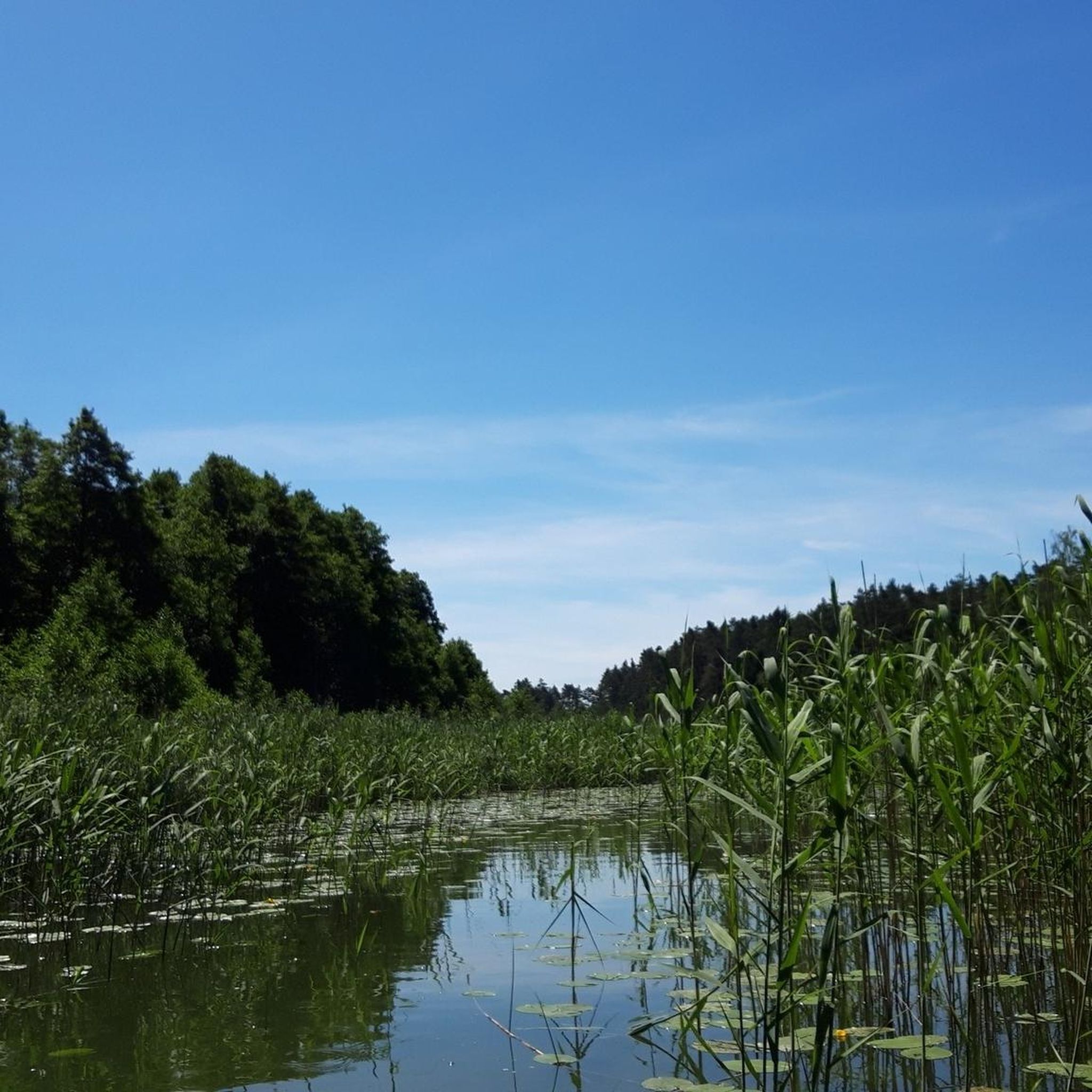
Great landscape and a great river for canoeing
0
0
Frequently Asked Questions
How many hiking trails are available around Lake Biale?
There are over 15 hiking routes available around Lake Biale, offering a diverse range of experiences. These trails are highly rated by the komoot community, with an average score of 5.0 stars.
Are there easy hiking trails suitable for beginners or families around Lake Biale?
Yes, Lake Biale offers several easy hiking options perfect for beginners or families. For instance, the Hiking loop from Grabowo is an easy 7.1 km trail that takes less than two hours to complete, leading through varied natural scenery. Another easy option is the Old Mazurian Cemetery – Mazurska Chata loop from Nowy Zyzdrój, which is 7.7 km long.
What kind of terrain and elevation can I expect on hikes around Lake Biale?
The terrain around Lake Biale generally features gentle elevation changes, making most routes accessible for various fitness levels. The landscape is characterized by ribbon lakes, well-developed coastlines, and numerous bays and peninsulas. Shores are typically high and dry, often adorned with pine trees, and feature sandy bottoms.
Are there any circular hiking routes around Lake Biale?
Yes, many of the trails around Lake Biale are designed as circular routes, allowing you to start and end at the same point. A popular moderate option is the Lake Dłużec loop from Borowe, which is 11.2 km long and offers scenic views. Another circular route is the Lake Dłużec loop from Grabowo, covering 10.1 km.
What are some notable natural features or landmarks to look out for while hiking?
The region around Lake Biale is known for its picturesque lake views, pine forests, and diverse natural landscapes. The Augustów Canal, which connects Lake Białe Augustowskie to other bodies of water like Lake Necko, offers scenic routes. The area also features the 'Patelnia' beach with its large sand mountain and steep slope, and you might even spot white peacocks and mandarin ducks.
Are the hiking trails around Lake Biale dog-friendly?
While specific regulations for dogs on every trail may vary, the natural and open character of the trails around Lake Biale generally makes them suitable for walks with dogs. It's always recommended to keep your dog on a leash and ensure you clean up after them to preserve the natural environment for everyone.
What is the best time of year to go hiking in Lake Biale?
The best time to visit Lake Biale for hiking is typically during the warmer months, from spring through early autumn. During this period, the weather is pleasant, and the natural beauty of the pine forests and lake views can be fully enjoyed. Some trails may also be accessible in winter, but conditions can be more challenging.
Are there any challenging hikes for experienced hikers?
While many trails around Lake Biale are moderate or easy, the broader region, particularly the Bialskie Mountains (Eastern Sudetes), offers more demanding treks. For example, routes leading to Śnieżnik can be more challenging. Within the immediate Lake Biale area, routes like the Dwór Galiny – Sorkwity Castle loop from Grabowo, at 17.0 km, offer a longer, moderate excursion.
What do other hikers enjoy most about hiking in Lake Biale?
The area is highly rated by the komoot community, with an average score of 5.0 stars from over 13 reviews. Reviewers often praise the picturesque lake views, the tranquility of the pine forests, and the well-maintained paths that cater to various ability levels. Many appreciate the blend of natural beauty and accessible terrain.
Are there any historical landmarks or cultural sites accessible via hiking trails?
Yes, some routes combine natural beauty with historical interest. For example, the Dwór Galiny – Sorkwity Castle loop from Grabowo explores both natural landscapes and historical landmarks, including a castle, offering a richer hiking experience.
Is parking available near the trailheads around Lake Biale?
Yes, areas like the 'Patelnia' beach, a notable feature around Lake Białe Augustowskie, are equipped with parking facilities. For specific trailheads, parking availability can vary, but generally, popular starting points for hikes will have designated parking areas or roadside options.
Most popular routes around Lake Biale

Get inspired with the komoot mobile app


Explore more
Browse the best Hikes in other regions.
