The best MTB trails around Alcabón
3.5
(109)
872
riders
193
rides
Mountain biking around Alcabón is characterized by its location within the broader Toledo province, featuring a landscape of plains situated between the Tagus and Alberche rivers. The terrain primarily consists of rural and agricultural areas, offering routes that traverse open countryside. While Alcabón itself is a small town, the surrounding region provides a network of trails suitable for mountain biking, often starting from nearby towns like Torrijos. The elevation changes are generally moderate, with some routes incorporating longer climbs.
Best…
Last updated: May 9, 2026
4.3
(4)
30
riders
74.5km
05:51
510m
510m
Hard mountain bike ride. Very good fitness required. Advanced riding skills necessary.
4.0
(1)
29
riders
77.8km
06:20
460m
460m
Hard mountain bike ride. Very good fitness required. Suitable for all skill levels.

Sign up for free
3.0
(4)
21
riders
33.9km
02:38
180m
180m
Moderate mountain bike ride. Good fitness required. Advanced riding skills necessary.
4.3
(3)
18
riders
28.0km
02:13
170m
170m
Moderate mountain bike ride. Good fitness required. Advanced riding skills necessary.
3.0
(4)
16
riders
35.5km
02:53
220m
220m
Moderate mountain bike ride. Good fitness required. Advanced riding skills necessary.
Get access to more routes and recommendations from other explorers.
Sign up for free
Already have an account?
Our route recommendations are based on thousands of hikes, rides, and runs completed by other people on komoot.
Start today with a free account
Your next adventure awaits.
Login or Signup
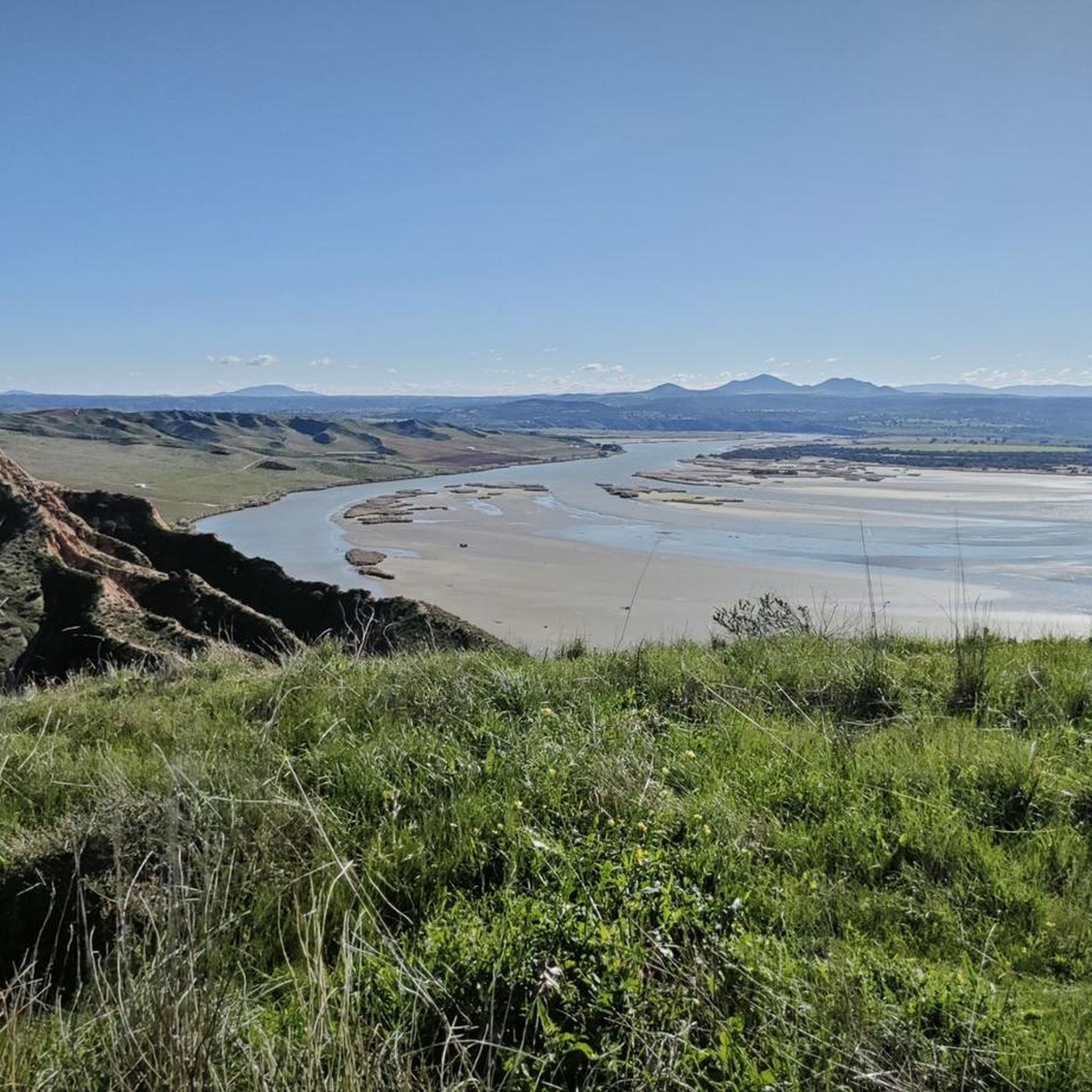
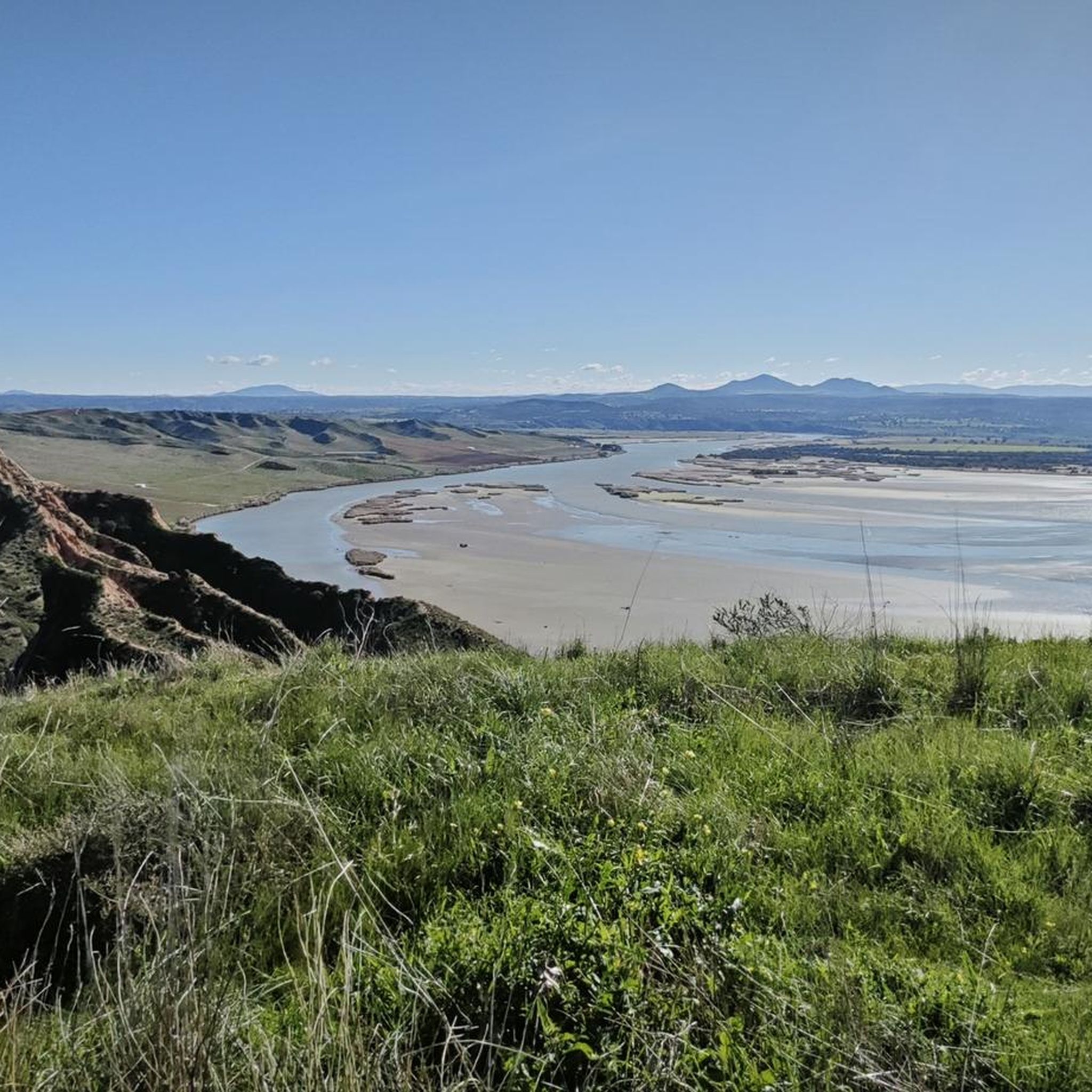


Tips from the Community

Barcience Castle is a medieval fortress located in the municipality of Barcience, in the province of Toledo. It stands on a hill that dominates the surroundings, offering a strategic view of the surrounding landscape.
5
0

You have to go during times when the crops are not high because otherwise it is very difficult to find
1
0

When we cross the bridge, we have beautiful views of the Tagus and San Juan de los Reyes. Its date of construction is not known with certainty. It was part of the city's defensive system next to the Alcántara bridge. Built entirely with granite ashlars, it consists of five slightly pointed arches, the central one standing out for its size. It has two defensive towers with an irregular polygonal plan, crenellated, one at each end. The bridge was used as a pontazgo, collecting the various taxes - common in the Middle Ages to finance public works - that were paid for the passage of different goods and migratory livestock, linking the city with the Montes de Toledo region and with Estremadura. In addition, the bridge served the muleteers who transported granite from Ventas con Peña Aguilera, marble from San Pablo de los Montes, charcoal or other products from the area. During the reign of Charles II, at the end of the 17th century, the bridge was partially renovated, widening its entrances and modifying the interior tower, whose door was topped with a large imperial shield flanked by the figures of two seated kings and two stone plaques. that detail the characteristics of the work and its completion date, 1690. A century later, in 1760 and with Charles III as king, the bridge was paved, as indicated by a plaque carved in stone located on the right parapet. It was declared a National Artistic Monument in 1921, supporting the passage of road traffic until 1976, from which date only pedestrian use was allowed.
1
0


Torrijos gives its name to its region in the plain between the Tajo and Alberche rivers. It is the natural center of trade in goods and services in this area of Toledo. With its population of almost 13,000 inhabitants, it has all the services of a small city and has direct communications by train and bus with the main cities of Toledo and Extremadura. Its monuments, such as the palace of Peter I or its collegiate church, testify to its historical importance since the Middle Ages.
1
0

Albarreal de Tajo is a municipality in the province of Toledo. It is very close to the Tagus River and the Tagus Nature Trail passes through its urban area.
2
0
Rielves is a transit point for the Caminos de Santiago del Levante, on its way between Toledo and Ávila, the path being perfectly signposted.
7
0
We can tour its large courtyard, and the almost square plan that it presents, indicating by its size and the time in which it was erected, that it served as a residence rather than a defensive fort. Two interesting cubes are indications of the barrier and the moat that protected the entrance door to the enclosure, and of which there are no remains. Three towers, two circular, another square, and the homage, make up the rest of the enclosure. Juan de Silva, the first Count of Cifuentes, began the construction of the fortress in the 14th century, which would be completed by his grandson, with the same name. It was endowed with artillery and garrison in the 16th century.
7
0
Frequently Asked Questions
How many mountain bike trails are available around Alcabón?
There are nearly 200 mountain bike routes available around Alcabón. These trails cater to various skill levels, with 18 easy, 151 moderate, and 25 difficult options to explore.
What kind of terrain can I expect when mountain biking near Alcabón?
The terrain around Alcabón is primarily characterized by rural and agricultural plains situated between the Tagus and Alberche rivers. You'll find routes traversing open countryside with generally moderate elevation changes, though some trails incorporate longer climbs.
Are there any family-friendly mountain bike trails in the Alcabón area?
Yes, there are 18 easy mountain bike routes around Alcabón that are suitable for families. These trails typically feature less challenging terrain and gentler gradients, making them ideal for a leisurely ride with children.
What do other mountain bikers say about the trails around Alcabón?
The mountain bike trails around Alcabón are highly rated by the komoot community, with an average score of 3.5 stars from over 100 reviews. Many riders appreciate the varied terrain and the opportunity to explore the rural landscapes of the Toledo province.
Are there any circular mountain bike routes available?
Yes, many routes around Alcabón are designed as loops. For example, the moderate Church of Huecas – Torrijos Town Center loop from Torrijos is a 33.9 km trail through agricultural landscapes, and the Tagus Natural Trail – Guadarrama Viewpoint loop from Torrijos offers expansive views on a more challenging 84.9 km ride.
What are some notable landmarks or points of interest I can see while mountain biking near Alcabón?
While mountain biking in the region, you can encounter several points of interest. These include historical sites like San Silvestre Castle and Castillo de la Vela. You might also pass through Torrijos Town Center, which features the Plaza de España and Monument to the Cross, and the Parish Church of Our Lady of the Assumption.
Are there any challenging mountain bike trails for experienced riders?
Absolutely. There are 25 difficult mountain bike routes in the Alcabón area. An example is the Torrijos Town Center – Workout loop from Torrijos, a demanding 77.8 km path that provides a significant workout exploring the rural surroundings.
What is the best time of year for mountain biking around Alcabón?
Central Spain, where Alcabón is located, generally offers pleasant conditions for mountain biking during spring (April-May) and autumn (September-October). The temperatures are milder, making for more comfortable rides compared to the hotter summer months or potentially colder, wetter winter periods.
Can I find routes that offer scenic views?
Yes, several routes provide scenic vistas. The Tagus Natural Trail – Guadarrama Viewpoint loop from Torrijos, for instance, is known for offering expansive views across the Tagus river plain.
Are there any moderate mountain bike trails for intermediate riders?
The majority of trails around Alcabón, 151 to be exact, are rated as moderate. A good example is the Barcience Castle – Torrijos Town Center loop from Torrijos, a 27.9 km route that offers a balanced challenge for intermediate riders.
What is the typical duration for mountain bike routes in this area?
Route durations vary significantly based on distance and difficulty. Easy routes might take an hour or two, while moderate trails like the Albarreal de Tajo Town Center – Torrijos Town Center loop from Torrijos (35.5 km) can take nearly three hours. More difficult and longer routes can extend to over six hours, such as the 84.9 km Tagus Natural Trail – Guadarrama Viewpoint loop from Torrijos.
Most popular attractions around Alcabón

Get inspired with the komoot mobile app


Explore more
Browse the best MTB trails in other regions.
