The best walks and hikes around La Luisiana
4.0
(32)
61
hikers
2
hikes
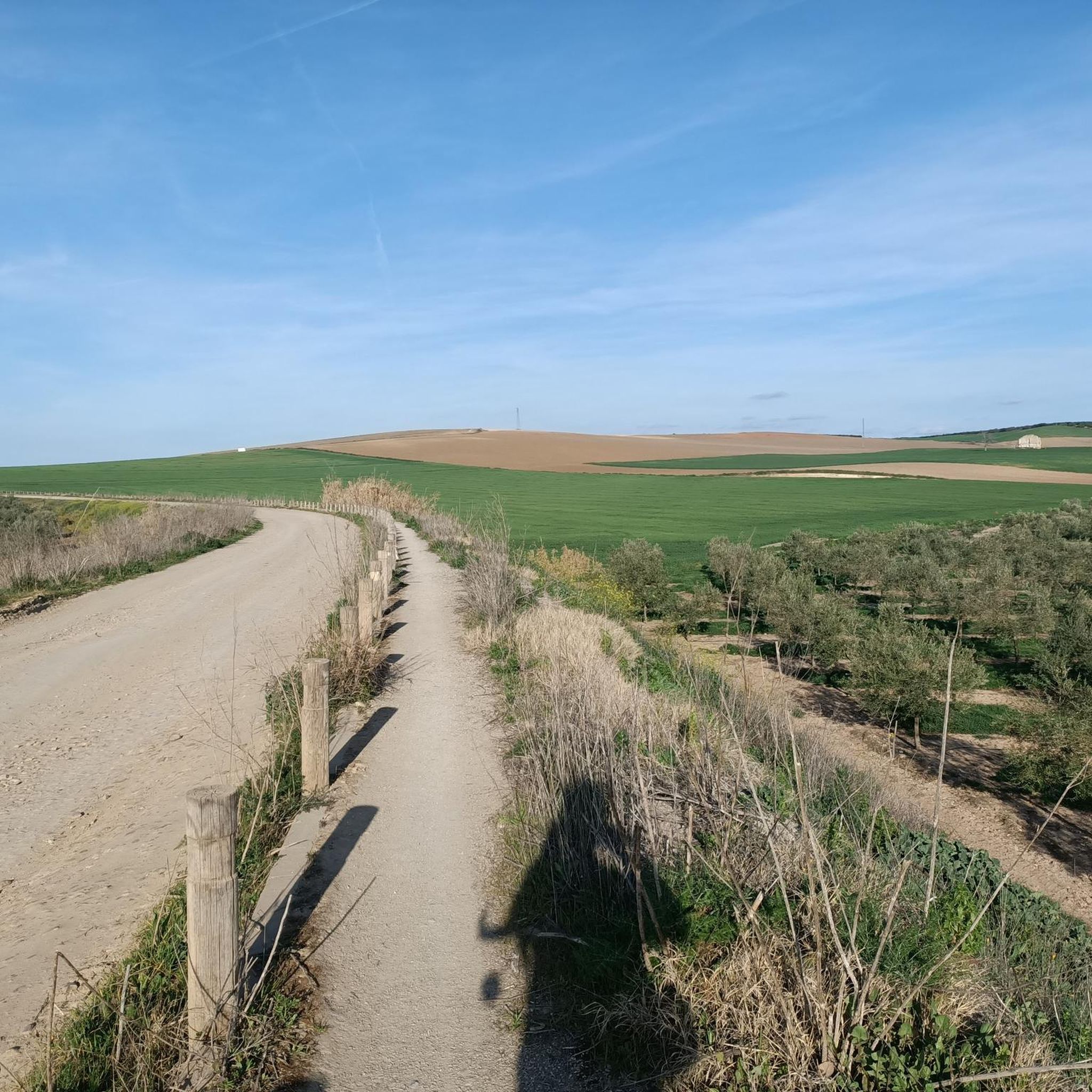
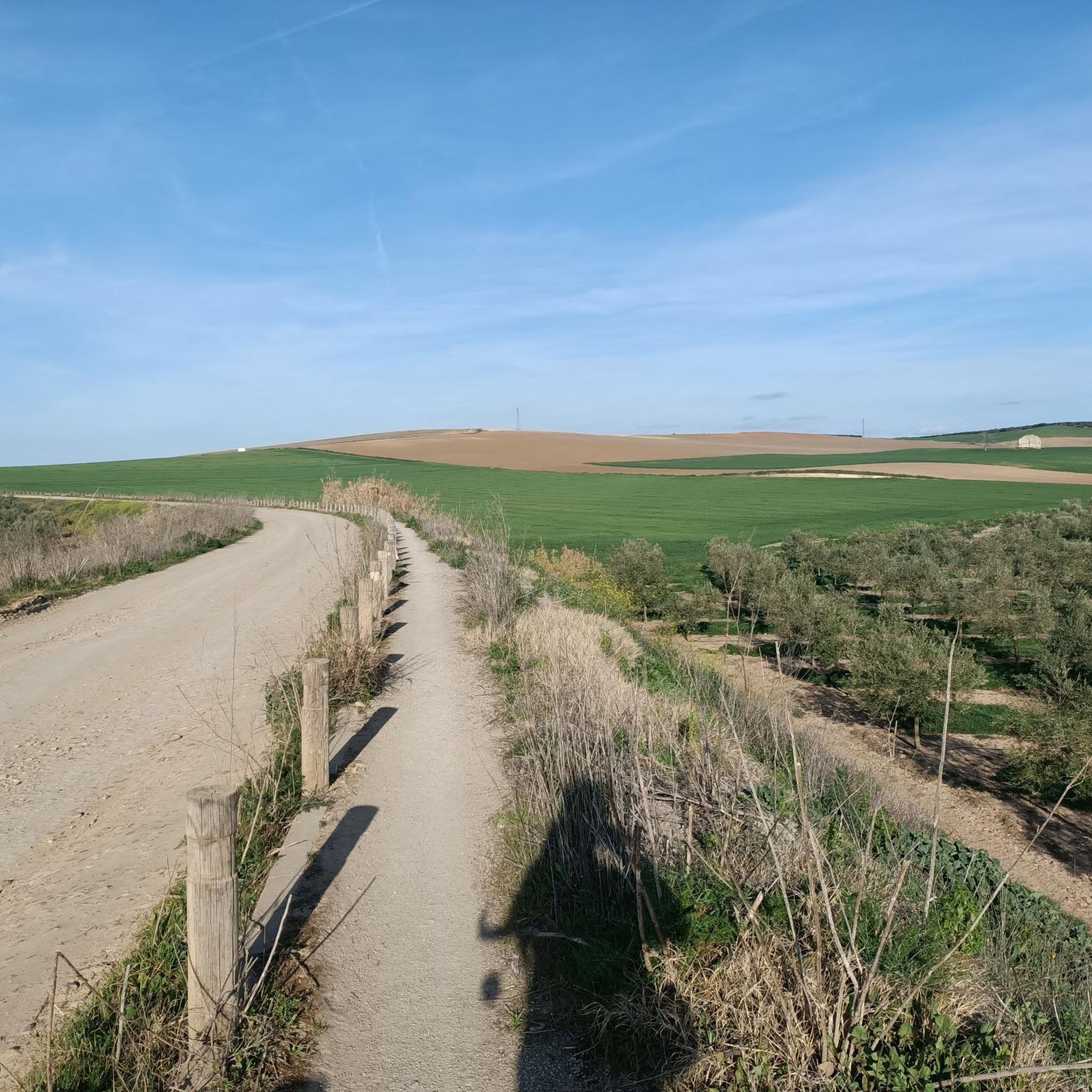
Hiking around La Luisiana offers exploration through the agricultural landscapes of Seville, Spain. The region is characterized by flat terrain, with gentle elevation changes, making it suitable for accessible walks. Trails often follow greenways and paths connecting historical towns, providing views of cultivated fields and local architecture.
Best hiking trails around La Luisiana
- The most popular hiking route is Route of the Vía Verde de la Campiña - round trip from Écija, a 11.4 miles (18.3 km) trail that…
Last updated: July 4, 2026
5.0
(1)
4
hikers
18.3km
04:45
110m
110m
Moderate hike. Good fitness required. Easily-accessible paths. Suitable for all skill levels.
3.3
(6)
12
hikers
11.7km
03:00
40m
40m
Moderate hike. Good fitness required. Easily-accessible paths. Suitable for all skill levels.

Sign up for free
3.5
(2)
9
hikers
6.14km
01:35
30m
30m
Easy hike. Great for any fitness level. Easily-accessible paths. Suitable for all skill levels.
3.3
(4)
8
hikers
12.3km
03:13
100m
100m
Moderate hike. Good fitness required. Easily-accessible paths. Suitable for all skill levels.
5.0
(1)
4
hikers
4.84km
01:14
20m
20m
Easy hike. Great for any fitness level. Easily-accessible paths. Suitable for all skill levels.
Our route recommendations are based on thousands of hikes, rides, and runs completed by other people on komoot.
Start today with a free account
Your next adventure awaits.
Login or Signup


Tips from the Community

Particularly worth seeing are its historicist decorations, the coffered ceilings, the large courtyard and the staircase. In the vestibule there is a plinth with tile work from Triana.
4
0
Located in the historic center of the city, also known as “El Salón”, it is configured as the most important civic and social center and serves as the main square. Under the direction of the City Council, it has a rectangular plan and a perimeter of more than 400 meters, which corresponds to an area of 0.80 hectares. It is surrounded by a series of civil and religious buildings, and depending on the buildings located there, important streets and some small squares of great architectural and monumental interest meet.
4
0
The Benamejí Palace: model of civil baroque in Andalusia. The Benamejí Palace, which houses the museum, is a monument declared a "cultural asset". Built in the first half of the 20th century. XVIII, it is one of the most important examples of civil baroque in Andalusia.
4
0
The old parish church of Santa María belonged to the Gothic-Mudejar type of church. It seems that it was built by D. Pedro Fernández Gragera, a knight in the service of San Fernando in the reconquest of Écija. According to sources, it was completed in 1262. The structure was designed with three naves and a polygonal head, later two side naves were added, so its plan was irregular, with a tower, a patio with orange trees and a cemetery. The building was extensively renovated in the 16th and 17th centuries, with the church being demolished and rebuilt in 1758.
4
0
The Peñaflor Palace, one of the most important sights in Écija Even from the outside, it is one of the most iconic images of the city.
5
0

The tower's origins date back to the 15th century, when it was built on an ancient Arab tower. Due to lightning damage in 1892, it was partially demolished, and the first part of the old Mudejar tower remains today as a bell tower.
3
0
Its large balcony running along the facade distinguishes it from the rest of the buildings in Écija. It is a 13th century palace, recently restored and inhabited until 1958.
4
0
It is one of the most elegant churches in Andalusia, built in the Gothic-Mudejar style of the 15th century. The temple underwent significant renovations in the late Renaissance and early Baroque periods. The current tower was built between 1757 and 1766. It is one of the most typical of the city, with its large brick body decorated with locally influenced tiles typical of the province of Seville.
1
0
Frequently Asked Questions
What kind of hiking trails can I expect around La Luisiana?
Hiking around La Luisiana primarily features routes through the agricultural landscapes of Seville, Spain. The terrain is generally flat with gentle elevation changes, making it suitable for accessible walks. Trails often follow greenways and paths connecting historical towns, offering views of cultivated fields and local architecture.
How many hiking trails are available in the La Luisiana area?
There are several hiking routes available around La Luisiana. Our guide features 5 distinct hiking tours, ranging from easy strolls to moderate excursions, ensuring options for various ability levels.
Are there any easy hiking trails suitable for beginners or casual walkers?
Yes, there are easy trails. For instance, the Church of Santiago – Peñaflor Palace loop from Écija is a 3.8-mile (6.1 km) trail that takes about 1 hour 35 minutes to complete, leading through historical areas. Another easy option is the Peñaflor Palace – Church of Santiago loop from Écija, which is 4.8 miles (7.8 km) long.
What are the longer hiking options around La Luisiana?
For a longer excursion, consider the Route of the Vía Verde de la Campiña - round trip from Écija. This trail is 11.4 miles (18.3 km) long and typically takes around 4 hours 45 minutes to complete, following a converted railway line.
What can I see along the hiking trails in La Luisiana?
Many trails offer views of cultivated fields and connect to historical towns. You can explore landmarks such as the Plaza de España (El Salón), the Parish of Santa María and Santa Bárbara, and the Peñaflor Palace, all located in Écija, a town frequently featured in the local routes.
Are there any circular hiking routes available?
Yes, several routes are designed as loops. For example, the Palace of Justice of Écija – Torre Albarrana loop from Écija is a moderate 7.6-mile (12.2 km) path exploring the surroundings of Écija. The Church of Santiago – Peñaflor Palace loop from Écija is another popular circular option.
What do other hikers enjoy most about the trails in La Luisiana?
The routes in La Luisiana are highly rated by the komoot community, with an average score of 4.0 stars from over 30 reviews. Hikers often praise the accessible nature of the trails, the charming historical towns they connect, and the peaceful agricultural scenery.
Is there parking available for hikers near the trailheads?
While specific parking information for each trailhead is best checked on the individual route pages, towns like Écija and Fuentes de Andalucía, which serve as common starting points for many trails, typically offer public parking options for visitors.
Can I reach the hiking trails using public transport?
Information regarding public transport directly to specific trailheads is limited. However, major towns like Écija and Fuentes de Andalucía, which are central to many of the hiking routes, are generally accessible by regional bus services. From these towns, you may need to walk or arrange local transport to reach the exact starting points.
What is the best time of year to go hiking in La Luisiana?
Given the agricultural landscape and the climate of Seville, Spain, the spring and autumn months are generally ideal for hiking in La Luisiana. Temperatures are milder, and the scenery is often at its most vibrant. Summers can be very hot, making early morning or late afternoon hikes preferable if visiting during that season.
Are the trails in La Luisiana suitable for families with children?
Yes, many of the trails, especially the easier and shorter loop options, are suitable for families. The generally flat terrain and gentle elevation changes make them accessible for various ages. The historical towns along the routes also offer interesting points for children to explore.
Are dogs allowed on the hiking trails around La Luisiana?
While specific regulations can vary, dogs are generally permitted on many public paths and greenways in rural Spain, often on a leash. It is always recommended to check local signage or specific route details for any restrictions before heading out with your dog.
Most popular routes around La Luisiana
Most popular attractions around La Luisiana

Get inspired with the komoot mobile app


Explore more
Browse the best Hikes in other regions.
